


















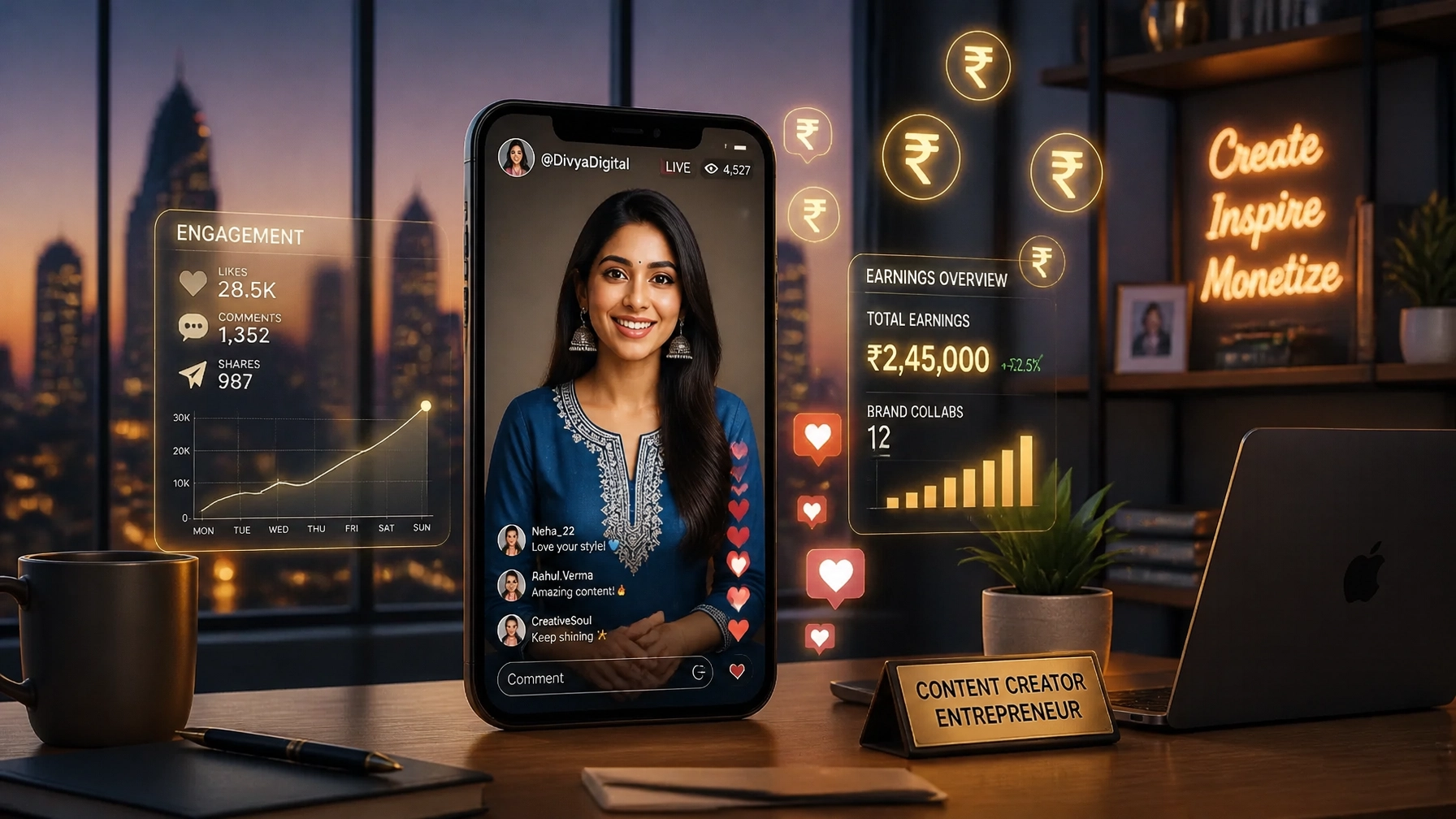
Virtual Stars, Real Money: How India’s AI Influencers are Disrupting the Creator Economy

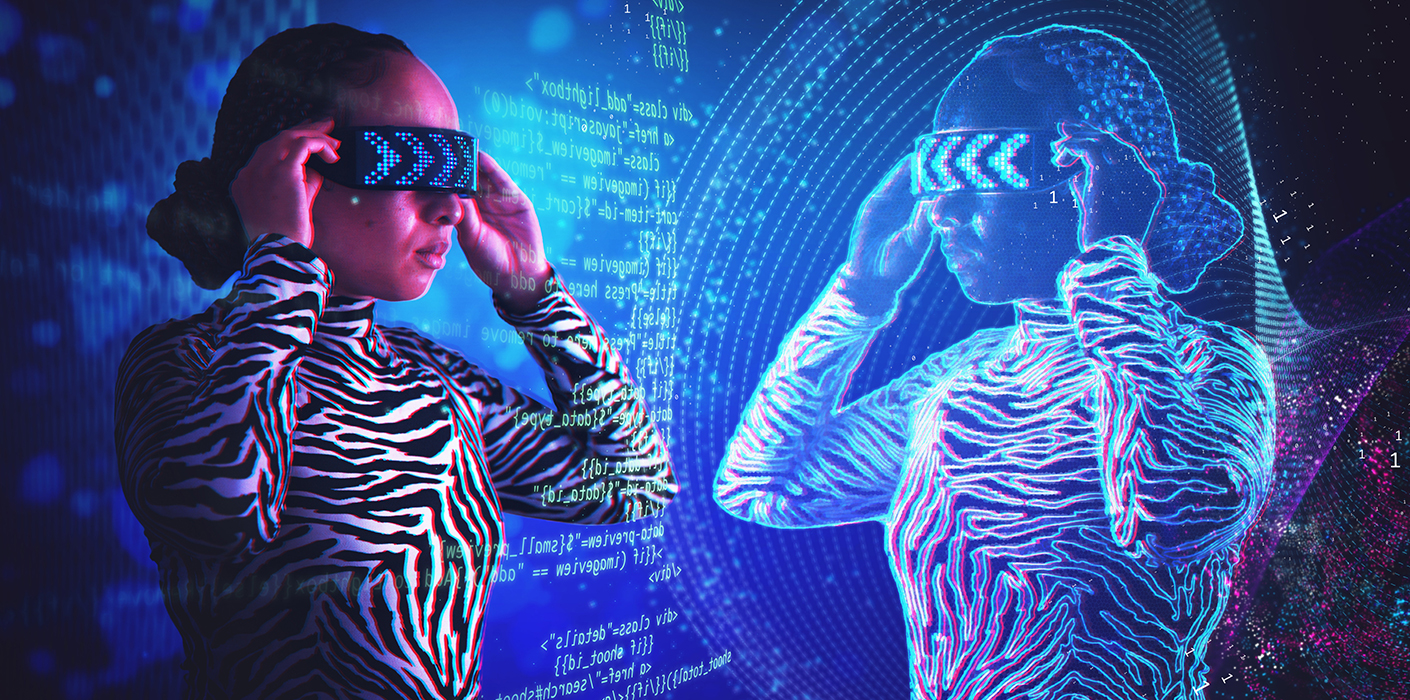
The landscape of the Indian creator economy is undergoing a profound transformation. In a market where personal connection and authenticity have long been the primary currencies, a new breed of protagonist is emerging: one that does not possess a physical heartbeat but commands a massive digital pulse. An AI that does not exist recently generated a staggering ₹1.2 lakh in a single month. This is not a speculative projection; it is the current operational reality of virtual influencers like Vrutika Patel.
As we navigate the complexities of the 2026 digital landscape, the rise of AI influencers India represents more than just a technological novelty. It serves as a catalyst for change, fundamentally altering how brands engage with audiences and how creators define "presence." In this deep dive, Business Tantra explores the unit economics, the human infrastructure, and the strategic implications of the virtual influencer revolution.
The Unit Economics of a Virtual Idol: The Vrutika Patel Case Study
The narrative of Vrutika Patel is a masterclass in synthetic storytelling. With over 1 lakh followers on Instagram, Patel presents as a photorealistic Indian lifestyle creator. Her feed is a curated tapestry of aspirational yet relatable content: a blue kurta against a backdrop of bougainvillea, quiet moments on Diu beach, and the ubiquitous comfort of a morning chai.
However, Vrutika is a 100% AI-generated persona. Despite her lack of physical existence, her monetization strategy is highly effective:
- Direct Monetization: Patel currently boasts approximately 300 paid subscribers on Instagram, each contributing ₹399 per month.
- Gross Revenue: This translates to a monthly income of roughly ₹1,19,700 from subscriptions alone.
- Scalability: Unlike human creators who are limited by time, travel, and physical fatigue, an AI influencer can produce high-quality assets at exponential growth rates with minimal marginal costs.

For individuals interested in the latest stories on market movers, this model represents a shift from "creator as a person" to "creator as a scalable IP asset."
The Reality Check: Beyond the Digital Facade
While the headline figures are impressive, a rigorous business analysis requires a "reality check." Navigating the AI influencers India ecosystem is not a pursuit of "easy money." It involves sophisticated operational overhead and significant platform dependencies.
1. Platform Commissions and Net Margins
Gross revenue is a vanity metric; net profit is the reality. Platforms like Instagram often take a 30% to 45% cut of subscription revenue. When you factor in the "Apple Tax" or Google Play fees for in-app purchases, a ₹1.2 lakh gross can quickly dwindle to a net take-home of ₹65,000 to ₹80,000. For a sustainable business model, these "data-driven insights" are crucial for long-term viability.
2. The Human Engine Behind the Algorithm
The term "AI influencer" is somewhat of a misnomer. Behind every successful synthetic persona is a team of humans: prompt engineers, digital artists, social media strategists, and community managers. These virtual stars are managed with the same precision as a corporate brand. The AI is merely the face; the strategy is purely human.
3. The Saturation Paradox
For every Vrutika earning lakhs, there are thousands of AI-generated accounts generating zero revenue. To democratize the creator space, one must move beyond the tool and focus on the narrative. The moat in this industry is no longer the ability to generate an image; it is the ability to build distribution and trust.
Global Context: From Aitana to Kyra
India is not an island in this trend. The global virtual influencer market is already mature, providing a roadmap for Indian entrepreneurs and investors.
- Aitana López (Spain): Created by the agency The Clueless, Aitana reportedly earns up to €10,000 (approx. ₹9 lakh) per month through high-end brand deals. Agencies prefer her because she is reliable, has no personal scandals, and never misses a deadline. You can read more about her impact on global marketing trends here.
- Kyra (India): As India's first prominent virtual influencer, Kyra has already collaborated with major electronics and fashion brands. While Kyra leans more into a 3D/CGI aesthetic, her success paved the way for photorealistic models like Vrutika.

Why Brands are Pivoting to Synthetic Assets
The shift toward virtual influencers is driven by a legitimate purpose: risk mitigation and creative control. In a hyper-connected electronic communications network, a human creator's past tweet or personal indiscretion can lead to immediate brand devaluing.
Data-driven insights suggest that brands value:
- Total Creative Control: Want a summer campaign in the Maldives shot in the middle of a monsoon? With AI, it’s a matter of a few prompts rather than a logistics nightmare.
- Safety and Predictability: Virtual influencers do not age, do not get involved in political controversies (unless programmed to), and are available 24/7.
- Cost Efficiency: Eliminating the costs of travel, hair and makeup, and location scouting has revitalized marketing budgets, allowing for more focus on ad spend and distribution.
The Intersection of Storytelling and Trust
The most fascinating aspect of the AI influencers India phenomenon is that consumers are increasingly aware that these personas are fake, yet they continue to engage. This suggests that in the creator economy, people pay for storytelling and emotional connection, not necessarily "real-world" existence.
The technology has democratized the ability to create beauty and lifestyle content, but it has heightened the value of "trust." As we emphasize in our about us section, providing timely and accurate updates is key to building a loyal audience. For virtual influencers, "trust" is built through consistent character arcs and transparent communication.

Future Outlook: The Virtual-First Economy
Are we ready for a world where our favorite fashion icons and financial advisors are digital constructs? The trajectory suggests an affirmative answer. We expect to see:
- Interactive AI Twins: Human creators using AI versions of themselves to handle thousands of DMs and personalized interactions.
- Hyper-local Avatars: Virtual influencers specifically designed for regional Indian markets, speaking in local dialects and participating in local festivals.
- Metaverse Integration: These characters will transition from 2D Instagram feeds to 3D interactive environments.
The rise of virtual influencers won't necessarily take jobs from human creators. Instead, it will create a new class of "Virtual Talent Managers." As the saying goes, AI won’t take your job, but a human using AI might take your audience.
Conclusion
The emergence of Vrutika Patel and her contemporaries marks a pivotal moment in India's digital evolution. While the financial figures are compelling, the true story lies in the shifting definition of "influence." We have moved from the era of "celebrity" to the era of "IP-based storytelling."
For brands and investors, the message is clear: the virtual influencer market is no longer a niche experiment; it is a revitalized frontier for growth. Success in this space requires a balance of high-tech generation and high-touch storytelling. As the AI influencers India trend continues to gain momentum, those who master the art of synthetic connection will be the ones who define the future of the creator economy.
Stay updated with the latest in business news and technological advancements by following our Video News and Highlight Stories. If you are looking to collaborate or have insights to share, feel free to contact us.