























MAHA Feels Betrayed After Supreme Court Sides With Monsanto in Landmark Roundup Ruling

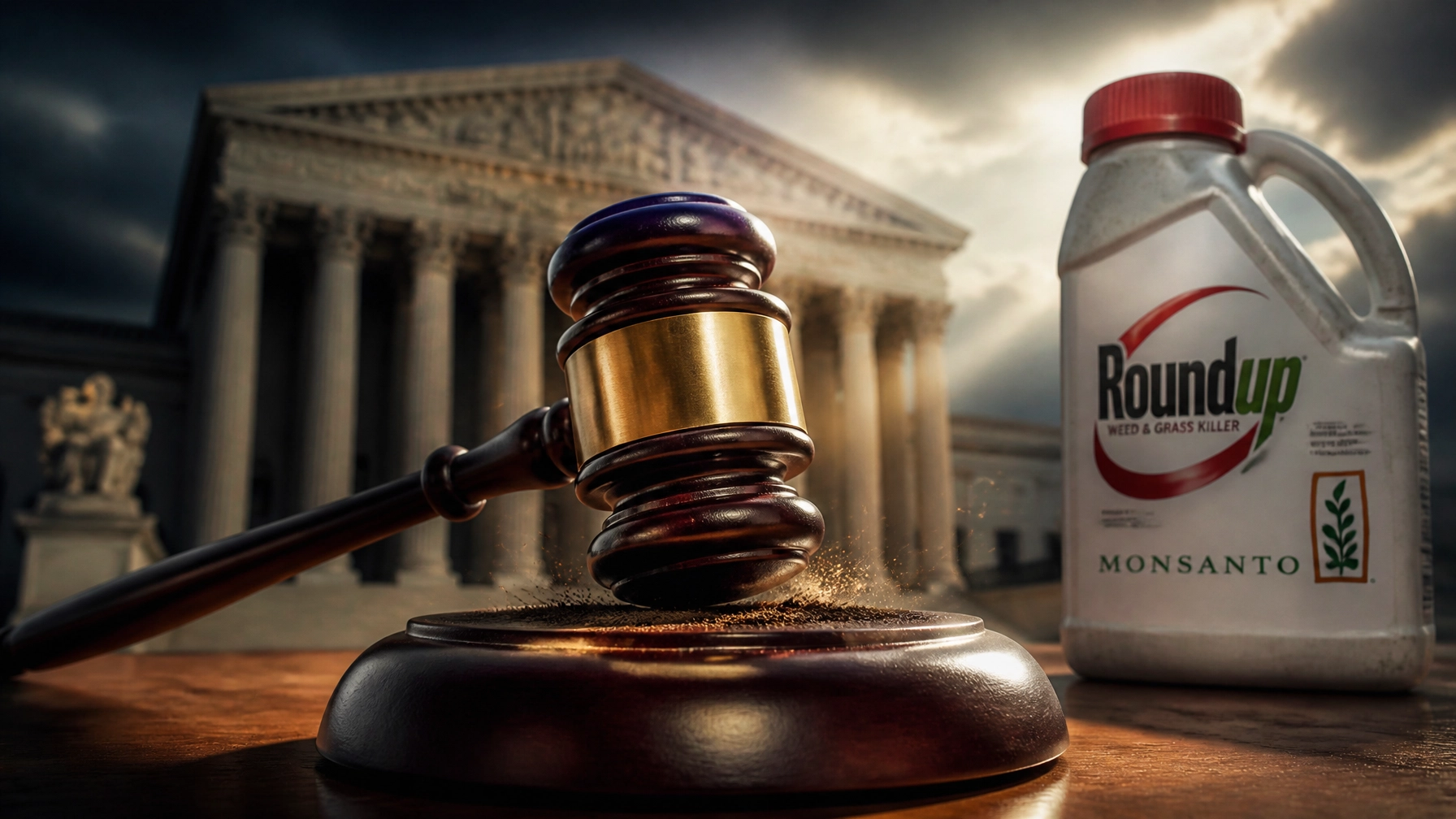
In a decision that has sent shockwaves through the global agribusiness sector and the political corridors of Washington, the United States Supreme Court delivered a decisive 7-2 ruling on June 25, 2026, in the case of Monsanto Co. v. Durnell. This landmark verdict establishes that federal law: specifically the Federal Insecticide, Fungicide, and Rodenticide Act (FIFRA): effectively preempts state-level "failure-to-warn" claims regarding the safety of Roundup, the world’s most ubiquitous glyphosate-based herbicide.
For the stock market today, the implications are profound, as the ruling acts as a massive legal shield for Bayer AG, the parent company of Monsanto, potentially neutralizing thousands of pending lawsuits. However, beyond the balance sheets, a political storm is brewing. Activists within the "Make America Healthy Again" (MAHA) movement, who once saw an ally in the current administration, now express a profound sense of betrayal. As this legal precedent solidifies, its ripples are expected to be felt far beyond American soil, impacting the regulatory landscape and the economy of India.
The Kavanaugh Opinion: A Victory for Federal Uniformity
Writing for the majority, Justice Brett Kavanaugh articulated a robust defense of federal regulatory supremacy. Joined by an eclectic mix of conservative and liberal justices: including Chief Justice Roberts and Justices Thomas, Alito, Sotomayor, Kagan, and Barrett: the Court concluded that because the Environmental Protection Agency (EPA) has consistently approved Roundup’s label without a cancer warning, individual states cannot mandate one.
Justice Kavanaugh’s opinion emphasizes that FIFRA was designed to create a "uniformity" in pesticide labeling. If every state jury could decide what warnings were necessary, it would create a "patchwork of conflicting requirements" that would be impossible for manufacturers to navigate. This "legitimate purpose" of federal oversight ensures that data-driven insights from the EPA take precedence over localized tort claims.
For those tracking the stock market today, this clarity is a catalyst for change. Bayer’s shares, which have been weighed down for years by the "litigation overhang" of Roundup, saw a significant revitalized interest from institutional investors. The ruling effectively shuts the door on the primary legal theory: failure to warn: that has resulted in billions of dollars in jury awards against the company in the past decade.

MAHA: The Political Fallout of "The Betrayal"
While Wall Street cheered, the MAHA movement: a coalition of health advocates, organic farmers, and environmentalists: reacted with vitriol. To many in this group, the ruling is seen as a direct contradiction of President Trump's earlier rhetoric regarding public health and the "democratization" of food safety information.
The sentiment of betrayal was exacerbated by a February 2026 Executive Order that utilized the Defense Production Act to support the domestic production of glyphosate, citing national food security. MAHA leaders argue that the administration and the Court have prioritized corporate profitability over the health of the American public. This ideological schism could have significant electoral consequences, as a once-loyal voting bloc begins to distance itself from the administration, viewing the legal shielding of Monsanto as a "sold out" moment to big-tier agribusiness.
Global Repercussions: The Ripple Effect on the Economy of India
While the Supreme Court’s jurisdiction is limited to the United States, its influence is undoubtedly global. India, a major hub for both the consumption and manufacturing of agrochemicals, watches these developments with keen interest. The economy of India is heavily reliant on agricultural productivity, where glyphosate plays a critical role in no-till farming and weed management.
1. Strengthening the Hand of Multinational Agrochemicals
Indian regulators often look to the U.S. EPA and high-court decisions for technical and legal precedents. This ruling provides Bayer India and other multinational giants with significant leverage to resist stricter labeling requirements or bans proposed by local advocacy groups. It reinforces the narrative that glyphosate, when used according to scientifically vetted labels, is safe for public use.
2. Boost for Indian Pesticide Exports
India is one of the world's largest exporters of generic pesticides. Companies like UPL and PI Industries, which form a significant part of the stock market today in the chemical sector, may see this as a stabilizing force for global demand. If the world’s most litigious market: the U.S.: has effectively capped the liability for glyphosate, it lowers the perceived risk for Indian exporters who supply the American market with technical-grade ingredients.

3. Regulatory Stability vs. Public Health Tensions
Just as in the U.S., there is a growing movement in India concerned about chemical residues in the food supply. The SCOTUS ruling might inadvertently stifle local legal challenges, but it could also embolden Indian "MAHA-style" grassroots movements to seek legislative remedies rather than judicial ones. This tension between industrial exponential growth and public health will be a defining feature of the Indian economic landscape over the next decade.
The Financial Perspective: Stock Market Today and Agribusiness Trends
From an investment standpoint, the Monsanto Co. v. Durnell decision is a transformative event. It transitions the agribusiness sector from a period of high legal uncertainty into one of relative stability.
- Bayer (BAYRY): Expected to see a long-term rerating as the threat of "existential liability" recedes.
- Indian Chemical Stocks: Investors looking at the stock market today should note that Indian agrochemical firms may benefit from the "standardization" of global safety views, reducing the risk of sudden, localized bans that disrupt supply chains.
- Data-Driven Agriculture: The ruling underscores the importance of "electronic communications networks" and digital transparency in how pesticide risks are communicated to farmers, moving away from purely label-based warnings toward more comprehensive digital safety portals.

Technical Precision in a Polarized Environment
The Court’s focus on the "uniformity clause" of FIFRA serves as a precise legal instrument to maintain interstate commerce. For business professionals, this is a lesson in the power of federal preemption. When a federal agency like the EPA issues a "safe for use" determination, it creates a federal "requirement" that displaces varying state laws.
This legalistic precision is what shielded the company. The dissenters, Justices Jackson and Gorsuch, argued that states should retain the right to protect their citizens with higher warning standards, but their view remained a minority. For the broader industry, this establishes that following the federal rulebook is the ultimate defense against mass tort litigation.
Conclusion: A New Paradigm for Agribusiness
The Supreme Court’s 7-2 ruling is more than just a legal win for a single corporation; it is a definitive statement on the hierarchy of regulatory authority in the 21st century. By siding with Monsanto, the Court has provided the agribusiness industry with a much-needed period of calm, revitalizing investor confidence in the stock market today.
However, the political cost remains high. The "MAHA" sense of betrayal signifies a deep-seated distrust that no court ruling can easily resolve. For the economy of India, the decision serves as both a blueprint for regulatory stability and a warning of the persistent tension between industrial necessity and public health advocacy. As we move forward, the "mission" for companies in this space will be to utilize their newly secured legal protections not as a shield for complacency, but as a foundation for developing even safer, more transparent agricultural solutions for a hungry planet.
For more in-depth analysis on how global legal shifts impact the Indian corporate landscape, visit our Business Section and stay updated with our Latest Stories.