


























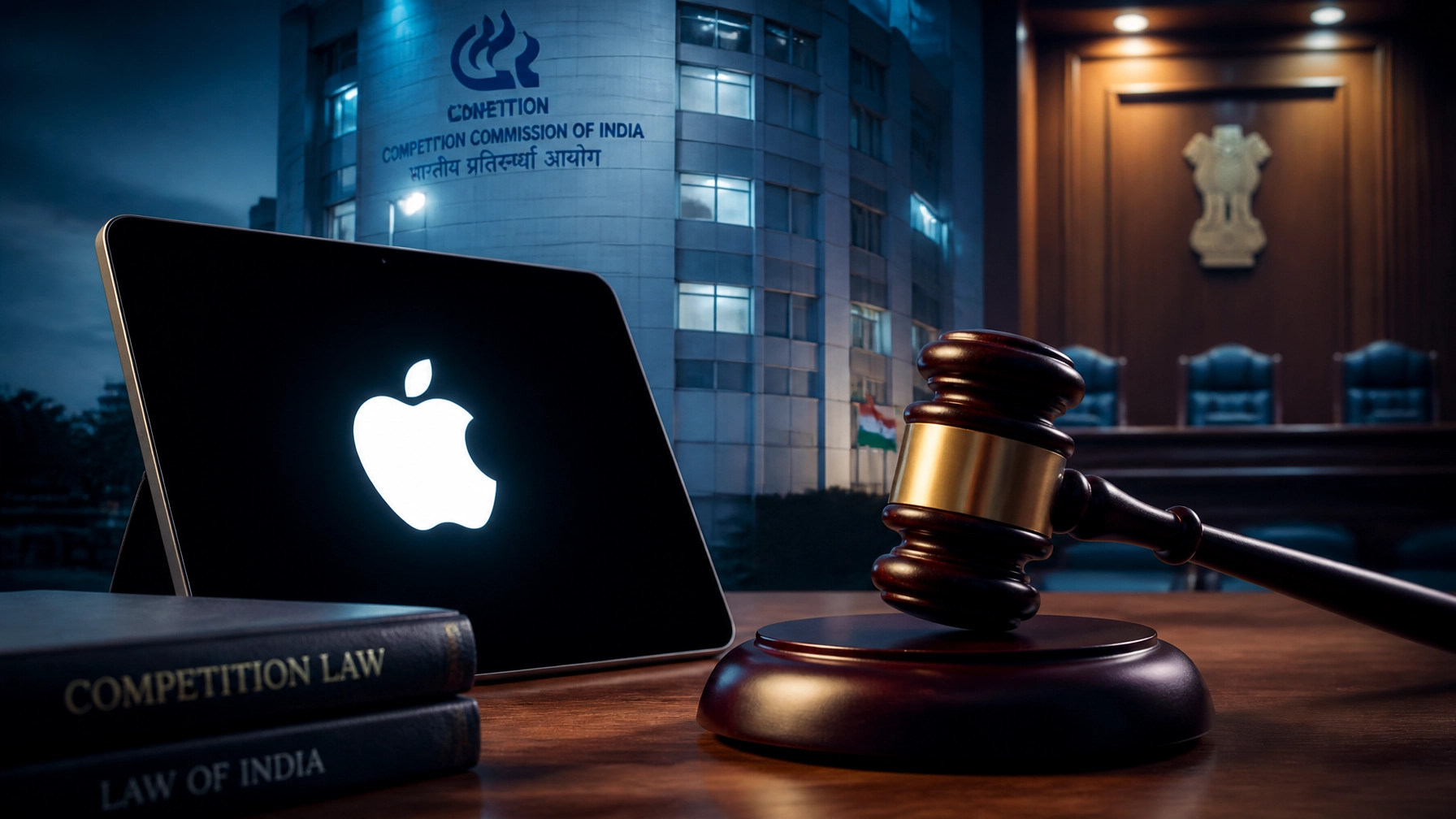
Apple Accuses India’s CCI of ‘Copy-Pasting’ Rivals’ Claims in Antitrust Probe : Seeks to Quash Findings

In a dramatic escalation of its legal battle in South Asia, tech giant Apple has formally accused the Competition Commission of India (CCI) of compromising the integrity of its ongoing antitrust investigation. In a comprehensive filing submitted on June 25, 2026, Apple alleged that the regulator’s investigative wing essentially "copy-pasted" allegations from rival firms, including Match Group, PhonePe, and Paytm, rather than conducting a rigorous, independent analysis.
This development is a critical flashpoint in the broader fintech news India landscape, where the gatekeeping power of mobile platforms remains under intense regulatory scrutiny. Apple is now moving to have the investigation’s findings quashed, arguing that the process has been marred by procedural lapses and a lack of due process.
1. The "Copy-Paste" Allegation: A Breach of Investigative Standards?
The core of Apple's June 25 filing centers on the conduct of the CCI’s Director General (DG), the investigative arm responsible for probing market dominance. Apple claims that the DG’s 2024 report, which found the company guilty of anti-competitive practices, was not the result of an original inquiry.
According to the filing, large sections of the report appear to be verbatim reproductions of claims made by the original complainants: most notably Match Group (the parent company of Tinder) and major players in the startup news India ecosystem like the Alliance of Digital India Foundation (ADIF).
Apple’s legal team reportedly presented tables comparing the DG’s findings with the submissions from rivals, suggesting that the regulator failed to "independently verify or critically assess" the narrative pushed by its competitors. This accusation strikes at the very heart of the CCI’s credibility as a neutral arbiter in the Indian business environment.

2. Procedural Lapses and the Denial of Oral Evidence
Beyond the "copy-paste" claims, Apple has raised serious concerns regarding the procedural fairness of the three-year-long probe. A primary grievance is that the CCI allegedly failed to provide Apple with a single opportunity to record oral evidence or present witness statements during the investigative phase.
In the world of high-stakes corporate law, the right to a "legitimate purpose" and a fair hearing is paramount. Apple argues that by bypassing these steps, the CCI has created a "procedurally flawed" record that cannot serve as a valid basis for penal action. The tech giant is now urging the commission to set aside the 2024 findings entirely before the next scheduled hearing on July 21, 2026.
3. The App Store Commission Dispute: The Catalyst for Conflict
The underlying issue of this legal saga is the mandatory use of Apple's in-app payment system. Under current rules, Apple charges a commission: ranging from 15% to 30%: on the sale of digital goods and services within its ecosystem. For the burgeoning startup community in India, these fees are often viewed as a "tax" on innovation.
Key Points of the Dispute:
- Mandatory Billing: Apple requires developers to use its proprietary billing system, preventing the use of third-party payment gateways like those offered by PhonePe or Paytm.
- Anti-Steering Rules: Apple limits developers' ability to inform users about cheaper payment options available outside the App Store.
- Market Dominance: The CCI preliminarily concluded that the App Store is an "unavoidable trading partner" for iOS developers, giving Apple "abusive" leverage over the market.
Apple maintains that its commissions are a fair return for the massive investment it makes in the security, global reach, and technical infrastructure of the App Store.

4. Impact on India’s Digital Economy and Investment
One of the most potent arguments in Apple's filing is the warning regarding the "mission" of India's digital transformation. Apple has cautioned that "remedial measures" that are overly aggressive or based on flawed investigations could serve as a deterrent to foreign direct investment (FDI).
As India strives to democratize access to digital services and foster a global-tier fintech news India hub, the outcome of this case will set a significant precedent. If the CCI imposes a massive fine: potentially calculated based on global turnover under India’s revised competition laws: it could revitalize the debate over how "Big Tech" is regulated in emerging markets.
Apple has previously suggested that such fines could reach up to $38 billion, a figure that would represent a "catalyst for change" in how global corporations view the Indian regulatory risk landscape.
5. The Rivals: PhonePe, Paytm, and Match Group
The involvement of domestic giants like PhonePe and Paytm adds a layer of nationalist economic sentiment to the case. These companies, which have revolutionized the startup news India sector, argue that Apple’s restrictive policies hinder the growth of an open and competitive digital payments ecosystem.
The Alliance of Digital India Foundation (ADIF), which represents hundreds of Indian startups, has been a vocal critic of Apple’s "walled garden" approach. They argue that for India’s digital economy to reach its full potential, local developers must have the freedom to choose their service providers and retain a larger share of their revenue.

6. Global Precedents: The Digital Markets Act (DMA) Influence
The CCI’s investigation does not exist in a vacuum. It is heavily influenced by global trends, most notably the European Union’s Digital Markets Act (DMA). Apple’s filing specifically points out that the CCI investigators "blindly replicated" graphics and reasoning from EU rulings, suggesting a lack of consideration for the unique dynamics of the Indian market.
While the EU has forced Apple to allow alternative app stores and third-party billing, Apple argues that India should not simply import these "data-driven insights" without a thorough, local, and independent investigation. The tension between global regulatory alignment and domestic investigative sovereignty will likely be a major theme at the July 21 hearing.
7. What to Expect from the July 21 Hearing
As we approach the July 21 deadline, the stakes could not be higher. The CCI must now decide whether to address Apple's procedural objections or move straight to the penalty phase.
Possible Outcomes:
- Case Quashed: The CCI agrees with Apple that the investigation was procedurally flawed and orders a fresh probe (unlikely but possible).
- Modification of Findings: The CCI acknowledges the "copy-paste" concerns but maintains the core conclusion of market abuse, perhaps adjusting the scope of the findings.
- Final Order and Penalty: The CCI dismisses Apple’s objections and proceeds to issue a final order, including a significant financial penalty and a mandate to open up the App Store.
For those following fintech news India, this case is the definitive barometer for the future of platform regulation.
Conclusion
The confrontation between Apple and the CCI has evolved from a technical dispute over commissions into a fundamental challenge to the integrity of India’s antitrust framework. By accusing the regulator of "copy-pasting" rivals' claims, Apple is making a high-stakes gamble to invalidate years of investigative work.
Whether the CCI has truly "parroted" the claims of Match Group, PhonePe, and Paytm, or if Apple is simply utilizing every legalistic maneuver to delay the inevitable, will be clarified in the coming months. For now, the Indian startup news India ecosystem remains on edge, waiting to see if one of the world’s most powerful companies will be forced to change its "value proposition" in one of its most important growth markets.
At Business Tantra, we will continue to monitor this landmark case as it unfolds. Stay tuned for our deep-dive analysis following the July 21 hearing.
External Resources for Further Reading: