



























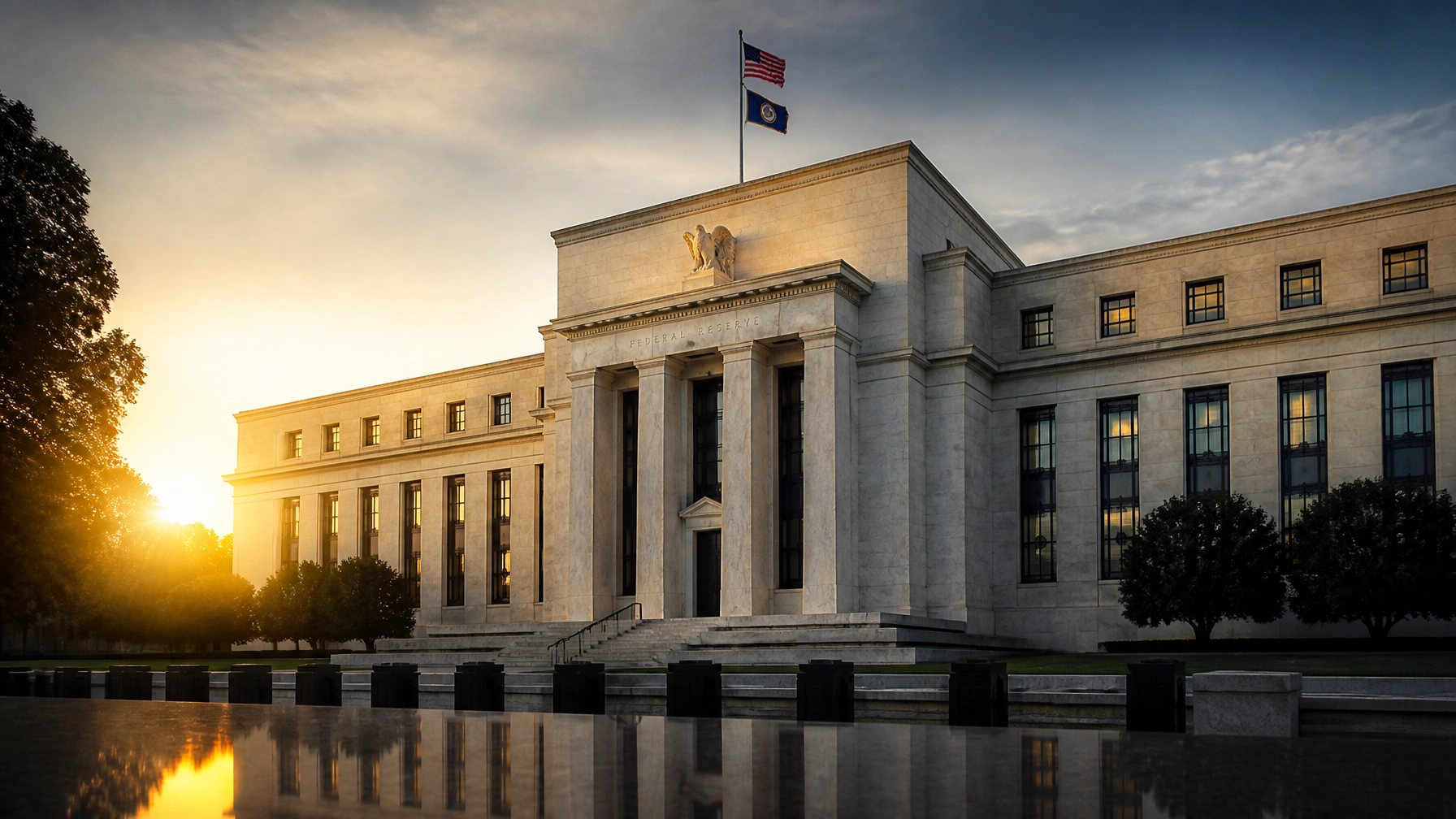
Stephen Miran exits the Fed. How he set the stage for Kevin Warsh.

The corridors of power at the Marriner S. Eccles Federal Reserve Board Building are experiencing a seismic shift that promises to redefine the trajectory of American monetary policy. The recent announcement of the Stephen Miran Fed exit is not merely a routine administrative turnover; it is a calculated, strategic maneuvers that signals a profound transformation in the central bank’s operational philosophy. By stepping aside, Miran has effectively cleared the path for Kevin Warsh to take the helm, setting the stage for what many analysts anticipate will be a "revitalized" approach to inflation management and fiscal discipline.
As the financial world dissects this transition, it becomes clear that this is more than just a change in personnel. It is the beginning of a new era: one that seeks to "democratize" economic clarity while steering the Federal Reserve back toward its traditional foundations. For investors and business leaders tracking the latest stories on global markets, the implications of this succession are both far-reaching and transformative.
The Strategic Resignation: More Than a Standard Departure
Stephen Miran’s decision to submit his resignation is a masterclass in institutional coordination. While his statutory term was nearing its conclusion, the timing of his departure is intrinsically linked to the confirmation of Kevin Warsh as the incoming Chair. Miran’s tenure, though relatively brief, was marked by a steadfast commitment to data-driven insights and a rigorous critique of the Fed's expanding footprint in non-core social and cultural issues.
By choosing to exit "upon or shortly before" Warsh is sworn in, Miran ensures a seamless handoff that avoids the friction of overlapping mandates. This transition is a catalyst for change, providing the incoming leadership with a clean slate to implement a more "narrow mandate." This philosophy, which Miran championed during his public appearances, advocates for a central bank that focuses exclusively on price stability and maximum employment, eschewing the "mission creep" that has characterized recent years.

The Warsh Doctrine: A Vision for the "Narrow Mandate"
Kevin Warsh is no stranger to the Federal Reserve. A former governor himself, Warsh brings a sophisticated understanding of the "electronic communications network" that governs modern finance. His return as Chair signals a pivot toward what Miran described as a "return to fundamentals."
The core tenets of the Warsh doctrine: supported and paved by the Stephen Miran Fed exit: include:
- Balance Sheet Normalization: A revitalized commitment to shrinking the Fed’s massive balance sheet, reducing its interventionist role in the private credit markets.
- Focus on Core Mandates: Steering the institution away from political debates and "hot-button" cultural issues that have, in the view of many critics, compromised the Fed's perceived neutrality.
- Fiscal-Monetary Synergy: Establishing a more coherent dialogue with the Treasury to ensure that monetary policy is not working at cross-purposes with national fiscal objectives.
This vision represents an "exponential growth" in the push for institutional independence, paradoxically occurring at a time when the relationship between the Fed and the executive branch is under intense scrutiny.
The "Shadow Fed" No More: Establishing Legitimate Purpose
Critics of the Federal Reserve have long argued that the institution has acted as a "shadow" legislature, exerting influence over areas beyond its legal jurisdiction. The transition from Miran to Warsh is framed as a restoration of "legitimate purpose." By narrowing the focus, the leadership seeks to rebuild the public’s trust and ensure that the Fed’s actions are transparent and predictable.

Miran’s vocal support for Warsh highlights a shared belief that the Fed should be a neutral arbiter of value rather than a social engineer. This perspective is particularly relevant for those following Economics updates in India and abroad, as the policies set in Washington D.C. inevitably ripple through global trade corridors. The "Stephen Miran Fed exit" serves as the final act of a tenure dedicated to preparing the ground for this ideological shift.
Market Implications: Navigating the New Monetary Landscape
For the business community, the shift in leadership introduces both opportunities and challenges. A Warsh-led Fed is likely to be more hawkish on balance sheet reduction, which could lead to tighter liquidity in certain sectors. However, the promise of a more predictable, less "activist" central bank provides a level of certainty that has been lacking in recent years.
The Stephen Miran Fed exit suggests that the transition team is prioritized on stability. Business Tantra’s analysis of market performance indicates that investors value this "rule-based" approach over discretionary interventions. By anchoring expectations in a clear, narrow mandate, Warsh could provide the foundation for sustainable long-term growth, free from the volatility often sparked by unexpected policy pivots.

The Independence Debate: A Journalistic Perspective
A central question surrounding this transition is the degree of independence the Fed will maintain. Miran has been explicit in stating that the President "has never ever asked me to do anything on monetary policy." This statement is a crucial piece of the narrative, intended to insulate Warsh from accusations of being a political appointee tasked with doing the executive's bidding.
Maintaining professional distance while ensuring policy alignment is a delicate balancing act. Warsh's deep connections to both the financial sector and the administrative apparatus position him as a unique figure capable of navigating these waters. The "Stephen Miran Fed exit" ensures that the transition is viewed as an orderly progression of ideas rather than a disruptive coup.
Preparing for the Handover: The FOMC Dynamics
The logistics of the handover remain a point of interest for seasoned market observers. As Jerome Powell’s term reaches its conclusion, the Federal Open Market Committee (FOMC) will need to manage the transition of leadership without creating a vacuum of authority. Miran’s exit from his governor seat specifically creates the vacancy that Warsh will fill, effectively consolidating the incoming Chair’s influence from day one.
This strategic alignment is designed to prevent the "lame duck" period that often hampers organizational effectiveness. It ensures that the "Warsh Era" can begin with a clear mandate and a unified Board, ready to tackle the complexities of a $100 trillion global economy.

Conclusion: A New Chapter in Economic Governance
The Stephen Miran Fed exit is far more than a resignation; it is the closing of a chapter and the simultaneous opening of another. By aligning his departure with the arrival of Kevin Warsh, Miran has demonstrated a commitment to the long-term health of the Federal Reserve over individual tenure. This transition marks a definitive move toward a more disciplined, mandate-focused central bank that seeks to provide the "data-driven insights" necessary for a complex modern economy.
As Kevin Warsh prepares to take his seat, the financial world watches with a mixture of optimism and analytical scrutiny. The stage is set for a revitalized Fed: one that is leaner, more focused, and perhaps more resilient to the political winds of the day. For those interested in the future of the Indian and global economy, staying updated through platforms like Business Tantra is essential to navigating this transformative period.
The legacy of this shift will be measured not by the names on the nameplates, but by the stability and prosperity it fosters in the years to come. The "Stephen Miran Fed exit" may well be remembered as the quiet catalyst that returned the world's most powerful central bank to its core mission. 📈

admin


Related Post