
























Anglo American to Sell Australian Coal Mines for up to $3.9 Billion

In a move that signifies a tectonic shift in the global commodities landscape, Anglo American has officially reached an agreement to divest its portfolio of steelmaking coal assets in Australia’s Bowen Basin. This high-stakes transaction, valued at approximately $3.9 billion, marks a definitive pivot for the London-listed mining giant as it moves toward a "copper-first" strategy. For those following financial news india, this development carries profound implications for the domestic steel industry and India's broader energy security strategy.
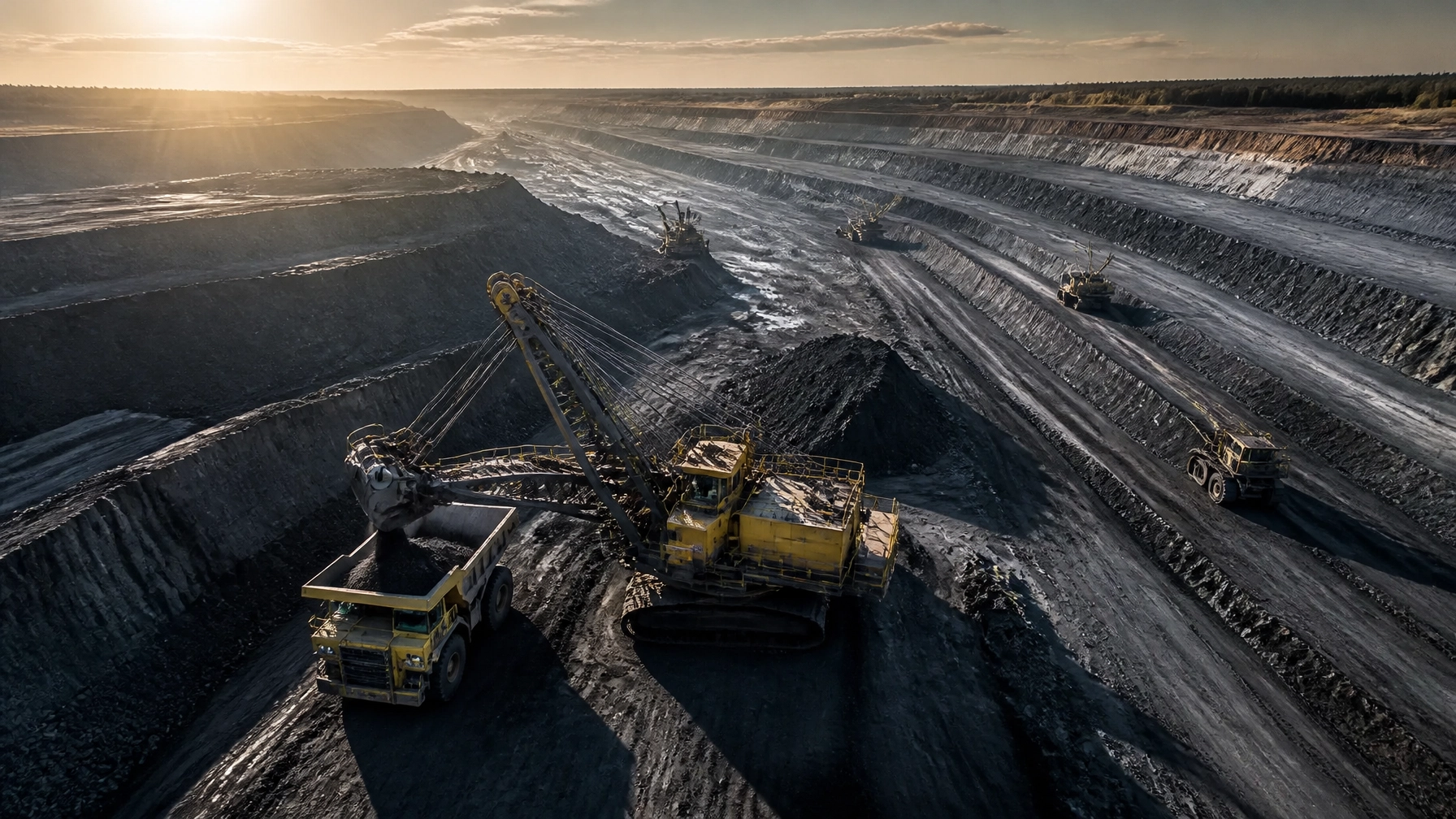
The deal involves the sale of Anglo American’s remaining coking coal mines to Dhilmar, a privately held Indonesian group. This divestment is not merely an operational exit but a strategic realignment designed to simplify the company’s portfolio and fortify its balance sheet. As global markets increasingly prioritize minerals critical to the energy transition, the liquidation of coal assets serves as a "catalyst for change," enabling mining majors to revitalize their focus on electrification metals like copper.
1. The Strategic Pivot: Why Anglo American is Exiting Coal
The decision by Anglo American to distance itself from steelmaking coal is rooted in a long-term vision of a decarbonized industrial future. By divesting these assets, the company is positioning itself to capture the exponential growth anticipated in the copper and critical minerals sectors. Copper, often referred to as the "metal of electrification," is indispensable for the manufacturing of electric vehicles (EVs), renewable energy grids, and advanced electronic communications networks.
For Anglo American, this exit simplifies a complex organizational structure that has often been viewed as undervalued by the market. By shedding volatile coal assets, the company aims to "democratize" its value proposition for shareholders who are increasingly ESG-conscious. This shift mirrors a broader trend among global mining conglomerates where the mission is now centered on the "green transition" rather than traditional fossil fuel extraction.

2. Transaction Dynamics: The $3.9 Billion Valuation Breakdown
The financial structure of the deal is as sophisticated as the assets themselves. While the headline figure of $3.9 billion has captured the attention of analysts, the composition of this payment is nuanced:
- Upfront Cash Injection: The deal includes an immediate cash payment of $2.3 billion, providing Anglo American with immediate liquidity to reduce its debt obligations.
- Contingent "Earn-Out" Payments: An additional $1.58 billion is structured as contingent payments, dependent on future steelmaking coal prices. This mechanism ensures that Anglo American retains a "legitimate purpose" in the upside potential of the market while transferring operational risk to the buyer.
This tiered payment structure reflects the current cautious sentiment in global finance. Buyers are wary of overpaying at the peak of a commodity cycle, while sellers seek to maximize value through performance-based metrics. This risk-sharing model is becoming a standard in high-value mining M&A, ensuring that data-driven insights translate into equitable outcomes for both parties.
3. Impact on Indian Steel Giants: Tata Steel, JSW, and SAIL
When analyzing this story through the lens of financial news india, the most critical concern is the supply of coking coal. India remains one of the world's largest importers of metallurgical coal, a primary ingredient in the blast-furnace route for steel production. Major Indian players like Tata Steel, JSW Steel, and the Steel Authority of India Limited (SAIL) rely heavily on Australian imports to feed their domestic furnaces.
The entry of an Indonesian private group like Dhilmar into the Australian coal sector introduces a new variable for Indian procurement managers. Historically, global mining majors have provided a level of predictability in supply and pricing. If the new owners adopt a more aggressive pricing strategy or pivot their focus toward Southeast Asian markets, Indian mills could face increased input-cost volatility. According to analysts at Business Tantra, any upward pressure on coking coal prices directly impacts the margins of Indian industrial giants, potentially leading to inflationary pressures in the construction and automotive sectors.

4. The Global Energy Transition: A Catalyst for Change in Indian Markets
Anglo American’s reallocation of capital into copper aligns seamlessly with India’s own ambitious climate goals. As the nation pushes for greater EV adoption: supported by initiatives like India's new battery swap scheme: the global supply of copper becomes a strategic concern.
By focusing on "energy transition" minerals, Anglo American is indirectly supporting the global supply chains that India will rely upon for its infrastructure modernization. The "revitalized" focus on copper by global miners ensures that as India’s demand for electricity grid components and renewable installations grows, the global mining industry is ready to meet that demand. This transition from "old economy" minerals to "new economy" metals is a central theme in the Modi wave of industrial reform, where self-reliance (Atmanirbhar Bharat) meets global supply chain integration.
5. Macro-Economic Implications: India’s Import Bill and Inflation
The sale of these mines at a multi-billion dollar valuation underscores the continued relevance of coal, despite the overarching push for renewables. For the Indian economy, coal imports represent a significant portion of the current account deficit. High transaction values in the mining sector often signal expectations of sustained high commodity prices.
If coking coal prices remain elevated due to consolidation or increased demand from other emerging economies, India’s import bill could swell. This has a cascading effect on the national economy:
- Current Account Pressure: Increased outflows of foreign exchange to pay for essential fuel and raw materials.
- Industrial Inflation: Higher steel prices lead to increased costs for infrastructure projects, housing, and consumer durables.
- Monetary Policy: Persistent industrial inflation may influence the Reserve Bank of India’s (RBI) stance on interest rates.
Investors monitoring financial news india must keep a close watch on the operational shifts following this deal. A more efficient, private-sector-led operation at the Bowen Basin could potentially increase supply, providing a much-needed reprieve for Indian importers.

6. The Rise of Asian Private Capital in Global Mining
The acquisition of these assets by the Indonesian group Dhilmar signifies the growing dominance of Asian capital in the global mining sector. Previously, Western "supermajors" held a near-monopoly on high-quality Australian mining assets. However, the tide is turning as companies like Dhilmar and other Asian conglomerates utilize their deep pockets and regional expertise to acquire "non-core" assets from Western firms.
This shift has a "transformative solution" aspect for the mining industry. Asian buyers often have a longer-term investment horizon and a different risk appetite compared to their public-market-driven Western counterparts. For the Indian mining and metals sector, this could mean more opportunities for cross-border collaborations or even strategic acquisitions by Indian firms looking to secure their own supply chains abroad.

Conclusion
The sale of Anglo American’s Australian coal mines for $3.9 billion is far more than a simple transaction; it is a profound statement on the future of the global economy. By divesting from coking coal, Anglo American is doubling down on a future powered by copper and clean energy, leaving the "black gold" to specialized private operators.
For the Indian business ecosystem, this deal serves as a dual-edged sword. While it highlights the risks of input-cost volatility and the necessity of securing reliable trade partnerships, it also validates the global shift toward the minerals that will power India’s own technological and environmental future. As we observe these shifts in the global supply chain, it is clear that the "mission" of the mining industry has fundamentally changed. Whether you are an investor in Mumbai or a steel manufacturer in Jamshedpur, the ripples of this $3.9 billion deal will be felt across the balance sheets of corporate India for years to come.
Stay tuned to Business Tantra for the latest updates on global market movers and their impact on the Indian economy. For more insights into the evolving energy landscape, explore our deep dive into India's industrial pivots.