


























How India’s Cooking Fuel Shortage is Driving Up California’s Gas Prices

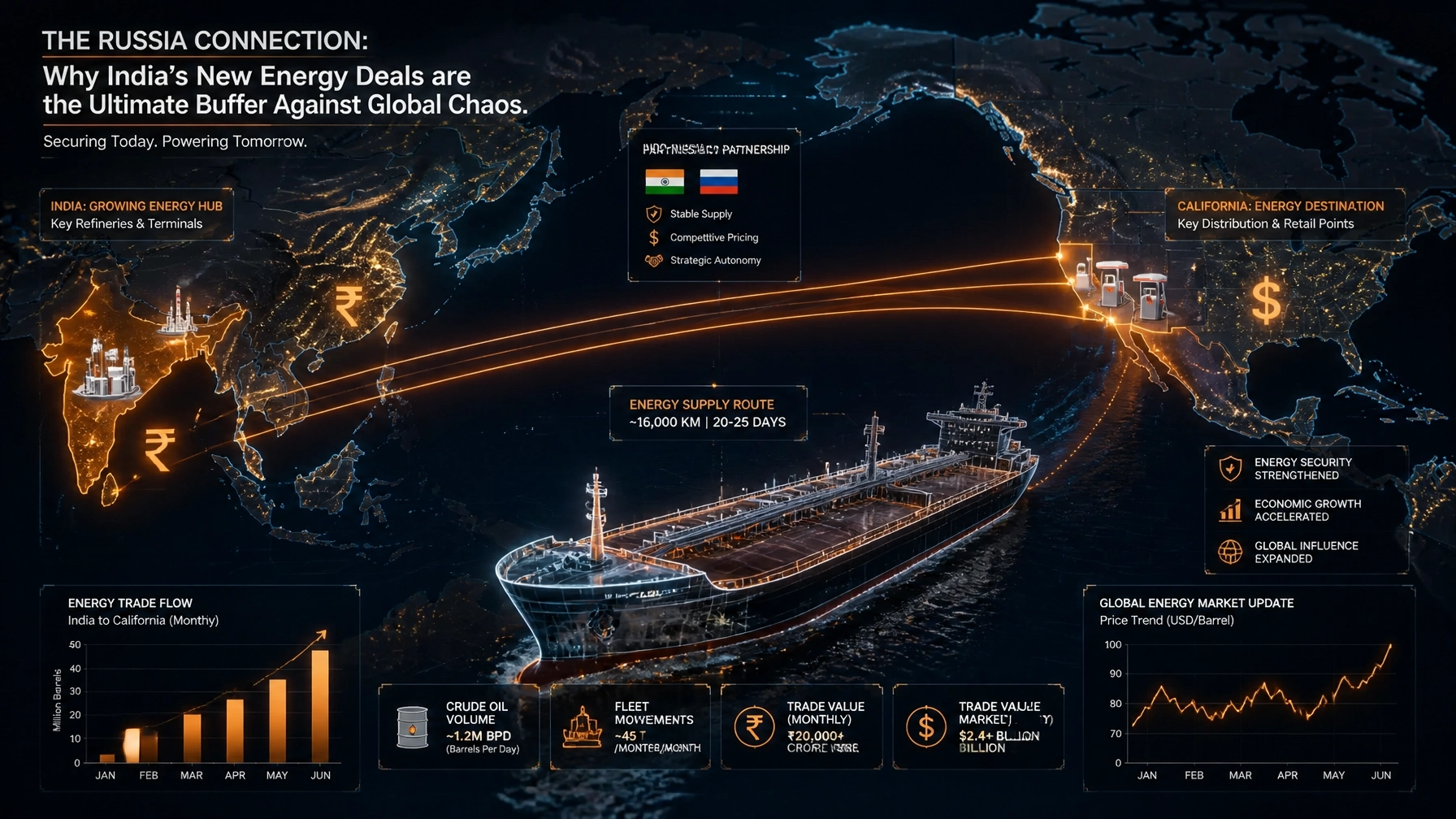
In the hyper-connected architecture of the 2026 global economy, a flickering blue flame in a kitchen in Mumbai can directly influence the digital display at a fuel pump in Santa Monica. This phenomenon, often referred to as the "butterfly effect" of energy markets, has become a central focus for analysts tracking Indian business updates. While California and India are separated by nearly 8,000 miles, their energy destinies have become increasingly intertwined through a complex web of refinery yields, maritime logistics, and shifting domestic priorities.
For the California business community, understanding this link is no longer a matter of academic interest but a strategic necessity. As gas prices across the Golden State surge past the $6.50 mark, the primary catalyst isn't just local taxes or environmental regulations: it is a massive supply-side recalibration happening across the Pacific.
1. The Strategic Isolation of California’s Fuel Market
California operates as a "fuel island." Due to its unique geographic position and stringent environmental standards: specifically its requirement for a specialized, low-emission gasoline blend: it cannot easily pull supply from the rest of the United States. According to the U.S. Energy Information Administration (EIA), California’s refining capacity has faced a steady decline, leaving the state reliant on seaborne imports for nearly 20% of its finished gasoline.
This reliance has shifted the state's gaze toward the "Pacific Basin" market, where India, South Korea, and Singapore serve as the primary suppliers. When these Asian hubs experience volatility, the impact on California business logistics and consumer spending is almost immediate. The state's isolation means that any disruption in the "swing" refineries of Asia forces California to outbid global competitors to secure necessary cargoes.

2. India’s Domestic Mission: The Cooking Fuel Priority
Recent Indian business updates have highlighted an escalating shortage of Liquefied Petroleum Gas (LPG), the primary fuel used for domestic cooking across the subcontinent. The Indian government, viewing energy security as a non-negotiable social mandate, has intensified its efforts to prioritize LPG production and procurement.
India is one of the world's largest consumers of LPG, and its domestic "Ujjwala" scheme has brought clean cooking fuel to millions of households. When global supply chains tighten: as they have during the ongoing 2026 West Asia crisis: the Indian Ministry of Petroleum and Natural Gas (MoPNG) frequently directs domestic refineries to maximize LPG output to prevent a domestic crisis. This shift in operational focus is the "catalyst for change" that ripples through the global gasoline market.
3. The Economics of the "Yield Shift"
To understand the price hike, one must look at the technical operations of a modern refinery. Crude oil is not just turned into "gasoline"; it is refined into a "basket" of products including LPG, naphtha, jet fuel, and diesel. Refiners have the flexibility to tweak their "yield" based on market demand and profitability.
- Prioritizing LPG: When India faces a cooking fuel shortage, refineries in India and partner hubs in Singapore shift their "cracking" processes to maximize light ends like LPG.
- Sacrificing Gasoline: Every barrel of crude that is optimized for higher LPG production often results in a lower yield of high-octane gasoline components.
- Tightening Surplus: India, which usually exports a significant surplus of refined products, begins to consume more of its own production or exports less gasoline to prioritize the domestic cooking fuel supply.
This reduction in available gasoline surplus in the Asian market means fewer tankers are dispatched to the U.S. West Coast. As supply drops, the "crack spread": the profit margin refiners earn for turning crude into gasoline: spikes, leading to higher California gas prices.

4. The Geopolitical Catalyst: The Iran-Israel Conflict
The broader context of this energy squeeze is the ongoing conflict in West Asia. Since the escalation of the Iran war, global oil prices have seen unprecedented volatility, with the Rupee reaching record lows of 96.20 against the US Dollar. This currency depreciation has made crude imports more expensive for Indian refiners, further incentivizing them to prioritize high-demand domestic products like cooking fuel over international gasoline exports.
Furthermore, the conflict has revitalized concerns over shipping lanes. Insurance premiums for tankers traversing the Indian Ocean have surged, adding a "war risk" premium to every gallon of gasoline that eventually makes its way to a California port. For a comprehensive look at how these market movers are shifting, visit our Latest Stories section.
5. Democratizing Energy Data: Impact on California Business
For the California business owner, these global shifts manifest as a direct hit to the bottom line. From "last-mile" delivery services to the broader logistics industry, the increase in fuel costs acts as a regressive tax on operations.
- Logistics & Freight: Companies reliant on trucking are seeing fuel surcharges reach 2022-highs, forcing a pass-through of costs to the consumer.
- Consumer Sentiment: High pump prices act as a dampener on discretionary spending, impacting the retail and hospitality sectors across major Californian hubs like Los Angeles and San Francisco.
- Energy Transition: This volatility is acting as a catalyst for a faster transition to electric fleets, as businesses seek to insulate themselves from the "data-driven insights" suggesting a long-term trend of fuel price instability.
6. Indian Business Updates: A New Era of Energy Diplomacy
India’s role in this equation highlights its growing influence as an "Energy Hub" for the Global South. By managing its domestic fuel shortage through aggressive market maneuvers, India is demonstrating its "value proposition" as a major player in the global refining landscape.
However, this comes at a cost to its export revenues. The Indian market must balance the need for domestic stability with the lucrative opportunities provided by high California demand. Investors looking for deeper analysis on these trends should monitor the Economics category for daily updates on market performance and economic indicators.

Conclusion
The correlation between India's cooking fuel shortage and California's gas prices serves as a definitive reminder of the fragility and interconnectedness of the modern energy landscape. As India prioritizes the "legitimate purpose" of providing affordable cooking fuel to its billion-plus citizens, the resulting shift in refinery yields creates a vacuum in the Pacific gasoline supply: a vacuum that California, due to its regulatory and geographic isolation, must fill at a premium.
For stakeholders in both California business and the Indian business updates sphere, the mission is clear: diversification and resilience are no longer optional. As we move deeper into 2026, the ability to interpret these cross-continental signals will define the winners in an increasingly volatile global economy. 🌍📈
Stay ahead of the curve with Business Tantra. Our dedicated team of analysts provides timely updates on the Indian business landscape, ensuring you never miss a beat in the world of finance and economics.