
























CCPA issues notices to Amazon, Flipkart, Meesho and JioMart over ‘cyclosinone herbicide’ sale

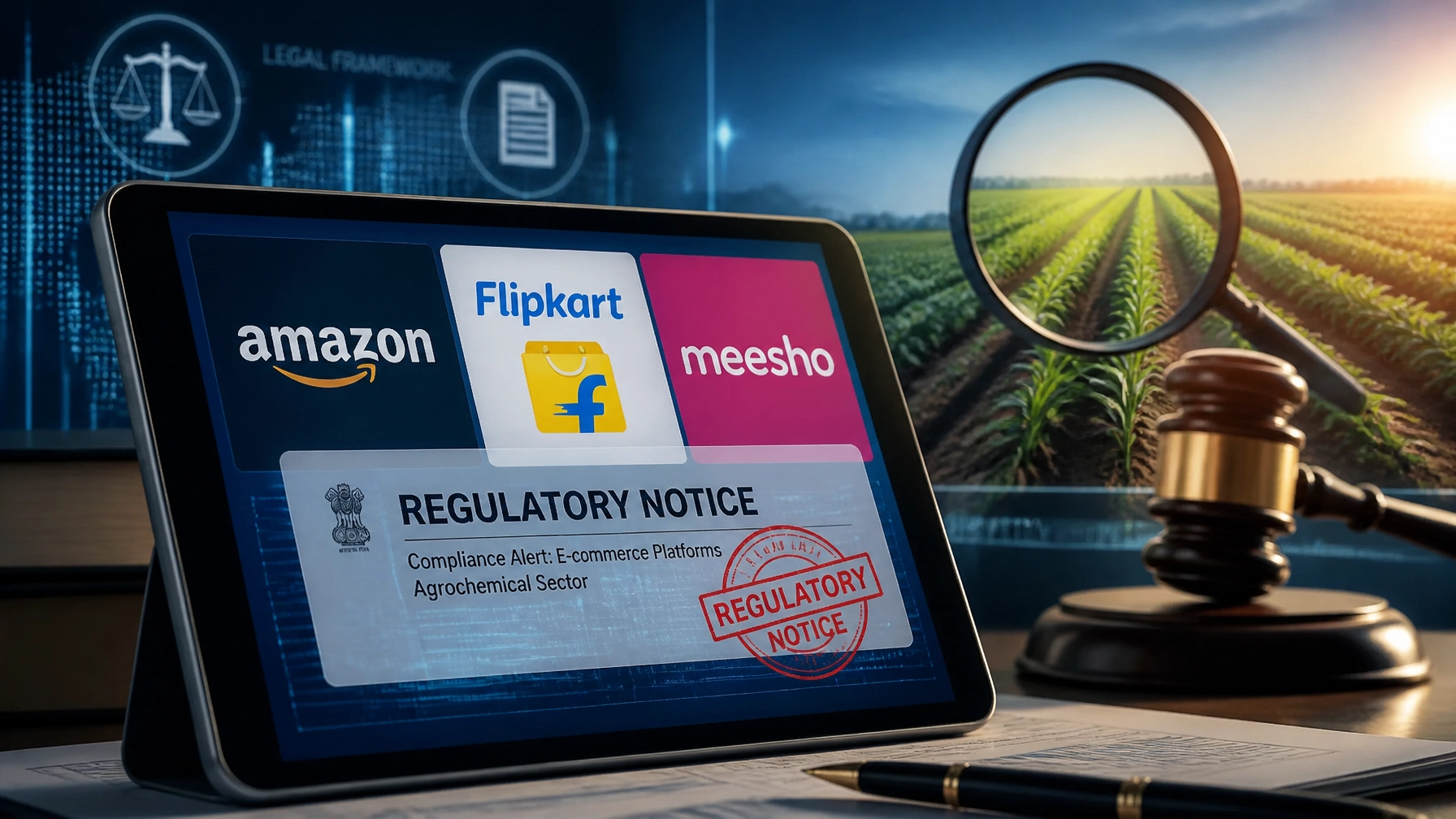
In an era where the digital marketplace has become the primary conduit for consumer goods, the boundary between accessibility and regulatory compliance has never been more critical. The Central Consumer Protection Authority (CCPA) recently sent ripples through the Indian e-commerce landscape by issuing formal notices to four of the industry’s most prominent titans: Amazon, Flipkart, Meesho, and JioMart. The impetus for this decisive action is the alleged unauthorized sale of a product marketed as 'cyclosinone herbicide', an unregistered and imported chemical that bypasses the stringent safety protocols mandated by Indian agricultural law.
This move by the CCPA serves as a potent catalyst for change, signaling a shift from a reactive to a proactive regulatory stance. For e-commerce platforms that have long operated under the protective umbrella of "intermediary status," the scrutiny over high-risk categories like agrochemicals highlights a revitalized commitment to consumer safety and national biosecurity.
The Core of the Dispute: Unregistered Chemicals and Regulatory Compliance
The controversy began when the Crop Care Federation of India (CCFI), acting through the Union Ministry of Agriculture, flagged the presence of 'cyclosinone' on multiple e-commerce platforms. Under the Insecticides Act of 1968, any pesticide or herbicide intended for manufacture, import, or sale within India must undergo rigorous testing and formal registration with the Central Insecticides Board and Registration Committee (CIB&RC).
The sale of 'cyclosinone herbicide': a product currently lacking this mandatory registration: represents a significant breach of the electronic communications network protocols that govern trade. By facilitating the distribution of an unverified chemical, these platforms may have inadvertently compromised the safety of the Indian soil and the livelihoods of millions of farmers. This is not merely a clerical error; it is a fundamental challenge to the mission of safeguarding the agrarian economy.

The intersection of digital trade and agricultural safety demands high-level regulatory checks.
Intermediary Liability vs. Due Diligence
For years, e-commerce giants have maintained that they are mere marketplaces: neutral ground where third-party sellers interact with buyers. However, the CCPA’s recent CCPA notices to e-commerce platforms suggest that this defense is wearing thin. The authority has sought detailed explanations regarding the due-diligence mechanisms these platforms have in place.
The question at the heart of the investigation is simple: How was a restricted or unregistered product allowed to be listed in the first place? In a world where Amazon drone engineers are pushed to the brink of burnout to optimize delivery speeds, the same level of technological prowess must be applied to compliance. The "legitimate purpose" of an e-commerce platform is to provide a safe and regulated environment for trade, and failing to filter out illegal agrochemicals is seen as a significant lapse in corporate governance.
This is not the first time the CCPA has taken a hard line. Similar notices were previously issued for the sale of corrosive acids and unauthorized walkie-talkie equipment. By holding these platforms accountable, the CCPA is working to democratize safety, ensuring that even the most remote farmer purchasing supplies online is protected by the same standards as a retail buyer in a metropolitan city.
Impact on the Agri-tech and E-commerce Ecosystem
The implications of these notices extend far beyond the immediate removal of a few product listings. They represent a significant shift in the value proposition of online marketplaces in India.
- Farmer Safety and Crop Security: The use of unregistered herbicides can lead to soil degradation, crop failure, and unpredictable chemical reactions. For an economy that relies heavily on its agricultural output, the stakes could not be higher.
- Market Integrity: When illegal products are sold alongside legitimate, registered chemicals, it creates an uneven playing field. This undermines the business models of compliant manufacturers who invest heavily in R&D and regulatory approvals.
- Consumer Trust: As inflation impacts everything from truck financing to raw material costs, consumers and businesses alike are looking for reliability. A breach of trust in a regulated category like agrochemicals can have long-term negative effects on platform loyalty.
To navigate these challenges, startups and established players must realize that effective business management now requires a deep integration of legal and regulatory compliance into the core tech stack.

Data-driven insights are now essential for maintaining marketplace compliance and consumer trust.
The Future of Regulatory Oversight in Digital India
The CCPA’s action is a definitive signal that the "Wild West" era of Indian e-commerce is coming to an end. As the government continues to promote digital transformation, the expectation for exponential growth is now paired with an equally strong demand for accountability. The Consumer Protection Act, 2019, provides the CCPA with the teeth it needs to enforce these standards, including the power to order product recalls, impose heavy penalties, and even shut down non-compliant operations.
The integration of data-driven insights into regulatory monitoring is the next frontier. By leveraging AI and machine learning, regulators like the CCPA can potentially scan millions of listings in real-time, identifying prohibited items before they ever reach a consumer's shopping cart. For platforms like Amazon, Flipkart, Meesho, and JioMart, the "mission" must now include the development of robust, automated filtering systems that respect local laws like the Insecticides Act, 1968.

The modern regulator utilizes both traditional legal frameworks and cutting-edge technology to protect the public interest.
Strategic Implications for Investors and Stakeholders
From an investor's perspective, these regulatory interventions are a double-edged sword. While they may increase operational costs in the short term due to the need for enhanced compliance teams and better vetting processes, they ultimately provide a more stable and revitalized market environment. A marketplace that is free from illegal and hazardous products is far more sustainable and less prone to catastrophic legal liabilities in the future.
The CCPA notices to e-commerce platforms are not just a warning; they are an invitation to elevate the standard of digital trade in India. Stakeholders must now look toward transformative solutions that balance the speed of e-commerce with the meticulous nature of legal compliance.
Conclusion
The issuance of notices to Amazon, Flipkart, Meesho, and JioMart regarding the 'cyclosinone herbicide' sale marks a pivotal moment in the governance of India’s digital economy. By targeting the unauthorized distribution of unregistered agrochemicals, the Central Consumer Protection Authority (CCPA) has reinforced the principle that no platform, regardless of its scale, is above the law.
As the industry moves forward, the focus will undoubtedly shift toward more rigorous due diligence and the implementation of sophisticated operational tools to ensure compliance. For the Indian consumer and farmer, this represents a significant victory: a step toward a safer, more transparent marketplace where the promise of convenience does not come at the cost of safety. The central thesis remains clear: in the race for market dominance, regulatory compliance is no longer optional; it is the bedrock of a legitimate and enduring business model.
Stay informed with the latest in Business, Economics, and Video News at Business Tantra.

Key Regulatory Bodies Involved:
- CCPA: Central Consumer Protection Authority
- CIB&RC: Central Insecticides Board and Registration Committee
- CCFI: Crop Care Federation of India
Legal Frameworks Cited:
- Consumer Protection Act, 2019
- Insecticides Act, 1968
Note: This article provides an analytical overview of recent regulatory developments and does not constitute legal advice.

admin

Related Post