

























Ford Set to Launch Seven European Models as it Seeks to Grow Sales and Fend off China

In a calculated maneuver to reclaim its diminishing market share and fortify its presence against an unprecedented influx of Chinese competitors, Ford Motor Company has unveiled a comprehensive strategic pivot for the European market. By committing to the launch of seven new models: comprising both passenger and commercial vehicles: the American automotive giant is signaling a "revitalized" approach to regional manufacturing and consumer engagement. This move comes at a critical juncture for corporate news India, as global manufacturers recalibrate their supply chains and product portfolios to navigate the complexities of the green energy transition and shifting geopolitical landscapes.
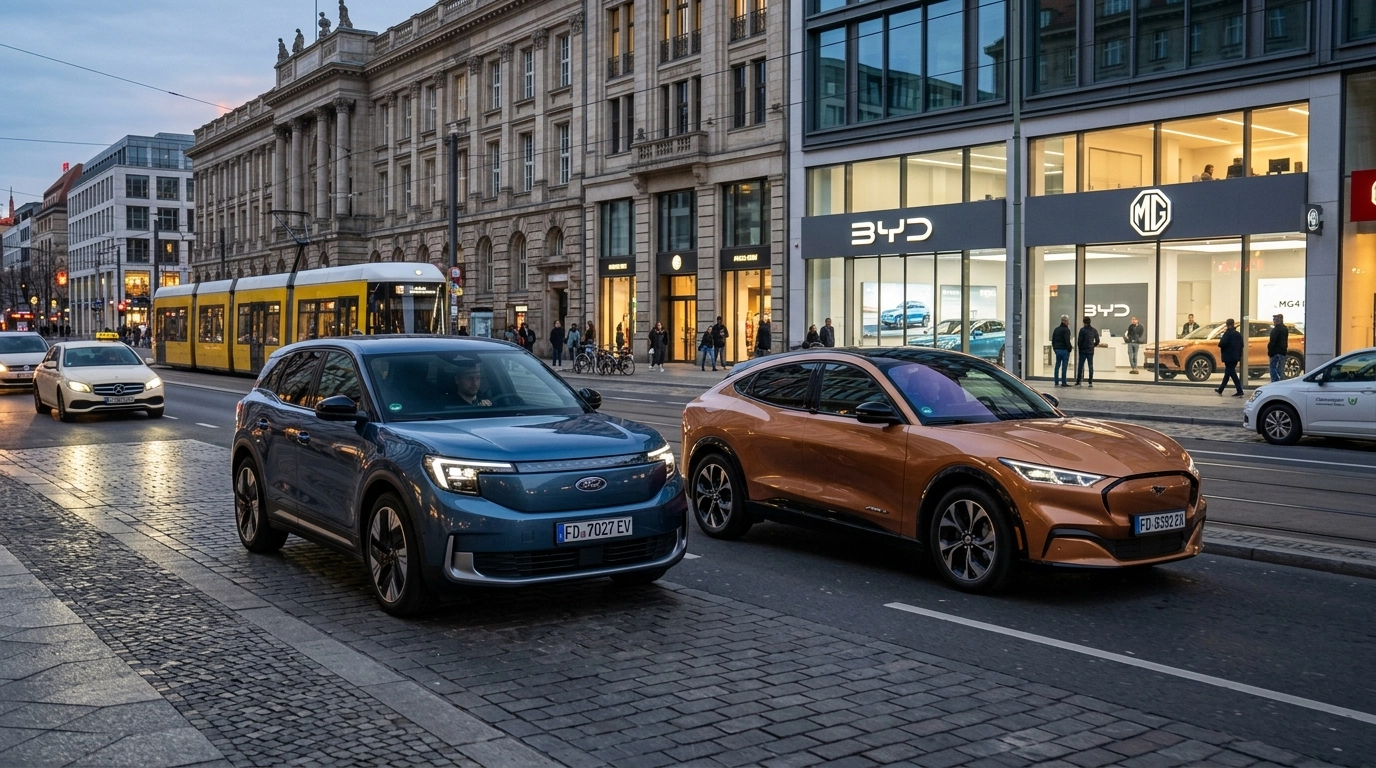
The stakes could not be higher. As the European Union moves toward a 2035 ban on new internal combustion engine (ICE) vehicles, the vacuum created by the departure of traditional stalwarts like the Ford Fiesta and Focus has been aggressively filled by Chinese brands such as BYD, MG, and Great Wall Motor. Ford’s response is not merely a product refresh; it is a fundamental restructuring of its value proposition, leveraging technological partnerships and "data-driven insights" to maintain relevance in a hyper-competitive ecosystem.
The Seven-Pronged Offensive: Ford’s New European Lineup
Ford’s strategic roadmap involves a diverse array of vehicles designed to cater to both the enthusiast and the pragmatic fleet operator. The cornerstone of this offensive is the European-built electric Explorer, a medium-sized crossover that represents the first fruits of Ford’s "mission" to democratize high-performance EVs for the continental consumer.
The planned rollout includes:
- The Electric Explorer: A robust crossover built in Cologne, Germany, aimed at the heart of the SUV market.
- A Second Sporty Crossover: Often referred to as the "Capri" successor, this model focuses on design-forward aesthetics.
- The Electric Puma: An EV version of Ford’s best-selling passenger car in Europe, crucial for maintaining high-volume sales.
- Four New Commercial Vehicles: Under the "Ford Pro" banner, these include electric variants of the Transit and Tourneo families, emphasizing the company’s dominance in the commercial sector.
This product blitz is designed to catalyze "exponential growth" in Ford’s electric vehicle delivery, with a target of exceeding 600,000 EVs annually in Europe by 2026. For those following corporate news India, these developments mirror the aggressive EV targets set by Indian domestic giants like Tata Motors and Mahindra, who are also racing to secure their home turf against similar international pressures.

Fending Off the "Chinese Wall" of Competition
The primary catalyst for change in Ford’s strategy is the rapid expansion of Chinese original equipment manufacturers (OEMs). Brands like BYD have established a "legitimate purpose" in the European market by offering technologically advanced vehicles at price points that often undercut Western rivals by 20% to 30%. This pricing advantage stems from vertical integration: particularly in battery manufacturing: and significant government backing.
To counter this, Ford is pivoting away from the "commodity" segment. Instead of competing solely on price, the company is doubling down on its brand heritage, focusing on "distinctly Ford" driving dynamics and emotional appeal. This strategy is essential to prevent the brand from being marginalized in an era where software-defined vehicles are becoming the norm.
The parallels with the Indian market are striking. As discussed in recent Indian startup updates, the ability to innovate locally while maintaining global standards is the hallmark of modern corporate survival. Ford’s European struggle provides a cautionary yet illustrative tale for Indian corporations aiming to protect their domestic market from the same global supply chain shifts.
Strategic Partnerships: A "Multi-Energy" Approach
Recognizing that it cannot navigate this transition in isolation, Ford has entered into significant "international business agreements" to share costs and accelerate development. A notable partnership involves the use of Renault’s Ampere platform for upcoming small EVs, allowing Ford to leverage existing architectures while focusing its R&D on design and user experience.

Senior executives analyzing global market trends and corporate strategy to navigate the competitive automotive landscape.
Furthermore, Ford is embracing a "multi-energy" strategy. While the long-term goal is full electrification, the company has realized that the transition is non-linear. By offering internal combustion, hybrid, and electric versions of common platforms, Ford provides the flexibility required to meet varying regional demands and infrastructure limitations. This pragmatism is a cornerstone of effective business management for growth, ensuring that the company remains profitable while investing in the future.
Corporate News India: The Global Impact of Ford’s Pivot
While the immediate focus of these seven models is Europe, the reverberations are felt globally, particularly in India. Ford’s previous exit from Indian manufacturing was a significant moment in the nation's automotive history, yet the company continues to maintain a strong presence through its Global Business Services.
The success or failure of Ford’s European strategy will dictate how the brand views emerging markets in the future. If Ford can prove that a traditional Western OEM can successfully "fend off China" through premium positioning and strategic partnerships, it may provide a blueprint for a potential re-entry or deepened partnership within the Indian ecosystem, especially as India’s new battery swap schemes gain traction.

Scaling the Ford Pro Ecosystem
One area where Ford remains virtually unchallenged by Chinese entrants is in the commercial sector. The "Ford Pro" ecosystem: a holistic suite of vehicles, charging solutions, software, and financing: creates a "data-driven insights" loop that commercial fleet operators find indispensable. By integrating "electronic communications networks" within their vans, Ford ensures maximum uptime and efficiency for businesses, a value proposition that goes far beyond the hardware itself.
This focus on services and software represents the "transformative solution" Ford needs to insulate its margins. While a Chinese-made sedan might be cheaper to buy, a Ford Transit integrated into a professional logistics network offers a lower total cost of ownership (TCO) through telematics and superior service networks.
Conclusion: A Definitive Shift in Strategy
Ford’s commitment to launching seven new models in Europe is a bold "mission" to prove that legacy automakers can adapt to the "exponential growth" of the electric era. By combining product innovation with strategic alliances and a focus on high-margin commercial services, Ford is attempting to build a defensive moat against the rising tide of Chinese competition.
For the readers of corporate news India, this narrative is a reminder of the global nature of the automotive industry. The strategies deployed in Cologne or Valencia today could very well influence the market dynamics in Chennai or Pune tomorrow. As the industry moves toward a zero-emissions future, the ability to balance "legitimate purpose" with profitability will distinguish the leaders from the laggards. Ford’s European gamble is more than just a sales push; it is a fight for the very soul of the Western automotive tradition in a world that is rapidly turning east.
Key Takeaways:
- Model Blitz: Seven new models (3 passenger, 4 commercial) to be launched by 2026.
- Chinese Competition: Strategy focuses on "distinctly Ford" identity to counter low-cost Chinese EVs.
- Partnerships: Utilizing Renault’s Ampere platform to reduce R&D costs and time-to-market.
- Commercial Dominance: Leveraging Ford Pro to maintain a lead in the fleet and logistics sectors.
- Global Relevance: Ford’s European strategy serves as a critical case study for global markets, including India.