






















How Trump’s Crypto Venture and Iran’s Top Exchange Tapped Into the Same Industry Networks

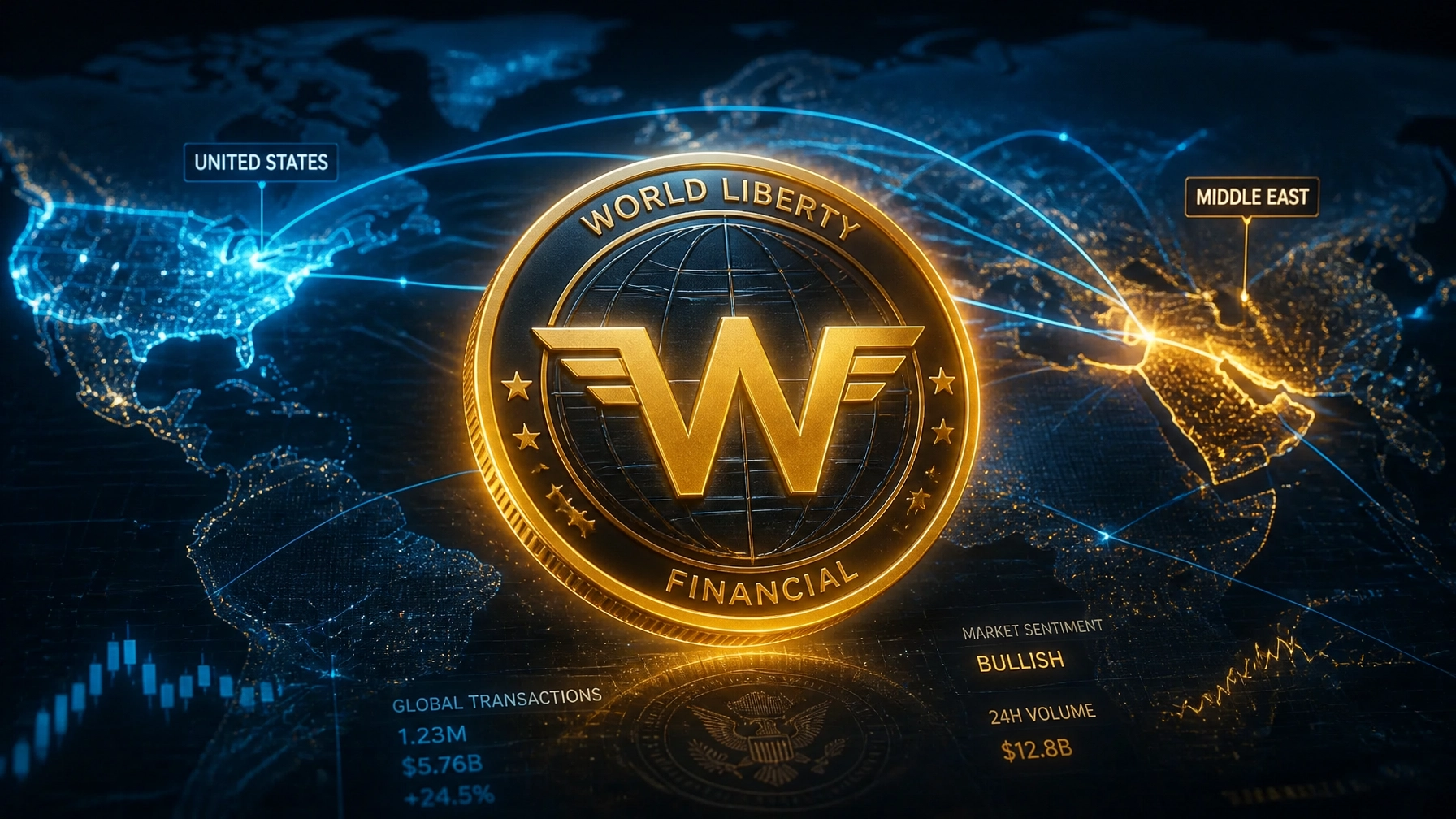
The convergence of global politics, decentralized finance, and international security has recently reached a fever pitch. At the center of this storm is Trump’s crypto venture, World Liberty Financial (WLFI). While the project was marketed as a revolutionary step toward the "democratization" of finance, a deeper investigation into its operational DNA reveals a startling reality: the venture’s growth is inextricably linked to the same industry networks that support sanctioned Iranian financial hubs.
For observers of financial news India, this narrative is more than just a curiosity; it represents a pivotal shift in how "legitimate purpose" and global liquidity are defined in the age of digital assets. As the lines between national security and private profit blur, the infrastructure supporting WLFI: specifically its reliance on Binance and its intersection with the Iranian exchange Nobitex: presents a complex case study in the modern global economy.
The Genesis of Trump’s Crypto Venture: World Liberty Financial
World Liberty Financial emerged as a high-profile entrant into the Decentralized Finance (DeFi) sector, aiming to provide users with a stablecoin-centric ecosystem. Trump’s crypto venture was positioned not merely as a tool for speculation, but as a "mission" to revitalize the American financial landscape. By leveraging the Trump brand, the project sought to capitalize on the growing crypto adoption seen in emerging markets, including the vibrant startup news India landscape.
However, the venture’s structural foundations were built upon established industry giants. WLFI chose to integrate deeply with Binance, the world’s largest cryptocurrency exchange, and utilized the Aave protocol for its lending mechanisms. While these are standard choices for a burgeoning crypto project, they also tethered WLFI to the regulatory and historical baggage of these platforms: specifically their past interactions with sanctioned jurisdictions.

The Nobitex Connection: Direct Transactional Intersections
One of the most provocative revelations regarding Trump’s crypto venture involves direct token sales that touched Iranian infrastructure. According to a detailed report by the Washington-based watchdog Accountable.us, WLFI tokens were allegedly sold to entities with direct ties to Iran’s top cryptocurrency exchange, Nobitex.
Nobitex is not just any platform; it has been repeatedly flagged by U.S. officials for enabling Iranian entities to evade international sanctions. The watchdog alleges that approximately 3,500 WLFI tokens were sold to a trader utilizing Nobitex. Furthermore, the report claims that hundreds of thousands of tokens were funneled into wallets associated with sanctioned actors in both North Korea and Iran.
While WLFI eventually moved to block 272 "high-risk" wallets, the fact that these transactions occurred initially points to a significant gap in the venture's early screening processes. For professionals monitoring financial news India, this highlights the inherent difficulty in policing DeFi protocols where the "electronic communications network" is designed for anonymity and speed over rigorous compliance.
Structural Dependence: The Binance Link
To understand how Trump’s crypto venture tapped into the same industry networks as Iran, one must look at its relationship with Binance. Public Citizen’s "Conflict Coin" report describes Binance as "integral" to the economics of WLFI. The project uses Binance as a core venue for liquidity and as a primary custodian for its USD1 stablecoin.
The catch? Binance has a documented history of large-scale sanctions violations involving Iran. In a landmark settlement with the U.S. Department of Justice, Binance pleaded guilty to anti-money laundering and sanctions violations. From 2018 to late 2022, the exchange reportedly processed approximately $8 billion in Iranian transactions.
By doubling down on its partnership with Binance: even announcing joint promotions as recently as March and April of 2026: Trump’s crypto venture is effectively building its house on a foundation that previously facilitated the very financial flows the U.S. government seeks to curtail. This paradox represents a significant challenge for regulatory bodies trying to maintain the integrity of the global financial system.

Geopolitical Entanglements: UAE and Pakistan
The networks supporting Trump’s crypto venture extend beyond software and exchanges; they involve high-stakes statecraft. A key "catalyst for change" in WLFI’s capital structure was the acquisition of a 49% stake in the venture by an entity controlled by Sheikh Tahnoon bin Zayed Al Nahyan, the Deputy Ruler of Abu Dhabi.
This investment from the UAE: a country that plays a central role in mediating U.S.-Iran relations: positions WLFI at the heart of Middle Eastern geopolitics. Simultaneously, WLFI has established a business partnership with the Pakistani Ministry of Finance to integrate blockchain technology into their national financial system.
For readers following startup news India, the involvement of regional neighbors like Pakistan and the UAE in a Trump-linked crypto project underscores the "exponential growth" of blockchain as a tool for diplomatic and economic leverage. As India continues its own start-up flood, the global maneuvering of projects like WLFI serves as a reminder that financial technology is never truly neutral.
Key Drivers of the Shared Industry Networks:
- Liquidity Pools: Both sanctioned entities and legitimate ventures like WLFI gravitate toward high-volume exchanges like Binance to ensure deep liquidity.
- Shared Infrastructure: The use of decentralized protocols (DeFi) allows various actors to operate within the same "electronic communications network," often bypassing traditional banking hurdles.
- Third-Party Intermediaries: Mixers like Tornado Cash were reportedly used by WLFI token buyers, the same tools utilized by sanctioned groups to obscure transaction trails.
The Impact on Global Financial Integrity
The intersection of Trump’s crypto venture and Iranian exchange networks is a "revitalized" concern for global regulators. It demonstrates that even projects with high-level political backing are susceptible to the complexities of the crypto ecosystem. The reliance on "data-driven insights" to flag high-risk wallets is often a reactive measure rather than a proactive shield.
In the context of business management for startups, the WLFI saga illustrates the critical need for robust compliance frameworks from day one. Failing to account for the "value proposition" of sanctions compliance can lead to significant legal and reputational risks that can derail even the most well-funded projects.

Conclusion: A New Era of Financial Transparency?
The investigation into how Trump’s crypto venture tapped into the same industry networks as Iran’s top exchange reveals a world where digital finance and geopolitical strategy are one and the same. While WLFI may not have intended to facilitate transactions for sanctioned entities, its structural dependence on platforms like Binance and its early-stage vetting failures have placed it in a precarious position.
For those tracking financial news India and the broader global market, this case highlights the "transformative solution" that blockchain offers: while simultaneously exposing its most dangerous vulnerabilities. As the world moves toward a more "democratized" financial system, the "mission" for both startups and established giants must be to ensure that innovation does not come at the cost of global security.
Ultimately, the story of World Liberty Financial is a definitive lesson in the interconnectedness of modern finance. Whether it is a battery swap scheme in India or a multi-million dollar crypto venture in the U.S., the rules of the network apply to all. Moving forward, the industry must prioritize transparency and rigorous data standards to ensure that the industry networks of the future are as secure as they are innovative.