























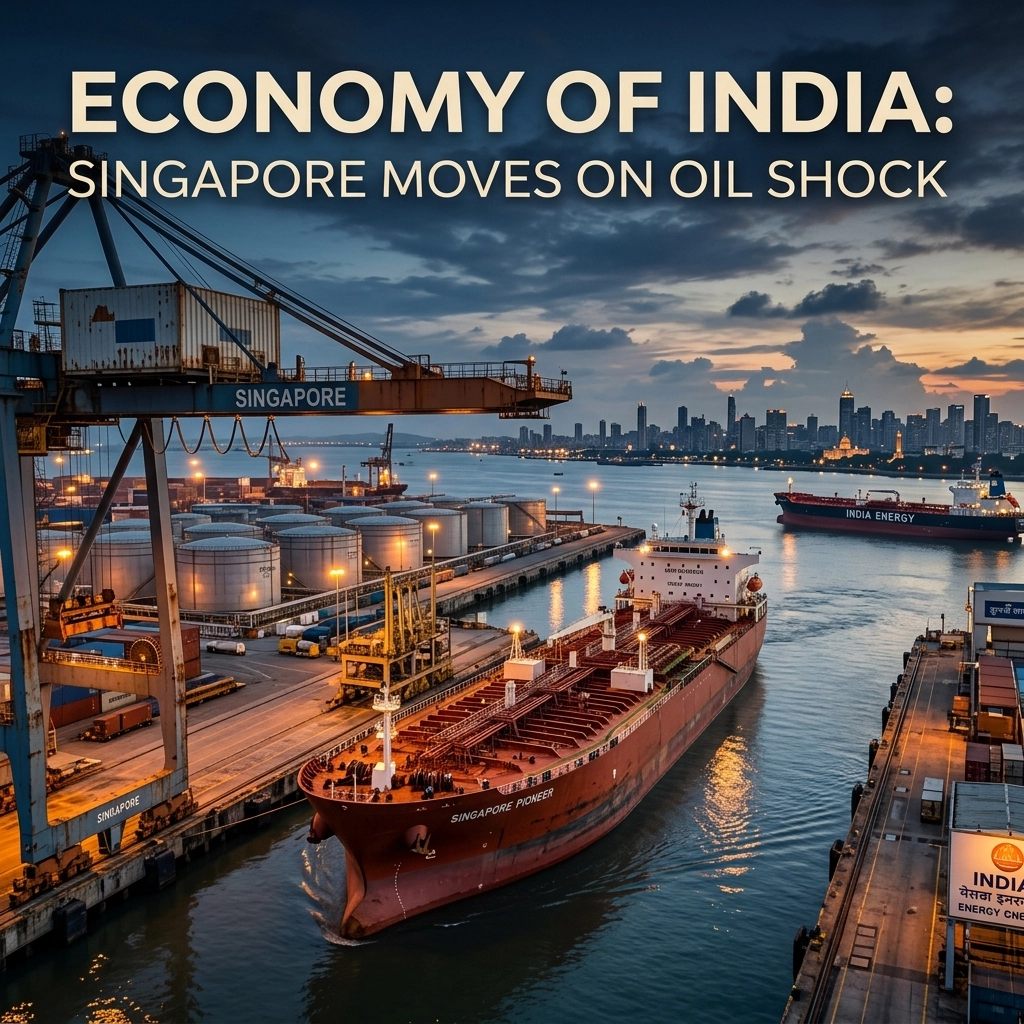

The Economy of India is currently standing at a critical crossroads as global energy markets grapple with the most severe volatility seen in decades. On this Tuesday, April 14, 2026, the global financial landscape has been jolted by a decisive move from the Monetary Authority of Singapore (MAS). In a pre-emptive strike against the inflationary pressures of the ongoing West Asia firestorm, Singapore has tightened its monetary settings, marking the first major Asian central bank response to the current oil shock. For those tracking financial news India, this move serves as a harbinger of the "Pax Silica" era, where energy security and currency stability dictate the survival of national economies.
1. The Singapore Pre-emptive Strike: A Lesson in Agility
The Monetary Authority of Singapore (MAS) announced this morning that it is increasing the slope of its exchange rate band. This technical adjustment is a direct response to the "oil shock" triggered by the escalating conflict in the Middle East and the closure of key shipping lanes in the Strait of Hormuz. By allowing the Singapore dollar to appreciate more quickly, the MAS aims to dampen the cost of imported inflation.
According to reports from Bloomberg, Singapore’s economy is expected to contract by 1% in the first quarter of 2026, yet the central bank is prioritizing price stability over immediate growth. This is a "high-voltage" maneuver. Unlike the Reserve Bank of India (RBI), which often balances a wider array of socio-economic factors, Singapore’s central bank is laser-focused on the exchange rate as its primary tool to combat the 2.0% headline CPI inflation forecast: a figure that, while low by global standards, is a cause for alarm in the city-state’s import-heavy economy.

2. Economy of India and the $130 Crude Threshold
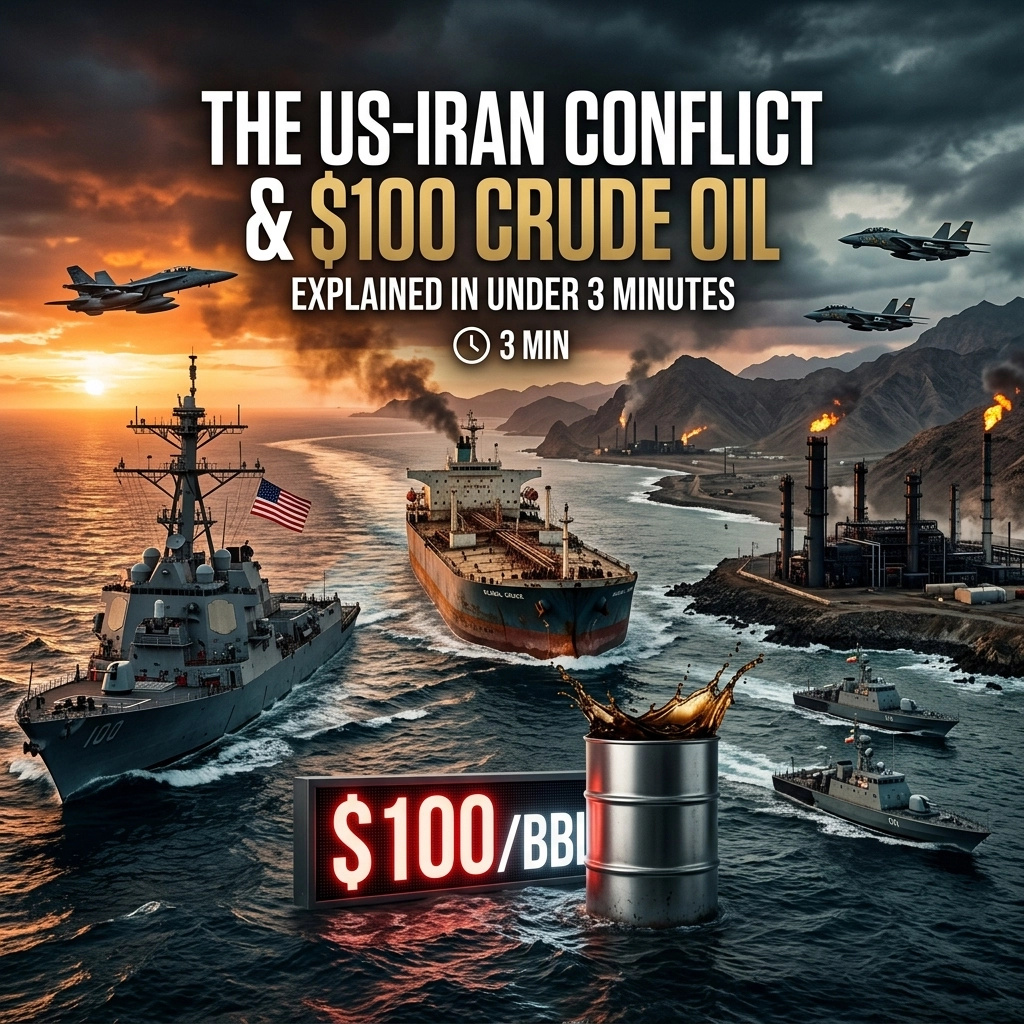
While Singapore moves on the currency front, the Economy of India is employing a vastly different strategy. As of today, crude prices are hovering dangerously near the $130 per barrel mark. In India, the government has instructed state-owned oil marketing companies (OMCs) to absorb the brunt of these costs. This intervention has kept retail petrol and diesel prices relatively stable for the Indian consumer, acting as a crucial "shock absorber" for the domestic market.
However, the fiscal strain of this strategy cannot be ignored. Financial analysts monitoring financial news India suggest that the OMCs can only maintain this posture as long as crude remains below the $130-$135 range. If the West Asia crisis deepens, the fiscal deficit could widen, necessitating a strategic reset in how New Delhi manages energy subsidies. You can find more updates on how these trends are affecting local markets on our Home News page.
3. Industrial Fallout: From Gujarat to the Global Supply Chain
The impact of the energy crisis is not limited to the fuel pump. In Gujarat, the heart of India's manufacturing sector, the effects are already visible. Numerous aluminum extrusion plants have been forced to suspend operations due to the unavailability of natural gas. These plants are vital to the construction and solar energy sectors, and their closure represents a significant disruption in the domestic supply chain.
This industrial "stutter" highlights a broader vulnerability in the Economy of India. The country's heavy reliance on Middle Eastern gas: accounting for nearly 30% of its total supply: means that any disruption in the Persian Gulf translates directly into idle factories in India. This serves as a "catalyst for change," pushing the government toward more aggressive domestic exploration and a revitalized focus on nuclear power surges.
4. Financial News India: The Stock Market Reaction
The Indian stock market has reflected this global anxiety. Today, the Sensex dropped 703 points, with the Nifty closing at 23,843. Despite the broader sell-off, companies like Adani Enterprises and ICICI Bank emerged as top gainers, suggesting that investors are seeking refuge in large-cap stocks with diversified portfolios or strong balance sheets.
As reported by Reuters, the "gamification of war" and the rapid spread of information (and misinformation) through technology have reshaped how traders react to geopolitical events. The hope for Iran-US peace talks briefly pushed the GIFT Nifty up by 200 points earlier today, but the reality of Singapore’s tightening and the ongoing Strait of Hormuz blockade ultimately pulled the market back into the red.
5. Comparing Central Bank Philosophies: RBI vs. MAS
The divergence between the MAS and the RBI is a fascinating study in economic philosophy.
- Singapore (MAS): Operates on an exchange rate-centered policy. They allow the currency to appreciate to fight inflation, effectively passing through the "pain" of higher costs to maintain long-term stability.
- India (RBI): Focuses on interest rates and maintains a cautious watch on the Consumer Price Index (CPI). The RBI’s current mandate is to keep inflation below 4%, a target that becomes increasingly difficult as oil prices soar.
For the Economy of India, the Singapore move is a warning shot. If inflation continues to be imported through high energy costs, the RBI may eventually be forced to follow suit with more hawkish measures, potentially cooling the rapid GDP growth India has enjoyed over the last two years.

6. The Shift Toward Strategic Energy Independence
The current crisis is accelerating India’s pivot away from traditional energy dependencies. There is a growing consensus among policymakers that India must democratize its energy sources. This includes:
- Nuclear Expansion: The Nuclear Power Surge seen in the 2026 budget is now being viewed as a necessity rather than a luxury.
- Russian Re-engagement: Despite international pressure, India is looking to revitalize its energy ties with Russia to secure discounted crude, bypassing the volatile Middle Eastern routes.
- Strategic Reserves: Expanding the capacity of strategic petroleum reserves (SPR) to provide a 90-day cushion against global supply shocks.
These moves are designed to create a "data-driven" energy policy that protects the Economy of India from the "exponential growth" of geopolitical risks. For entrepreneurs and investors looking to navigate these changes, our About Us section provides insight into how Business Tantra tracks these transformative solutions.
7. Global Trade Tensions: The China Factor
Adding another layer of complexity to the financial news India landscape is the latest data from East Asia. China's exports have stumbled while their imports of raw materials have surged, largely due to the same energy pressures affecting India and Singapore. US shipments to China are down 26.5%, highlighting a fracturing of the old global trade order. As the BRICS 2026 takeover begins, India finds itself in a unique position to act as a bridge between the West and the Global South, provided it can manage its domestic energy inflation.
Conclusion
The decision by the Monetary Authority of Singapore to tighten its monetary settings is a definitive moment for the Asian markets in 2026. It signals that the "oil shock" is no longer a distant threat but a present reality that requires immediate action. For the Economy of India, the path forward involves a delicate balance of fiscal intervention, strategic diversification, and vigilant monetary policy.
While the Indian government has successfully shielded consumers from the worst of the price hikes so far, the industrial shutdowns in Gujarat and the volatility in the Sensex serve as reminders that no economy is an island. As we continue to provide the latest financial news India, the "mission" for Indian businesses remains clear: adapt to the high-cost energy environment through innovation and strategic resilience. The era of cheap energy is over; the era of strategic energy management has begun.
For those looking to secure their professional presence in this rapidly changing economic landscape, consider upgrading to a Digital Business Card to stay connected in the age of Pax Silica. Stay tuned to Business Tantra for more "high-voltage" updates on the global economy.