



























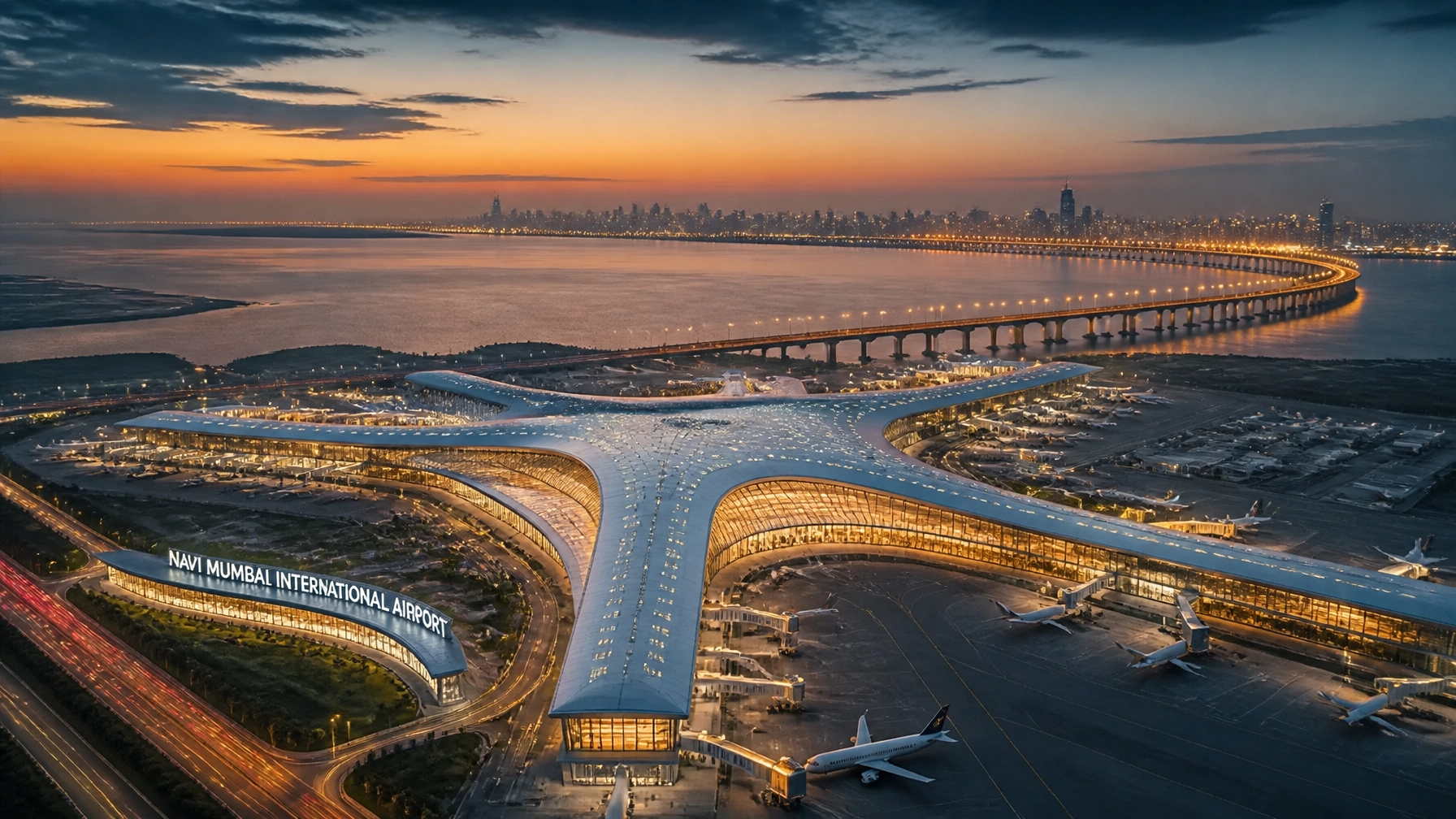
Navi Mumbai airport’s next challenge moves beyond runway capacity

For over a decade, the narrative surrounding the DB Patil International Airport: more commonly known as the Navi Mumbai International Airport (NMIA): was centered on the physical Herculean task of land acquisition and earth-moving. With the runway now largely stabilized and the first phase nearing operational readiness, the conversation has pivoted. Navi Mumbai airport’s next challenge is no longer about asphalt and concrete; it is a complex "systems problem" involving airspace orchestration, multimodal integration, and the delicate economic balance of a dual-hub city.
As the 2021 economic rebound demonstrated, infrastructure acts as a primary catalyst for change, but only if the surrounding ecosystem can absorb the surge. For Mumbai, a city that has long gasped for aviation relief, the arrival of a second airport is a transformative solution. However, the transition from a single-airport city to a coordinated dual-airport hub presents operational hurdles that are as significant as the construction itself.
1. The Airspace Conundrum: Orchestrating a Dual-Hub System
The most immediate technical hurdle involves the invisible architecture above the city. Navi Mumbai airport’s next challenge is the seamless integration of its flight paths with those of the Chhatrapati Shivaji Maharaj International Airport (CSMIA). Both facilities share the same wider airspace, creating a high-density environment that requires surgical precision from Air Traffic Control (ATC).

Managing two major international gateways in such close proximity is a rarity globally. ATC must design complex arrival and departure procedures to prevent conflict, especially during peak hours or adverse weather conditions. This necessitates data-driven insights and sophisticated electronic communications networks to ensure that the increased capacity of NMIA does not result in systemic delays at CSMIA. The "legitimate purpose" of the new airport: to relieve congestion: could be undermined if the airspace design becomes a bottleneck rather than an enabler of exponential growth.
2. Connectivity Catch-Up: The Door-to-Door Journey
While the runway is ready to receive aircraft, the ground infrastructure is still racing to catch up. The value proposition of an airport is fundamentally tied to its accessibility. Currently, the "catchment area" for NMIA is heavily reliant on road networks. While the Atal Setu (MTHL) has revitalized travel times from South Mumbai to Navi Mumbai, the lack of high-capacity public transit remains a critical gap.

Airlines, including Air India, have already voiced concerns to the Airport Economic Regulatory Authority (AERA), stating that insufficient connectivity could limit the initial traffic catchment. Until the dedicated metro spurs and suburban rail links are fully operational, the airport faces a "last-mile" friction that may deter time-sensitive business travelers. To democratize access to the new terminal, CIDCO and the state government must prioritize the completion of the Navi Mumbai Metro and the proposed rail interfaces that connect the airport directly to the wider Mumbai Metropolitan Region (MMR).
3. Airline Strategy and the Economics of a Hub
For carriers like IndiGo and Akasa Air, NMIA represents a fresh canvas. However, the decision to split operations between two airports: known as "dual-basing": is fraught with logistical complexities. Airlines must manage ground crews, spare parts, and crew rotations across two sites, which can elevate operational costs.
- Slot Allocation: Regulators must ensure a fair distribution of lucrative time slots to incentivize airlines to move flights to Navi Mumbai.
- Hub Continuity: International carriers often prefer a single hub to facilitate transfers. If NMIA cannot provide seamless domestic-to-international connections in its early phases, its role may be relegated to a domestic "pressure-relief valve" rather than a global gateway.
- Aeronautical Charges: The cost of operating from a greenfield airport is often higher. Investors and airlines will be closely watching the fee structures implemented by Adani Airports to ensure they remain competitive compared to peer airports in the region.
4. Terminal Readiness and the Digital Passenger Experience
Beyond the airfield, the passenger-facing systems must be flawless. Early reports from initial test phases indicated that digital connectivity: specifically mobile network strength inside the massive terminal structures: needed urgent attention. In an era where digital boarding passes, ride-hailing apps, and fintech innovations drive the passenger experience, a "dead zone" is not an option.

Recent updates from April 2026 suggest these mobile network issues have been largely resolved, but the challenge of scaling from domestic operations to a full-fledged international hub remains. This includes staffing for immigration, customs, and security agencies like the CISF. The operational culture of the airport: ensuring that the ~15,000 direct jobs created are filled with highly trained personnel: will define the airport’s reputation in its first year.
5. Urban Integration: The Socio-Economic Ripples
The airport is a massive catalyst for the surrounding regions of Ulwe, Panvel, and Kharghar. However, rapid urban development brings its own set of challenges. Real estate prices in Navi Mumbai have seen an exponential growth trajectory, but the local infrastructure: water, sewage, and local roads: must be able to sustain this new population density.

Furthermore, noise management and environmental compliance regarding the surrounding wetlands and mangroves are ongoing regulatory pressures. The mission of Navi Mumbai International Airport is to be a "greenfield" project in every sense, including a commitment to sustainable aviation practices. Managing the environmental impact while pursuing aggressive growth targets will be a delicate balancing act for the operators.
Conclusion
Navi Mumbai airport’s next challenge is a testament to the airport's maturity. We are moving from the era of "How do we build it?" to "How do we run it?" The transition into a dual-hub system is the most significant evolution in Indian civil aviation infrastructure in decades. While the runway capacity provides the physical space for growth, the success of the project will depend on the "soft" infrastructure: the airspace coordination, the multimodal transit links, and the strategic alignment of airlines.
If these systems are integrated with the same precision as the construction of the terminal itself, NMIA will not just be a secondary airport; it will be the centerpiece of a revitalized, global Mumbai. For investors, travelers, and the aviation industry at large, the coming months will be a masterclass in modern infrastructure management.
Stay updated on the latest stories in Indian business and economics by visiting Business Tantra. From startup floods to market indicators, we bring you the news that matters.