

























Fuel Price Hike: How Much Petrol, Diesel, PNG and CNG Cost in Your City Today

In the rapidly evolving landscape of financial news india, the most pressing concern for the average citizen remains the fluctuating cost of essential commodities. As of Monday, May 18, 2026, the Indian energy sector is grappling with a formidable "double shock." With the Indian Rupee (INR) plummeting to a record low of 96.20 against the US Dollar and global Brent crude hovering around the $111 mark, the domestic fuel market is witnessing a significant recalibration.
This volatility is not merely a number on a trading screen; it translates directly to the pump prices and monthly kitchen budgets of millions. Whether you are a daily commuter in Delhi or a business owner in Mumbai, understanding the underlying catalysts of these price hikes is essential for navigating the current economic climate.
The Rupee Factor: Why 96.20 is a Critical Threshold for Financial News India 📉
The primary catalyst for the recent surge in fuel prices is the sharp depreciation of the Indian Rupee. Since the onset of the West Asia crisis, the currency has devalued by approximately 5.5%, reaching a historic low. For a nation that imports nearly 85% of its crude oil requirements, the exchange rate is a pivotal lever of economic stability.
When the rupee weakens, Oil Marketing Companies (OMCs) like Indian Oil Corporation (IOCL), Bharat Petroleum (BPCL), and Hindustan Petroleum (HPCL) must spend significantly more in domestic currency to purchase the same volume of oil in US Dollars. This "landed cost" inflation is the foundational reason for the recent ₹3 per litre hike across various states. As reported by major outlets in financial news india, this currency pressure acts as an immediate inflationary driver, affecting everything from logistics to the cost of everyday groceries.

Petrol and Diesel Prices Across Major Metros: A Comparative Analysis ⛽
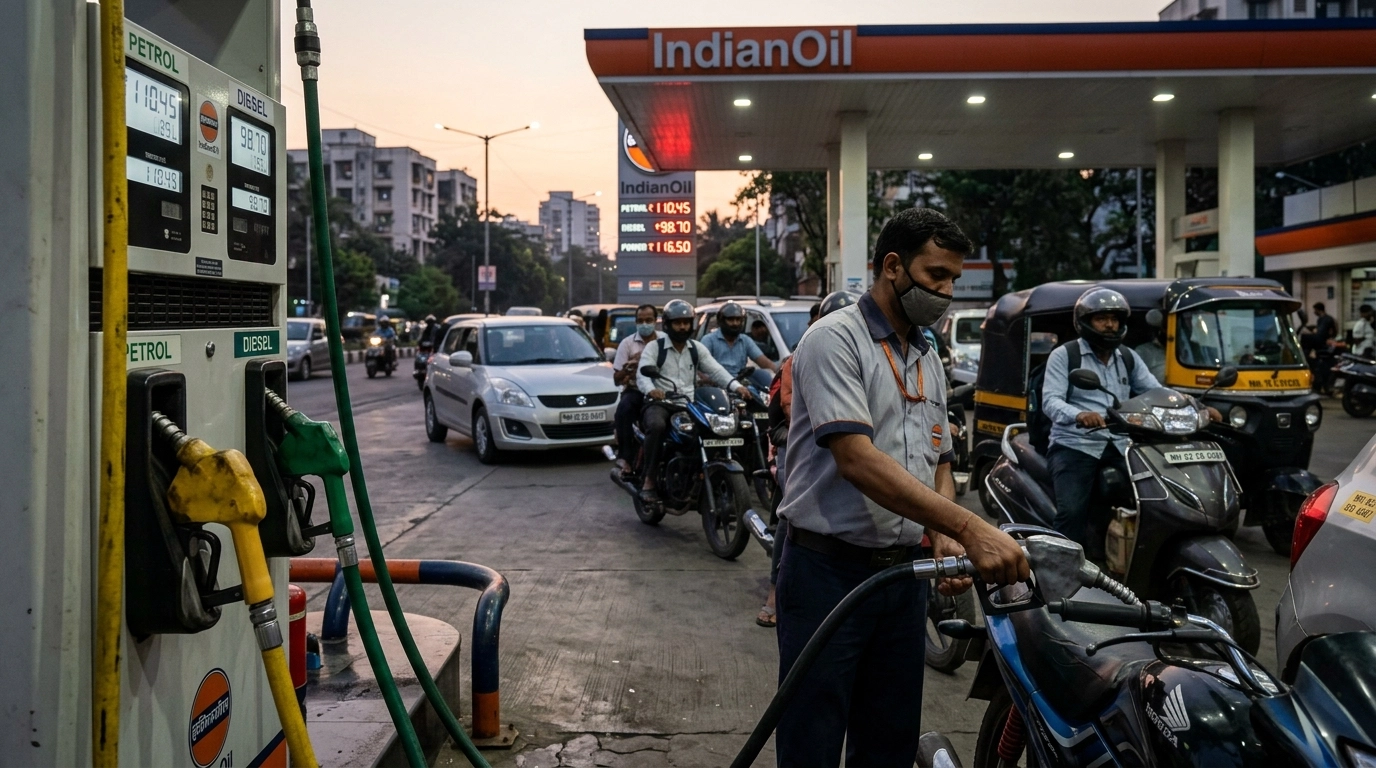
The retail price of petrol and diesel varies across India due to the varying levels of Value Added Tax (VAT) imposed by state governments and freight charges. Currently, the national capital remains relatively lower in price compared to the southern and western hubs.
Below is a breakdown of the indicative retail prices for major Indian cities as of today:
| City | Petrol (₹/Litre) | Diesel (₹/Litre) |
|---|---|---|
| New Delhi | ₹97.77 | ₹90.67 |
| Mumbai | ₹106.68 | ₹93.14 |
| Bengaluru | ₹106.17 | ₹94.10 |
| Kolkata | ₹108.70 | ₹95.13 |
| Chennai | ₹103.67 | ₹95.25 |
Note: Prices are subject to change based on daily OMCs' revisions and local taxes.

Mumbai and Kolkata continue to maintain the highest price points, largely due to higher state-level taxation. For business professionals and logistics companies, these disparities necessitate a more strategic approach to fuel management and operational budgeting. The persistent high cost of diesel, in particular, is a "catalyst for change" in the freight industry, pushing many towards EV adoption or hybrid alternatives.
The CNG and PNG Surge: Impacting the Modern Kitchen and Commute 🏡
While petrol and diesel often dominate the headlines, the surge in Compressed Natural Gas (CNG) and Piped Natural Gas (PNG) is equally impactful. Urban households and public transport systems are feeling the pinch as distributors like Indraprastha Gas Ltd (IGL) and Mahanagar Gas Ltd (MGL) adjust rates to compensate for higher input costs.
1. The CNG Milestone in Delhi-NCR
For the first time, CNG prices in New Delhi have breached the ₹80/kg mark. After a cumulative hike of ₹3 per kg within a 48-hour window, commuters are facing increased fares for auto-rickshaws and cabs. In Mumbai, the rates have touched approximately ₹84/kg, reflecting the broader trend of rising gas sourcing costs.
2. PNG and the Cost of Domestic Living
PNG tariffs, which are typically adjusted less frequently than liquid fuels, have also seen upward revisions. Because PNG is often linked to a mix of domestic gas and imported Liquefied Natural Gas (LNG), the weak rupee has made the imported component significantly more expensive. This is particularly concerning as India faces a localized cooking fuel shortage, which has surprisingly even begun influencing global energy trends.

Market Resilience: Can India Absorb the Shock? 🛡️
Despite the grim figures at the fuel station, there is an air of professional optimism within the regulatory corridors. SEBI Chairperson Madhabi Puri Buch recently emphasized that the Indian markets are structured to absorb shocks arising from the West Asia crisis. This resilience is attributed to the "democratize[d]" nature of the Indian market, where domestic institutional investors (DIIs) and retail participants are providing a robust cushion against the flight of Foreign Institutional Investors (FIIs).
The Economic news section highlights that while fuel-led inflation is a legitimate concern, the overall macro-economic indicators remain stable. The government may consider a reduction in excise duty if the rupee continues its downward trajectory, though no official announcement has been made as of this morning.

Strategic Implications for the Indian Consumer
- Logistics and Transportation: Companies are likely to implement "fuel surcharges" to maintain profit margins.
- FMCG and Agriculture: As diesel powers the movement of crops and goods, expect a "second-round effect" on food inflation.
- Investment Shifts: With energy costs rising, renewable energy stocks and EV infrastructure companies may see "exponential growth" in investor interest.

Conclusion: Navigating the Energy Transition 🏁
The current fuel price hike is a stark reminder of India’s sensitivity to global geopolitical shifts and currency volatility. A rupee at 96.20 combined with Brent crude at $111 creates a challenging fiscal environment that demands both government intervention and consumer adaptability.
However, the "mission" of the Indian economy remains clear: to revitalize domestic production and diversify energy sources to mitigate such external shocks in the future. As we monitor the latest developments in financial news india, it is evident that while the immediate impact is a strain on the wallet, the long-term response will likely accelerate India’s shift toward a more sustainable and self-reliant energy ecosystem.
For real-time updates and deep-dive analysis on the Indian economy, stay tuned to the Business Tantra Latest Stories.
Disclaimer: Fuel prices are updated daily at 6:00 AM IST. Please check with your local fuel station or the official apps of IOCL, BPCL, and HPCL for the most precise rates in your area.