
























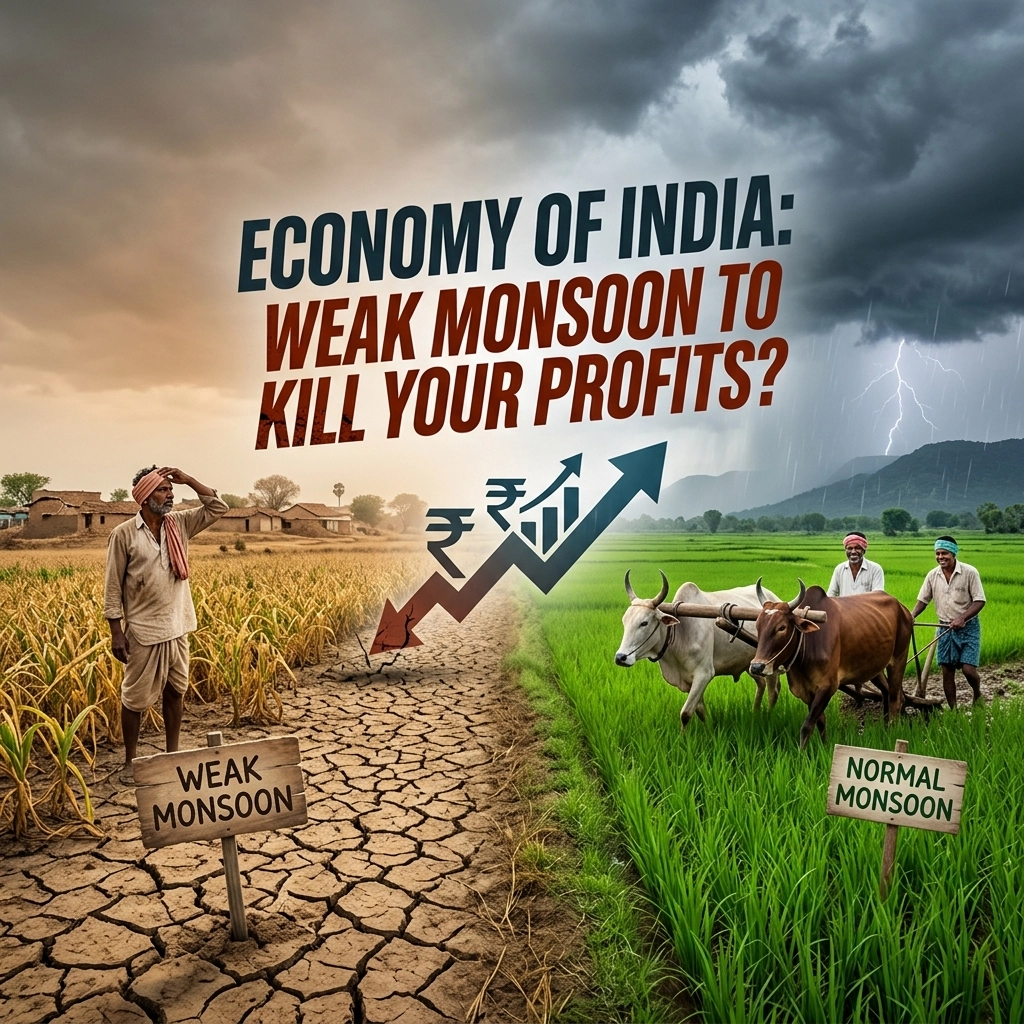

Economy of India is currently staring down the barrel of a climate-induced financial catastrophe as 2026 forecasts confirm a strengthening El Niño that threatens to decimate the upcoming monsoon season. For a nation where the "gamble on the rains" still dictates the pulse of the stock market and corporate balance sheets, a below-normal monsoon isn't just a weather report: it is a brutal economic executioner. While the government pivots toward high-tech manufacturing, the foundational stability of the subcontinent remains tethered to the clouds. If the rains fail, your quarterly targets will fail with them.
The stakes could not be higher. As we analyze the data coming from the News on Air reports, the consensus is shifting toward a defensive stance. We are not just talking about a few dry fields; we are talking about a systemic shock that could slash GDP growth projections from a healthy 8% to a struggling 5%. If you are an investor or a business owner, ignoring these signals is a recipe for fiscal suicide.
The Brutal Impact on the Economy of India and Corporate Bottom Lines
When we dissect the vulnerabilities within the Economy of India, agriculture stands out as the most volatile pillar. Accounting for roughly 15-20% of the GDP and supporting a staggering 70% of the population, any disruption here sends shockwaves through the entire supply chain. A weak monsoon in 2026 will lead to a direct collapse in rural spending power. When two-thirds of the nation earns less, they spend less. This isn't theoretical; it is a mathematical certainty that will hit every sector from FMCG to automotive.
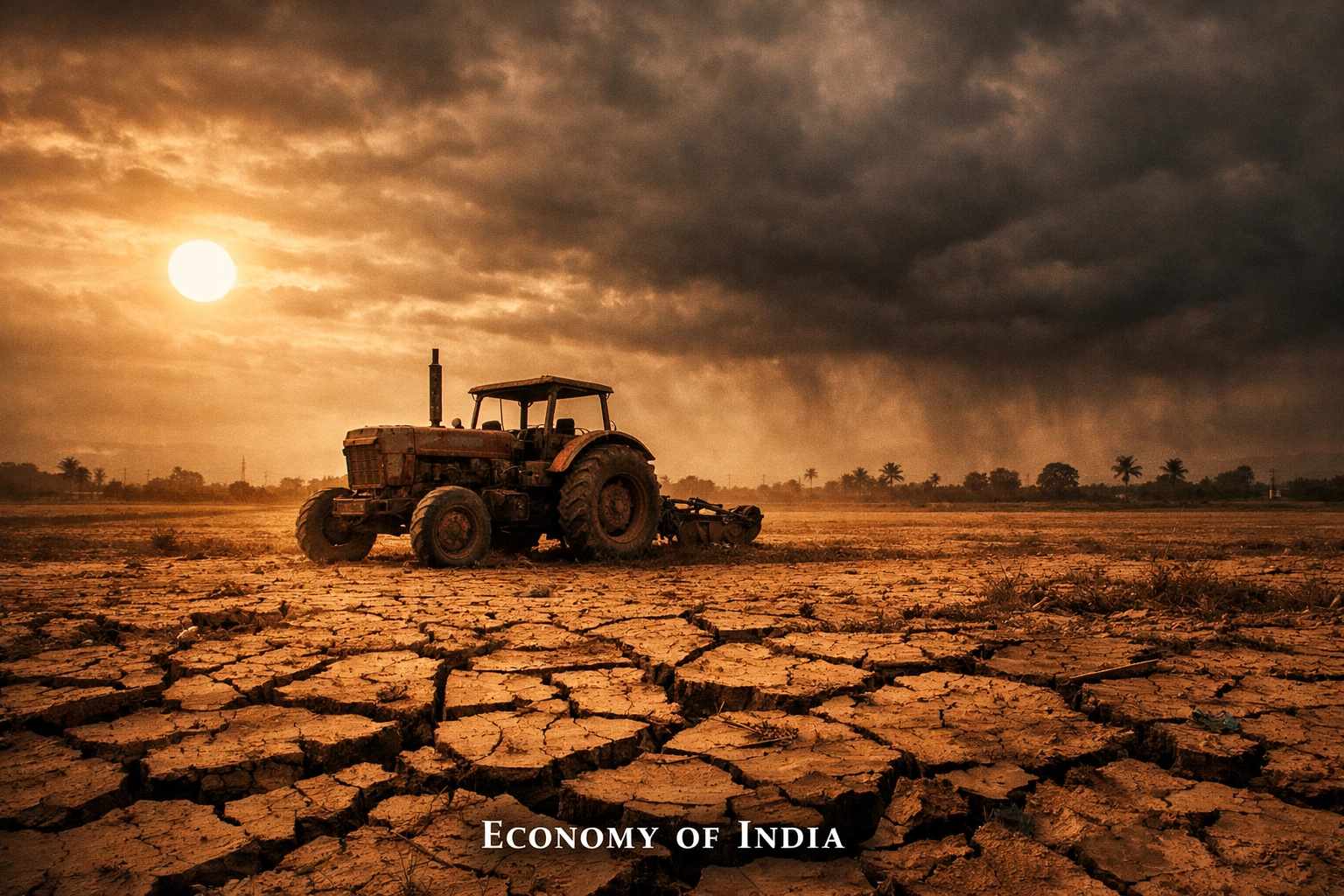
The rural market is the lifeblood of India’s consumer giants. Companies dealing in two-wheelers, tractors, and fast-moving consumer goods (FMCG) are particularly exposed. When agricultural yields drop, the first thing a farmer cuts is discretionary spending. We have already seen signs of this in the Indian business updates regarding March 2026 PMI, where global tensions are already squeezing margins. Adding a domestic monsoon failure to this mix creates a toxic cocktail for corporate profitability.
Analyzing the Risks to the Economy of India via Agricultural Fragility
To understand the gravity, one must look at the specific industries that will be gutted. It starts with the agrochemical and fertilizer sectors. Lower planting acreage means lower demand for inputs. But the pain doesn't stop at the farm gate. The banking and finance sector: specifically those with heavy exposure to Microfinance Institutions (MFIs) and rural lending: will face a surge in Non-Performing Assets (NPAs). When the harvest fails, loan defaults are inevitable.
The Economy of India relies on the liquidity provided by rural consumption to keep the wheels of the urban economy turning. If the Reserve Bank of India (RBI) is forced to hike interest rates to combat the inevitable food inflation caused by low crop yields, the cost of capital will skyrocket for everyone. This creates a double-whammy: lower demand and higher operational costs.
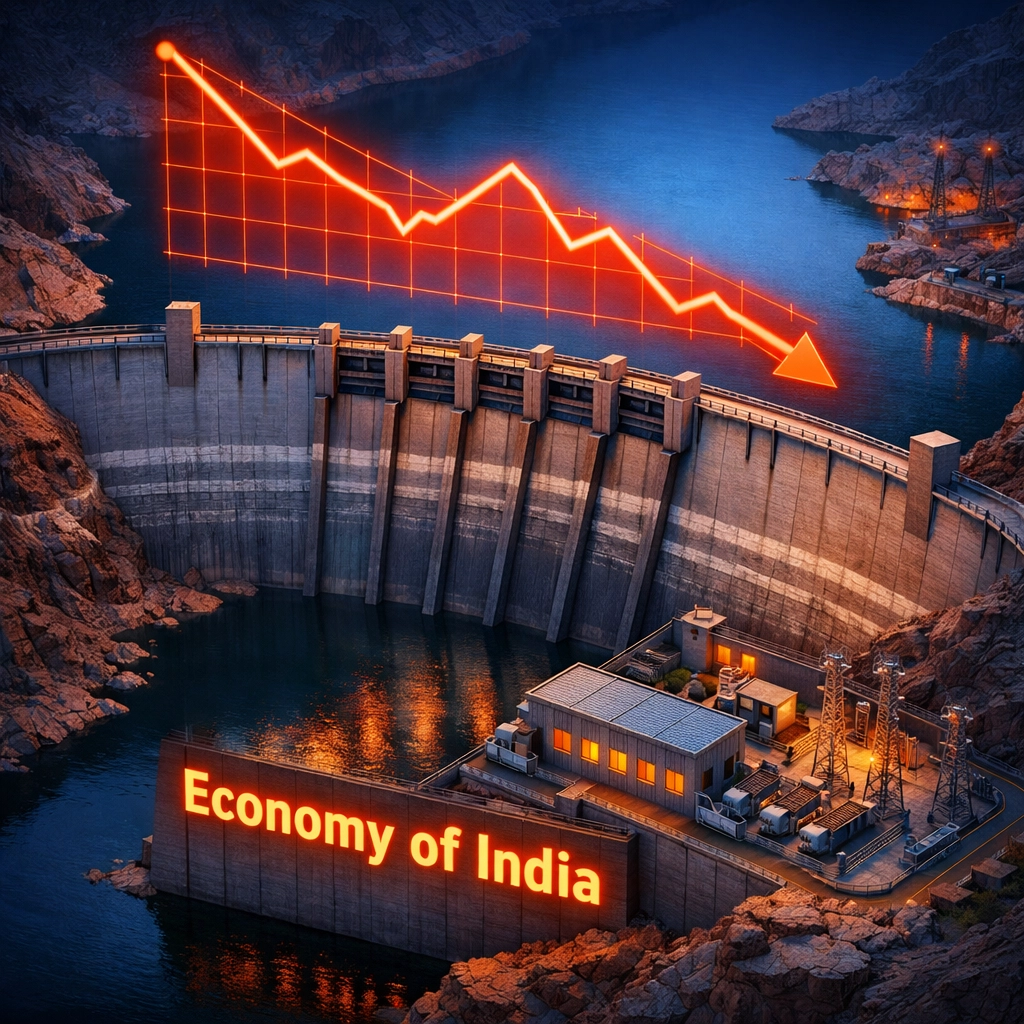
Furthermore, the power generation sector is at extreme risk. Hydro-electric power constitutes a significant portion of India's energy mix. A weak monsoon depletes reservoir levels, leading to power shortages that can halt industrial production in key manufacturing hubs. This is not just a rural problem; it is a national security concern. For more insights on how these trends affect the broader landscape, you can visit our Home News section for real-time updates.
Future-Proofing the Economy of India Against Climate Volatility
How does a business survive this? The answer lies in diversification and aggressive digital transformation. Waiting for the rain is a 20th-century strategy. In 2026, the Economy of India requires businesses to be lean, data-driven, and capable of pivoting to urban or international markets when domestic rural demand evaporates.
- Supply Chain Resilience: Businesses must secure their raw materials now. If food prices explode due to low yields, those without long-term contracts will see their margins incinerated.
- Digital Integration: Leveraging tools like NFC-enabled digital business cards and advanced CRM systems allows for more precise targeting of resilient consumer segments, bypassing the decimated rural middle class.
- Geopolitical Hedging: Look at the European Union’s latest trade events to identify export opportunities that can offset domestic slumps.
The government's fiscal deficit is also likely to widen as they implement farm loan waivers and increased food subsidies to prevent social unrest. This could lead to a downgrade in sovereign ratings, making foreign investment more expensive. As an industry leader, your "mission" is no longer just growth: it is survival through strategic agility.
Macro-Economic Volatility and the Inflation Trap
We cannot ignore the specter of inflation. A weak monsoon is the primary catalyst for food inflation in the Economy of India. When the prices of staples like rice, wheat, and pulses rise, it eats into the disposable income of the urban middle class as well. This reduces the overall "value proposition" of the Indian market for foreign investors who are looking for stable, low-inflation growth.
The current geopolitical climate, as tracked by the US Department of State, suggests that global commodity prices are already volatile. If India is forced to import massive quantities of food grains to stabilize domestic prices, the Indian Rupee will come under immense pressure. A weaker Rupee makes imports like oil more expensive, further fueling the inflationary fire. This is a "cascading failure" scenario that every CFO should be modeling right now.

For those looking to understand the deeper corporate structures navigating these waters, check out our About Us page to see how Business Tantra provides the analytical edge needed in these turbulent times. We don't just report news; we provide the data-driven insights necessary to protect your capital.
Strategic Pivot: Moving Toward Industrial Autonomy
To mitigate the damage to the Economy of India, there must be an exponential growth in non-agrarian sectors. The "China Plus One" strategy and the push for electronics manufacturing are vital, but they cannot replace the consumption power of 800 million rural citizens overnight.
Companies that have revitalized their hiring strategies to include remote work models are finding they can reduce overhead costs significantly, providing a much-needed buffer against domestic market contractions. Efficiency is no longer an option; it is a mandate.

Investment tips for 2026 include moving toward defensive stocks: utilities, pharmaceuticals, and high-end tech: that are less sensitive to the monsoon cycle. The stock market today might be ignoring the El Niño warnings, but history shows that the market eventually reacts with extreme prejudice when the first "below normal" rainfall data hits the wires in June.
Conclusion
The Economy of India is at a crossroads where the forces of nature are set to collide with the ambitions of a rising superpower. A weak monsoon in 2026, driven by a strengthening El Niño, is not a minor hurdle; it is a transformative event that will redefine the winners and losers of the fiscal year.
From the collapse of rural demand to the explosion of food inflation and the straining of the banking sector, the risks are manifold and lethal to unoptimized business models. However, by acknowledging these threats early, securing supply chains, and pivoting toward more resilient market segments, savvy operators can survive the bloodbath.
Stay informed with the latest updates on Business Tantra and ensure your strategy is as aggressive as the challenges we face. The rains may fail, but your business doesn't have to. The time to hedge is now. If you're ready to take your corporate networking to the next level despite the economic headwinds, explore our Shop for tools designed for the modern executive. Don't let a bad season kill your profits( evolve.)