







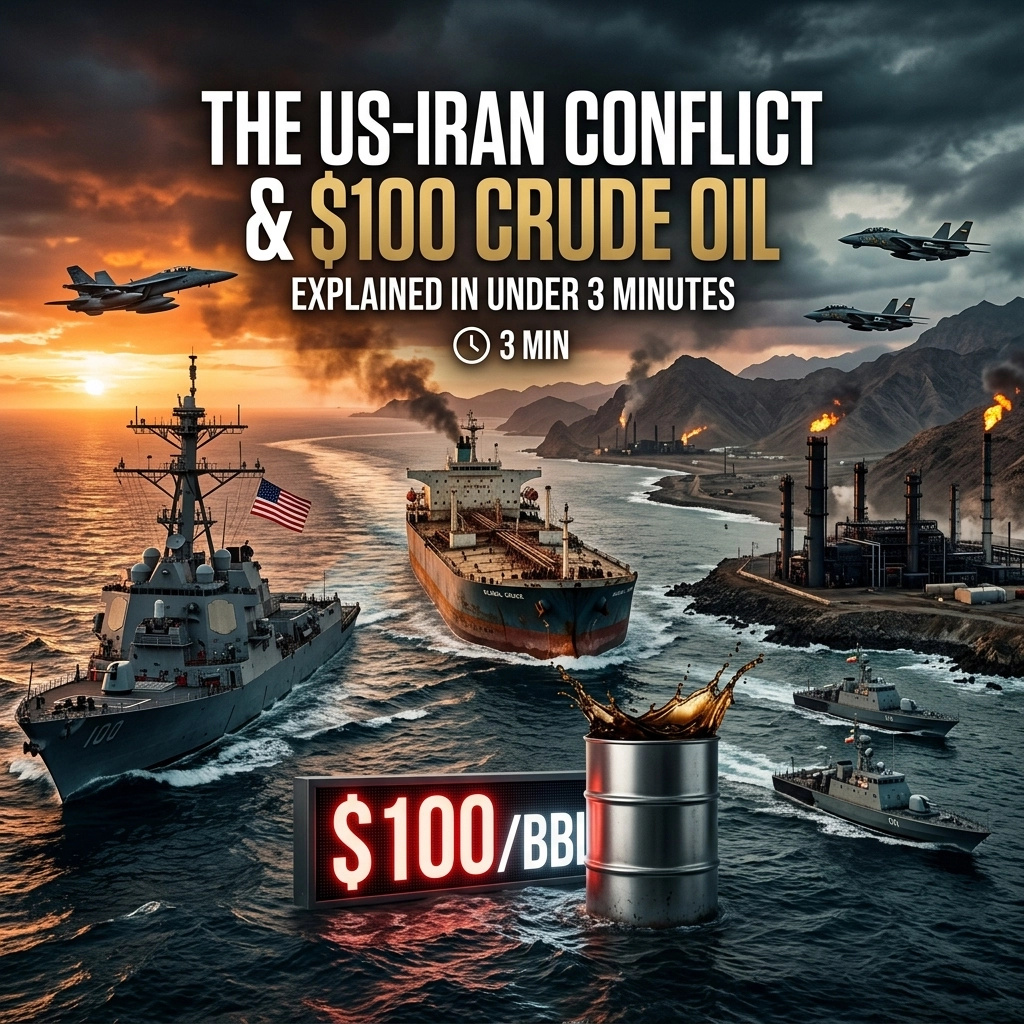


















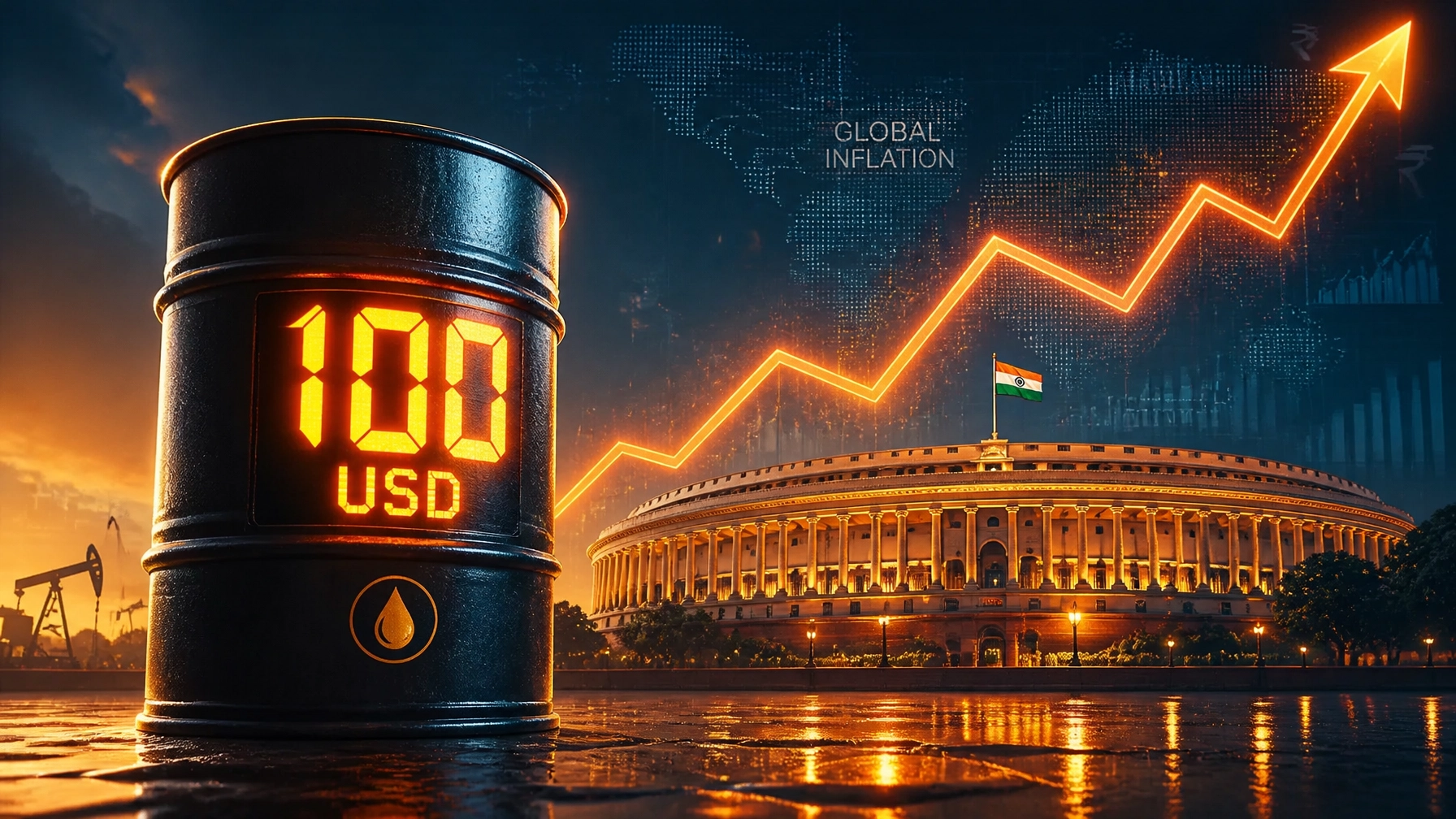

The global energy landscape is currently undergoing a seismic shift, primarily driven by escalating geopolitical tensions in West Asia. For a nation like India, which imports approximately 85% of its crude requirements, Oil at $100 per barrel is not merely a number on a trading screen: it is a formidable catalyst for change across every tier of the domestic economy. As the West Asia crisis deepens, the ripples are being felt from the boardrooms of Mumbai to the agricultural hubs of Punjab.
In this analytical exploration, Business Tantra examines how this surge in energy costs is reshaping fiscal policies, corporate strategies, and the broader macroeconomic stability of India.
1. The Inflationary Ripple Effect: Beyond the Petrol Pump
The most immediate and pervasive impact of Oil at $100 is the upward pressure on the Consumer Price Index (CPI). Crude oil serves as the foundational input for almost every sector of the modern economy. When prices breach the triple-digit threshold, the "pass-through" effect becomes inevitable.
- Direct Impact: Higher costs for petrol, diesel, and Liquefied Petroleum Gas (LPG) directly deplete household disposable income, acting as a regressive tax on the populace.
- Logistics and Supply Chains: The transport sector is the backbone of Indian commerce. Increased freight rates lead to a surge in the price of essential commodities, including food and manufactured goods.
- Fertilizer Costs: India’s agricultural sector is particularly vulnerable, as natural gas is a primary feedstock for urea production. A spike in global energy prices often necessitates a substantial increase in government subsidies to protect the "mission-critical" food security of the nation.
Utilizing data-driven insights, the Reserve Bank of India (RBI) has historically noted that every 10% increase in crude prices can contribute roughly 70 to 80 basis points to headline inflation. With oil hovering at $100, the central bank’s mandate to maintain inflation within the 4% target becomes increasingly difficult, potentially delaying much-anticipated interest rate cuts.
2. Fiscal Discipline and the Budget 2026-27 Tightrope
The Union Budget is often a delicate balancing act, and high oil prices act as a significant disruptor. As we navigate the fiscal year, the "value proposition" of India’s economic growth is being tested by external shocks.

To prevent a complete erosion of consumer sentiment, the government may be compelled to utilize a legitimate purpose of fiscal intervention: reducing excise duties on fuel. While this provides temporary relief to the public, it simultaneously narrows the government’s revenue stream.
Furthermore, the burgeoning subsidy bill for fertilizers and cooking gas puts immense pressure on the fiscal deficit targets. Analysts at Business Tantra observe that maintaining a trajectory of fiscal consolidation while providing a "revitalized" social safety net is the primary challenge facing the Ministry of Finance today.
3. The Current Account Deficit and Rupee Volatility
The external sector remains the most sensitive barometer of India’s energy dependence. A prolonged period where we see Oil at $100 drastically widens the Current Account Deficit (CAD).
It is estimated that every $1 per barrel increase in crude prices adds approximately $1 billion to India's annual import bill. Moving from a baseline of $75 to $100 creates a massive $25 billion hole in the trade balance. This "exponential growth" in the import bill exerts downward pressure on the Indian Rupee.
As the Rupee depreciates against the US Dollar, it creates a secondary inflationary cycle: making even non-oil imports more expensive. For business professionals and investors, this volatility necessitates sophisticated hedging strategies to safeguard corporate margins against currency risk.
4. Sectoral Winners and Losers: A Strategic Realignment
While the macro picture may seem challenging, the crisis is acting as a catalyst for a massive sectoral realignment.
- Aviation and Logistics: These sectors face the most significant headwind, as Aviation Turbine Fuel (ATF) can account for up to 40% of an airline's operating costs.
- FMCG and Manufacturing: Companies are being forced to adopt "lean manufacturing" and optimize their distribution networks to combat rising input costs.
- Renewable Energy: High fossil fuel prices have inadvertently accelerated the "democratization" of green energy. Solar and wind projects, which were previously compared on a marginal cost basis, now offer a superior and stable value proposition.
- Domestic Oil Producers: Entities engaged in domestic exploration and production (E&P) are seeing revitalized balance sheets as their realizations improve in tandem with global benchmarks.
5. Strategic Petroleum Reserves and Energy Diplomacy
In response to the West Asia crisis, India is intensifying its focus on energy security through strategic reserves and diversified sourcing. The "legitimate purpose" of these reserves is to provide a buffer during supply disruptions.
The government is actively exploring "G2G" (Government-to-Government) agreements to secure long-term contracts at fixed prices, thereby insulating the economy from the spot market's volatility. This geopolitical maneuvering is essential for maintaining the "exponential growth" trajectory that India has promised its global investors.
Furthermore, the push toward electric vehicles (EVs) and green hydrogen is no longer just an environmental goal; it is a strategic economic imperative. Reducing the "oil-to-GDP" intensity of the Indian economy is the only long-term solution to ensure that future West Asia crises do not hold the nation’s growth hostage.
Conclusion
The persistence of Oil at $100 represents a transformative moment for the Indian economy. While the short-term impacts on inflation and the fiscal deficit are undeniably challenging, the crisis is also serving as a powerful incentive for structural reform. By accelerating the transition to renewable energy and tightening fiscal efficiency, India is attempting to turn a systemic vulnerability into a cornerstone of future resilience.
Ultimately, the ability of the Indian economy to navigate these turbulent waters will depend on a combination of prudent monetary policy from the RBI, strategic fiscal management by the government, and the inherent adaptability of the Indian corporate sector. At Business Tantra, we remain optimistic that the "mission" of sustainable 7%+ growth remains intact, provided the nation continues to innovate in the face of these global headwinds.
Stay updated with the latest in business and economics by visiting Business Tantra. For detailed analysis on market trends, check out our Economics section.
References: