

























California’s AI Bill Matters: How New Laws Are Tracking Workforce Shifts

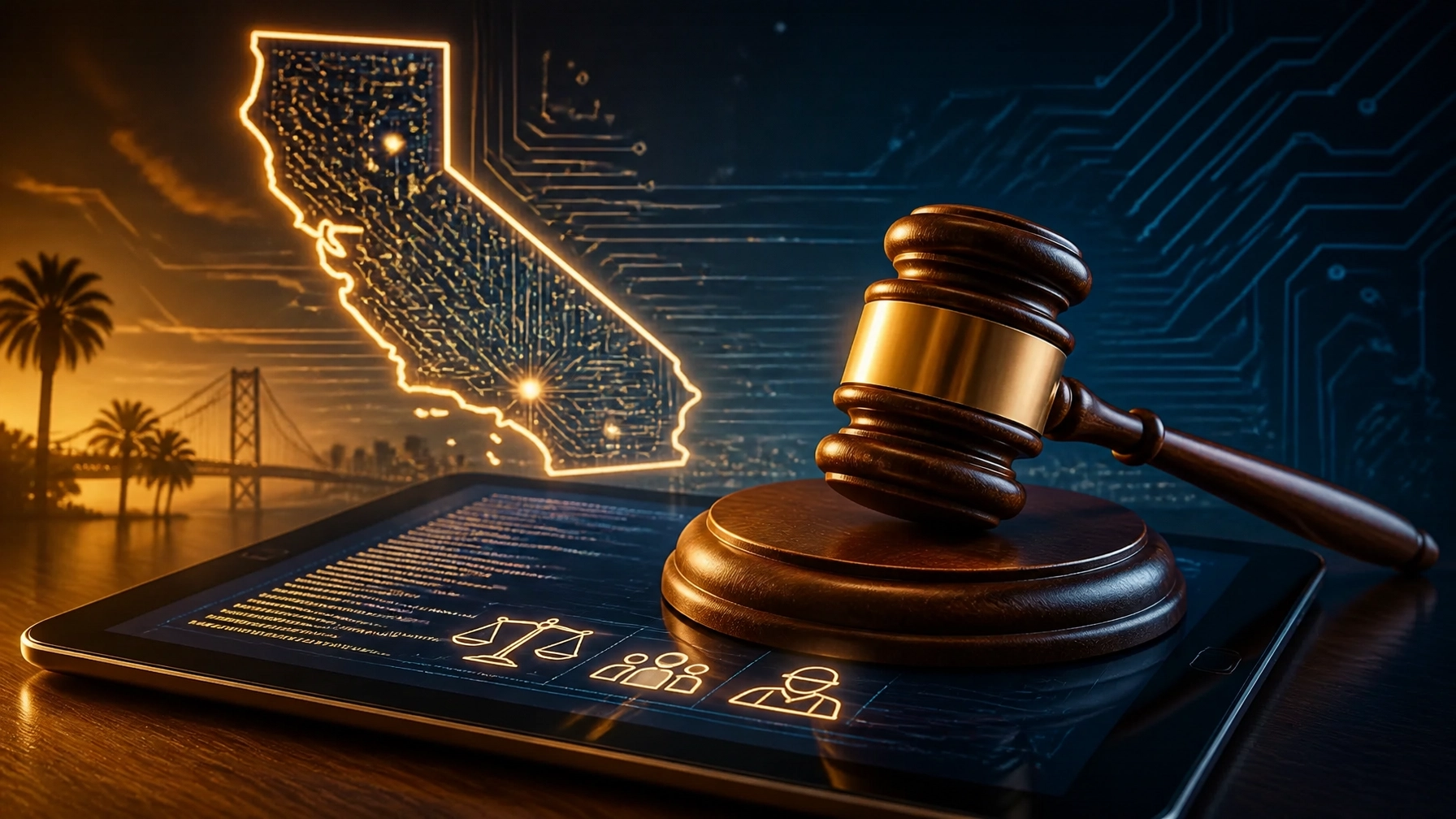
In the rapidly evolving landscape of global technology, California’s AI Bill: specifically the discussions surrounding SB 1047 and subsequent executive actions: has emerged as a significant catalyst for change in how governments oversee the intersection of innovation and labor. As the technological epicenter of the world, California's legislative trajectory often serves as a definitive blueprint for other nations, including the burgeoning startup ecosystem in India. For business professionals and investors, understanding these legal shifts is no longer optional; it is a fundamental requirement for navigating the future of work.
The legislative discourse in Sacramento has moved beyond mere theoretical safety concerns. It has transitioned into a tangible effort to democratize data regarding workforce displacement and to revitalize the protections afforded to employees in the age of automation. While the specific provisions of SB 1047 faced a high-profile veto, the underlying mission remains clear: to ensure that the exponential growth of artificial intelligence does not come at the expense of economic stability or worker rights.
The Strategic Pivot: From Safety Protocols to Workforce Transparency
When analysts discuss California’s AI Bill, they are often referring to the Safe and Secure Innovation for Frontier Artificial Intelligence Models Act. Although Governor Gavin Newsom ultimately vetoed the bill in its initial form, citing concerns that it might stifle innovation, the legislative intent has already permeated the state’s regulatory framework. The bill’s core philosophy: that "covered models" with massive compute power require oversight: has been revitalized through a series of strategic executive orders and secondary bills focused on labor market transparency.
This shift is particularly relevant for those following latest business stories on Business Tantra, as it signals a transition from "if" AI will be regulated to "how" its impact on human capital will be tracked. The state is now moving toward a model where data-driven insights will dictate labor policy, moving from abstract fears to concrete operational tools.

1. Strengthening Whistleblower Protections in Tech
One of the most transformative elements within the framework of California’s AI Bill was the emphasis on whistleblower protections. In the high-stakes environment of frontier AI development, the "mission" of safety often clashes with the "value proposition" of speed-to-market. The proposed laws aimed to provide a legitimate purpose for employees to report safety risks or non-compliance without the fear of career-ending retaliation.
For the entrepreneur community in India, these developments offer a preview of the ethical standards that may soon be required globally. By protecting the labor force that builds these models, the state effectively creates an internal "kill switch" powered by human oversight. Even without the full passage of SB 1047, the cultural shift toward transparency is already influencing how major tech entities handle internal dissent and safety auditing.
2. The New Labor Dashboard: Monitoring Exponential Job Shifts
California is not just regulating; it is observing. Following the executive directives that arose in the wake of the California’s AI Bill debate, the state’s Employment Development Department (EDD) has been tasked with creating a sophisticated public dashboard. This tool is designed to track AI’s impact on employment across various sectors using real-time unemployment insurance data.

This initiative represents a move toward "data-driven insights" that could redefine how we view the startup growth strategies of the future. By tracking which sectors are experiencing the most significant AI-driven restructurings, the state can:
- Identify high-risk industries before mass layoffs occur.
- Allocate public funding to specific worker retraining programs.
- Monitor whether productivity gains are being shared with the workforce.
Such a system acts as an electronic communications network for labor, providing the precision needed to balance economic growth with social welfare.
3. Revitalizing the WARN Act for the AI Era
Mass layoffs in the tech sector, such as those seen at Meta and other Silicon Valley giants, have traditionally been governed by the Worker Adjustment and Retraining Notification (WARN) Act. However, the discourse around California’s AI Bill has highlighted significant gaps in this aging legislation. Current discussions are focusing on how to update these laws to account for "AI-driven" restructurings, which may happen more rapidly and frequently than traditional industrial shifts.
Proposed updates suggest that companies may soon be required to provide more detailed justifications for layoffs that occur simultaneously with large-scale AI implementation. This legalistic terminology: "legitimate purpose" and "operational necessity": is becoming the new battleground for corporate lawyers and labor advocates alike.

4. California as a Global Regulatory Benchmark
Why does California’s AI Bill matter to a reader in Mumbai or Bangalore? Because the "California Effect" is a well-documented phenomenon in global economics. When a market as large as California sets a standard for data privacy (like the CCPA) or AI safety, global corporations often adopt those standards across all jurisdictions to simplify compliance.
For those interested in business leadership insights, the movement in California suggests that the era of "move fast and break things" is being replaced by a more mature phase of "innovate with accountability." This shift is likely to influence international business agreements and cross-border trade negotiations, as seen in recent high-level international business signings.
5. Democratizing AI Benefits Through Training
A core tenet of the revised legislative approach is the belief that AI should democratize opportunity rather than concentrate wealth. The state is exploring worker ownership models and expanded AI skills programs for young people entering the workforce. This is a critical component for ensuring that the "catalyst for change" that AI represents leads to a revitalized middle class rather than a bifurcated economy.
The MSME business platform model, which is vital to India’s economy, can learn much from California’s focus on providing small businesses with the tools to compete in an AI-dominated world. By offering public AI compute clusters (like the proposed "CalCompute"), the government aims to lower the barrier to entry for smaller players, preventing a monopoly of intelligence.
Conclusion
The evolution of California’s AI Bill from a single, controversial safety mandate into a broader suite of labor-focused executive actions marks a definitive shift in the regulatory landscape. While the initial bill may have been stalled, the mission to protect and track the workforce during this period of exponential growth has only intensified.
For business professionals, the takeaway is clear: the future of AI is as much about people as it is about processors. By tracking workforce shifts with the same rigor they apply to market performance, California is setting a global standard for responsible innovation. Whether you are a startup founder in India or a policy maker in Europe, the lessons from Sacramento will likely be the transformative solutions of tomorrow. Stay updated on these global shifts and more by following Business Tantra, your source for the latest in economics and business news.