






















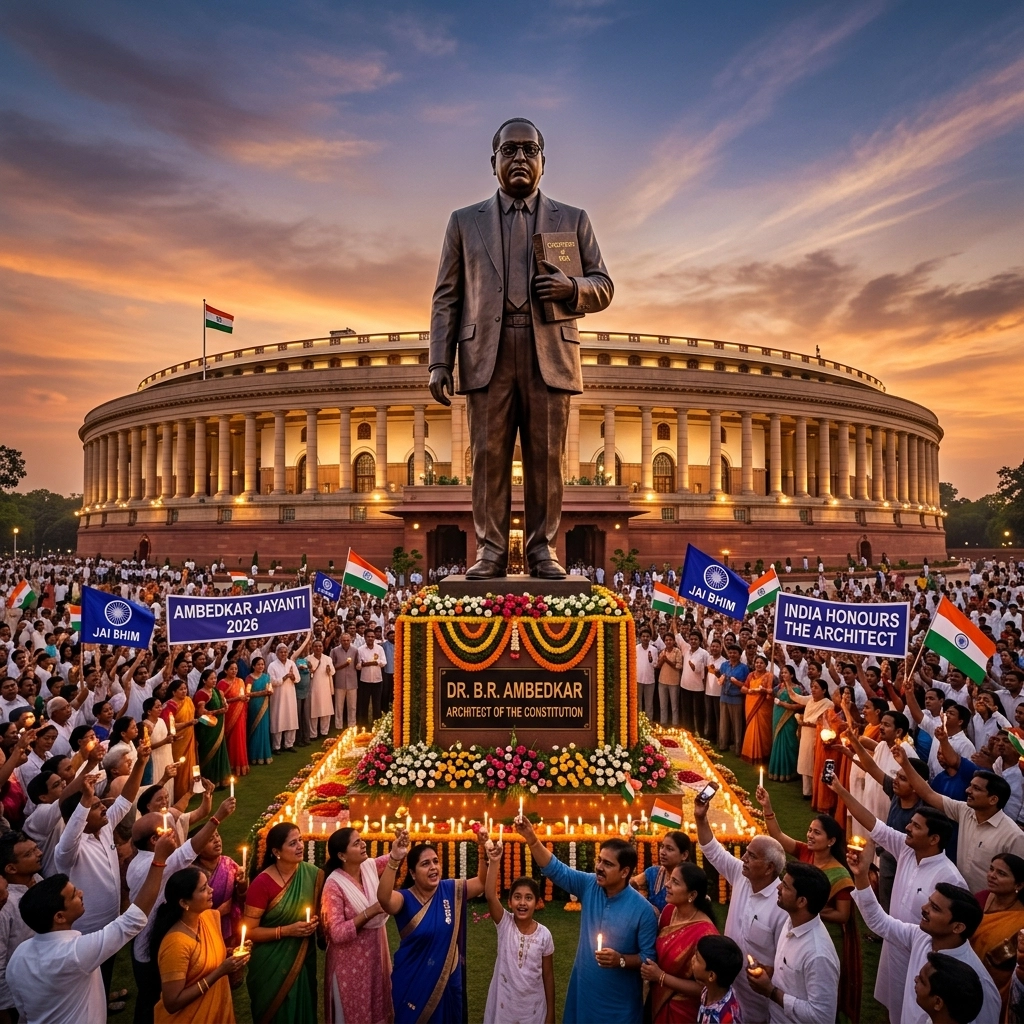
Ambedkar Jayanti 2026: India Honours the Architect

Ambedkar Jayanti stands as a pivotal moment in the national calendar, and in 2026, the 135th birth anniversary of Dr. B.R. Ambedkar has taken on a profound significance. As the nation reflects on the legacy of the "Architect of the Indian Constitution," the atmosphere across New Delhi and the financial hubs of Mumbai reflects a blend of solemn tribute and high-voltage political unity. For those following Indian business updates, today’s celebrations have also necessitated a pause in the frantic pace of the markets, as the Bombay Stock Exchange (BSE) and National Stock Exchange (NSE) remain closed to observe this historic milestone.
Dr. Bhimrao Ramji Ambedkar, born on April 14, 1891, was far more than a social reformer; he was a revolutionary economist and a jurist whose theories continue to serve as a catalyst for change in modern Indian governance. Today, as President Droupadi Murmu and Prime Minister Narendra Modi lead the nation in prayer and remembrance, the relevance of Ambedkar’s vision for an equitable economic landscape has never been more apparent.
1. A Moment of Political Synergy at Prerna Sthal
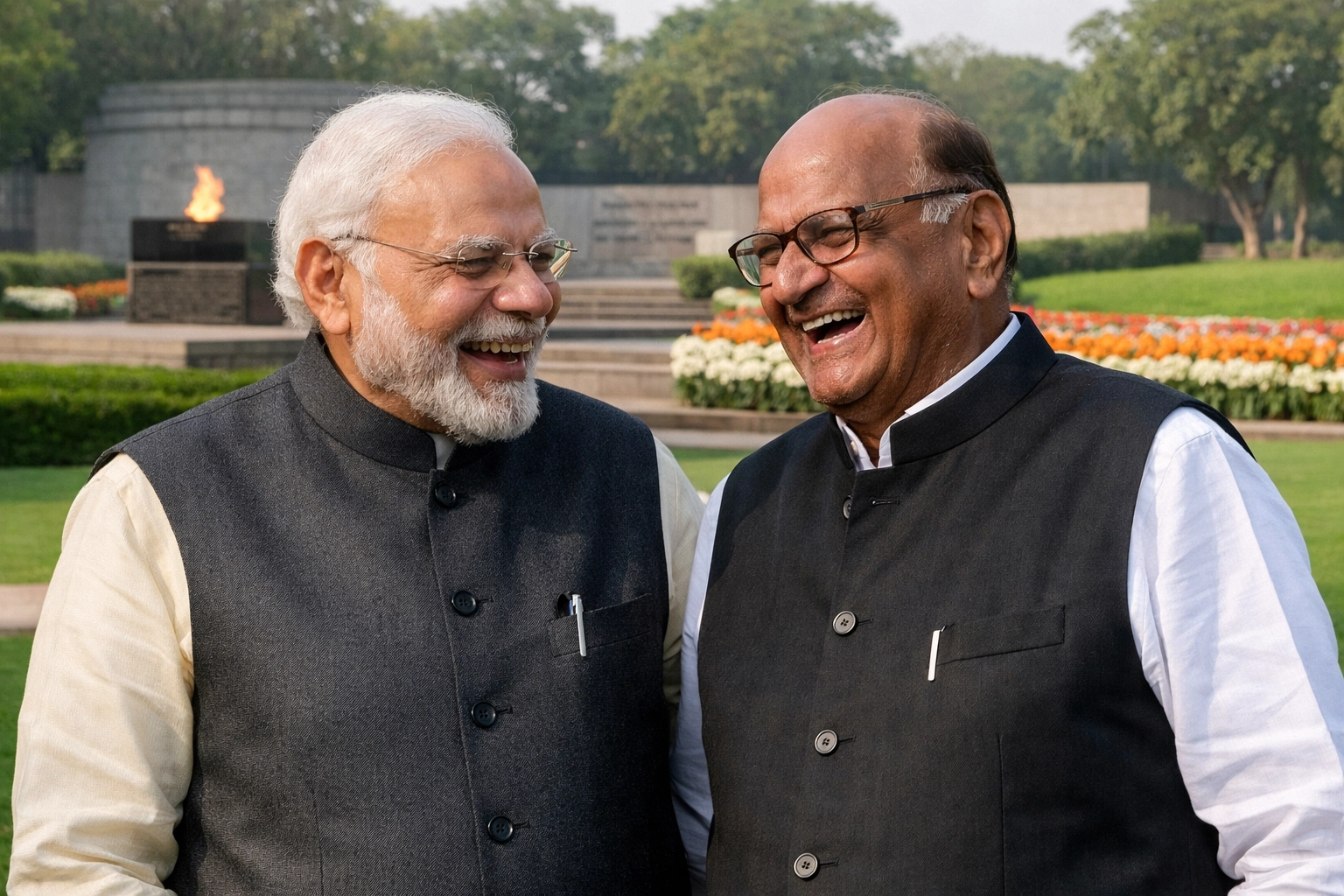
In a rare display of political camaraderie that has captured the attention of national media, Prime Minister Narendra Modi and Mallikarjun Kharge, the President of the Indian National Congress, were seen sharing a light-hearted moment and a laugh at the newly inaugurated Prerna Sthal. This interaction, occurring during the floral tribute ceremony, signifies a temporary thawing of political tensions in honor of the man who drafted the rules of Indian democracy.
The high-voltage nature of this year's Ambedkar Jayanti is underscored by the government's commitment to "Viksit Bharat 2047," a vision that officials claim is rooted in Ambedkar’s principles of industrialization and social equality. The camaraderie between the Treasury and Opposition benches today serves as a reminder that the constitutional framework remains the ultimate "legitimate purpose" of the Indian state, ensuring that even in a polarized era, the fundamental rights of the citizenry remain protected.
2. President Murmu’s Message on Social Justice
President Droupadi Murmu, in her address to the nation, emphasized that social justice is not merely a political slogan but a foundational requirement for "exponential growth." She noted that Dr. Ambedkar’s struggle for the rights of the underprivileged was a mission to democratize the very idea of India.
According to reports from The Times of India, the President’s message highlighted how the digital revolution in 2026 is finally fulfilling Ambedkar’s dream of financial inclusion. By leveraging data-driven insights and AI-led governance, the Indian state is now able to reach the "last mile" with a precision that was previously unimaginable. This "revitalized" approach to social justice is seen as a key pillar in maintaining India’s status as a stable investment destination.
3. The Economist Behind the Constitution
While often remembered for his social advocacy, Ambedkar’s role as a sophisticated economist is frequently highlighted in Indian business updates. He was the first Indian to pursue a doctorate in economics abroad, and his thesis, The Problem of the Rupee, was instrumental in the conceptualization of the Reserve Bank of India (RBI).
In 2026, as the RBI navigates complex global inflationary pressures and the shift toward the Digital Rupee, Ambedkar’s advocacy for a stable currency and fiscal discipline remains highly relevant. Business leaders today are revisiting his works to understand the structural reforms needed to sustain a $7 trillion economy. His vision was never just about redistribution; it was about creating a robust "electronic communications network" of economic opportunity where every citizen could participate in the value proposition of a growing nation.
4. Market Impact and Indian Business Updates
For the trading community, Ambedkar Jayanti serves as a scheduled cooling period. The closure of the equities, debt, and currency markets allows institutional investors to recalibrate their portfolios following the recent volatility in West Asia. According to Business Standard, while the physical floors are quiet, the "GIFT Nifty" continues to offer cues for the reopening on April 15.
The impact of such national holidays on productivity is a frequent topic of debate in corporate circles. However, many HR tech firms and startups listed on our Home News section argue that these breaks are essential for maintaining the mental well-being of the modern workforce. The 2026 corporate landscape is increasingly adopting "Inclusive Growth" models that mirror Ambedkar’s focus on labor rights and fair wages.
5. Global Recognition of the 135th Anniversary
The celebrations are not limited to Indian soil. From the London School of Economics to Columbia University in New York, the global Indian diaspora is celebrating Ambedkar Jayanti with academic seminars and cultural galas. The United Nations has also recognized the day as a symbol of the global fight against systemic inequality.
This international recognition serves to strengthen India's "soft power," positioning the country as a leader in human-centric development. For entrepreneurs looking to expand globally, as seen in our About Us section, the branding of "India as a Democracy of Rights" is a powerful tool in attracting foreign direct investment (FDI).
6. The 2026 Vision: Digital Equality
A significant theme of this year's celebrations is "Digital Ambedkarism." The government has launched several initiatives aimed at ensuring that the "data-driven insights" of the modern economy do not exclude the marginalized. There is a concerted effort to ensure that the AI algorithms used in credit scoring and recruitment are free from the historical biases that Dr. Ambedkar fought against.
For businesses, this means a shift toward more transparent and ethical AI models. Companies that fail to prioritize these values may find themselves at odds with the evolving "IT Rules" and public sentiment. In this context, Dr. Ambedkar’s focus on "Constitutional Morality" is being translated into "Corporate Morality" for the 21st century.
7. Commemorative Events and Public Celebration
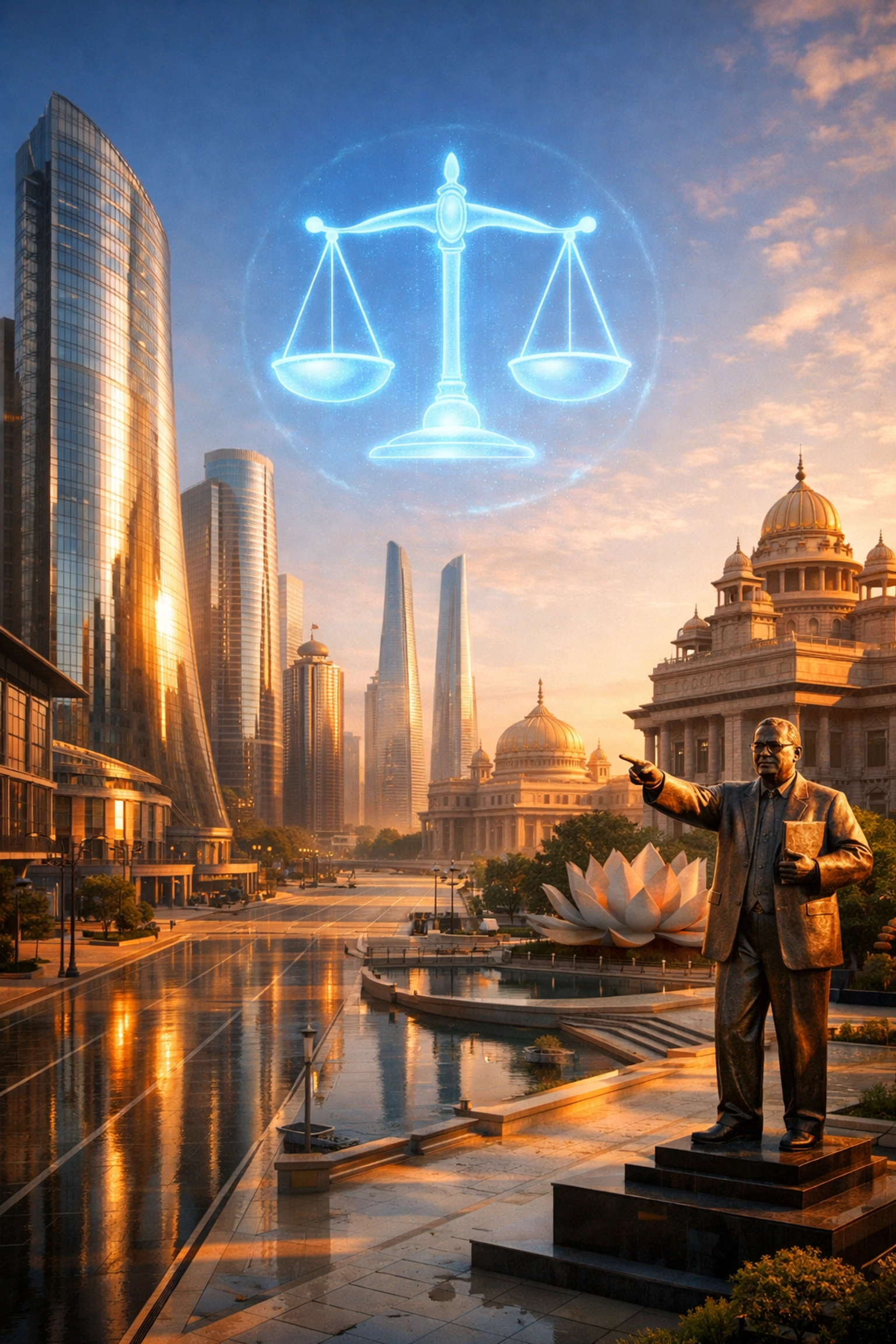
Across the country, statues of Babasaheb have been adorned with blue garlands, and community feasts (Bhandaras) are being organized at a massive scale. The "Prerna Sthal" in the national capital has become a site of pilgrimage, with thousands of citizens arriving to pay their respects.
The government has also released a special digital commemorative coin and an NFT series depicting the life of Dr. Ambedkar, aiming to engage the Gen Z population. This move to "democratize" historical legacy through technology is a testament to how far India has come since 1947. For more information on how technology is reshaping Indian heritage, visit our Blog Layout.

8. Analyzing the Value Proposition of Social Harmony
From a business perspective, the social harmony championed on Ambedkar Jayanti is a prerequisite for economic stability. Political scientists and economic analysts often point out that India’s ability to remain a "vibrant democracy" despite its immense diversity is its greatest competitive advantage.
Dr. Ambedkar’s emphasis on "Fraternity" as a pillar of the Republic is directly linked to the ease of doing business. When social friction is reduced, transaction costs fall, and the environment becomes conducive to long-term investment. This is why the tributes paid by India's top CEOs today are not just performative; they are an acknowledgement of the legal and social framework that allows their enterprises to thrive.
9. Challenges Ahead: The Road to 2047
Despite the celebratory tone, the 135th anniversary also brings into focus the challenges that remain. Wealth inequality continues to be a concern, with recent studies suggesting that the top 10% own a significant portion of the nation’s assets. Addressing this through the "Ambedkarite lens" of land reform and educational access remains a priority for the 2026 legislative agenda.
As we move toward the mid-century mark, the "mission" for India is to ensure that the "exponential growth" of the Sensex translates into "inclusive growth" for the hinterlands. This requires a shift from purely profit-driven motives to a stakeholder-driven approach, a concept that Dr. Ambedkar essentially pioneered through his work on labor laws and the Hindu Code Bill.
10. Conclusion: A Legacy Revitalized
The celebration of Ambedkar Jayanti 2026 is a definitive statement of India's enduring commitment to the values of justice, liberty, and equality. The "High-Voltage" interactions between political leaders at Prerna Sthal and the nationwide pause in the financial markets reflect the deep respect for the man who provided the blueprint for the world's largest democracy.
For the business community, the takeaway is clear: the principles of Dr. B.R. Ambedkar are not just historical artifacts but active operational tools for building a sustainable and equitable future. As we look ahead, the integration of his vision into the "Indian business updates" of tomorrow will be the true measure of our success as a nation.
Whether you are an investor looking for stability or a citizen seeking justice, the "Architect of the Indian Constitution" continues to be the guiding light. For further insights into India's evolving socio-economic landscape, we invite you to explore our Contact Us page or register for our daily newsletter at our Register portal.
Ambedkar Jayanti 2026 is more than a holiday; it is a reaffirmation of the Indian spirit. Jai Bhim!