























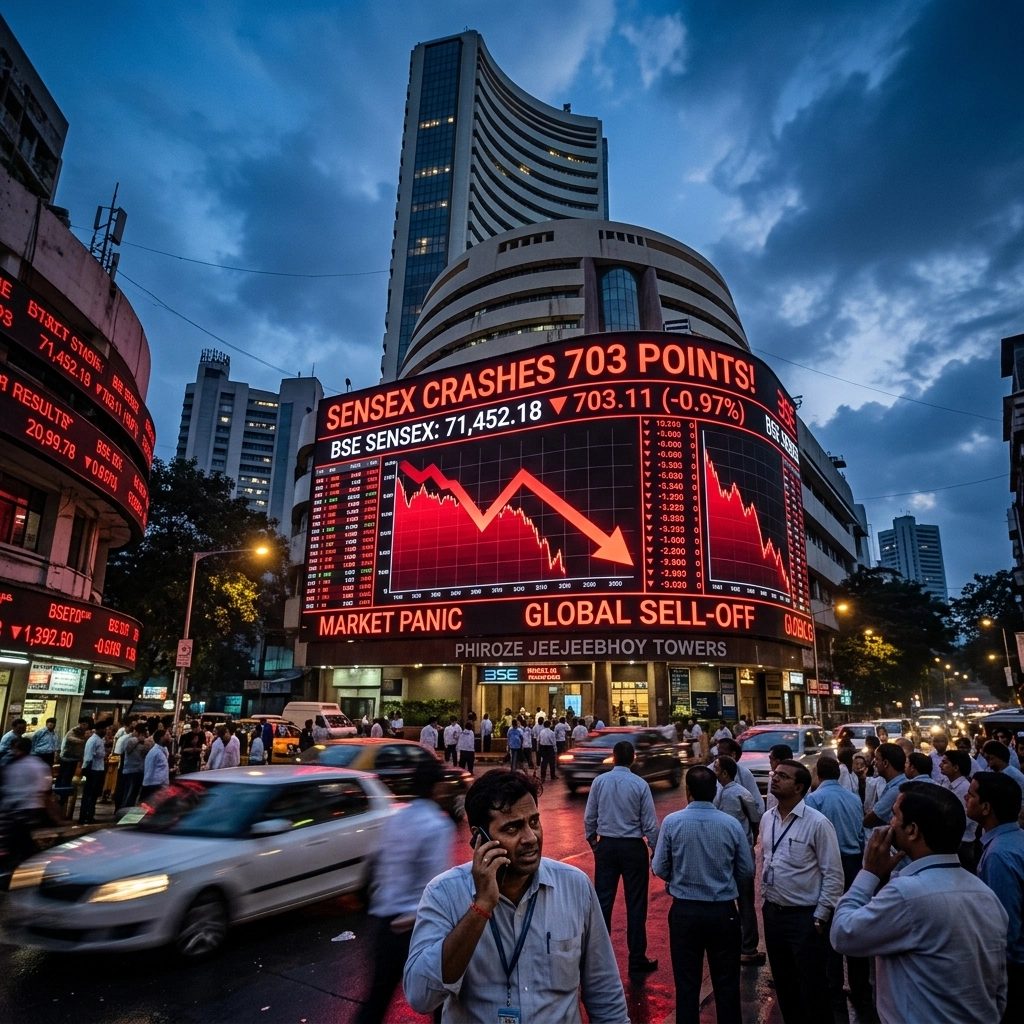

Stock market today witnessed a significant bloodbath on Dalal Street as the BSE Sensex plummeted by 703 points, closing at a sobering 74,321. This sharp correction, mirrored by the Nifty 50 which settled at 23,843, has sent ripples of concern through the investor community. The primary catalyst for this downturn is a perfect storm of escalating geopolitical tensions in West Asia and a subsequent spike in global energy prices. For anyone tracking indian stock market news, the sudden shift from the recent record highs to a defensive posture highlights the inherent fragility of global financial ecosystems when faced with regional instability.
The sell-off was broad-based, wiping out billions in investor wealth in a single session. While the indices attempted a brief recovery in the early afternoon, the weight of foreign fund outflows and the looming threat of a prolonged conflict in the Middle East proved too heavy to lift. As we analyze the intraday movements, it becomes clear that the "risk-off" sentiment has returned with a vengeance, forcing institutional and retail investors alike to reconsider their exposure to high-beta sectors.
The Strait of Hormuz Crisis: A Catalyst for Market Volatility
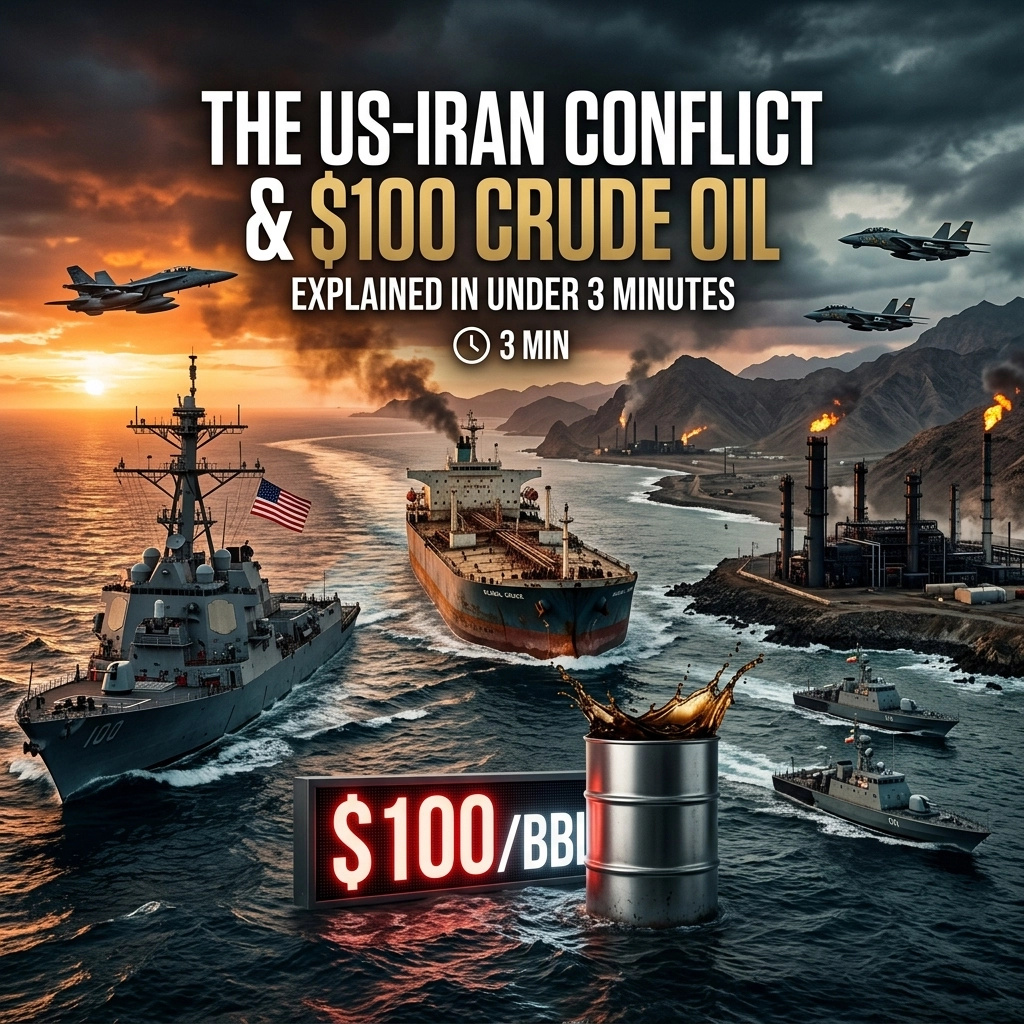
The central driver behind the current market turbulence is the alarming escalation in the Iran-US conflict. Reports emerging on April 14, 2026, suggest a near-total blockade of the Strait of Hormuz: a vital maritime artery through which nearly 20% of the world’s liquefied natural gas (LNG) and oil passes. The threat of sea mines and direct military engagement has led to a complete "risk premium" being baked into market valuations overnight.
For the stock market today, this isn't just a political headline; it is a direct threat to India’s energy security. India, which imports over 80% of its crude oil requirements, is particularly vulnerable to disruptions in this corridor. The fear of a supply-side shock has revitalized the bearish narrative, leading to a massive unwinding of long positions.
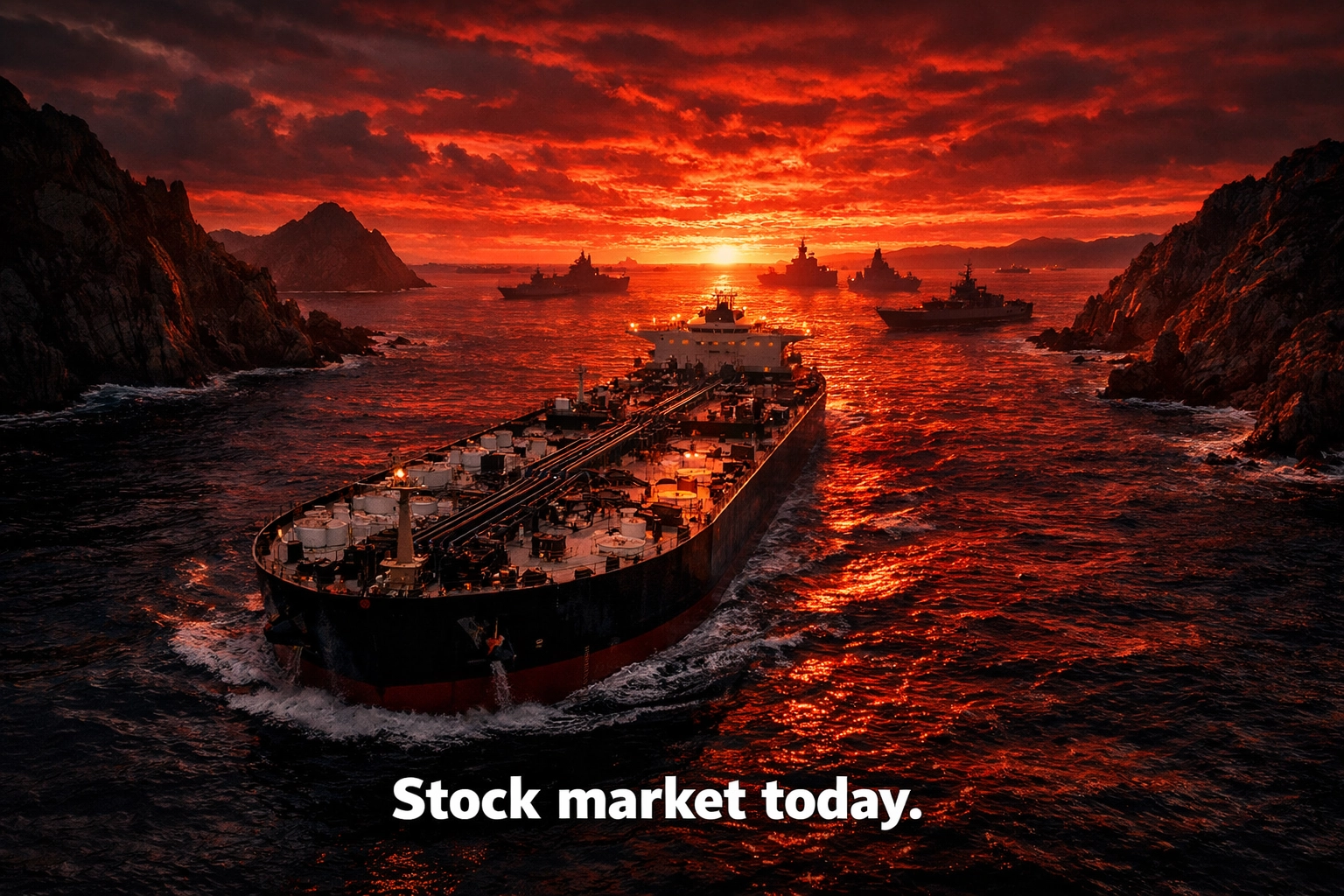
According to reports from Business Standard, the failure of weekend peace talks served as the definitive "catalyst for change" in market sentiment. What was previously seen as a diplomatic hurdle has now transformed into an operational nightmare for global trade. Investors are moving capital away from emerging markets like India and into "safe-haven" assets, reflecting a global trend of capital preservation over growth-seeking.
Oil Price Surge and Its Impact on Indian Stock Market News
The immediate repercussion of the West Asian crisis is the volatility in Brent crude prices, which crossed the psychological barrier of $100 per barrel. This surge has a direct correlation with the decline in the Sensex and Nifty. High oil prices lead to imported inflation, widening the current account deficit, and putting immense pressure on the Indian Rupee.
In the context of indian stock market news, the sectors most affected include Auto, Paints, and Aviation. Companies like Maruti Suzuki and InterGlobe Aviation (IndiGo) saw their margins threatened by rising fuel and input costs. The inflationary pressure also dampens the hopes for any interest rate cuts by the RBI in the near future, further straining corporate profitability.
You can stay updated on how these macroeconomic shifts affect your portfolio by visiting our Home News section, where we provide real-time updates on global trade impacts.
Top Gainers and Losers: ICICI Bank and Adani Enterprises Defy the Odds
Despite the 703-point crash, the market was not entirely devoid of green. Interestingly, Adani Enterprises and ICICI Bank emerged as top gainers, showcasing a level of resilience that surprised many analysts. Adani Enterprises benefitted from its diversified infrastructure portfolio and strategic plays in domestic energy logistics, which are seen as defensive during global supply chain disruptions.
On the other hand, ICICI Bank’s gains were driven by a flight to quality. Investors often seek shelter in large-cap banking stocks with strong balance sheets during periods of extreme volatility. The banking sector, while overall down, saw selective buying in entities that are perceived to have minimal exposure to external debt and high domestic credit demand.

Conversely, the losers' list was dominated by IT heavyweights and FMCG giants. The IT sector is particularly sensitive to US economic health; with the US diverting resources toward Middle Eastern stability, fears of a slowdown in tech spending have intensified. For a detailed breakdown of these stock movements, you can check the latest data on the NSE official website.
FII Outflows: The Institutional Retreat
Foreign Institutional Investors (FIIs) have been a primary source of selling pressure over the last 48 hours. The combination of rising US Treasury yields and the geopolitical risk in Asia has prompted a significant withdrawal of capital. When FIIs move to the sidelines, the domestic institutional investors (DIIs) often find it difficult to provide a sufficient liquidity cushion.
This exodus of foreign capital is not just a temporary dip; it represents a fundamental re-evaluation of emerging market risk. If the blockade of the Strait of Hormuz continues, we could see a prolonged period of "Pax Silica": a term recently coined by analysts to describe a world where technology and energy security are the only true currencies.
For those looking to digitize their networking during these volatile times, our Digital Business Card offers a seamless way to stay connected with the business community without the need for physical contact or traditional logistics.
Technical Outlook: Will Nifty Hold 23,800?
From a technical perspective, the stock market today has broken several key support levels. The Nifty’s close at 23,843 puts it dangerously close to its 50-day Exponential Moving Average (EMA). If the index fails to sustain the 23,800 level in the coming sessions, the next support is pegged at 23,500, which could lead to further panic selling.

Traders are advised to maintain a "wait and watch" policy. The India VIX, a measure of market volatility, has surged by nearly 9%, indicating that the road ahead will be bumpy. Sophisticated investors are utilizing this time to "democratize" their portfolios by shifting focus from overvalued mid-caps to stable large-caps that offer long-term value propositions.
Strategic Moves for Investors in 2026
In this high-voltage environment, it is crucial to move beyond emotional trading. The 2026 market landscape is vastly different from previous years due to the "gamification" of news and the rapid spread of information. Here are three strategic steps to consider:
- Hedge with Gold and Energy: As oil prices remain volatile, diversifying into energy-focused ETFs or physical gold can act as a legitimate purpose for capital protection.
- Focus on Domestic Consumption: Look for companies that are insulated from the US-Iran trade war. Indian businesses with a purely domestic supply chain are likely to recover faster.
- Monitor Corporate Earnings: While macroeconomic news dominates the headlines, the ultimate driver of stock price is the bottom line. Watch for the upcoming Q1 results to identify companies that are managing cost pressures effectively.
For more insights into business strategies and investment tips, feel free to browse our Blog Layout for comprehensive guides.

Conclusion
The 703-point crash of the Sensex on April 14, 2026, is a stark reminder of how interconnected the indian stock market news is with global geopolitical events. The Strait of Hormuz blockade and the escalating Iran-US war have acted as a massive "catalyst for change," shifting the market from an era of exponential growth to one of cautious preservation.
While the immediate outlook remains clouded by uncertainty and oil price volatility, the resilience of stocks like ICICI Bank and Adani Enterprises provides a glimmer of hope. Investors must navigate this landscape with data-driven insights and a professional degree of skepticism toward speculative "war memes" that often flood social media.
As we look forward, the ability of the Indian economy to manage its LPG supply and energy logistics will be the ultimate test of its "Budget 2026" resilience. Stay tuned to Business Tantra for the latest updates and deep-dives into the stories that move the markets. For any inquiries or further information, you can reach out to us via our Contact Page.