























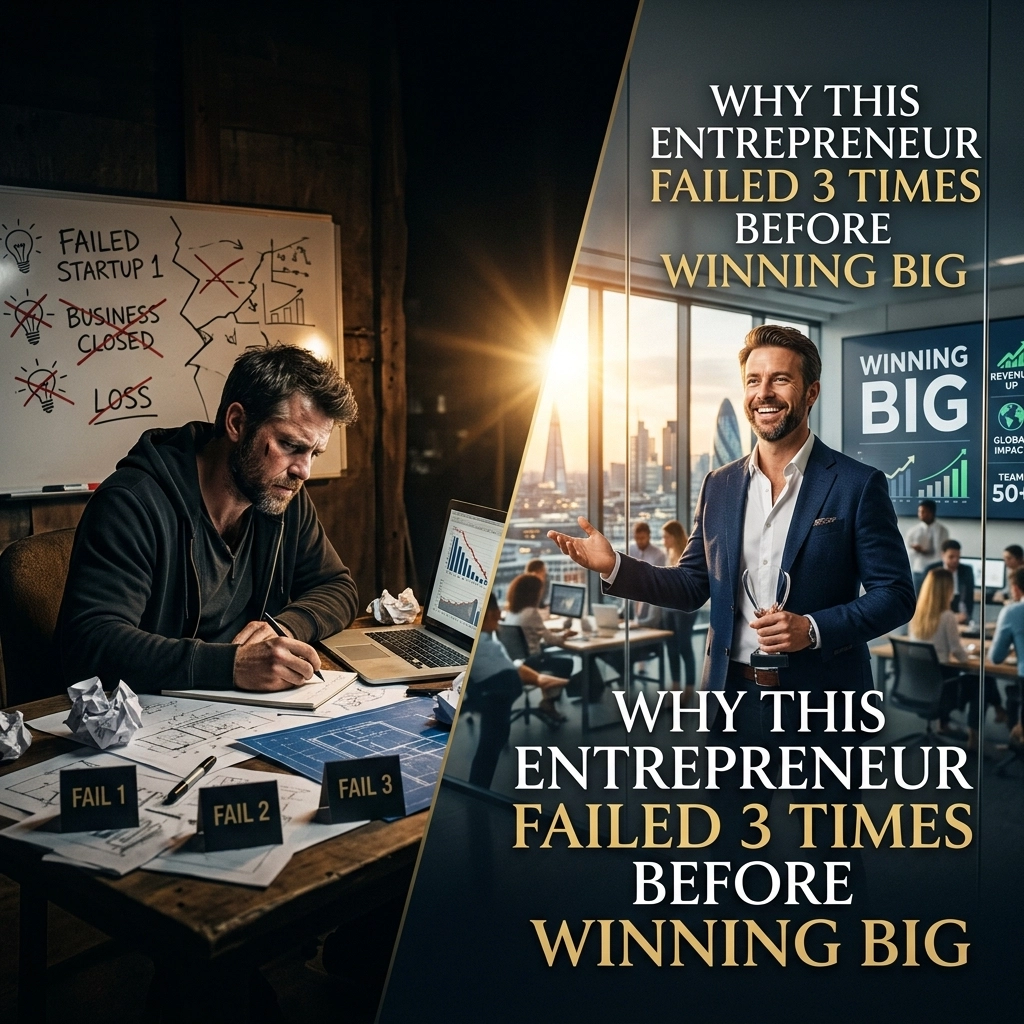
Why This Entrepreneur Failed 3 Times Before Winning Big

The journey of a visionary is rarely a straight line toward the horizon of prosperity. In the high-stakes world of modern business, we often consume entrepreneur success stories as if they were overnight miracles, glossing over the wreckage of previous attempts that paved the way for a final, triumphant exit. For one particular founder, the road to a multi-billion dollar valuation wasn't paved with early venture capital and instant product-market fit. Instead, it was built on the smoldering remains of three distinct, high-profile failures that would have forced a lesser individual to retreat into the safety of corporate employment.
This is not just a story of persistence; it is a clinical study of how failure acts as a "catalyst for change." To understand why this entrepreneur failed three times before winning big, we must dissect the anatomy of their setbacks and the evolution of their strategic mindset.
1. The Hubris of the 'Perfect' Product
The first venture began with a common trap: building in a vacuum. The entrepreneur, then a young engineer with a penchant for disruption, spent eighteen months developing a sophisticated hardware solution for cold-chain logistics. On paper, the value proposition was undeniable. In reality, the market wasn't ready to "democratize" its supply chain data.
The startup burned through ₹2 crores in seed funding without securing a single long-term contract. The failure was a masterclass in the "legitimate purpose" of market research. By focusing on technical perfection rather than customer pain points, the founder learned that a revolutionary product is useless if the industry's legacy infrastructure refuses to integrate it. This initial collapse was the first step in a long education, proving that innovation without adoption is merely an expensive hobby.

2. The Unit Economics Catastrophe
After the hardware debacle, the pivot was swift but flawed. The second venture focused on a hyper-local delivery model designed to capitalize on the burgeoning digital economy in India’s Tier-2 cities. However, the founder fell into the trap of chasing "exponential growth" at the expense of sustainable margins.
Despite high transaction volumes, the Customer Acquisition Cost (CAC) remained stubbornly higher than the Lifetime Value (LTV) of the user base. In the frantic race to scale, the company ignored the fundamental "data-driven insights" that suggested the model was leaking capital. When the funding dried up in a tightened secondary market, the company folded within six months. This failure highlighted a critical lesson: volume is a vanity metric; unit economics is the reality of survival. For those navigating the complexities of the current market, understanding regulatory shifts like Navigating GST 2.0 is essential to avoiding similar fiscal pitfalls.
3. The Scaling Trap and Management Collapse
The third failure was perhaps the most painful because it was the closest to succeeding. The venture, an AI-driven HR tech platform, achieved rapid traction and secured Series A funding. However, the entrepreneur struggled with the transition from a "hands-on" founder to a strategic CEO.
The company scaled its headcount from 10 to 150 in less than a year. The "electronic communications network" within the organization broke down, leading to a toxic culture and a massive exodus of key engineering talent. Without a robust management structure or a clear "mission" statement, the platform’s development stalled, and competitors quickly revitalized their own offerings to fill the void. The business was liquidated for cents on the dollar. This third strike served as a brutal reminder that a founder’s primary job is not just to build a product, but to build an organization that can sustain that product.

4. The Turning Point: Startup Founder Interviews and Radical Candor
After the third collapse, the entrepreneur took a sabbatical to conduct deep-dive startup founder interviews with mentors and industry veterans. This period of reflection was characterized by radical candor. By analyzing their own patterns of failure, the founder realized they had been solving problems they thought existed, rather than the ones that actually kept industry leaders awake at night.
These interviews revealed a consistent gap in the market: the inability of large-scale enterprises to synthesize fragmented data into actionable corporate strategy. This became the foundation for the "winning" venture. The entrepreneur stopped trying to disrupt markets and started trying to solve a specific, agonizing friction point for high-value clients.
5. The Evolution of Strategy: Winning Big in 2026
When the fourth venture: a specialized SaaS platform for enterprise risk management: launched, it was different. The founder utilized a "lean" approach, securing three anchor clients before even writing the first line of code. They prioritized "data-driven insights" over gut feelings and maintained a laser focus on profitability from day one.
The result was a business that didn't just grow; it dominated. By leveraging the lessons of the previous decade, the entrepreneur was able to navigate the global volatility of 2026 with a level of precision that their younger self lacked. The platform eventually became a cornerstone of the industry, leading to an acquisition that redefined the sector.

6. Key Lessons from the Triple Failure
To distill this journey into actionable intelligence, we must look at the recurring themes that separate struggling entrepreneurs from those who eventually achieve a "revitalized" level of success:
- Resilience is a Metric: It is not about how many times you fall, but how much "institutional knowledge" you bring to the next attempt.
- Market Timing is Everything: Innovation must align with the market’s capacity to absorb it.
- Financial Precision: In an era of high interest rates and cautious VC sentiment, "legitimate purpose" in spending is non-negotiable.
- Cultural Architecture: Scaling a business requires a transformation from technical expert to organizational leader.
For more insights into how to build a resilient business, visit our About Us page to see how we track the pulse of the Indian startup ecosystem.
7. The Psychology of the Comeback
Why do some founders quit after the first failure while others use it as a springboard? The answer lies in their relationship with risk. The entrepreneur in this case viewed failure not as a reflection of their worth, but as a "data point" in a larger experiment. This objective distance allowed them to detach their ego from the outcome and focus on the "value proposition" of their next move.
In the competitive landscape of Business Tantra, we see this pattern repeatedly. The most successful founders are often those who have been "bloodied" by the market and have come back with a more cynical, yet more effective, view of what it takes to win.

Conclusion
The story of the entrepreneur who failed three times is a testament to the fact that "overnight success" is usually a decade in the making. The path from ₹10,000 in a bank account to a multi-crore brand is littered with the carcasses of "good ideas" that lacked the necessary execution or timing. By treating every setback as a "catalyst for change," this founder turned three potential endings into the prologue of a massive success.
For the modern professional, the takeaway is clear: do not fear the pivot, do not ignore the unit economics, and never stop learning from those who have already navigated the minefield. The Indian economy in 2026 offers unprecedented opportunities, but only for those disciplined enough to learn from their mistakes.
Stay updated on the latest shifts in the corporate landscape by checking our Home News section, and if you're looking to share your own story of resilience, feel free to Contact Us. Success isn't just about winning big; it's about staying in the game long enough to find the right play.