
























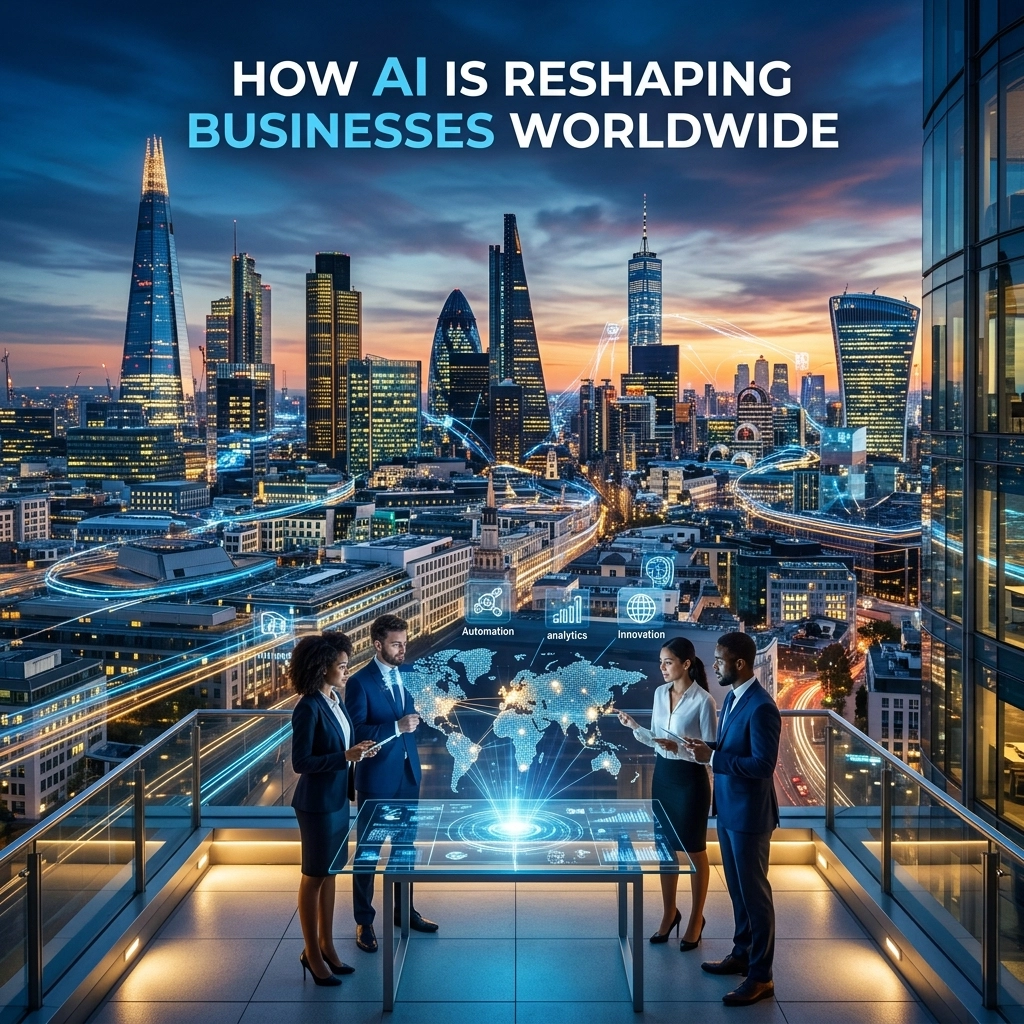

The world is no longer standing on the brink of a revolution; it has already been consumed by one. As of April 2026, the global corporate landscape is witnessing a seismic shift that dwarfs the Industrial Revolution in both speed and scale. Artificial Intelligence (AI) is not merely a "tool" or a "software update": it has become the very central nervous system of modern commerce. From the bustling tech hubs of Bengaluru to the high-frequency trading floors of Wall Street, global tech trends are dictating a new world order where data is the only currency that matters.
At the heart of this transformation are AI startups in India, which have pivoted from being back-office support to becoming the architects of global business logic. The sheer velocity of this change is staggering. McKinsey estimates that generative AI could unlock between $2.6 and $4.4 trillion in annual economic value. We are witnessing the "Great Decoupling," where businesses that fail to integrate AI are not just falling behind: they are becoming obsolete in real-time.
1. The Economic Imperative: Why AI is a Catalyst for Change 🚀
The global economy is currently navigating a period of hyper-acceleration. The era of static five-year plans is dead, replaced by real-time, AI-driven strategic pivots. According to recent PwC data, nearly 34% of global CEOs report that generative AI has already increased their profits.
This isn't just about efficiency; it's about survival. The global tech trends we see today indicate that AI is acting as a foundational amplifier for every other technology, from biotechnology to quantum computing. For the modern enterprise, AI is the "catalyst for change" that revitalizes stagnant legacy systems, turning bloated administrative departments into lean, high-output engines of growth.

2. AI Startups in India: The New Global Powerhouse 🇮🇳
While Silicon Valley remains a titan of innovation, the real "boots on the ground" revolution is happening within the ecosystem of AI startups in India. These companies are no longer just building clones of Western products; they are solving unique, high-scale problems that have massive global implications.
Indian founders are leveraging the country’s massive data sets and engineering talent to build AI solutions for agritech, healthcare, and fintech. These AI startups in India are democratizing access to high-end business intelligence, allowing even small-scale MSMEs to utilize tools that were once the exclusive domain of Fortune 500 companies. This shift is not just local; it is a fundamental restructuring of the global supply chain of intelligence.
3. Operational Metamorphosis: Beyond Simple Automation
For decades, automation meant a robot arm moving a car door. In 2026, automation means an AI agent negotiating a multi-million dollar contract, optimizing a global logistics route in response to a sudden geopolitical shift, and drafting the legal compliance documents: all in seconds.
The "metamorphosis" of operations is visible in several key areas:
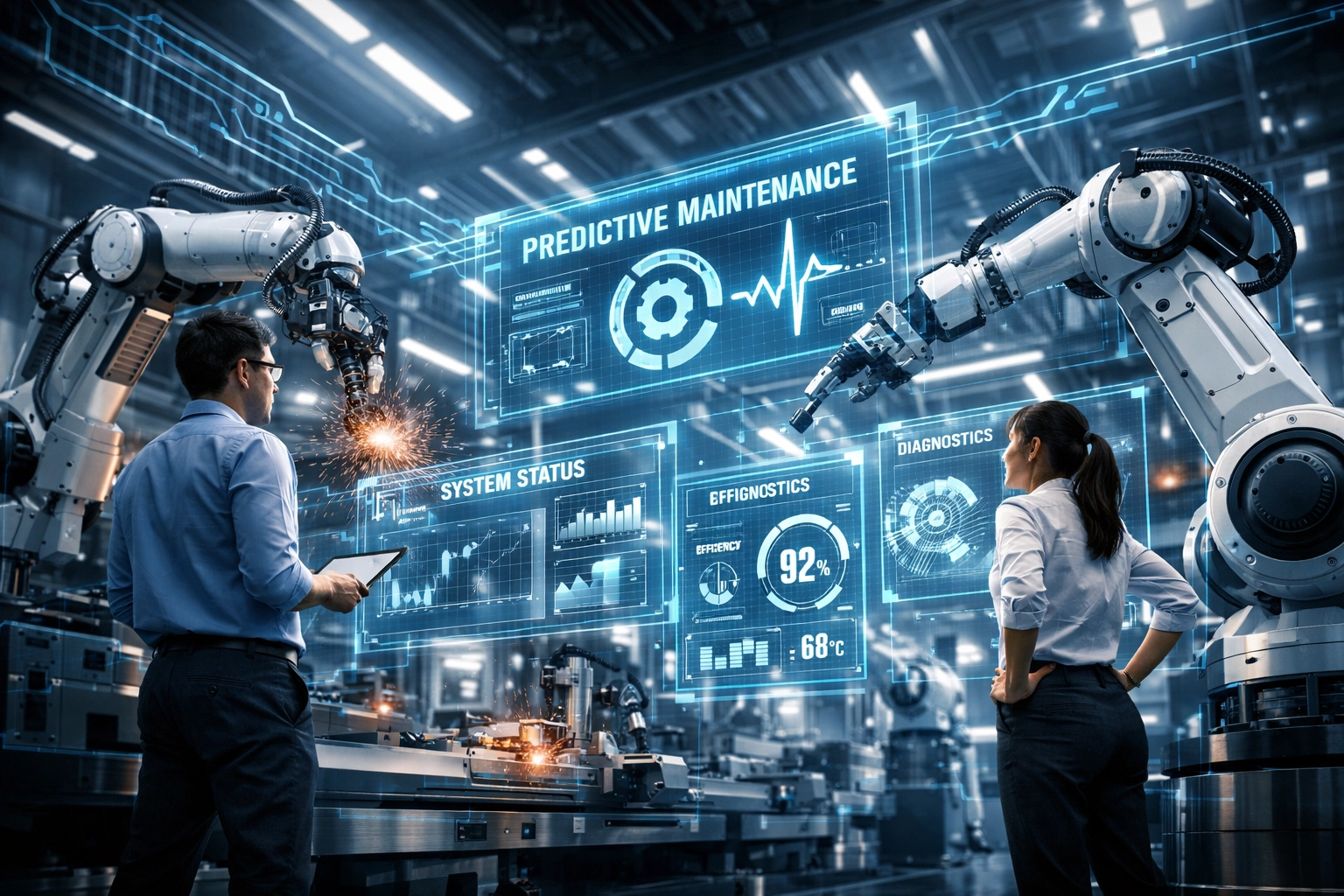
- Predictive Maintenance: In manufacturing, AI sensors now predict a machine failure weeks before it happens, preventing "black swan" events in production lines.
- Hyper-Personalization: Retailers are using AI to create a "store of one," where every customer sees a completely different interface based on their real-time psychological profile.
- Algorithmic Legal Compliance: Large corporations are utilizing AI to navigate complex international laws, ensuring a "legitimate purpose" for every data transaction within the global electronic communications network.
These advancements are not just incremental; they represent global tech trends that are redefining the "value proposition" of traditional industries.
4. The Decision-Making Revolution: From Gut Feeling to Data-Driven Insights
The most dramatic change in the corporate hierarchy is the death of the "Highest Paid Person's Opinion" (HiPPO). Today, the most successful CEOs act more like data curators than traditional commanders. AI serves as a "decision co-pilot," providing real-time pattern recognition that humans simply cannot perceive.
This transition from intuitive leadership to data-driven insights is what separates winners from struggling entrepreneurs. By processing petabytes of market data, AI can signal a shift in consumer sentiment months before it reflects in sales figures. For many, this has turned business strategy from a game of chess into a game of "perfect information."
5. Global Tech Trends: Multimodal AI and Spatial Intelligence
As we look toward the latter half of 2026, the focus has shifted from simple text-based AI to "Multimodal AI" and "Spatial Intelligence." Businesses are now integrating video, 3D modeling, and real-time simulations into their core workflows.
In the engineering and construction sectors, spatial intelligence allows for the creation of "Digital Twins": virtual replicas of physical assets that update in real-time. This allows a project manager in Mumbai to walk through a virtual skyscraper being built in London, identifying structural risks before a single brick is laid. These global tech trends are not just impressive; they are fundamentally safer and more cost-effective.

6. The Human-Machine Synthesis: Empowering the Workforce
There is a pervasive fear that AI will render the human worker redundant. However, the reality on the ground at Business Tantra suggests a different narrative: the rise of the "Augmented Professional." AI is empowering workers by removing the "drudgery" of routine tasks, allowing them to focus on high-level creativity and complex problem-solving.
According to research from the World Economic Forum, while AI will displace some roles, it is set to create millions of new ones that we haven't even named yet. The goal is "workforce empowerment," where technology serves as an equalizer, providing even entry-level employees with the analytical power of a veteran consultant.
7. Navigating the Ethical Minefield
With great power comes an existential responsibility. The rise of AI has brought legalistic and ethical challenges to the forefront. "Data-driven insights" must be balanced with privacy rights and ethical AI frameworks. Corporations are now being held to a higher standard regarding their "legitimate purpose" for data harvesting.
The emergence of AI startups in India that focus specifically on "Ethical AI" and "Explainable AI" (XAI) is a testament to the industry's maturity. These startups are building the guardrails that will prevent the "intelligence explosion" from becoming a disaster for civil liberties.
8. Conclusion: The Irreversible Horizon 🏁
The reshaping of global business through Artificial Intelligence is an irreversible phenomenon. We have moved past the era of experimentation and into the era of execution. Whether it is through the innovative spirit of AI startups in India or the sweeping global tech trends originating from the world's tech capitals, the mandate for 2026 is clear: adapt or vanish.
AI has proven to be the ultimate "exponential growth" engine. It has revitalized dying industries, democratized high-level strategy, and created a more interconnected global economy. As we look forward, the businesses that will dominate the next decade are those that view AI not as a threat to be managed, but as a partner to be embraced.
The future of business is not just digital; it is intelligent. And that future is happening right now.
Want to stay ahead of the curve? Explore more deep dives into the Indian economy and global markets at Business Tantra. Ready to join the revolution? Register today for exclusive insider reports.