











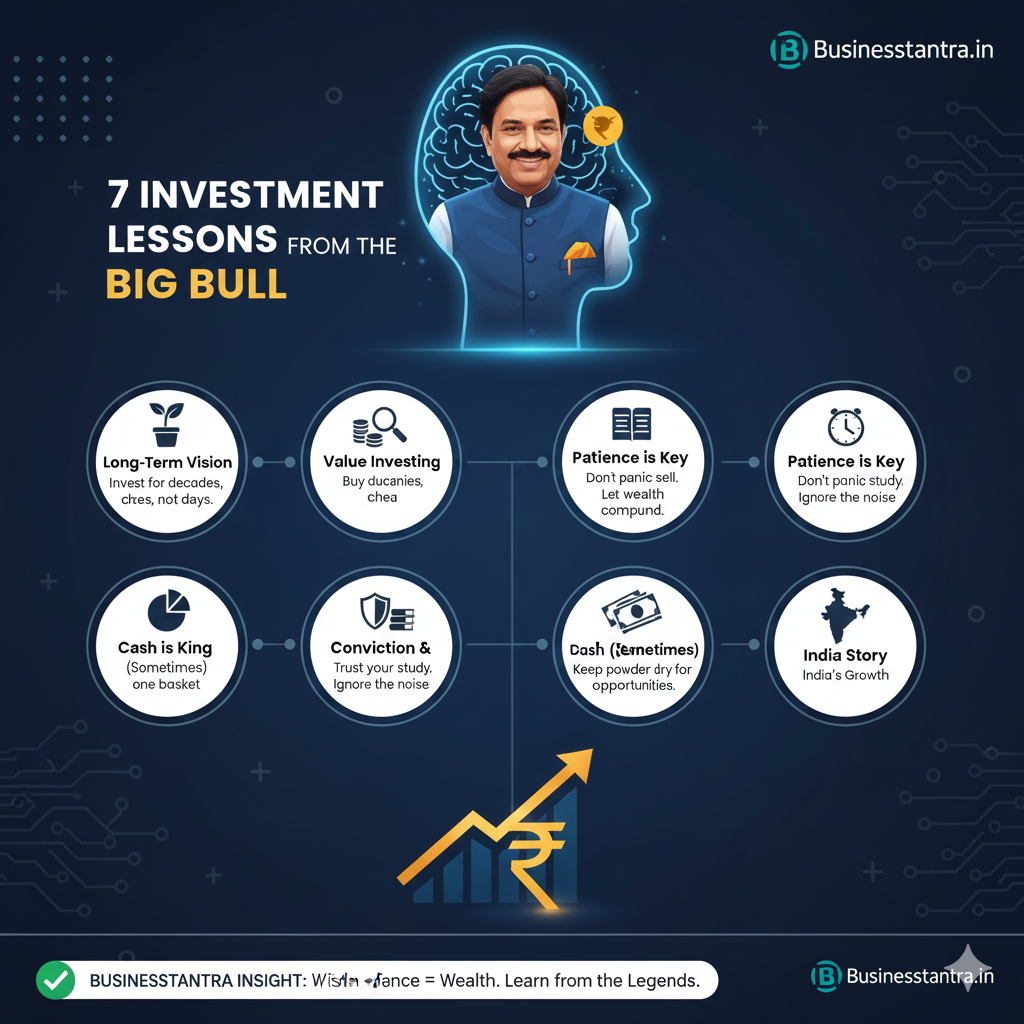

















Financial news India reports often highlight the meteoric rise of the Sensex, but for the average investor, the reality on the ground feels starkly different. As we navigate through the second quarter of 2026, many retail and institutional portfolios are not just slowing down: they are stalling in the face of unprecedented global and domestic headwinds. The "India Growth Story" is facing its most rigorous stress test yet, and the reasons behind this stagnation are both complex and systemic.
If your wealth has hit a plateau, you are not alone. From the volatile sands of West Asian conflicts to the rapid-fire disruption of Artificial Intelligence in the Silicon Plateau, the catalysts for change are everywhere. To understand why your returns have evaporated, we must look beyond the surface-level tickers and analyze the structural shifts defining the current fiscal year.
Understanding the Financial news India Context: The Geopolitical Stranglehold
The primary culprit behind the current market malaise is a tightening of global financial conditions that few predicted would last this long. Financial news India observers have noted that ten-year US Treasury yields have climbed stubbornly above the 4% mark. While this might seem like a distant American problem, the ripple effects are devastating for emerging markets like India.
When US yields rise, global capital retreats to the safety of the dollar, leading to significant outflows from the Indian equity markets. In the last 16 months alone, Foreign Portfolio Investors (FPIs) have withdrawn an eye-watering $34 billion from Indian equities. This mass exodus has created a liquidity vacuum, making it nearly impossible for mid-cap and small-cap stocks: the traditional engines of portfolio growth: to maintain their upward trajectory.

Furthermore, the escalating conflict in West Asia has served as a massive drag on sentiment. As a major energy importer, India is uniquely vulnerable to crude price volatility. According to reports from Reuters, the widening spreads on Indian corporate bonds: increasing by as much as 25 basis points for lower-rated borrowers: reflect a growing risk premium. This "wait and watch" approach by financial institutions has stalled an estimated $32 billion in External Commercial Borrowing (ECB) loan activity, effectively starving Indian corporations of the cheap capital required for expansion.
The AI Revolution: A Double-Edged Sword in Financial news India
For decades, the IT sector was the "safe haven" of the Indian stock market. However, the narrative has shifted dramatically. Financial news India recently covered a staggering single-day decline that wiped out approximately Rs 1.9 lakh crore in market capitalization across major tech firms like Infosys, TCS, and Wipro.
The cause? A profound fear of AI-driven displacement.
The value proposition of traditional IT services: largely based on labor arbitrage and maintenance: is being democratized and disrupted by advanced generative AI models. Investors are no longer convinced that the old guard can pivot fast enough to compete in a world where code can be written and debugged by machines in seconds. This sector-wide re-rating has acted as a lead weight on the Nifty 50, preventing any meaningful rallies.
For those looking for a deeper dive into how these shifts affect the job market, our analysis on remote work and hiring strategies offers crucial insights into the evolving corporate landscape.
Deciphering the Financial news India Q2 2026 Market Shift
As we stand in April 2026, we are witnessing a fundamental pivot in the market’s internal dynamics. This is not just a temporary dip; it is a "revitalized" approach to valuation. The Q2 2026 market shift is characterized by a flight to "Real Value" and "Tangible Assets."

- Banking Under Pressure: The banking sector, once the darling of the bulls, has seen a 2% decline as credit growth slows and bad loan concerns resurface amidst higher interest rates.
- Manufacturing Resilience: While IT falters, specialized manufacturing and green energy sectors are showing signs of exponential growth, albeit not enough to offset the broader market drag yet.
- The Regulatory Hammer: Sudden policy shifts, such as Maharashtra’s temporary stay on new auto-rickshaw permits, have sent ripples through the auto sector, proving that political risk remains a potent factor in portfolio performance.
To stay updated on these shifting trends, you can explore our comprehensive post sitemap for a full history of market analysis.
Strategic Realignment: How to Move Forward
In this high-volatility environment, maintaining a stagnant portfolio is a recipe for wealth erosion. Financial news India experts suggest that the era of "buying the dip" blindly is over. The focus must now shift toward data-driven insights and sector-specific agility.
- Exposure to AI-Resilient Sectors: Look for companies that are not just using AI as a buzzword but are integrating it to create proprietary electronic communications networks and optimized supply chains.
- Fixed Income Re-balancing: With yields remaining high, moving a portion of equity into high-quality corporate bonds might provide the necessary cushion against market swings.
- Global Diversification: To mitigate the risks inherent in being a "major energy importer," diversifying into global markets that benefit from rising yields or technological dominance is becoming a legitimate purpose for many savvy Indian investors.
At Business Tantra, we believe in providing the tools necessary to navigate these turbulent waters. Whether you are looking for information on our About Us page or seeking direct consultation via our Contact Us portal, we are dedicated to demystifying the complexities of the modern economy.

The Role of Institutional Shifts
It is also worth noting the impact of domestic institutional investors. While FPIs are fleeing, domestic mutual funds have attempted to provide a floor for the market. However, their firepower is limited when faced with systemic global issues like the US Treasury yields. The current financial news India cycle suggests that until we see a cooling of inflation in the West or a de-escalation in West Asian tensions, the local market will remain in a "sideways-to-downward" grind.
According to data from The Economic Times, the sentiment among retail investors is at a three-year low. This psychological exhaustion often marks the bottom of a cycle, but in the Q2 2026 context, the "bottom" may be a long, flat plateau rather than a sharp V-shaped recovery.
Conclusion
In summary, the stalling of Indian portfolios is not a result of a single failure but a convergence of global geopolitical instability, rising borrowing costs, and a tectonic shift in the technological landscape. The financial news India landscape in 2026 demands a more sophisticated, analytical approach than ever before.
The Q2 2026 market shift serves as a catalyst for change, forcing investors to abandon outdated strategies and embrace a more resilient, diversified framework. While the IT sector collapse and banking pressures are painful in the short term, they are clearing the path for new industries: green energy, AI-integrated manufacturing, and high-yield fixed income: to take center stage.
To thrive in this new era, investors must remain informed, objective, and ready to pivot. Stay tuned to Business Tantra for the latest updates and deep-dives into the forces shaping your financial future. The market may be stalling, but your strategy shouldn't.