
























The Economics of the Golden State: Why California is So Rich

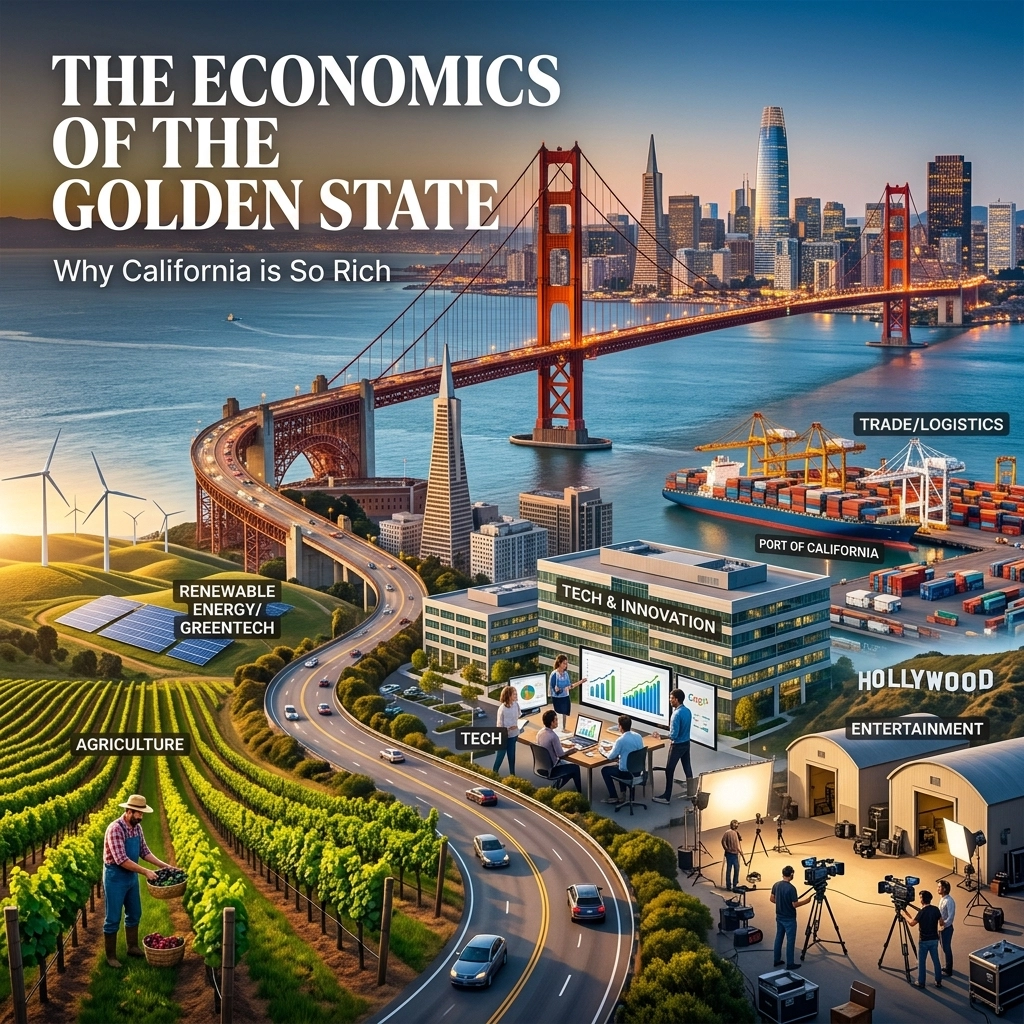
California is more than just a state within the American union; it is a global economic juggernaut that rivals the world’s most powerful nations. As of 2026, the "Golden State" continues to defy gravity, maintaining its position as the largest sub-national economy in the world. With a Gross State Product (GSP) surpassing $4 trillion, California would rank as the fourth-largest economy on the planet if it were a sovereign nation, trailing only the United States as a whole, China, and Germany.
For observers of LA Business and global economic trends, the scale of California's wealth is not merely a product of luck, but a result of a sophisticated, multi-sectoral engine that blends innovation, entertainment, and a relentless culture of entrepreneurship. From the high-tech corridors of Silicon Valley to the creative powerhouses of Los Angeles, California has become a catalyst for change in the global market.
1. A Diverse Economic Portfolio: The $4 Trillion Foundation
The sheer scale of California’s wealth is anchored in its extreme diversity. Unlike regions that rely on a single commodity or industry, California’s economy is a complex tapestry of high-value sectors. While the state represents only about 12% of the U.S. population, it holds approximately 17% of the national net worth. This disproportionate wealth generation is driven by finance, business services, manufacturing, and a massive government sector.
Data-driven insights suggest that the state's economic resilience comes from its ability to pivot. Even during global downturns, the concentration of intellectual property and high-barrier-to-entry industries ensures that California remains at the forefront of exponential growth. The median household net worth in the state sits at roughly $288,000: nearly 60% higher than the national average: largely bolstered by the state’s lucrative real estate market and the presence of more billionaires than any other jurisdiction in the Western Hemisphere.
2. Silicon Valley: The Global Hub for Startups in USA
No discussion of California’s wealth is complete without analyzing the San Francisco Bay Area. Silicon Valley remains the epicenter for Startups in USA, attracting more venture capital than almost any other region globally. The ecosystem here is designed to democratize innovation, moving from the "garage startup" phase to a global IPO at a record pace.
The concentration of tech giants: Apple, Google, Meta, and Nvidia: creates a "halo effect" that benefits smaller firms. Many entrepreneurs who find success in India, for instance, look toward California as the ultimate destination for scaling operations. As noted in our analysis of the startup flood in India, the synergy between Indian talent and California’s capital has created a corridor of wealth that is unprecedented in economic history.

The tech sector does more than just create software; it drives the state’s manufacturing and hardware industries. Despite the narrative of "tech exits," California remains a leader in semiconductor design and high-tech manufacturing, ensuring that the state's value proposition remains rooted in tangible high-value products as much as digital services.
3. The Power of LA Business: Entertainment and Beyond
While Northern California is the brain of the state’s tech economy, Southern California serves as its creative heart. The LA Business landscape is dominated by the "Big Six" major film studios and a rapidly expanding digital media sector. Hollywood is no longer just about cinema; it is a global exporter of culture, intellectual property, and digital streaming technology.
The entertainment industry has undergone a massive digital transformation. The shift toward streaming and AI-driven content creation has revitalized the region, attracting tech-heavy entertainment firms to "Silicon Beach" in Santa Monica. This convergence of tech and media has created a specialized labor market where high-salaried professionals drive up local consumption and real estate values.
Furthermore, the Port of Los Angeles and the Port of Long Beach handle roughly 40% of all containerized imports into the United States. This logistical dominance ensures that Los Angeles remains a critical hub for international trade, making it a primary focal point for businesses looking to export goods from the East to the American market.

4. Real Estate: The Primary Driver of Household Wealth
In California, wealth is often synonymous with real estate. High home values are a fundamental driver of the state's high household net worth. For many residents, home equity represents the vast majority of their total wealth. While the median home equity in other U.S. states hovers around $178,000, in California, it reaches approximately $484,000.
This appreciation in property value creates a "wealth effect," where homeowners feel more financially secure and are therefore more likely to invest in new ventures or high-end services. This cycle of appreciation and reinvestment has turned coastal communities in the San Francisco Bay Area and Los Angeles into some of the wealthiest zip codes on earth, with some areas reporting an average net worth exceeding $850,000 per resident.
5. Comparative Advantage: California vs. The World
For international entrepreneurs, especially those in the growing Indian market, California represents both a competitor and a collaborator. When evaluating startups in California vs startups in India, one must consider the maturity of the legal and financial frameworks. California offers a "legitimate purpose" for almost every type of high-risk investment, backed by a legal system that understands intellectual property better than perhaps any other.

However, the high cost of living and strict regulatory environment mean that business management for startups is essential for survival. Startups in the Golden State must be leaner and more efficient with their capital than ever before, focusing on profitability rather than just raw user growth: a trend we are seeing across the 2026 IPO wave.
6. The Role of Knowledge and Education
The wealth of California is intrinsically linked to its world-class public and private university systems. Institutions like Stanford, UC Berkeley, and Caltech act as incubators for the next generation of industry leaders. This steady stream of highly skilled graduates provides a constant "brain gain" for the state, ensuring that the labor force is capable of handling the demands of emerging industries like Quantum Computing, Biotech, and Clean Energy.
California’s commitment to a "green economy" has also opened new avenues for wealth. The state is a leader in electric vehicle (EV) adoption and renewable energy infrastructure. This focus on sustainability is not just a policy choice but a massive business opportunity, spawning new sectors in battery technology and grid management: areas where India’s new battery swap scheme shows similar visionary intent.
7. Challenges to the Throne: Can the Wealth Last?
No economic powerhouse is without its risks. California faces significant challenges including high taxation, a housing affordability crisis, and the potential for "centralized infrastructure" risks. As seen with the impact of major Cloudflare outages, the state’s reliance on digital networks means that any disruption to the electronic communications network can have billion-dollar consequences.
Furthermore, the state must navigate complex regulatory battles. From Apple’s stance on sideloading apps to environmental regulations that impact manufacturing, the legalistic environment of California can be a double-edged sword. While it provides precision and protection for IP, it also increases the "cost of doing business," leading some firms to relocate to lower-tax states like Texas or Florida.

Conclusion
The economics of the Golden State are a testament to the power of specialized industry clusters and a culture that celebrates risk-taking. California is rich because it has successfully positioned itself at the intersection of technology, imagination, and global trade. By maintaining its status as the premier destination for Startups in USA and a global leader in LA Business, the state ensures its continued relevance in a rapidly changing 21st-century economy.
For the global business community, California remains the benchmark for how a regional economy can achieve national-level influence. Whether through the digital screens of Silicon Valley or the silver screens of Hollywood, California’s wealth is built on the intangible power of ideas: and the very tangible infrastructure that allows those ideas to scale globally. As we look toward the remainder of 2026, the Golden State’s ability to reinvent itself through AI and green tech suggests that its economic dominance is far from over.

admin


Related Post