
























India’s PMI Dips to 57.4 : Still Strong, But the Growth Story Is Cooling

The Indian private sector is navigating a transition phase as the latest economic indicators suggest a subtle recalibration of the nation's growth trajectory. According to the recently released HSBC Flash India Composite PMI, India's PMI dips to 57.4 in June 2026, down from 59.3 in May. While any figure above the 50-mark threshold indicates a legitimate expansion, this latest print represents the weakest growth momentum witnessed since March.
For investors and market movers closely monitoring the latest business stories, this deceleration serves as a signal that the post-peak cooling phase has arrived. Although the Indian economy remains one of the fastest-growing globally, the current data underscores a cooling of domestic demand, a moderation in hiring, and a shift in business sentiment that has hit multi-year lows in specific sectors.
1. Decoding the Sectoral Slowdown: Manufacturing vs. Services
The composite figure of 57.4 is a weighted average of two critical engines: manufacturing and services. Both sectors contributed to the overall decline, though the degree of moderation varied significantly.
The Manufacturing Sector's Three-Month Low
Manufacturing output, once the primary catalyst for change in the post-pandemic era, saw its PMI slip to 54.5 in June. This marks a three-month low for the sector. While firms are still producing at a healthy clip, the rate of growth in production has eased. Manufacturers are facing a dual challenge: cooling domestic orders and an export market that is no longer providing the exponential growth seen in previous quarters.

Services Sector Hits 17-Month Low
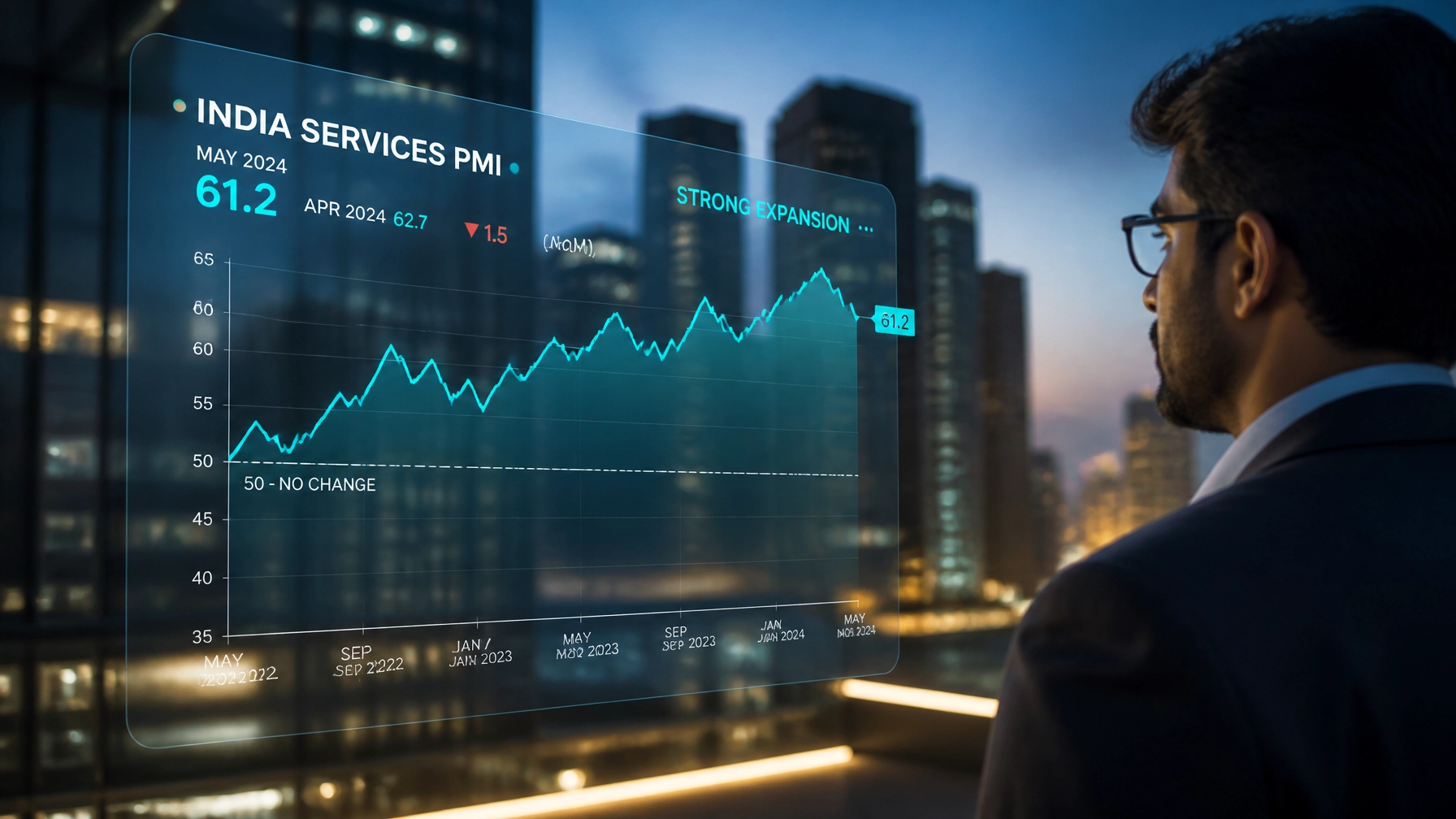
Perhaps more striking is the performance of the services sector. The HSBC Flash India Services PMI fell to 57.3 in June: a 17-month low. As the largest component of India's GDP, a slowdown in services activity often has a ripple effect across the broader economy. This dip indicates that the voracious appetite for professional services, technology consulting, and consumer-facing services is beginning to stabilize after a prolonged period of high-octane growth.
2. Cooling Demand and a Shifting Labor Market
One of the most critical metrics within the PMI report is the "New Orders" index. In June, demand grew at its slowest pace in three months. Many firms cited increasing competitive pressures and a more cautious approach from domestic clients as reasons for the deceleration.
Hiring Slumps to a Six-Month Low
As India's PMI dips, the impact on the labor market is becoming evident. Employment in the private sector continued to rise, but the pace of job creation was the weakest in the current six-month expansion cycle. Companies are no longer aggressively expanding their payrolls, opting instead to maintain existing capacity or fill only essential roles.

This cautious approach to recruitment is a direct response to the softer demand environment. When new business gains momentum, hiring usually follows; conversely, when the pipeline narrows, human capital investment is often the first area to be "revitalized" through leaner operational strategies. For professional readers following Business Tantra’s featured insights, this trend suggests a cooling of the talent war that characterized the last two years.
3. The Inflationary Pivot: A Silver Lining?
While the headline growth numbers have moderated, the "Price" indices within the PMI provide a more optimistic perspective for policymakers at the Reserve Bank of India (RBI).
Easing Input Costs
Inflationary pressures eased for the third consecutive month in June, reaching their lowest levels since January. For businesses, this reduction in cost inflation is a welcome relief. While raw material prices for items like chemicals and certain metals remain elevated, the overall intensity of price hikes has dissipated.
Moderation in Output Charges
Consistent with the cooling demand, firms are finding it harder to pass on higher costs to consumers. Consequently, selling price inflation moderated in both the manufacturing and services sectors. This shift suggests that the risk of the economy "overheating" has diminished, potentially giving the central bank more room to maintain a stable interest rate environment without the immediate need for restrictive measures.

4. Business Sentiment and the 12-Month Outlook
Perhaps the most telling data point in the June report is the "Future Output" index, which measures business optimism. While Indian firms remain positive about the next 12 months, the level of that optimism has fallen to its lowest point since January.
Manufacturers’ Sentiment Hits Four-Year Low
The manufacturing sector, in particular, saw positive sentiment drop to a near four-year low. This is a significant data-driven insight that reflects concerns about global geopolitical tensions, fluctuating semiconductor supply chains, and the potential for a deeper slowdown in domestic consumption.

Despite this dip in immediate confidence, the fundamental "value proposition" of the Indian market remains strong. Most firms surveyed by HSBC Global Research believe that planned product launches, marketing initiatives, and the democratization of digital services will continue to support growth in the long run. The current dip is viewed more as a normalization than a structural decline.
5. Strategic Implications for Investors and Businesses
What does it mean for the average professional when India's PMI dips to 57.4? It signifies a move toward a more sustainable and mature growth phase. The "mission" for Indian enterprises in the second half of 2026 will likely shift from pure-play expansion to operational efficiency and cost management.
- Inventory Optimization: As purchasing activity rises at the weakest pace in two-and-a-half years, companies are running leaner inventories. This "just-in-time" approach minimizes capital lock-up during periods of softer demand.
- Focus on Exports: While new export orders grew at their slowest pace in 21 months, they remain a critical diversifier. Companies that can maintain high quality while keeping costs in check will continue to find opportunities in global markets.
- Data-Driven Decision Making: In a cooling market, the margin for error narrows. Utilizing electronic communications networks and advanced analytics to predict demand shifts will be the hallmark of successful firms.
Conclusion
The June 2026 PMI data paints a picture of an economy that is firmly in expansion but no longer in an unrestrained surge. The dip to 57.4 is a reminder that even the most robust growth stories require periodic cooling to remain sustainable. With inflation easing and firms maintaining a positive: albeit cautious: long-term outlook, India is well-positioned to navigate this moderate phase.
For those looking to stay updated on the ever-evolving Indian business landscape, Business Tantra remains your primary source for timely updates and deep-dive economic analysis. The coming months will be a test of resilience for the Indian private sector as it balances cooling demand with the long-term goal of becoming a global manufacturing powerhouse.