





















Why India is the Next Big Manufacturing Hub in the Global Economy

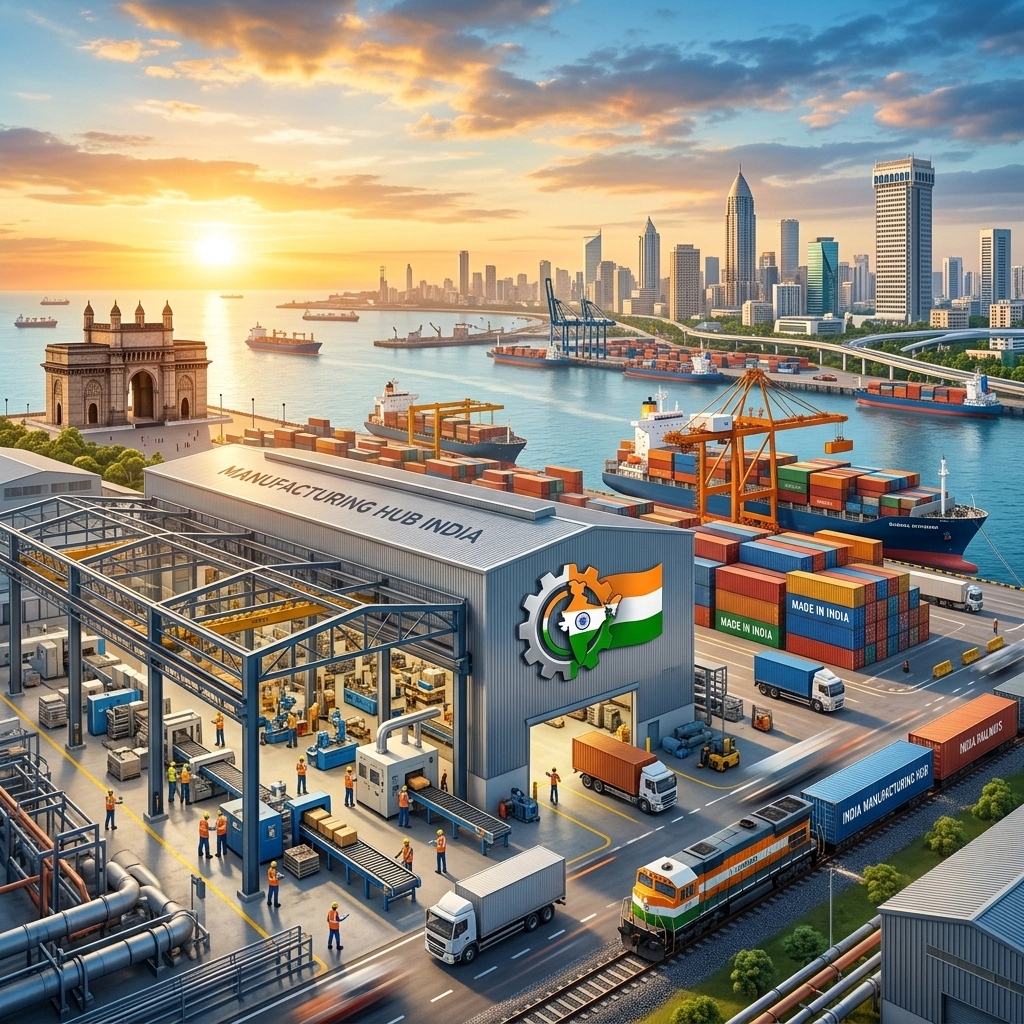
The global economic landscape is undergoing a tectonic shift. For decades, the world’s supply chains were anchored in a single geography, but recent geopolitical volatilities and pandemic-induced disruptions have exposed the fragility of over-reliance. As multinational corporations adopt the "China Plus One" strategy, the economy of India has emerged as the most compelling alternative. India is no longer just the "back office of the world"; it is rapidly transforming into its factory floor.
With a unique blend of democratic stability, a massive young workforce, and aggressive pro-business reforms, India is positioning itself as the next big manufacturing hub. This transition is not merely a trend but a structural evolution fueled by systematic government intervention and a revitalized industrial spirit.
1. The Global Supply Chain Diversification Catalyst
The primary driver for India’s manufacturing ascent is the urgent need for supply chain resilience. Global giants are moving away from concentrated manufacturing to mitigate risks associated with trade wars and regional instabilities. India, with its strategic geographic location and massive domestic consumption base, offers a "de-risked" environment for long-term capital investment.
This shift is reflected in the indian stock market news, where manufacturing and industrial stocks have seen a significant rerating. Investors are no longer just looking at the services sector; the industrial "renaissance" is providing a new engine for wealth creation. The diversification of global supply chains is acting as a catalyst for change, turning India into a mission-critical node for global trade.
2. Pro-Business Reforms: Government as a Growth Enabler
The Indian government has transitioned from being a regulator to a facilitator. Central to this transformation are the Production Linked Incentive (PLI) schemes. By offering financial incentives for incremental sales, the government has attracted billions in investment across sectors like electronics, pharmaceuticals, and renewable energy.
The Modi wave has triggered a start-up flood that is now spilling over into the manufacturing sector. Initiatives like Atmanirbhar Bharat (Self-Reliant India) have revitalized domestic industries by liberalizing FDI norms and simplifying the ease of doing business. However, the path isn't always smooth; for instance, the government remains firm on its domestic manufacturing mandates, as seen when India rejected Elon Musk’s calls for tax breaks, emphasizing that the road to the Indian market must pass through Indian factories.
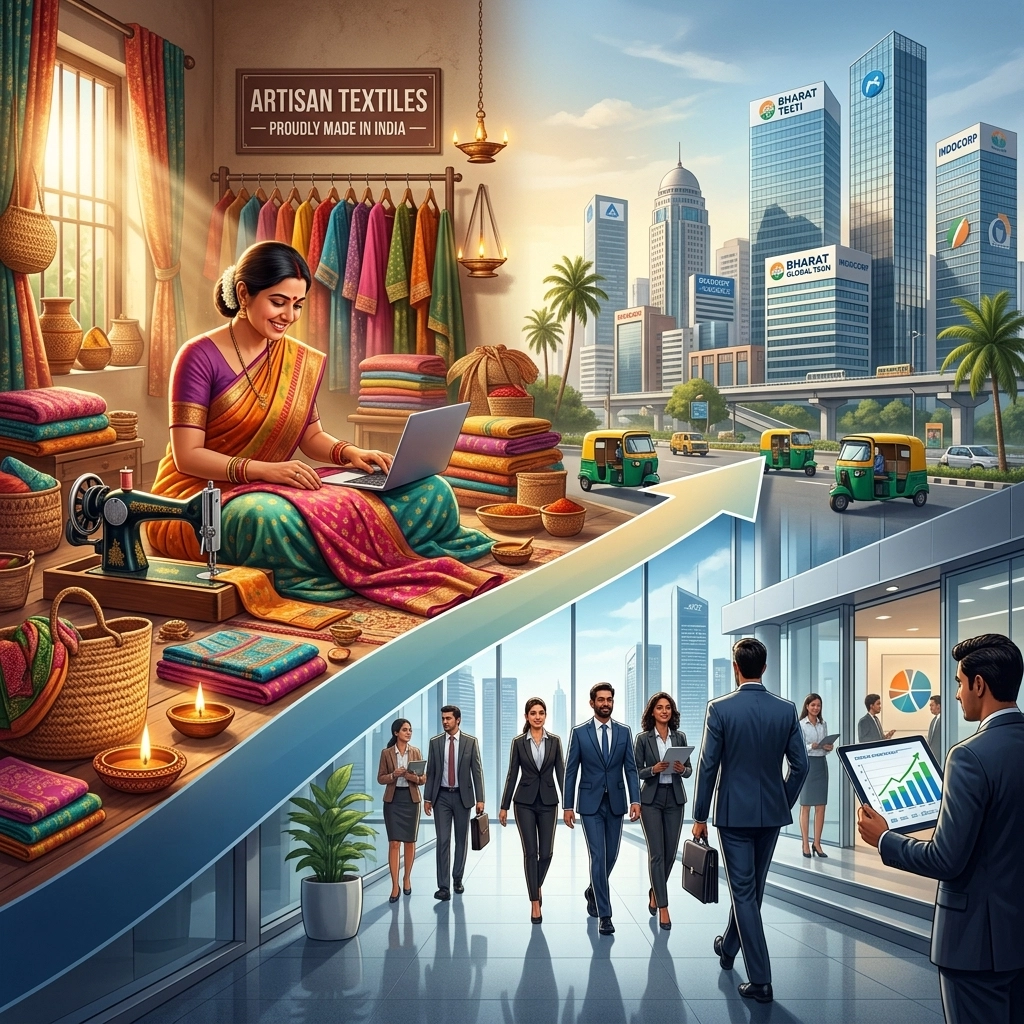
3. Scaling from Home-Grown Units to Global MNCs
One of the most inspiring facets of the Indian manufacturing story is the scaling of domestic enterprises. Small and medium enterprises (MSMEs) are increasingly adopting essential business management strategies to transition from local suppliers to global competitors.
We are witnessing a "Home business to MNC" evolution. Companies that started in small clusters are now leveraging technological advancements to export to European and American markets. This scaling is supported by incubators like the Livelihood Business Incubator and T-Hub, which provide the necessary infrastructure for turning a product prototype into a mass-manufactured reality.

4. The Digital and Physical Infrastructure Overhaul
To compete with global hubs, India is heavily investing in the PM Gati Shakti National Master Plan. This initiative aims to reduce logistics costs: which historically stood at 13-14% of GDP: to a more competitive 8%. By integrating roads, railways, and ports through a digital platform, India is streamlining the movement of goods.
Digitalization is also playing a role on the factory floor. "Industry 4.0" is being democratized across Indian manufacturing units. Data-driven insights and AI are being used to optimize assembly lines, ensuring that Indian-made products meet international quality standards. This technological leap is crucial for attracting high-tech manufacturing, such as semiconductor fabrication and advanced electronics.

5. Sector Spotlight: Electronics and Semiconductors
Electronics manufacturing has been the "poster child" of India’s success. India is now the world’s second-largest manufacturer of mobile phones. The presence of Apple’s ecosystem: with iPhones being manufactured and exported from India: signals a massive vote of confidence.
The indian stock market news frequently highlights the burgeoning semiconductor ecosystem. As the world faces chip shortages, India’s push for a domestic semiconductor mission is a strategic move to secure its technological future. This high-value manufacturing requires a skilled workforce, which India is providing through its vast network of engineering talent and vocational training programs.
6. How the Economy of India Benefits from Manufacturing
The shift toward manufacturing is essential for India’s target of becoming a $5 trillion economy. Manufacturing has a higher multiplier effect on job creation compared to the service sector. Every direct job created in a factory typically generates multiple indirect roles in logistics, maintenance, and retail.
Furthermore, as manufacturing scales, it reduces the trade deficit. By shifting from an import-dependent economy to an export-oriented one, the economy of India gains a more stable footing in the global market. This transition is also supported by new-age energy solutions, such as the India’s new battery swap scheme, which aims to power the logistics and transport sectors through sustainable means.
7. Upcoming Industries and Future Opportunities
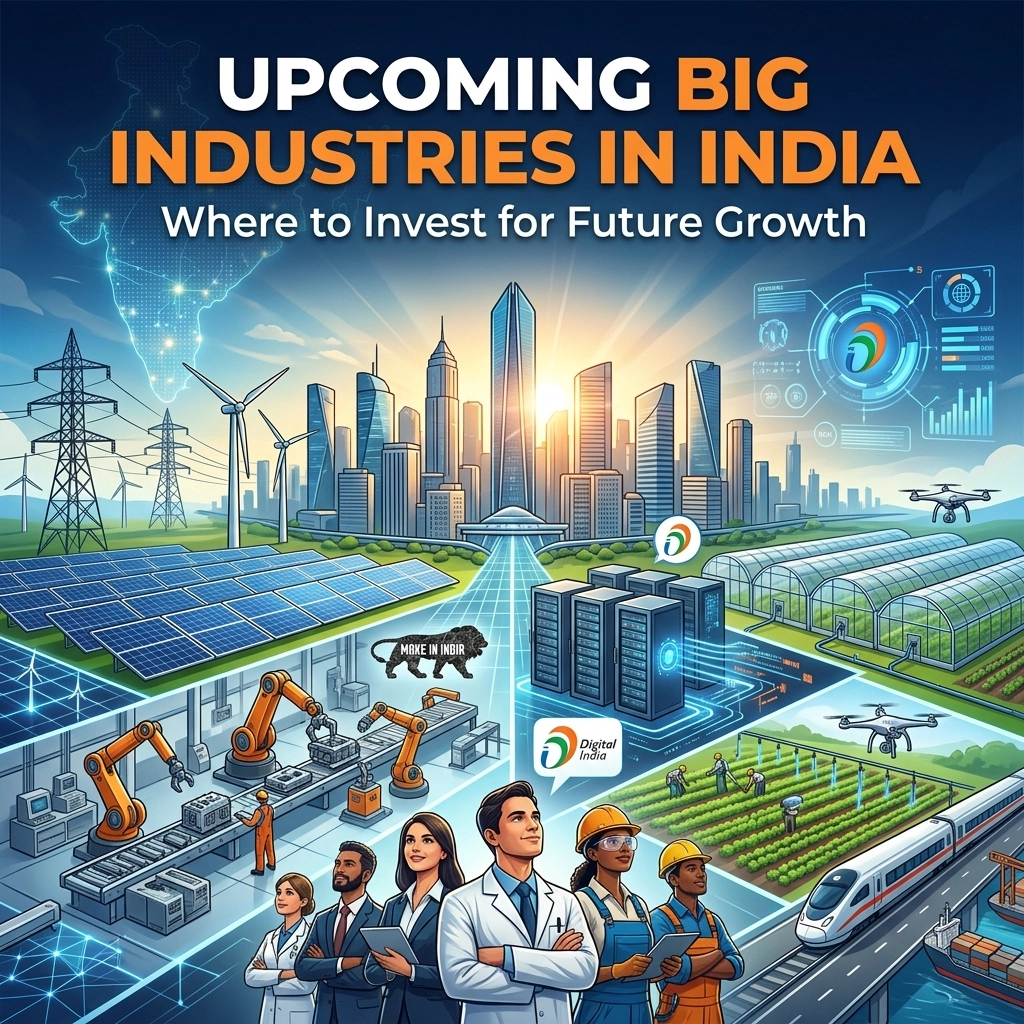
While electronics and automotive components lead the way, several "sunrise" industries are poised for exponential growth:
- Renewable Energy: Solar panels and wind turbine manufacturing.
- Defense: India is transitioning from a top defense importer to a major exporter of defense equipment.
- Biotechnology: Leveraging India's pharmaceutical strength to lead in bio-manufacturing and clinical research.
- Electric Vehicles (EVs): Creating a complete ecosystem from battery cells to finished vehicles.
These sectors are increasingly represented by female leaders as well, with women entrepreneurs making waves in manufacturing-heavy industries on platforms like Shark Tank India.
8. Challenges and the Road Ahead
Despite the optimism, challenges remain. Improving the ease of land acquisition, modernizing labor laws, and further reducing electricity costs are imperative for India to match the efficiency of established hubs like Vietnam or Taiwan. The "mission" for the next decade will be to ensure that the regulatory environment remains consistent and predictable for foreign investors.
The global competition is fierce, and India must continue to innovate to maintain its competitive edge. However, with the current momentum and the convergence of favorable demographics and policy, the "Made in India" label is set to become a hallmark of quality and value in the global economy.
Conclusion
India is standing at a historic crossroads. The convergence of global supply chain shifts, aggressive policy incentives, and an unprecedented infrastructure push has created a perfect environment for a manufacturing boom. The economy of India is no longer tethered solely to its service-sector prowess; it is diversifying into a robust, industrial powerhouse that can sustain long-term growth.
For investors, the indian stock market news will likely continue to reflect this industrial pivot, offering lucrative opportunities in the manufacturing and logistics segments. As India scales from a regional player to a global hub, the value proposition for "Making in India" has never been stronger. The journey from a promising alternative to a dominant manufacturing leader is well underway, promising a transformative decade for the nation and the global economy at large.

admin

Related Post