











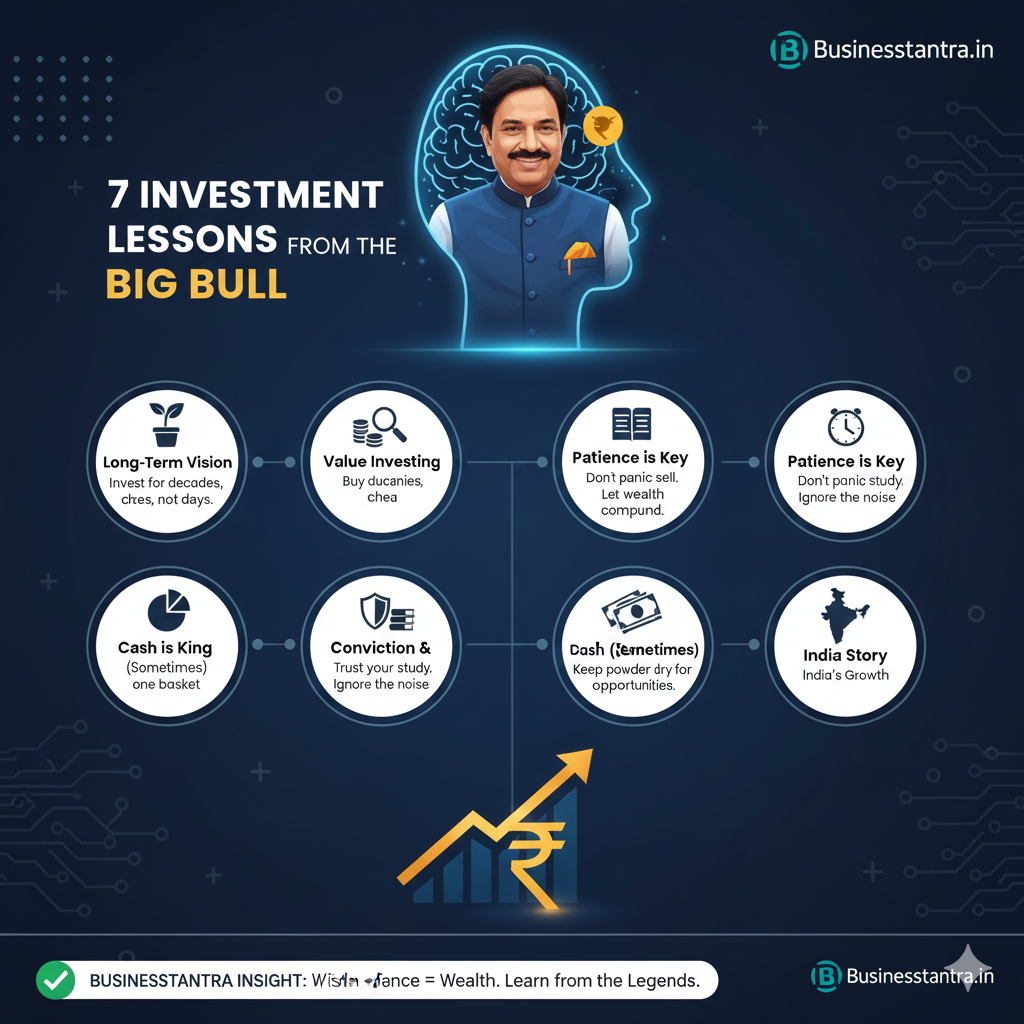
















7 Mistakes You’re Making with Your Indian Stock Market Strategy (and How to Fix Them)

As we navigate the second quarter of 2026, the Indian equity landscape has become a complex theater of exponential growth and unprecedented volatility. With India’s GDP growth consistently hovering around the 7.4% mark, retail participation has reached a fever pitch. However, a significant portion of new-age investors are finding their portfolios underwater despite a generally bullish macro environment. The culprit is rarely the market itself, but rather a flawed Indian stock market strategy that prioritizes momentum over merit.
In an era where algorithmic trading and "FinFluencer" narratives dominate the digital space, retail investors often fall prey to psychological traps and structural errors. At Business Tantra, we believe that market success is not a byproduct of luck but a result of rigorous, data-driven insights and disciplined execution. To safeguard your capital and capitalize on India's economic ascent, you must identify and rectify these seven critical mistakes.
1. Chasing "Hype Cycles" Instead of Long-Term Fundamentals
In 2026, the allure of quick gains in sectors like Green Hydrogen, AI-driven SaaS, and SpaceTech has led many to abandon the core principles of fundamental analysis. Chasing a stock simply because it is hitting "upper circuits" is a recipe for disaster. This "momentum bias" often ignores the underlying valuation of the company.
The Fix: You must prioritize the "value proposition" of a business over its current price action. Utilize tools like the Price-to-Earnings (P/E) ratio relative to historical averages and examine the debt-to-equity ratios. Before deploying capital, ask yourself: Does this company have a legitimate purpose and a sustainable moat? A revitalized focus on companies with strong free cash flows will always outperform speculative bets in the long run.
2. Ignoring Geopolitical Catalysts and Macroeconomic Shifts
The current global climate, particularly the tensions surrounding semiconductor supply chains and energy security, acts as a massive catalyst for change in the Indian indices. Many investors treat the Indian market as an island, failing to see how a policy shift in the US Federal Reserve or a supply disruption in East Asia ripples through the Nifty 50.

The Fix: Integrate a "top-down" approach into your Indian stock market strategy. Monitor the latest business news and international trade agreements. For instance, India’s Semiconductor Mission 2.0 isn't just a government headline; it is a fundamental shift in the industrial sector's DNA. Understanding these macro shifts allows you to position your portfolio ahead of the curve rather than reacting to news after the "smart money" has already moved.
3. The Diversification Paradox: Over-Diversification vs. Concentration Risk
Retail investors often swing between two extremes. Some hold 50 different stocks, diluting their potential for alpha (excess returns), while others put 80% of their net worth into a single "multibagger" tip. Over-diversification is essentially a "closet index fund" strategy with higher brokerage costs, while over-concentration is a gamble that ignores basic risk management.
The Fix: Aim for "optimal diversification." For most retail portfolios, 15 to 25 stocks across 5 to 7 uncorrelated sectors provide a healthy balance. This allows for meaningful gains from top performers while ensuring that a downturn in one sector: such as a temporary slump in the IT services industry: does not decimate your entire wealth.
4. Emotional Reactivity to Market Volatility
Psychological resilience is the hallmark of a sophisticated investor. In 2026, the speed of information dissemination often triggers "panic selling" or "panic buying." When the market experiences a healthy correction, many investors view it as a catastrophe rather than a strategic entry point. Conversely, during a rally, "Fear Of Missing Out" (FOMO) leads to purchasing at peak valuations.
The Fix: Implement a "Rules-Based" investment framework. Instead of reacting to daily fluctuations, set predefined exit and entry points. If you are serious about professionalizing your approach, consider using a digital business card to network with seasoned analysts who can offer a more objective perspective. Emotional distance is your greatest asset in a volatile market.
5. Misunderstanding the Role of Derivatives (F&O)
A significant number of retail participants have transitioned into the Futures and Options (F&O) segment without a comprehensive understanding of the "electronic communications network" or the mechanics of time decay. While derivatives are intended for hedging, they are frequently used by retail investors as high-leverage gambling tools.
The Fix: Respect the learning curve. If you must trade derivatives, ensure it constitutes no more than 5-10% of your total capital. Treat it as a risk-managed hedging tool rather than a primary wealth-creation engine. Focus on the "democratize" aspect of the market by learning the underlying assets first. For more structured insights, you can explore our blog layout for educational deep dives.
6. Neglecting the "IPO Fever" Reality Check
The 2026 IPO wave has seen 23 major startups racing for listing. While the excitement is palpable, many of these companies are prioritizing "exit liquidity" for early investors rather than long-term shareholder value. Investing in an IPO based solely on brand recognition without looking at the "path to profitability" is a common error.

The Fix: Adopt a "Wait and Watch" policy for new listings. Let the initial hype settle and observe at least two quarters of post-listing financial results. This provides data-driven insights into how the management handles the scrutiny of public markets. Remember, the mission of an IPO for the company is to raise capital; your mission as an investor is to ensure that capital generates a return for you.
7. Failing to Rebalance and Review Regularly
An Indian stock market strategy is not a "set it and forget it" endeavor. Portfolios naturally drift over time. A stock that was a "Value Buy" two years ago might now be an "Overvalued Sell." Many investors hold onto "losers" in the hope of breaking even while selling their "winners" too early, a psychological phenomenon known as the Disposition Effect.

The Fix: Schedule a quarterly "Portfolio Audit." Evaluate every holding against its original thesis. If the fundamental reason you bought the stock no longer exists, exit the position regardless of the current price. Rebalance your asset allocation to ensure it aligns with your risk tolerance and financial goals. Keeping your strategy agile is the only way to survive the rapid technological disruptions of the late 2020s.
The Importance of Data-Driven Insights
In the current landscape, relying on intuition is no longer sufficient. The integration of AI in market analysis has leveled the playing field, making it imperative for retail investors to upgrade their analytical toolkit. You must utilize resources that offer transparency and precision. If you are looking to register for deeper market analytics and exclusive reports, you can join our community here.
External resources like the Securities and Exchange Board of India (SEBI) provide critical regulatory updates that can impact market liquidity. Staying informed through credible sources is not just a recommendation; it is a necessity for capital preservation.
Conclusion
The Indian stock market remains one of the most vibrant engines for wealth creation globally. However, the transition from a "lucky participant" to a "successful investor" requires a fundamental shift in strategy. By avoiding the pitfalls of emotional trading, over-concentration, and hype-chasing, you position yourself to benefit from the systemic growth of the Indian economy.
The fix for these seven mistakes lies in a combination of discipline, continuous education, and a commitment to fundamental analysis. As we look toward the remainder of 2026, the investors who thrive will be those who treat the market with the professional rigor it demands. Your Indian stock market strategy should be a living document, revitalized by new data and anchored by timeless principles.
For further inquiries on how to refine your business and investment approach, feel free to contact us or learn more about our mission. The path to financial sovereignty is paved with informed decisions; make sure yours are backed by the right tantra.

admin


Related Post