



























The year 2026 has become a defining chapter in the history of the Indian entrepreneurial landscape. As we navigate through the second quarter, the narrative surrounding gdp growth india has shifted from speculative optimism to a complex reality of resilience and tactical adaptation. Bangalore, the undisputed "Silicon Valley of the East," recently found itself at the epicenter of a significant economic recalibration. While the national headlines touted a robust 7.4% growth forecast, the ground reality for mid-to-late-stage ventures was far more nuanced, marked by a sharp 38% decline in late-stage funding.
In this deep dive, we explore how the most agile players in the ecosystem managed to weather these indian business updates by embracing what many are now calling "The Pivot of '26." It wasn't just a change in product; it was a fundamental shift in the "tantra" of doing business.
1. The Economic Catalyst: Decoding GDP Growth India in 2026
The early months of 2026 presented a paradox. On one hand, the government’s digital infrastructure played a catalyst for change, driving financial inclusion and providing a steady tailwind for the macroeconomy. On the other hand, global geopolitical tensions led to intermittent supply chain shocks, directly impacting the operational costs of Indian tech firms.
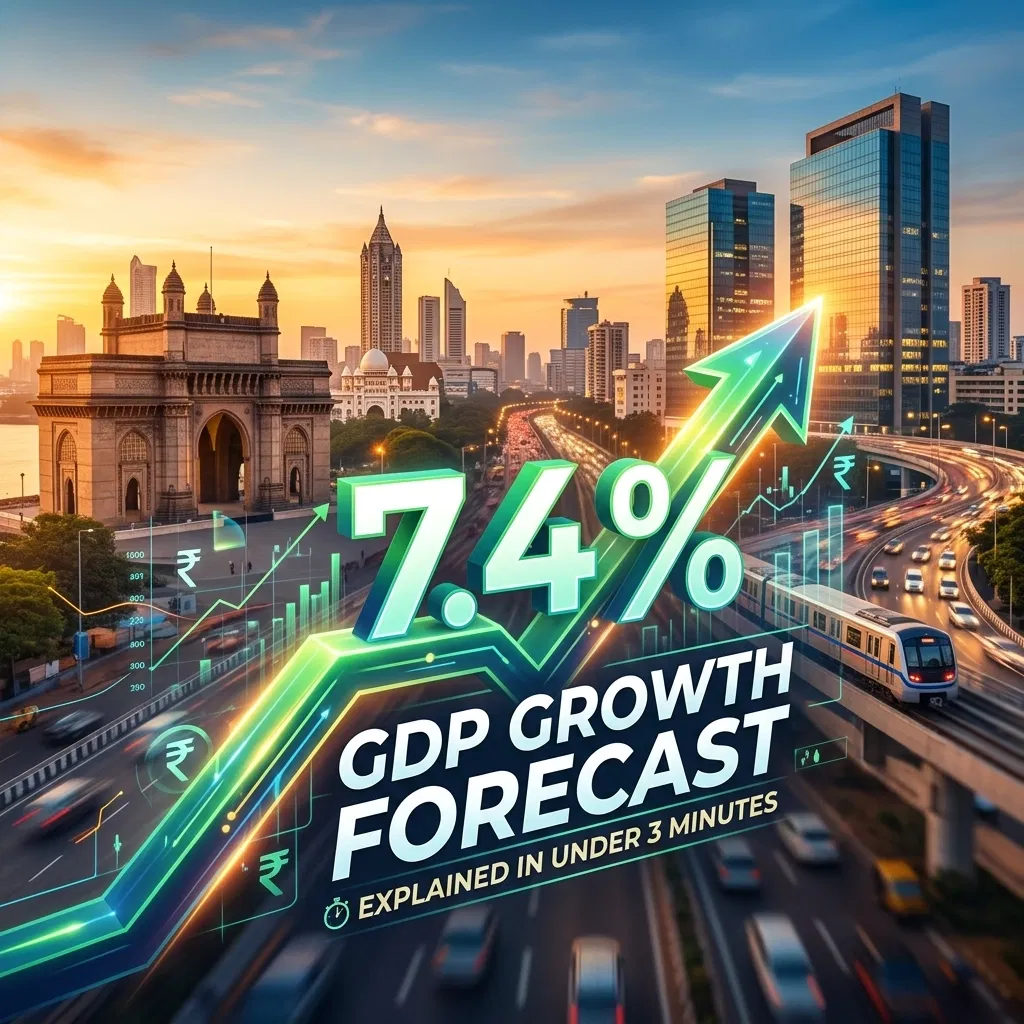
For a Bangalore-based startup, these fluctuations weren't just numbers on a spreadsheet: they were daily obstacles. The gdp growth india story in 2026 highlighted a divergence: while the "New India" economy showed strength in consumer spending, the capital markets became increasingly discerning. Investors began to democratize their portfolios, moving away from hyper-growth cash-burn models toward ventures that demonstrated a clear path to profitability. This shift required a revitalized approach to corporate strategy, moving from "growth at all costs" to "sustainable unit economics."
2. Startup News India: The Rise of Capital Efficiency
By March 2026, the startup news india headlines were dominated by stories of downsizing and "right-sizing." However, beneath the surface of these corrections lay a more inspiring trend. Startups that survived the initial shock of 2025’s funding winter were now emerging as leaner, more focused entities.
The latest data indicates that while total funding dipped to $11.7 billion, early-stage momentum actually saw a 33% increase. This suggests that the "Pivot of '26" was primarily a struggle for those caught in the "Series C Trap": startups that had raised too much at too high a valuation during the 2021-2022 frenzy. To understand the current climate, one can look at the resources available at Business Tantra, which provides a comprehensive sitemap of the evolving market dynamics.
3. Case Study: The Resilience of "Veridian Logistics"
To illustrate this transition, let us look at the story of Veridian Logistics, a Bangalore-based AI-driven supply chain platform. In late 2025, Veridian was preparing for a Series D round to expand into Southeast Asia. However, as the gdp growth india forecasts fluctuated and interest rates remained high, their lead investors pulled back, demanding a 40% reduction in burn rate before any further capital infusion.

The founder, a seasoned engineer from Jodhpur, realized that the company's survival depended on a radical pivot. They moved away from a broad-market acquisition strategy and focused exclusively on high-margin enterprise clients in the semiconductor and clean-tech sectors. By leveraging their proprietary AI to optimize last-mile delivery specifically for high-value components, they were able to reach break-even within six months. This journey from "market misfit" to a "glowing unicorn" of efficiency is the blueprint for success in the 2026 economy.
4. Forget Growth, Give Us Profit: The 2026 IPO Race
A significant portion of the indian business updates this year has focused on the "IPO Race." With 23 startups currently preparing for a public listing, the message from the markets is clear: "Forget growth, give us profit." The demand for data-driven insights and transparent electronic communications networks has never been higher.

Investors are no longer satisfied with "vanity metrics." They are looking for legitimate purposes behind every rupee spent. This has led to the emergence of the "Profitable Unicorn": a term that seemed like an oxymoron just a few years ago. Startups are now utilizing technical and legalistic precision to clean up their balance sheets, ensuring they meet the stringent requirements of the SEBI in 2026. For those looking to join this elite circle, understanding the registration process and keeping a close eye on the blog for regulatory updates is essential.
5. The Strategic Shift to Deep-Tech and AI
The "Pivot of '26" was also a technological one. Bangalore startups shifted their focus toward deep-tech: specifically AI, semiconductors, and clean energy. As global conflict over semiconductor supply chains intensified, Indian startups stepped in to fill the vacuum, fueled by government incentives and a skilled talent pool.

This move toward deep-tech has been a catalyst for change, allowing startups to build high-moat businesses that are less susceptible to short-term GDP fluctuations. By providing transformative solutions rather than just digital tools, these companies have secured their value proposition in a crowded market. The integration of AI into traditional sectors has led to exponential growth in efficiency, helping the Bangalore ecosystem maintain its 33% share of national startup funding despite the overall market cooling.
6. Navigating the "New India" Economy: Lessons for Founders
What can founders learn from the survivors of 2026? The most critical lesson is the importance of agility. The ability to read gdp growth india signals and react before the capital dries up is the difference between a "sunset story" and a "success story."
- Prioritize Unit Economics: If your business model doesn't work at a small scale, it won't work at a large scale in a high-interest environment.
- Focus on Retention: In 2026, real customer retention is the only metric that truly matters to investors.
- Leverage New-Age Tools: Utilize digital business cards and NFC-enabled networking, such as the products found in our shop, to maintain professional connections in a cost-effective manner.
- Embrace Transparency: Maintain high standards of corporate governance to attract institutional capital.
The startup news india landscape will continue to be volatile, but for those who have mastered the "Tantra" of business: the balance between innovation and discipline: the future remains bright.

Conclusion
The "Pivot of '26" marks the maturation of the Indian startup ecosystem. We are moving away from the era of exuberant excess and entering an age of calculated, sustainable excellence. While gdp growth india might fluctuate due to global pressures, the underlying strength of our entrepreneurs remains unshaken. By focusing on profitability, deep-tech innovation, and capital efficiency, Bangalore’s startups are not just surviving the latest economic shifts: they are redefining what it means to be a global business leader.
As we look toward the latter half of 2026, the lessons learned during this pivot will serve as a foundation for the next decade of growth. For more expert analysis and the latest indian business updates, feel free to explore our about us page or contact us for tailored insights into the market. The journey of the Indian entrepreneur is one of constant evolution, and at Business Tantra, we are here to document every transformative step.