


























The year 2026 has brought about a paradigm shift in the Indian entrepreneurial landscape. No longer is the "startup dream" confined to the high-rises of Bengaluru or the co-working spaces of Gurgaon. Today, the real SME growth India story is being written in the narrow lanes of Tier-3 towns and the sprawling agricultural hubs of "Bharat."
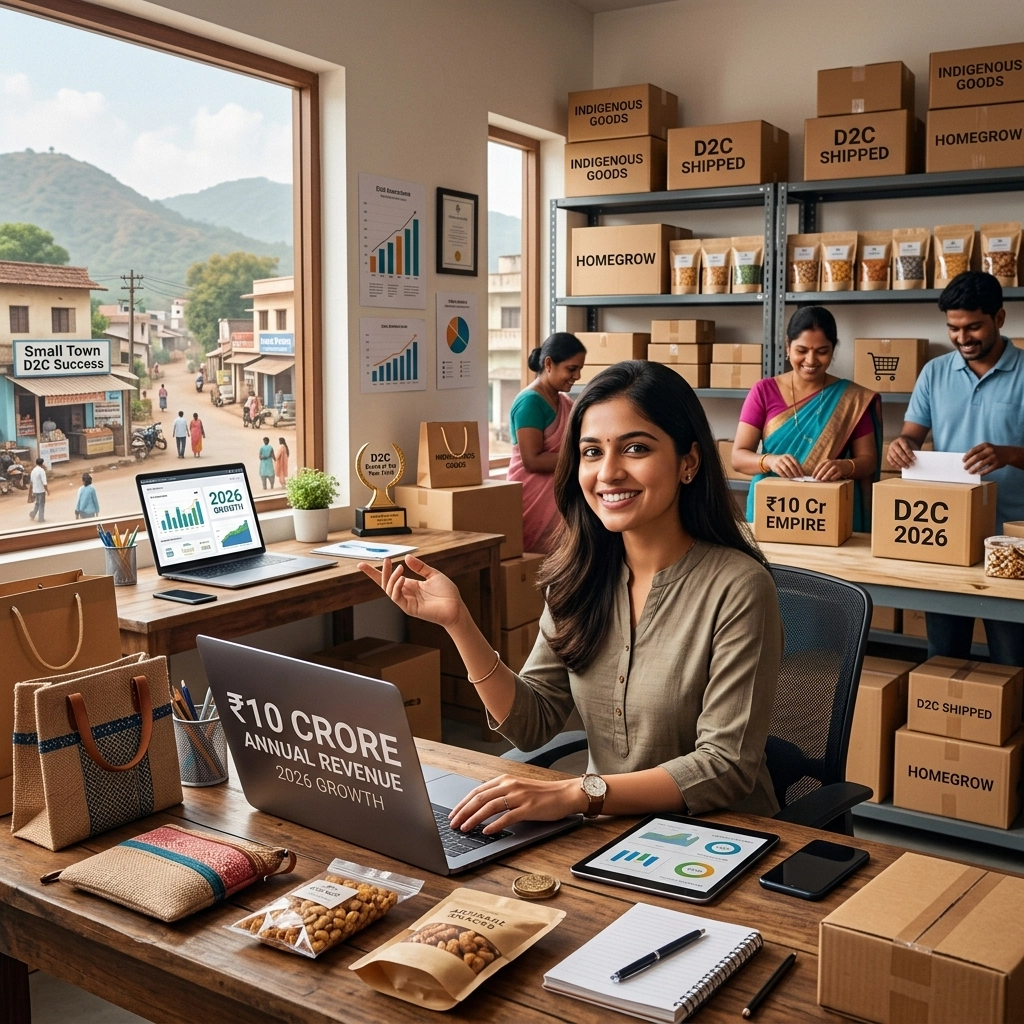
Take the case of Aarav Sharma. In early 2024, Aarav was operating a modest family workshop in Dhamtari, Chhattisgarh, producing handcrafted bamboo utility products. Fast forward to April 2026, and his brand, GraminCraft, has hit a staggering ₹10 crore annual recurring revenue (ARR). This isn't just a story of luck; it’s a testament to the small business success possible when traditional craftsmanship meets a high-tech Direct-to-Consumer (D2C) strategy.
The Catalyst for Change: From Local Shop to D2C Brand India
Aarav’s journey began with a simple realization: the value of his products was being diluted by middleman margins. To achieve exponential growth, he needed to own the relationship with his customer. By launching a D2C brand India focused on sustainable living, he bypassed traditional distributors and went straight to the smartphone-wielding urban consumer.
However, the transition wasn't seamless. Building a brand from a small town involves navigating a unique set of hurdles that metro-based founders rarely encounter. From unstable internet connectivity to a lack of specialized talent, the "Bharat" entrepreneur must be a master of resourcefulness.
Democratizing Access Through Digital Adoption
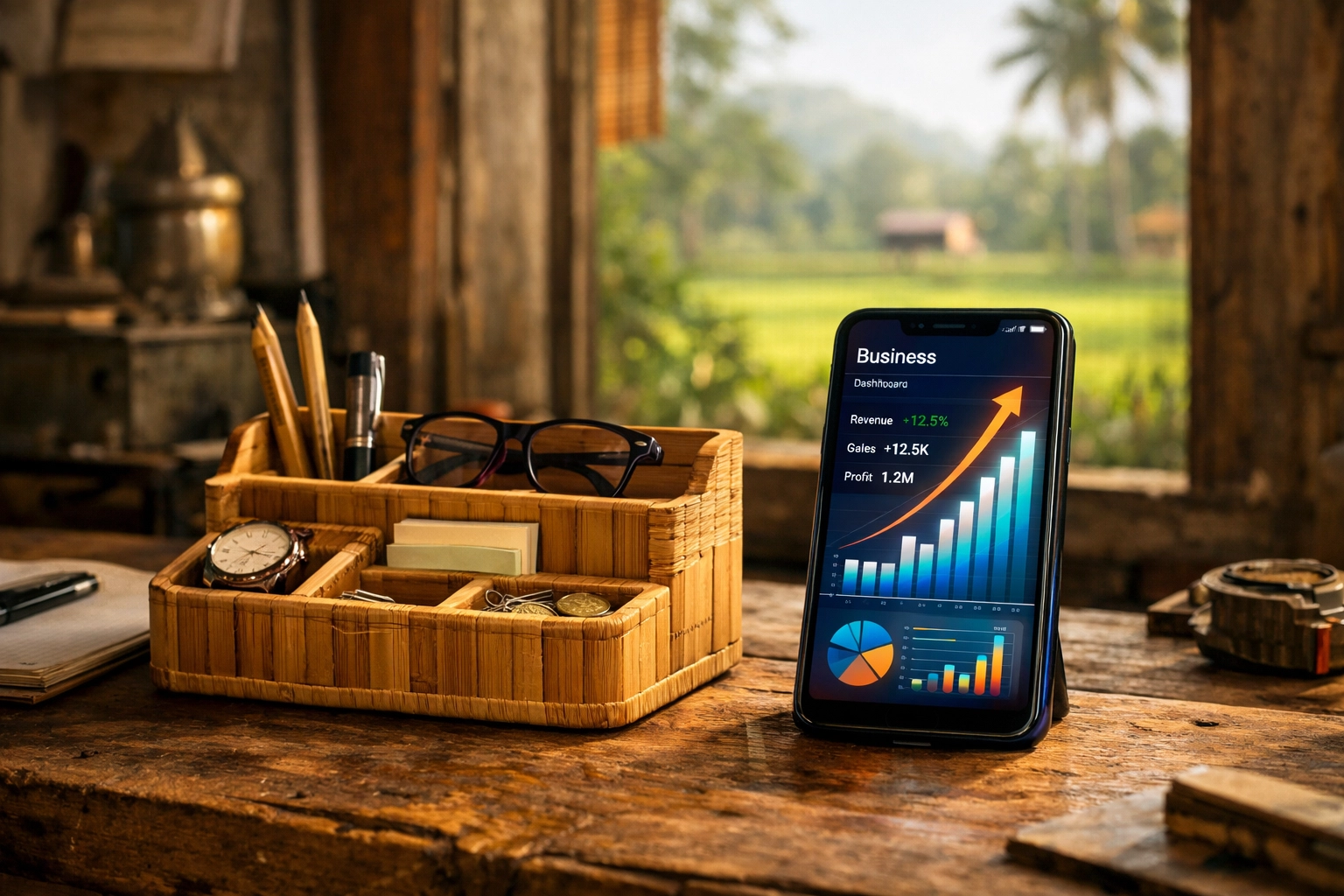
One of the most significant "catalysts for change" in Aarav’s journey was the rapid democratization of digital tools. In 2026, the digital divide has narrowed significantly. Low-cost AI agents and simplified ERP systems have allowed even rural SMEs to manage inventory and customer relations with the precision of a multinational corporation.
Aarav utilized data-driven insights to understand that his primary audience wasn't just "eco-conscious" people, but young professionals in metropolitan areas looking for aesthetic, functional home-office decor. By leveraging social media algorithms, GraminCraft reached the screens of Mumbai and Delhi residents before they ever saw a billboard. This level of small business success was historically impossible without a massive marketing budget.
You can read more about how technology is reshaping the landscape on our Home News page.
Overcoming the Logistics Logjam in Rural India
If there is one thing that keeps a rural D2C founder awake at night, it’s logistics. Shipping a fragile bamboo lamp from Dhamtari to a penthouse in Bangalore at a competitive price is no small feat. In the early days, GraminCraft faced high RTO (Return to Origin) rates and shipping costs that ate up nearly 40% of their margins.
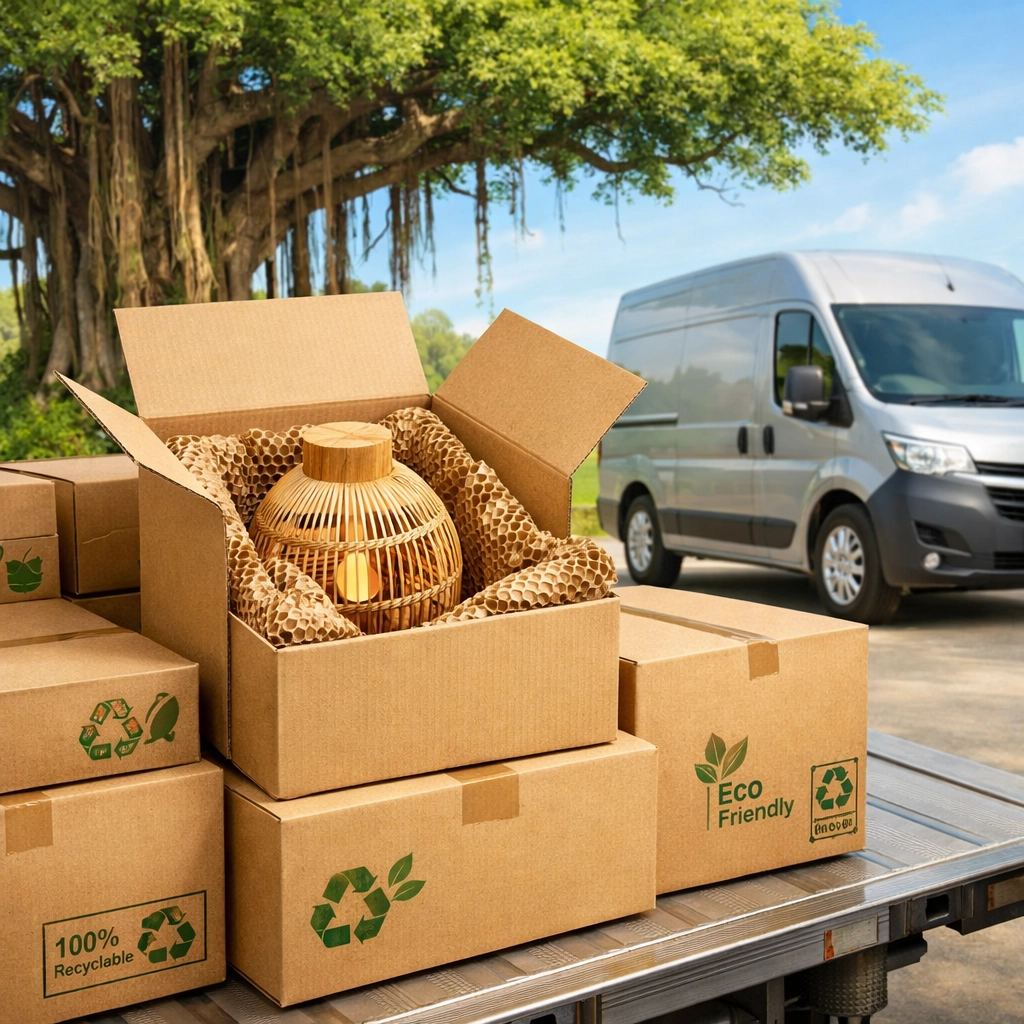
To solve this, Aarav didn't just look for a courier; he looked for a partnership. He collaborated with regional logistics aggregators who were utilizing the government’s revitalized infrastructure projects. By using local micro-fulfillment centers, he reduced his delivery time from ten days to three.
- Strategic Warehousing: Placing inventory closer to demand hubs.
- Packaging Innovation: Moving from plastic to reinforced biodegradable materials that reduced breakage by 80%.
- Local Employment: Training youth in the town for quality checks, ensuring that every product leaving the shed was "Amazon-grade."
The Power of Authenticity in 2026
In an era where consumers are bombarded with generic products, the story behind the brand has become the ultimate "value proposition." Aarav didn't just sell bamboo products; he sold the story of Dhamtari. He used the Business Tantra Blog and social media to showcase the artisans, the sustainability of the bamboo harvest, and the legitimate purpose behind his enterprise.
This authenticity resonated. When people bought from GraminCraft, they weren't just buying a product; they were participating in the SME growth India movement. This emotional connection acts as a moat against cheaper, mass-produced imports.
Navigating the Financial Maze
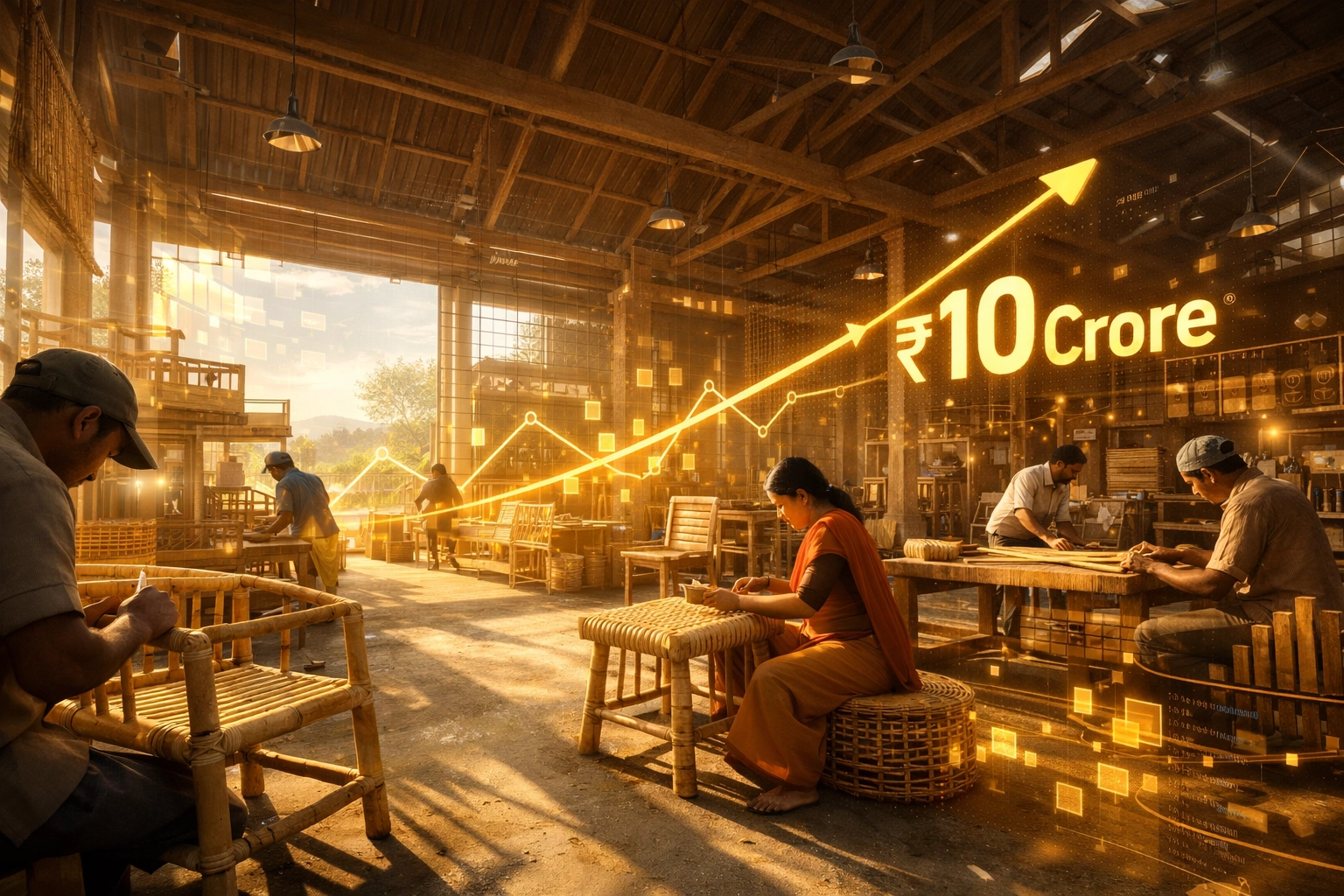
Scaling to a ₹10 crore empire requires capital, and for a long time, rural SMEs were ignored by traditional VCs. However, by 2026, the emergence of "Revenue-Based Financing" and specialized SME funds has changed the game. Aarav was able to secure funding by presenting a transparent ledger backed by data-driven insights.
The Ministry of MSME’s updated policies served as a foundational support system. If you're looking to understand the legalities of scaling your own business, checking our Terms and Conditions and policy updates can give you a clearer picture of the regulatory environment.
5 Lessons for the Aspiring 'Bharat' Entrepreneur
Building a D2C brand India is a marathon, not a sprint. Based on Aarav’s ₹10 crore journey, here are five non-negotiables for success:
- Focus on Product First: No amount of marketing can save a mediocre product. Ensure your quality is consistent.
- Master the Unit Economics: In a small town, every rupee counts. Monitor your Customer Acquisition Cost (CAC) vs. Lifetime Value (LTV) daily.
- Build a Local Community: Your town is your strength. Hire locally and build a culture of pride around the brand.
- Leverage AI for Lean Operations: Use AI tools for customer service and basic content creation to keep overheads low.
- Don’t Ignore the "Offline" Potential: While D2C is digital, 2026 has shown that "Phygital" (Physical + Digital) experiences, like pop-up stores in metros, can skyrocket brand trust.
Conclusion
The story of the ₹10 crore D2C empire in Dhamtari is a blueprint for the future of Indian commerce. It proves that with the right mix of traditional craftsmanship and modern digital strategy, location is no longer a barrier to small business success. As we continue to see exponential growth in the rural sectors, the line between "India" and "Bharat" continues to blur, creating a unified economic powerhouse.
The journey from a small workshop to a national brand is fraught with challenges, but the rewards: both financial and social: are unparalleled. Are you ready to build the next great Indian brand? Start your journey by learning more About Us and how we cover the heartbeat of Indian business.
The revolution of SME growth India is just getting started. It’s time to stop looking at small towns as mere consumer markets and start seeing them as the manufacturing and innovation hubs they are destined to be. If you have a story like Aarav’s, feel free to Contact Us and let the world know how you’re changing the face of Indian business.