


























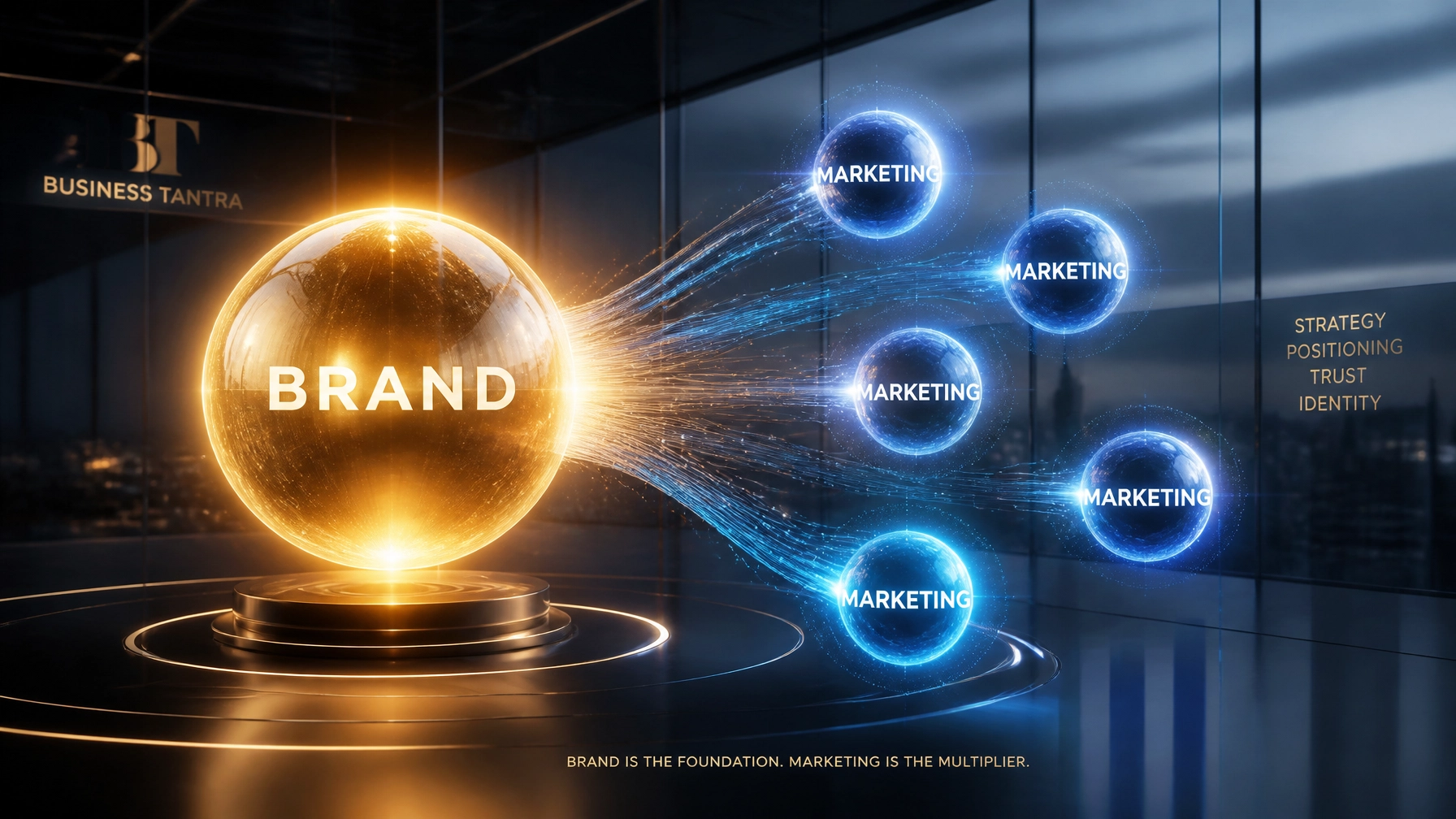

In the hyper-competitive landscape of 2026, the distinction between Branding vs Marketing has become the defining frontier for organizational survival. For decades, many executives viewed branding as a mere subset of the marketing department: a aesthetic exercise in logo design and color palettes. However, the most successful enterprises in India and across the globe have realized a fundamental truth: branding is the strategic foundation, and marketing is its tactical execution. As the industry adage goes, "Branding is not a part of marketing. Marketing is a part of branding."
This shift in perspective is more than a semantic debate; it is a catalyst for change in how we perceive value creation. To understand why marketing is subordinate to brand, one must look at the "soul" of a business. While marketing is the voice that speaks to the consumer, the brand is the character of the entity doing the speaking. In an era where Indian startups are experiencing exponential growth, the ability to build a brand that resonates on a human level is what separates temporary trends from enduring institutions.
1. The Strategic Core: Why Brand is the Soul
The brand is the "North Star" of an organization. It encompasses the mission, the value proposition, and the long-term vision. It answers the fundamental question: Who are we, and why do we exist? When we analyze the ongoing Startup Gold Rush in India, we see that companies with a clearly defined brand purpose find it easier to navigate market volatility.
Branding is a long-term commitment. It is the intangible asset that builds trust over decades. It involves establishing a "legitimate purpose" that goes beyond profit, creating an emotional connection with the target demographic. In contrast, marketing is often focused on the immediate: quarterly targets, lead generation, and customer acquisition. If you attempt to market a company without a robust brand, you are essentially shouting in a crowded room without having anything meaningful to say. This is why effective business management always begins with brand strategy before a single ad is ever run.

2. Marketing as the Tactical Extension
If branding is the strategy, marketing is the set of tools used to communicate that strategy to the world. Marketing includes search engine optimization (SEO), social media campaigns, electronic communications networks, and data-driven insights gathered through complex analytics. These tools are powerful, but they are hollow without the substance of a brand to give them weight.
Marketing is the vehicle that amplifies your message. For instance, when a startup undergoes a successful pivot, the marketing tactics may change drastically, but the core brand identity: the commitment to innovation or customer service: must remain constant to maintain credibility. Marketing's role is to "democratize" access to the brand’s value, ensuring that the right message reaches the right person at the right time. However, marketing remains subordinate because it must always conform to the rules set by the brand. If the marketing department runs a campaign that contradicts the brand's values, it doesn't just fail; it actively damages the company's reputation.
3. Branding vs Marketing: Navigating the 2026 Competitive Landscape
As we move further into 2026, the noise in the digital marketplace has reached unprecedented levels. Consumers are no longer just looking for products; they are looking for "sovereign tech" and companies that align with their ethical standards. In this environment, the hierarchy of Branding vs Marketing becomes even more pronounced.
Consider the following distinctions that define the modern business environment:
- Longevity vs. Immediacy: Branding is about building a legacy that lasts generations; marketing is about the "here and now."
- Emotional Connection vs. Transactional Interaction: Branding builds loyalty through shared values; marketing facilitates the transaction through discounts and features.
- Strategic Focus vs. Tactical Agility: Branding provides the roadmap; marketing provides the engine and the steering.
- Identity vs. Awareness: Branding defines who you are; marketing ensures people know you exist.
External resources like Forbes emphasize that while marketing can drive sales, only branding can drive sustainable growth and premium pricing. When a brand is strong, the "cost of acquisition" through marketing decreases because the brand itself becomes a magnet for talent and customers alike.

4. Operationalizing the Brand-First Philosophy
To transition from a marketing-led to a brand-led organization, leaders must implement structural changes that prioritize the brand's integrity. This involves moving from a "sales-first" mindset to a "mission-first" mindset.
First, companies must invest in deep research to uncover data-driven insights about their audience's psychographics, not just their demographics. This knowledge allows the brand to be "revitalized" to meet the evolving needs of the modern Indian consumer. Second, every touchpoint: from the customer service script to the UI/UX of a mobile app: must be an expression of the brand. This is where the marketing department excels: taking the abstract brand values and turning them into concrete applications.
For entrepreneurs looking to build the next unicorn, understanding this relationship is vital. Marketing can be outsourced; branding, however, must be nurtured from within. It is the internal culture and the external reputation coming together to form a cohesive whole. Whether you are looking at the success of local incubators or global tech giants, the pattern remains consistent: the brand dictates the marketing, never the other way around.

5. The Economic Impact of a Strong Brand
From a strictly financial perspective, the ROI of branding is often harder to measure than a specific marketing campaign. However, the cumulative impact is undeniable. A strong brand allows for higher margins because consumers are willing to pay a premium for a name they trust. This is the ultimate "value proposition" of branding.
In the world of finance and economics, brand equity is a legitimate asset on the balance sheet. Marketing expenses are often seen as costs to be managed, whereas branding is an investment to be grown. By positioning marketing as a subordinate function, organizations ensure that their spending is always aligned with their long-term equity. This prevents the "brand erosion" that occurs when short-term marketing stunts alienate the core audience. Companies like HubSpot have long advocated for this integrated approach where marketing serves the brand’s higher purpose.
Conclusion
The branding paradox reminds us that the most powerful tools are useless without a guiding philosophy. While marketing provides the essential mechanisms for growth and engagement, it is the brand that provides the purpose and the destination. In the dynamic world of Indian business news, we constantly see companies rise and fall based on their ability to manage this relationship.
Ultimately, Branding vs Marketing is not a competition but a hierarchy. By acknowledging that marketing is subordinate to brand, businesses can move with greater precision, build deeper trust, and achieve the kind of exponential growth that defines the industry leaders of today and tomorrow. A brand-first approach is not just a marketing strategy; it is a business imperative for the modern era.
Keep following Business Tantra for the latest on market movers and economic trends. 🚀🦾