
























Beyond the Hype: A Deep Dive into Corporate News India and the 2026 Merger Wave.

The Indian corporate landscape is no longer a place for the timid or the ill-prepared. As we hurtle through April 2026, the sheer velocity of structural transformation is enough to give even the most seasoned venture capitalists whiplash. The era of "wait and watch" is dead; replaced by a ruthless cycle of consolidation and strategic deconstruction. If you haven’t been tracking Corporate News India, you aren’t just behind: you’re obsolete. 📉
The current year has already proven to be a volatile cocktail of massive inbound capital and sudden, sharp market corrections. While the headlines of 2025 screamed of record-breaking $60 billion transaction volumes, the reality of early 2026 is far more nuanced, more aggressive, and significantly more dangerous for those who cannot read between the lines.
1. The 2025 Aftermath: A Foundation of High-Stakes Carnage
To understand the present "Merger Wave," we must first acknowledge the carnage of 2025. It was a year where the "Billion-Dollar Club" wasn't just an elite circle; it became the standard. India recorded 14 mega-deals exceeding a billion dollars each, representing a staggering 133% year-on-year increase. This wasn't just growth: it was an all-out assault on market share.
From the Adani Group’s relentless expansion to the massive consolidations in the fintech space, 2025 set a baseline that many assumed would continue indefinitely. However, as we look at the latest insights on the global economy, it is clear that the "bubble" mentality is being replaced by a "survival of the fittest" doctrine.

2. Policy as a Weapon: The Catalyst for Corporate News India
The primary driver behind this seismic shift isn't just market sentiment; it is the calculated weaponization of policy. The Reserve Bank of India (RBI) and the Ministry of Corporate Affairs have effectively dismantled the barriers to entry for domestic bank financing in M&A transactions. This is a game-changer. Historically, Indian banks were the spectators of the M&A arena; today, they are the primary financiers.
In the realm of Corporate News India, the shift in Foreign Direct Investment (FDI) limits: particularly in the insurance and defense sectors: has triggered an avalanche of inbound capital. We are seeing direct share swaps between Indian entities and overseas giants becoming the "legitimate purpose" of corporate restructuring. No longer are companies begging for capital; they are orchestrating complex, multi-jurisdictional maneuvers that prioritize long-term dominance over short-term dividends. 🏛️
3. The Big Four’s Ruthless Takeover of Corporate News India
Perhaps the most startling development in the 2026 merger wave is the displacement of traditional investment banks. The "Big Four": EY, PwC, Deloitte, and KPMG: have successfully executed a hostile takeover of the advisory landscape. These consulting behemoths are no longer just auditing books; they are architecting the deals.
- EY recently facilitated the $4.4 billion RBL Bank-Emirates NBD stake sale.
- Deloitte was the architect behind ONGPL’s $2.3 billion acquisition of Ayana Renewable.
- PwC is reporting that 41% of global CEOs: with a heavy concentration in the Indian subcontinent: plan to execute major acquisitions before the year ends.
This transition highlights a shift from "pure finance" to "integrated strategy." When you read Corporate News India today, you see a focus on operational synergy and tax efficiency that the old-school investment bankers simply ignored. The Big Four are utilizing data-driven insights to ensure that these mergers aren't just big: they're functional.

4. Demergers: The Silent Strategy in Corporate News India
While the world stares at the "Merger Wave," the smart money is watching the demergers. In a paradoxical twist, the most successful companies in 2026 are those that are brave enough to tear themselves apart. Giants like L&T, HDFC Bank, JSW Energy, and Tata Power are actively pursuing strategic separations to unlock hidden value.
This is the "democratization of value." By spinning off infrastructure, green energy, or specialized financial arms, these conglomerates are providing investors with a "pure-play" opportunity. This is a critical component of Corporate News India that often gets buried under the hype of massive acquisitions. A demerger isn't a sign of weakness; it is a tactical retreat to higher ground, allowing each unit to pursue exponential growth without the dead weight of a bloated corporate structure. ✂️
5. The January Reality Check: Is the Momentum Stalling?
Let’s talk about the elephant in the room. January 2026 was a cold shower for the optimists. Deal values plummeted by 60% compared to the frantic pace of December 2025. Does this mean the wave is over? Absolutely not. It means the market is becoming discerning.
The 207 deals recorded in the first month of the year were high-quality, strategic strikes. Take Coforge’s $2.4 billion acquisition of Encora. This single deal accounted for 40% of the month's total M&A value. What we are witnessing in Corporate News India is not a slowdown, but a maturation. The era of "buying for the sake of buying" is over. The current wave is characterized by "surgical acquisitions": buying specific technology, specific talent, or specific geographic access.

6. The $30 Trillion Vision and the Semiconductor War
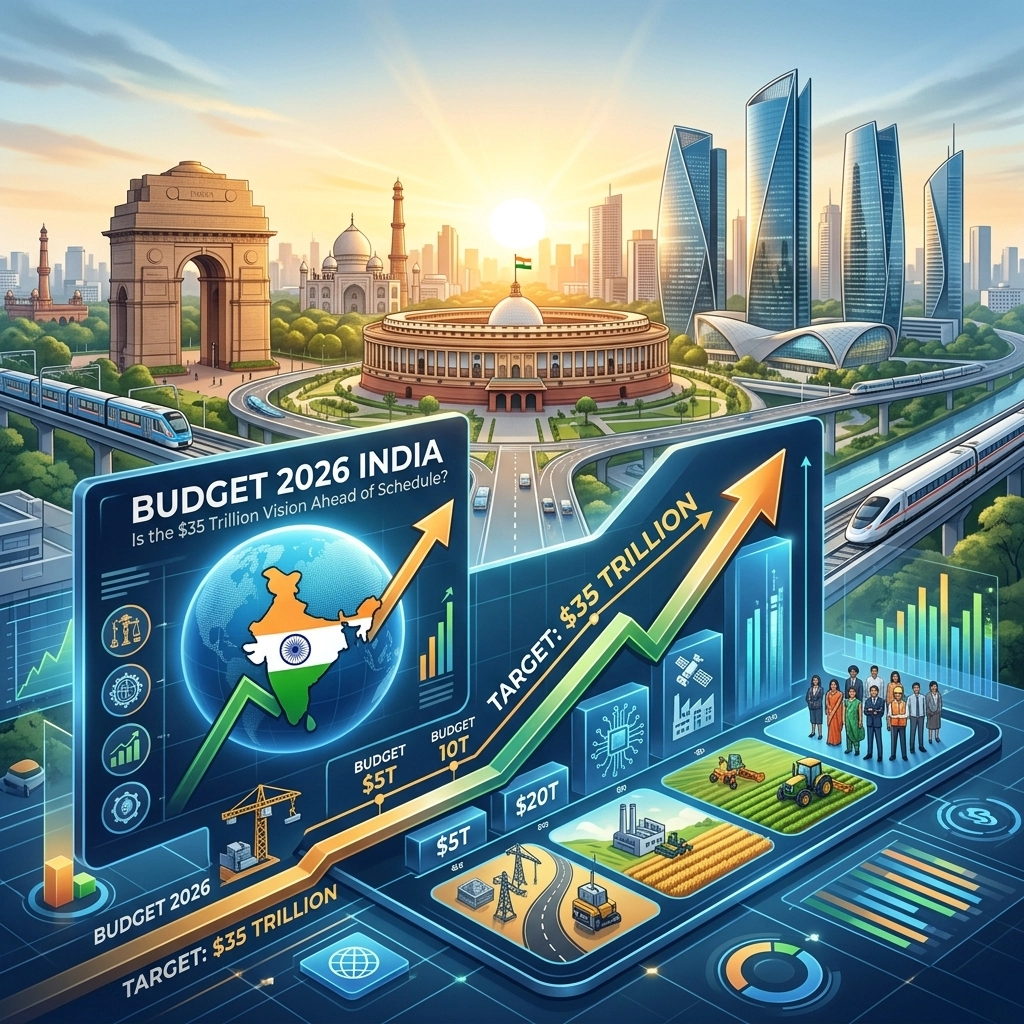
India’s ambition to scale toward a $30 trillion economy is the ultimate North Star for these corporate maneuvers. As outlined in the Business Tantra mission, the convergence of infrastructure, power, and high-tech manufacturing is where the next decade will be won or lost.
The "World War for Semiconductors" is playing out in the Indian stock market news every single day. The consolidation in the renewables and power sectors: fueled by the Budget 2026 proposals to restructure the Power Finance Corporation: is a direct response to the global energy transition. If you are not looking at these macro trends, you are effectively blind to the future of Corporate News India.
7. Investment Tips: Navigating the 2026 Volatility
For the investor or the entrepreneur, the 2026 Merger Wave presents a double-edged sword. To stay ahead, one must:
- Monitor the Big Four Mandates: The consulting firms are the new gatekeepers of deal flow.
- Watch the Debt-to-Equity Ratios: With RBI allowing bank financing, leverage is back in style. Ensure the companies you back aren't over-extending.
- Prioritize Regulatory Clarity: Deals are being made or broken in the halls of the Competition Commission of India (CCI).
The market is no longer interested in "potential." It demands "performance." As we move further into the year, the noise will only get louder, but the signals are clear for those who know where to look.
Conclusion
The 2026 Merger Wave is more than just a series of transactions; it is the total recalibration of the Indian economic engine. From the ruthless dominance of the Big Four to the strategic brilliance of the demerger trend, the rules of engagement have been rewritten. Corporate News India in 2026 is defined by a paradox of consolidation and separation, all aimed at one goal: global supremacy.
The "hype" may be exhausting, but the underlying shifts are permanent. As the lines between technology, finance, and infrastructure continue to blur, the companies that emerge victorious will be those that embrace this volatility as a catalyst for change. The wave is here: you either ride it or you are crushed by it. There is no middle ground. 🌊🚀
Stay tuned to Business Tantra for real-time updates on the deals that are defining the future of the Indian economy.

admin


Related Post