

























Amazon CEO Andy Jassy Meets PM Modi; Announces Plans to Invest Additional $13 Billion in India on Cloud, AI

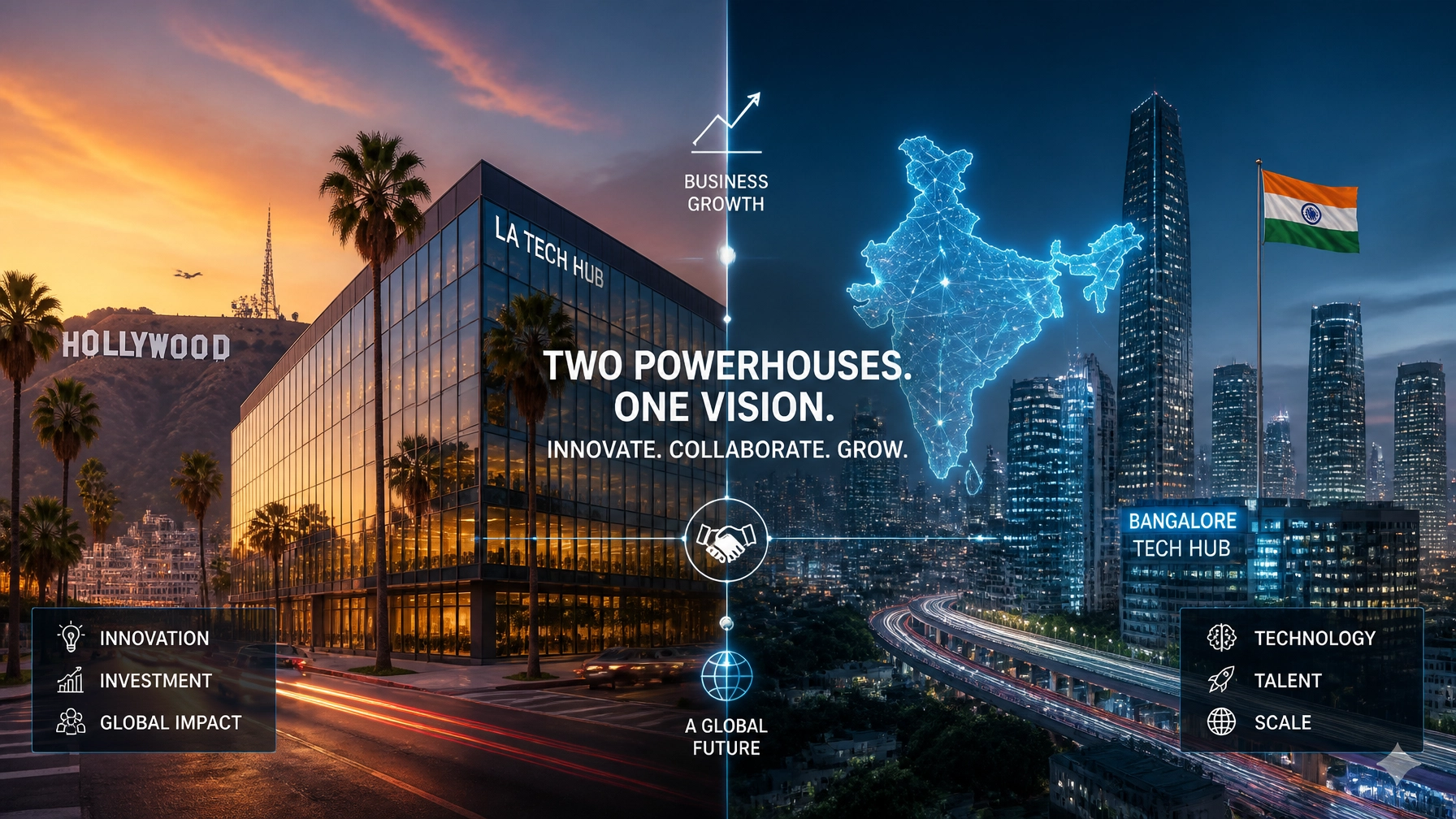
In a landmark development for the economy of india, Amazon CEO Andy Jassy met with Prime Minister Narendra Modi in New Delhi on June 25, 2026. This high-profile rendezvous resulted in a monumental announcement: Amazon will inject an additional $13 billion into the Indian market by 2030, specifically targeting the expansion of cloud infrastructure and artificial intelligence (AI). This new commitment elevates Amazon’s planned investment for the 2026–2030 period to a staggering $48 billion, underscoring the tech giant's confidence in India’s digital trajectory and its role as a global economic powerhouse.
A Multi-Billion Dollar Catalyst for the Economy of India
The scale of this capital infusion is historic. By raising its 2026–2030 investment target from $35 billion to $48 billion, Amazon has positioned itself as one of the most significant foreign direct investors in the country. When viewed through a long-term lens, Amazon’s cumulative investment in the economy of india from 2010 to 2030 is projected to exceed $88 billion. This is not merely a financial transaction; it is a profound vote of confidence in the nation's "Viksit Bharat" (Developed India) vision.
Prime Minister Modi hailed the announcement as definitive evidence of the growing global investor interest in the Indian sub-continent. The meeting, characterized by an atmosphere of professional synergy, focused on how digital infrastructure can serve as a "catalyst for change," driving efficiency across both the private and public sectors. For those following business news and trends, this move represents a significant shift in how global tech titans view India: not just as a market for consumption, but as a hub for sophisticated technological development.
Strengthening Infrastructure: AWS Mumbai and Hyderabad
A cornerstone of this $13 billion additional commitment is the massive expansion of Amazon Web Services (AWS). Over $21 billion has been specifically allocated for the development of cutting-edge data centers in Mumbai and Hyderabad between 2026 and 2030. These facilities are designed to handle the exponential growth of data-driven insights and AI-workloads that define the modern industrial landscape.

The expansion of AWS infrastructure is pivotal for several reasons:
- Low Latency and Data Sovereignty: By hosting data locally, Amazon ensures that Indian enterprises can comply with evolving data protection laws while enjoying high-speed access to cloud resources.
- Advanced AI Tooling: The new data centers will provide local access to custom AI chips like Trainium and Inferentia, alongside managed services like Amazon Bedrock. This allows Indian developers to build and scale generative AI applications with unprecedented precision.
- Resilience: A robust electronic communications network is essential for a stable digital economy. The dual-region presence in Mumbai and Hyderabad provides the redundancy required for mission-critical government and corporate applications.
This infrastructure push is a primary driver in featured business stories today, as it provides the foundational "rails" upon which the next generation of Indian software will run.
Empowering Startups and Small Businesses: The AI Democratization
Amazon’s mission extends beyond large-scale infrastructure; it aims to democratize access to high-end technology. A significant portion of the newly announced strategy involves bringing the benefits of AI to 15 million small and medium-sized enterprises (SMEs) across the country. By providing these businesses with the tools to optimize supply chains, predict consumer demand, and automate customer service, Amazon is facilitating a systemic upgrade of the Indian retail and manufacturing sectors.

In the realm of startup news India, this is a game-changer. Early-stage ventures often face a "compute gap," where the cost of high-end AI training is prohibitive. Through AWS credits, specialized incubators, and the deployment of accessible AI models, Amazon is lowering the barrier to entry for the next wave of Indian unicorns.
Furthermore, the social impact of this investment is noteworthy. Amazon has pledged to reach 4 million government school students with AI and coding literacy programs by 2030. This ensures that the future workforce is equipped with the technical skills necessary to thrive in an AI-augmented world, thereby securing the long-term vitality of the economy of india.
Human Capital and Global Trade: Jobs and Exports
The economic ramifications of Amazon's presence in India are quantified by ambitious targets for employment and trade. As of 2024, the company has already supported approximately 2.8 million direct and indirect jobs in India. With the new investment cycle, that number is expected to climb to 3.8 million jobs by 2030. These roles span a diverse spectrum: from data scientists and software engineers to logistics associates and delivery partners.

Equally impressive is Amazon’s commitment to enabling $80 billion in cumulative e-commerce exports from India by 2030. By leveraging its global logistics network, Amazon is allowing "Made in India" products to reach customers in the US, Europe, and beyond. This initiative aligns perfectly with the government's "Atmanirbhar Bharat" (Self-Reliant India) program, transforming local manufacturers into global exporters.
The focus on exports serves a legitimate purpose in narrowing the trade deficit and positioning India as a global manufacturing hub. The synergy between Amazon’s global reach and India’s manufacturing potential is a textbook example of a value proposition that benefits all stakeholders.
A Vision for a Developed India
During the meeting, Andy Jassy praised Prime Minister Modi’s "visionary leadership" and the digital transformation the country has undergone over the last 12 years. Jassy reiterated that Amazon remains a committed, long-term partner in India’s journey toward becoming a developed nation.
From an analytical perspective, this investment acts as a revitalized engine for growth. The integration of AI into the core of the economy of india is no longer a futuristic concept; it is an operational reality. The collaboration between the Indian government and private entities like Amazon ensures that the digital divide is bridged, and the benefits of the Fourth Industrial Revolution are felt by citizens across all socio-economic strata.
External experts and analysts at organizations like NASSCOM and the World Bank have frequently noted that India's digital economy is growing at a rate significantly higher than its overall GDP. Amazon's $13 billion "top-up" is a strategic maneuver to capture and catalyze this growth.
Conclusion
The meeting between Andy Jassy and Prime Minister Modi marks a pivotal moment in the 2026 business calendar. By committing an additional $13 billion toward AI and cloud infrastructure, Amazon is not just expanding its business footprint; it is actively shaping the future of the economy of india.
The ripple effects of this $48 billion investment cycle will be felt across the startup news India landscape, the SME sector, and the global export market. As India continues its ascent as a global tech leader, the partnership between the world’s largest e-commerce platform and the world’s fastest-growing major economy stands as a testament to the power of digital innovation and strategic investment. This is more than a news story; it is the blueprint for the next decade of Indian prosperity.