
























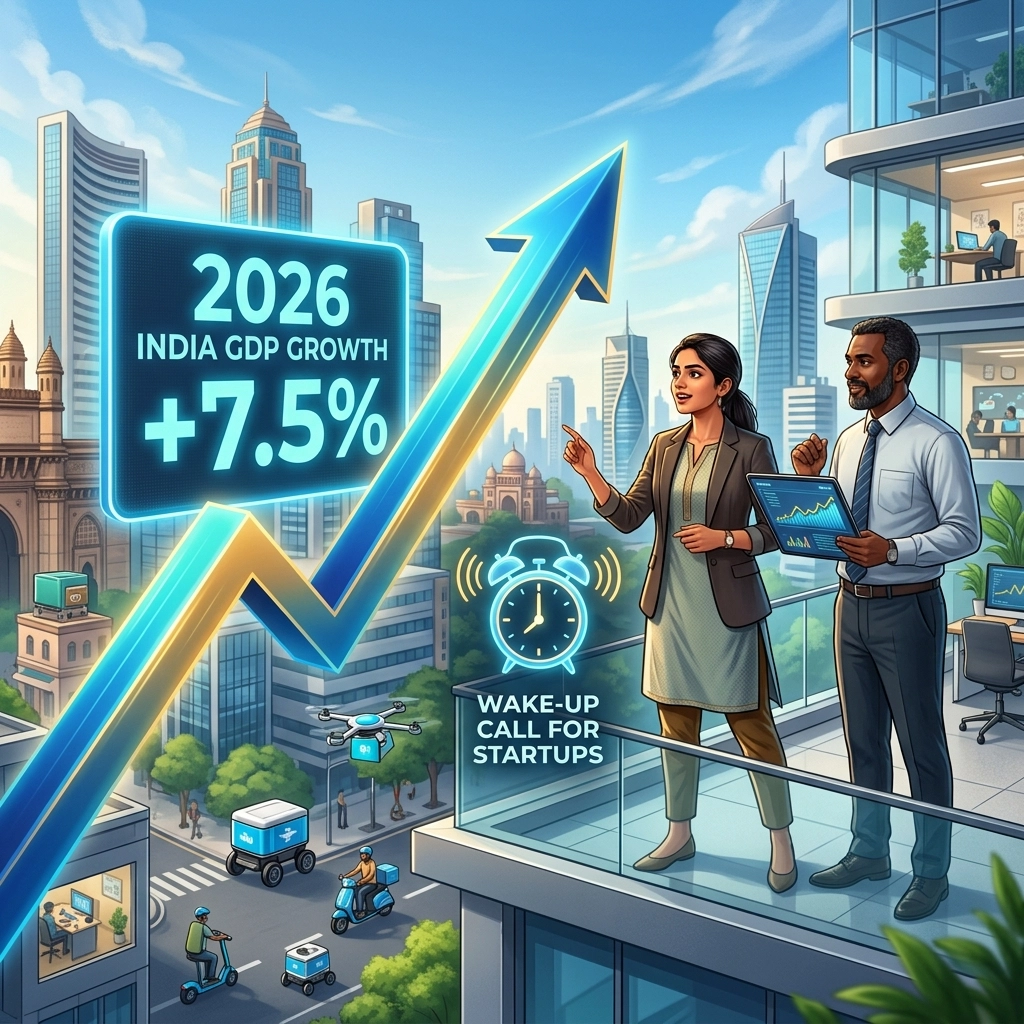
Why India’s 2026 GDP Growth is a Wake-up Call for Early-Stage Startups

As we cross the midpoint of 2026, the narrative surrounding the economy of India is one of undeniable resilience. While global markets have spent the last two years grappling with supply chain disruptions and geopolitical volatility, the gdp growth india forecast remains a beacon of light, currently hovering around a robust 7.4%. On the surface, it looks like a golden era for entrepreneurship. However, for those tracking the latest startup news india, a curious and somewhat jarring disconnect has emerged.
While the macro indicators are soaring, the "easy money" era for early-stage ventures has effectively ended. The 2026 GDP surge isn't just a number; it is a fundamental recalibration of what it means to be a "successful" startup in the world’s most populous nation. For founders who built their business models on the back of infinite runway and low-interest capital, this is the ultimate wake-up call.
1. The Great Disconnect: Macro Boom vs. Venture Contraction
It is a paradox that has left many founders scratching their heads. How can the economy of India be growing at record speeds while startup funding in Q1 2026 dropped by a staggering 26% compared to the previous year? According to recent market analysis, Indian startups raised approximately $2.3 billion in the first quarter of 2026, a sharp decline from the $3.1 billion seen in early 2025.
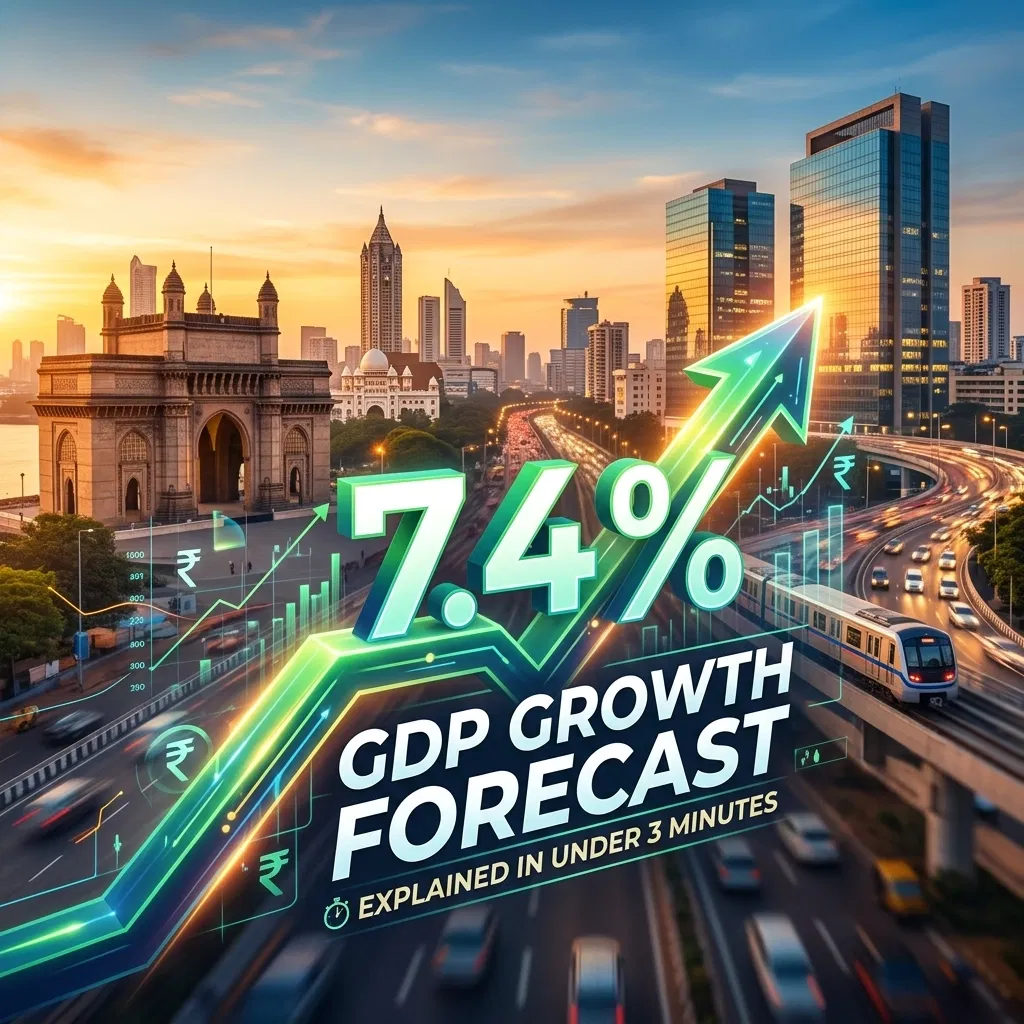
This contraction suggests that the gdp growth india is no longer a tide that lifts all boats indiscriminately. Instead, the growth is being driven by industrial manufacturing, digital infrastructure, and a revitalized agricultural sector. Investors are no longer looking for "blitzscaling" stories that burn cash to acquire users. They are looking for businesses that mirror the stability of the broader economy.
At Business Tantra, we’ve observed that the "valuation games" of 2021-2022 are being replaced by a rigorous focus on EBIDTA-positive trajectories. The wake-up call here is simple: macroeconomic success does not guarantee venture capital accessibility.
2. From "Growth at All Costs" to "Sustainable Unit Economics"
For years, the Indian startup ecosystem was fueled by the "FOMO" (Fear Of Missing Out) of global LPs. In 2026, that sentiment has shifted to "FORO" (Fear of Real Outcomes). The current startup news india cycle is dominated by stories of "recalibration": a polite term for downsizing and restructuring to achieve profitability.
The 2026 GDP growth is largely underpinned by domestic consumption and government-led capital expenditure. This means the money is moving toward "real" assets and services. Startups that cannot demonstrate a "legitimate purpose" for their cash burn are finding themselves locked out of the next round.
Why Profitability is the New North Star
- Investor Selectivity: Venture debt and equity are now flowing toward companies with a clear path to IPO.
- Operational Precision: High-level decision-making is now revolving around "data-driven insights" rather than gut feelings.
- Market Realism: The Indian consumer is more discerning than ever, demanding value-driven propositions over deep-discounted services.

If you are a founder today, your value proposition must be a "catalyst for change" that solves a systemic problem within the economy of India, rather than an incremental convenience.
3. The Seed-Stage Silver Lining
While the overall funding numbers might look grim, there is a fascinating trend at the very beginning of the funnel. Seed-stage funding actually surged by 58% in Q1 2026, reaching $248 million. This indicates that while late-stage investors are cautious, early-stage backers are more bullish than ever on "Day Zero" ideas.
This surge in seed funding represents a democratization of capital. New venture managers are actively scouting for the next generation of founders who have learned the lessons of the 2024-2025 "funding winter." These new companies are being built with lean structures and a "profit-first" DNA from the very first line of code.
For more updates on emerging seed-stage trends, keep an eye on our home-news section.
4. Sectoral Shifts: Where the GDP Growth is Actually Going
To understand why 2026 is a wake-up call, we must look at where the capital is actually migrating. The gdp growth india is being propelled by sectors that were previously considered "unsexy" by the tech elite:
- Agri-Tech & Rural Markets: With the intersection of agriculture and industrial progress reaching a fever pitch, startups focusing on rural supply chains are seeing exponential growth.
- Semiconductors & Deep-Tech: As global geopolitical tensions reshuffle supply chains, India’s push for semiconductor sovereignty is creating a massive "electronic communications network" of new-age vendors.
- Sustainable Consumer Goods: Ethical and eco-friendly brands, like Lucira, are securing significant funding by tapping into the conscious consumerism of the new Indian middle class.

Founders who align their "mission" with these national priorities are finding that the "wake-up call" is actually a call to action. Those sticking to saturated "copy-cat" models from the West are the ones feeling the chill.
5. Strategic Survival: How to Navigate 2026
If you’re an early-stage founder, navigating this environment requires a shift in mindset. You are no longer just competing with other startups; you are competing with the stability of the public markets and the high returns of traditional sectors.
Tips for the 2026 Founder:
- Focus on the Core: Strip away the "nice-to-have" features and focus on the "must-have" solution.
- Leverage Local Insights: Half of India's most successful startups in 2026 are emerging from Tier II and Tier III cities. Use that to your advantage.
- Build for Resilience: Ensure your cap table is clean and your "electronic communications" with investors are transparent.
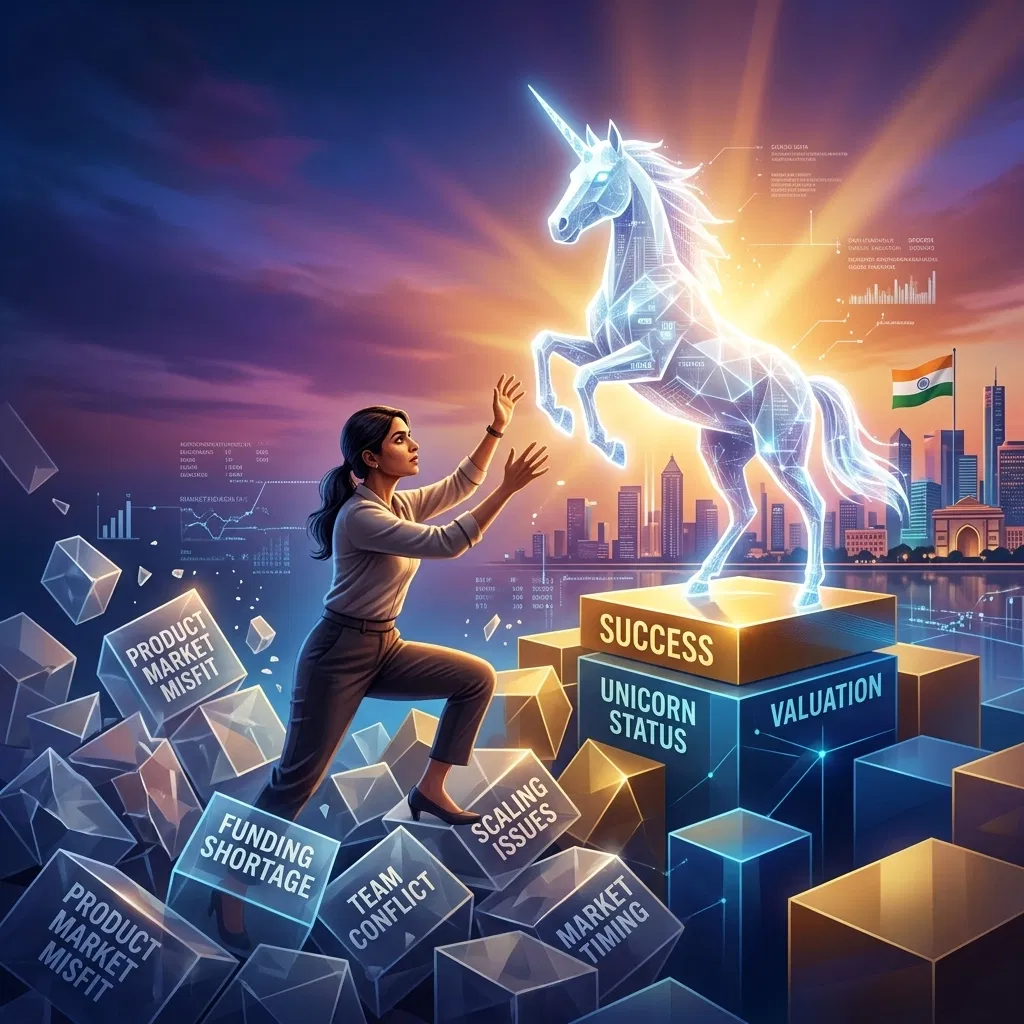
Success in 2026 is about reaching "unicorn status" not through valuation, but through impact and sustainability. The hurdles: funding shortages, market misfit, and team conflict: are real, but the rewards in an economy growing at 7.4% are unprecedented.
Conclusion
The 2026 gdp growth india report is a double-edged sword. On one side, it confirms India’s position as a global economic powerhouse. On the other, it serves as a definitive end to the era of irrational exuberance in the startup ecosystem. The economy of India is maturing, and it expects its startups to do the same.
The current state of startup news india might highlight a funding dip, but it is more accurately described as a "recalibration." We are moving away from a speculative bubble toward a value-driven economy. For the disciplined founder, this isn't a crisis: it's an opportunity to build something that lasts.
Are you ready to adapt your strategy to the new Indian reality? For more deep dives into market movers and corporate strategy, check out our about-us page or join the conversation at Business Tantra. The future belongs to those who can balance the "mission" with the "margin."

admin


Related Post