
























From Jodhpur to Unicorn Status: The untold story of how one founder navigated India’s chaotic 2026 market

The streets of Jodhpur are world-renowned for their distinctive blue hues and the towering presence of the Mehrangarh Fort. But in early 2026, these ancient lanes became the backdrop for one of the most improbable success stories in the modern Indian startup ecosystem. While the headlines of indian business updates were saturated with news of "funding winters" and "valuation corrections," Aditi Rathore was quietly building a tech empire that would soon defy every market expectation.
Aditi’s journey from a small-town entrepreneur to the CEO of a billion-dollar enterprise is more than just a success story; it is a masterclass in navigating a chaotic 2026 market. As we look at the latest startup news india, her name stands out as a catalyst for change, proving that geographical origin is no longer a barrier to achieving unicorn status in a hyper-digitized economy.
1. The Genesis: Bringing Silicon Valley to the Thar Desert
Born and raised in Jodhpur, Aditi Rathore didn't follow the traditional path to IIT or IIM. Instead, she spent her formative years observing the inefficiencies in the local textile and handicraft industries. She realized that while Rajasthan’s artisans produced world-class goods, their supply chains were stuck in the 19th century.
In 2023, she launched MaruSaaS, an AI-driven supply chain platform designed specifically for fragmented traditional industries. At the time, skeptics argued that "Bharat" wasn't ready for such sophisticated SaaS tools. However, Aditi remained undeterred. She leveraged her deep understanding of the local culture to build a product that wasn't just technologically superior, but culturally resonant.
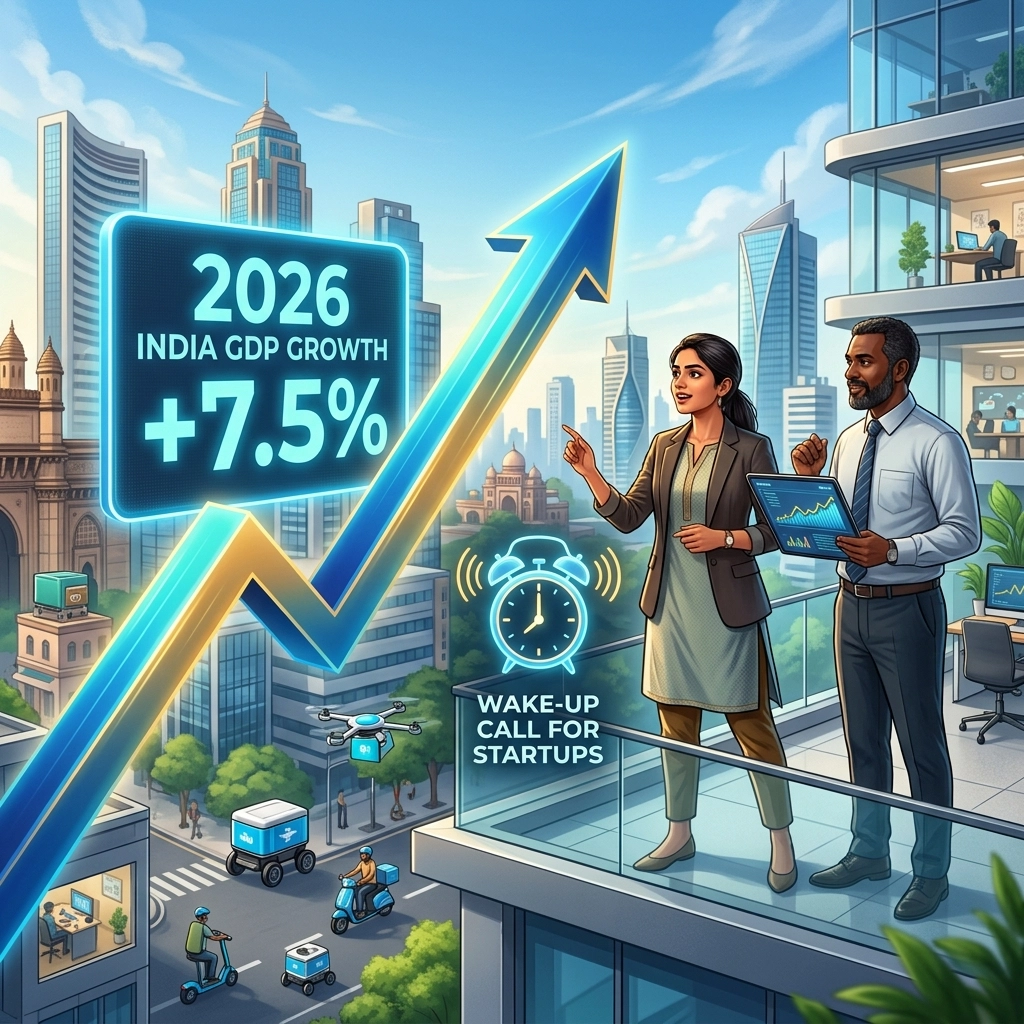
By the time 2026 rolled around, the Indian economic landscape had undergone a massive shift. With a 7.4% GDP growth forecast fueling investor optimism, the stage was set for a localized solution to scale globally.
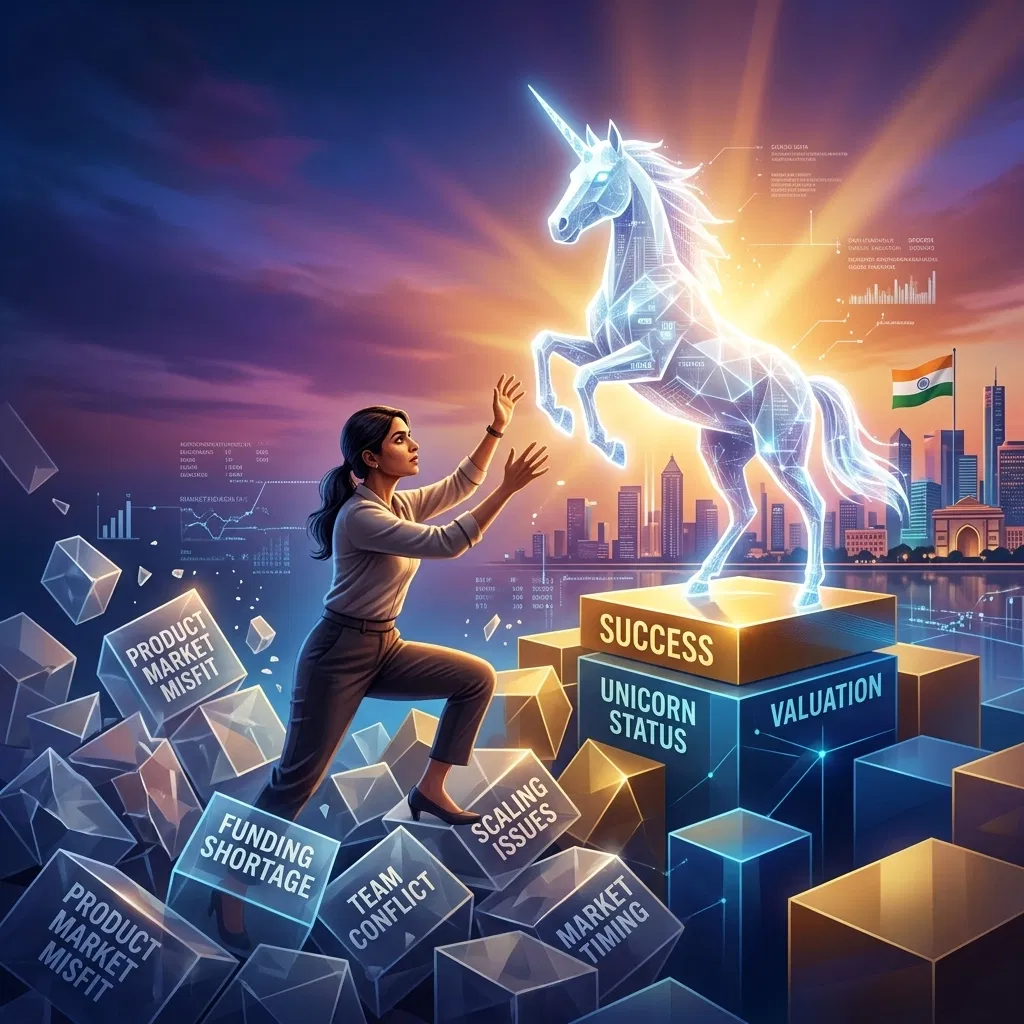
2. Navigating the Chaotic Market of 2026
The year 2026 has been anything but predictable. While the indian business updates from earlier in the year suggested a "fundamentally driven recovery," the reality on the ground was a volatile mix of high-interest rates and a sudden pivot in investor sentiment. VCs had shifted their focus from "growth at all costs" to "sustainable profitability."
Aditi found herself in the middle of a perfect storm. MaruSaaS was growing, but it needed a significant capital injection to fend off international competitors eyeing the Indian market. The "Pivot of '26" wasn't just a buzzword for her; it was a survival strategy.
"The market didn't just want to see our user numbers," Aditi noted in a recent interview. "They wanted to see our unit economics. They wanted to know if we could survive without the next round of funding." This shift in the startup news india cycle forced many founders to fold, but for Aditi, it was an opportunity to showcase the lean, efficient operation she had built in Jodhpur.
3. The $100 Billion Startup Gold Rush
As we analyze the current state of the Indian economy, it is clear that we are in the midst of a startup gold rush. The total market trajectory for Indian startups is eyeing the $100 billion mark, and MaruSaaS became the latest engine driving that growth.
To reach unicorn status, Aditi had to navigate several key hurdles:
- Geopolitical Shifts: 2026 saw significant shifts in semiconductor supply chains and data privacy laws.
- Regulatory Compliance: Navigating the "New India" economy required a sophisticated understanding of electronic communications networks and data-driven insights.
- Talent Acquisition: Moving her headquarters to Mumbai while keeping her R&D in Jodhpur allowed her to bridge the gap between rural innovation and urban capital.
The transition from a regional player to a national leader was revitalized by her ability to democratize access to high-end logistics tech for small-scale manufacturers across the country.

4. The Funding Round that Changed Everything
In March 2026, MaruSaaS announced a Series C funding round that valued the company at $1.2 billion. The round was led by a consortium of global sovereign wealth funds and domestic private equity giants. This was a significant moment in indian business updates, marking the first time a Jodhpur-based tech startup had achieved such a milestone.
The capital wasn't just used for expansion; it was a strategic move to "recession-proof" the business against further geopolitical shocks. Aditi’s vision was clear: build a platform that serves as the backbone of Indian manufacturing. By integrating AI-driven forecasting and eco-friendly logistics, MaruSaaS offered a value proposition that was both transformative and sustainable.
For more insights into how companies are scaling in this environment, you can visit our about-us page to see how we track these market movers.
5. From Growth to Profit: The New Founder Mantra
The story of MaruSaaS is reflective of a broader trend in the startup news india ecosystem. The era of "burning cash for market share" is effectively over. Today’s unicorns are built on the foundations of solid EBITDA and legitimate purpose.
Aditi’s success came from her refusal to participate in the "valuation games" of 2021-2022. Instead, she focused on:
- Customer Retention: Ensuring that once a traditional business joined MaruSaaS, they never left.
- Operational Excellence: Using data-driven insights to cut waste in the supply chain by 30%.
- Local Talent: Building a workforce in Rajasthan that was loyal, skilled, and deeply invested in the company's mission.
This disciplined approach is what eventually attracted the "big fish" investors who were tired of the volatility in the ed-tech and quick-commerce sectors.

6. Lessons for the Next Generation of Indian Founders
Aditi’s journey provides several critical takeaways for anyone looking at the current indian business updates and wondering how to start.
- Solve Real Problems: Don't build a "copy-paste" version of a Silicon Valley startup. Look at the inefficiencies in your own backyard.
- Master the Unit Economics: In 2026, profitability is the ultimate currency.
- Resilience is Key: Navigating a chaotic market requires a steady hand and a long-term vision.
As the IPO race of 2026 heats up, many are looking at MaruSaaS as the next big listing on the NSE. Aditi, however, remains focused on the "mission" rather than the exit. Her story has become a beacon of hope for entrepreneurs in Tier-2 and Tier-3 cities, proving that the next unicorn could be born anywhere from the salt pans of Kutch to the hills of Shillong.
Conclusion
The rise of Aditi Rathore and MaruSaaS is a definitive testament to the shifting dynamics of the Indian economy. By successfully navigating the chaotic 2026 market, she has not only revitalized her hometown’s industrial prospects but also set a new standard for what it means to be a founder in the "New India."
As we continue to provide the latest indian business updates, it is clear that the stories of resilience and exponential growth will no longer be confined to the traditional tech hubs. The democratization of technology and capital is finally reaching the heart of Bharat, and the results are nothing short of extraordinary.
For those looking to follow in these footsteps or stay updated on the most recent market shifts, feel free to contact-us or explore our post-sitemap.xml for a deep dive into the archives of Indian entrepreneurship.
The journey from Jodhpur to unicorn status is no longer just a dream; it is a blueprint for the future of global business.

admin


Related Post