






















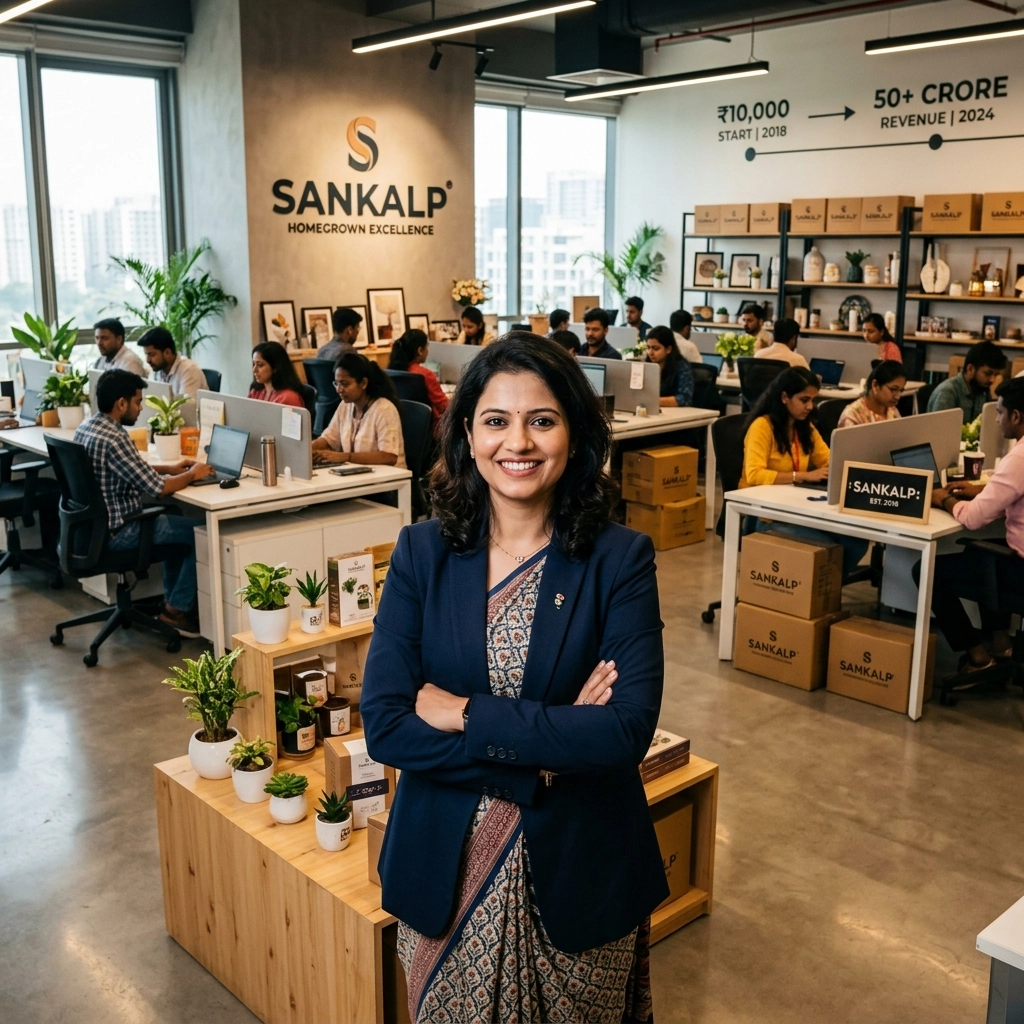
The Founder Who Started with ₹10,000 and Built a Multi-Crore Brand

In the high-octane world of startup news india, we are often inundated with tales of massive venture capital rounds, sky-high burn rates, and tech unicorns that prioritize "growth at all costs." However, the most profound architectural shifts in the Indian economy often come from those who operate in the shadows of the "glamorous" tech world. One such story is that of Ravi Modi, the visionary behind Vedant Fashions (Manyavar). It is a narrative that begins not in a glass-walled Silicon Valley office, but in a small shop in Kolkata with a meager ₹10,000 loan from his mother.
Today, as we analyze indian business updates in 2026, the Manyavar empire stands as a testament to the power of bootstrapping and the relentless pursuit of a value proposition that resonates with the cultural fabric of a nation. This is the story of how a single decision to pivot from wholesale to branding created a multi-crore retail titan that redefined the ethnic wear category.
1. The ₹10,000 Catalyst: From a Kolkata Shop to Startup News India Headlines
Ravi Modi’s journey is one of the most compelling entrepreneur success stories because it challenges the modern notion that you need millions in seed funding to disrupt a market. Growing up working in his father's small garment shop in Kolkata, Modi learned the nuances of the apparel trade early. He realized that while Western wear was becoming a commodity, the Indian ethnic wear market was largely unorganized and fragmented.
In the late 1990s, with just ₹10,000 borrowed from his mother, he decided to strike out on his own. At a time when most regional players were focused on local wholesale, Modi had a "mission" to democratize high-quality ethnic wear. He didn't just want to sell clothes; he wanted to own the "occasion." This initial capital was not spent on lavish offices but on sourcing and understanding the supply chain, a foundational step that many modern founders overlook.
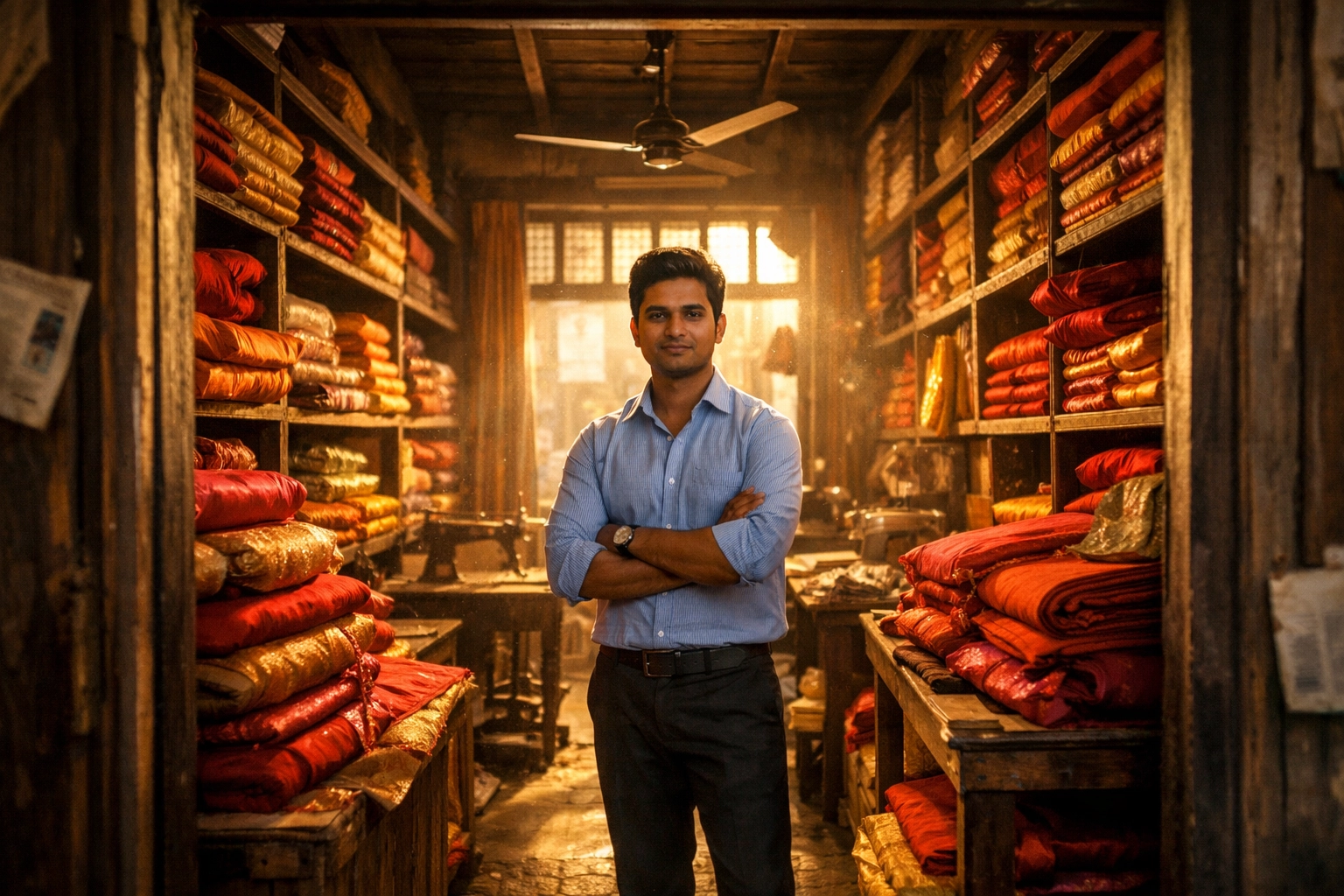
2. The Power of Bootstrapping: Indian Business Updates on Debt-Free Growth
One of the most "revitalized" concepts in the 2026 business landscape is the idea of sustainable growth. Long before it was fashionable to talk about "profitability over growth," Ravi Modi built a debt-free empire. For years, Manyavar operated with surgical precision, reinvesting every rupee of profit back into the business.
In the realm of indian business updates, the fiscal discipline shown by Vedant Fashions is legendary. By avoiding the trap of high-interest debt, Modi maintained complete control over his vision. This "data-driven insight" into his own cash flow allowed him to weather economic downturns that wiped out his competitors. For modern entrepreneurs looking to scale, understanding the balance sheet is just as important as the product. To help manage your professional identity while scaling, tools like the NFC-enabled Digital Business Card from Business Tantra are becoming essential for the modern executive.
3. Why Ravi Modi’s Journey Leads Entrepreneur Success Stories
What separates a successful entrepreneur from a struggling one is the ability to identify a market gap before it becomes a canyon. In 2002, when Modi officially launched the brand 'Manyavar', the Indian wedding industry was booming, but there was no national brand that a groom could rely on for consistency, quality, and price.
By standardizing the ethnic wear experience, Modi became a "catalyst for change" in the retail sector. He moved the industry away from the "tailor-made" model: which was slow and inconsistent: to a "ready-to-wear" model that offered instant gratification. This shift is a primary reason why his name consistently appears in discussions regarding the most impactful entrepreneur success stories of the last two decades.
4. The Strategic Pivot to Exclusive Brand Outlets (EBOs)
While many brands were content selling through Multi-Brand Outlets (MBOs) or large format department stores, Modi realized that to truly control the customer experience, he needed his own space. This led to a massive expansion of Exclusive Brand Outlets (EBOs) across India and eventually globally.
By 2026, the retail landscape has shifted significantly toward omnichannel experiences, but the foundation laid by Manyavar’s physical footprint remains unshakable. The EBO model allowed the brand to command higher margins and build deeper brand loyalty. This move was not just a retail strategy; it was a "transformative solution" to the problem of brand dilution in crowded marketplaces. You can learn more about our perspective on such business transformations on our About Us page.
5. Scaling Beyond the Founder: The Science of Systems
Ravi Modi’s success wasn't just about his intuition; it was about building a system that could function without him. He implemented rigorous inventory management and supply chain protocols that ensured his stores never ran out of the "hero" products.
In the context of startup news india, we often see founders struggle to transition from "doers" to "leaders." Modi’s ability to institutionalize his business was the key to his "exponential growth." He leveraged technology to track sales patterns across hundreds of cities, ensuring that a store in a Tier-2 city had exactly what the local demographic demanded. This level of precision is what modern MSMEs need to strive for, especially when navigating complex regulations like GST 2.0.
6. Diversification and the "Mohey" Evolution
A multi-crore brand cannot survive on a single product line forever. Recognizing the massive potential in the women’s ethnic wear segment, Modi launched "Mohey." This wasn't just an extension; it was a calculated move to capture the "other half" of the multi-billion dollar Indian wedding market.
By applying the same principles of standardization and branding to women's wear, the company solidified its position as a market leader. This strategic diversification is a masterclass for those following indian business updates. It demonstrates that once a core competency is established, it can be exported to adjacent categories to drive further value.
7. Lessons for the 2026 Entrepreneur
As we look at the current state of the Indian economy, the lessons from the Manyavar story are more relevant than ever:
- Start Small, Think Big: ₹10,000 was enough to start because the focus was on the product, not the perks.
- Profits are the Best Funding: Internal accruals are the most "legitimate purpose" for expansion capital.
- Culture as a Competitive Advantage: Understanding the "Indian-ness" of the consumer was something global brands couldn't replicate.
- Consistency is King: Whether in Kolkata or New York, a Manyavar store offers the same promise.

Conclusion
The journey of Ravi Modi from a ₹10,000 loan to a multi-crore empire is not just a tale of financial success; it is a blueprint for building a legacy brand in a volatile world. It reminds us that while technology is a powerful "electronic communications network" for business, the core of entrepreneurship remains rooted in solving a real-world problem with discipline and vision.
For those tracking startup news india, let this be a reminder that the next giant might not be the one with the loudest marketing, but the one with the most robust unit economics and a deep understanding of the Indian consumer. As Business Tantra continues to monitor the pulse of the nation, stories like these serve as the North Star for the next generation of founders.
Stay updated with the latest in the corporate world by visiting our Home Page or exploring our dedicated Business News section. The future of Indian business is being written today, one ₹10,000 dream at a time.

admin


Related Post
- By admin
- 04 Views