



























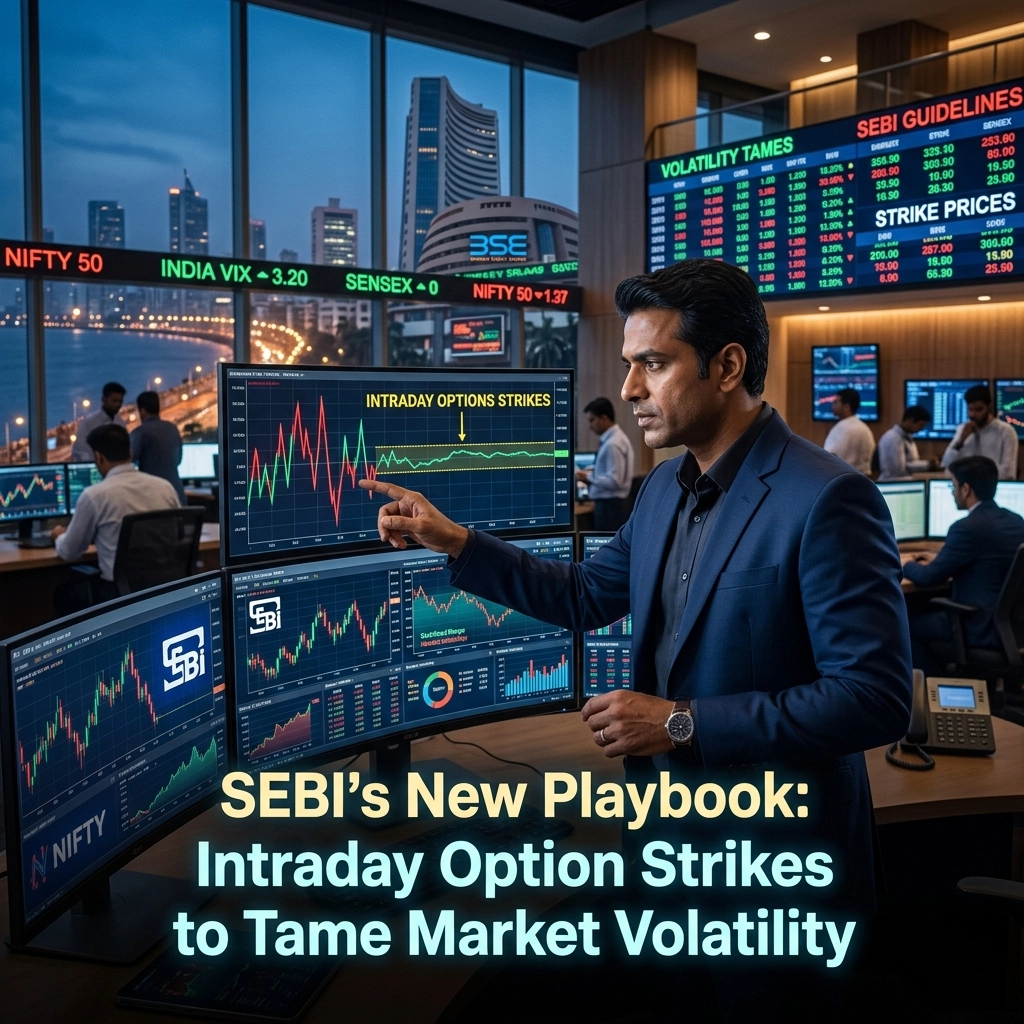

In an era defined by rapid-fire algorithmic trading and unprecedented geopolitical shifts, the Securities and Exchange Board of India (SEBI) is preparing to deploy a significant catalyst for change in the domestic derivatives landscape. The regulator is currently evaluating a transformative proposal that would permit stock exchanges to introduce intraday option strikes during active trading hours. This shift is designed to address a persistent friction point in the Indian markets: the inability of existing strike price frameworks to keep pace with extreme intraday volatility.
The move comes at a time when the Indian financial ecosystem is facing a confluence of external pressures, ranging from fluctuating global energy prices to the dynamic restructuring of international trade alliances. By modernizing the strike price introduction mechanism, SEBI aims to democratize access to precise hedging tools and ensure that price discovery remains robust, even when the underlying indices or stocks experience "gap-up" or "gap-down" openings.
The Volatility Factor: Why the Market Needs Real-Time Strikes
For years, the standard operating procedure for Indian exchanges involved setting option strike prices at the end of the previous day's session. While this works during periods of steady growth or consolidation, it leaves a strategic vacuum during "black swan" events or sharp market reversals. When a stock or index moves beyond the pre-defined range of listed strikes, traders are often left with "deep out-of-the-money" or "deep in-the-money" options that suffer from poor liquidity and wide bid-ask spreads.
The introduction of intraday option strikes functions as a vital safety valve. By allowing exchanges to list new strikes as the market moves, SEBI is ensuring that there is always a relevant "at-the-money" (ATM) strike available for participants. This is particularly crucial for retail investors and institutional desks that require high-gamma instruments to hedge immediate exposure during volatile sessions.

Stay informed on how global trends influence local markets by visiting our home news section.
Streamlining the Framework: A Uniform Approach Across Segments
One of the primary objectives of the SEBI proposal is the creation of a uniform framework across all trading segments. Historically, the management of strike prices has been somewhat fragmented, with different rules governing equity derivatives, currency pairs, and commodities. The new mandate aims to standardize strike management, ensuring that whether a trader is navigating the Nifty 50 or the USD-INR pair, the availability of new strikes remains consistent and predictable.
This standardization is expected to revitalize liquidity in secondary strikes. By aligning the rules for the National Stock Exchange (NSE), the Bombay Stock Exchange (BSE), and the Multi Commodity Exchange (MCX), SEBI is reducing the cognitive load on market participants and fostering a more integrated trading environment. Such regulatory precision is essential for maintaining India's status as one of the world's most active derivatives hubs.
Operational Seamlessness: No System Overhauls Required
A significant concern for any regulatory overhaul in the financial sector is the technical burden placed on intermediaries. However, the current proposal for intraday option strikes is designed with operational resilience in mind. According to preliminary discussions, the implementation will require no major system modifications for brokers or clearing members.
The logic behind this "plug-and-play" approach is to utilize existing electronic communications networks and broadcast protocols. Exchanges will simply push new contract definitions through existing data feeds, which most modern trading terminals are already equipped to handle. By avoiding a forced technology upgrade, SEBI is ensuring that the transition does not disrupt the daily operations of the brokerage industry, thereby maintaining market stability during the rollout phase.

Our commitment at Business Tantra is to provide data-driven insights into these regulatory shifts that define the future of finance.
Strategic Hedging and Price Discovery: The Value Proposition
The mission of this proposal extends beyond mere convenience; it is about the fundamental integrity of price discovery. In a market where strikes are fixed, sharp moves can lead to a "pinning" effect or a total collapse in the utility of the options chain. By introducing strikes in real-time, the market can more accurately reflect the consensus value of an underlying asset.
Furthermore, the framework will allow for better risk management. For instance, if an unexpected news event: such as a sudden change in ATF prices for airlines: triggers a massive sell-off in aviation stocks, exchanges can immediately introduce lower strike prices. This allows investors to purchase protective puts at a strike that actually correlates with the new, lower market price, rather than being forced to use illiquid, distant strikes.
Key Benefits of the Proposed Framework:
- Liquidity Concentration: New strikes will attract volume precisely where the market is trading, preventing liquidity from being "trapped" in obsolete strikes.
- Narrower Spreads: Real-time strikes mean more competitive market-making, resulting in tighter bid-ask spreads for the end user.
- Enhanced Participation: Lower-cost, relevant strikes lower the barrier to entry for strategic hedgers.
- Market Efficiency: Reducing the lag between price movement and instrument availability enhances the overall efficiency of the ecosystem.

Cross-Asset Synergy: Equity, Currency, and Commodities
The implications of this playbook are vast, particularly when considering the diverse nature of the Indian market. In the currency segment, where news from the Middle East or shifts in OPEC+ policies can lead to sudden rupee volatility, the ability to add intraday option strikes is a game-changer. It allows treasury desks to manage forex risk with surgical precision.
Similarly, in the commodities market, where energy prices are currently under a microscope due to West Asia turmoil, the MCX could use this framework to offer better-priced options for crude oil and natural gas during high-volatility sessions. This horizontal application of the rule underscores SEBI's vision of a holistic, robust regulatory environment that protects investors regardless of the asset class they choose to trade.
Regulatory Foresight and the Road Ahead
While the proposal is still under active discussion, the professional consensus is that it represents a necessary evolution. SEBI’s proactive stance mirrors global best practices found in developed markets like the CBOE or CME, where strike introduction is often automated based on price movement thresholds.
As we look toward 2026, the emphasis remains on transparency. SEBI has suggested that exchanges must periodically review their strike frameworks and publicly disclose their rulebooks to ensure all participants: from high-frequency trading firms to the individual retail investor: are on a level playing field. To join the conversation and track these developments, users can register for an account on our platform.

Conclusion
The proposed introduction of intraday option strikes is more than just a technical adjustment; it is a strategic maneuver designed to revitalize the Indian derivatives market. By providing the tools necessary to navigate sharp volatility, SEBI is fortifying the market's infrastructure against the "exponential growth" of intraday risks.
This framework promises to deliver a more legitimate purpose to the options market: moving it away from speculative gambling and toward its original intent: a sophisticated venue for risk management and precise price discovery. As the proposal moves from discussion to implementation, it will undoubtedly serve as a catalyst for a more resilient, transparent, and liquid trading environment for all.
For more detailed analysis on market movers and regulatory updates, explore our full blog archive or reach out to our team via the contact page.