























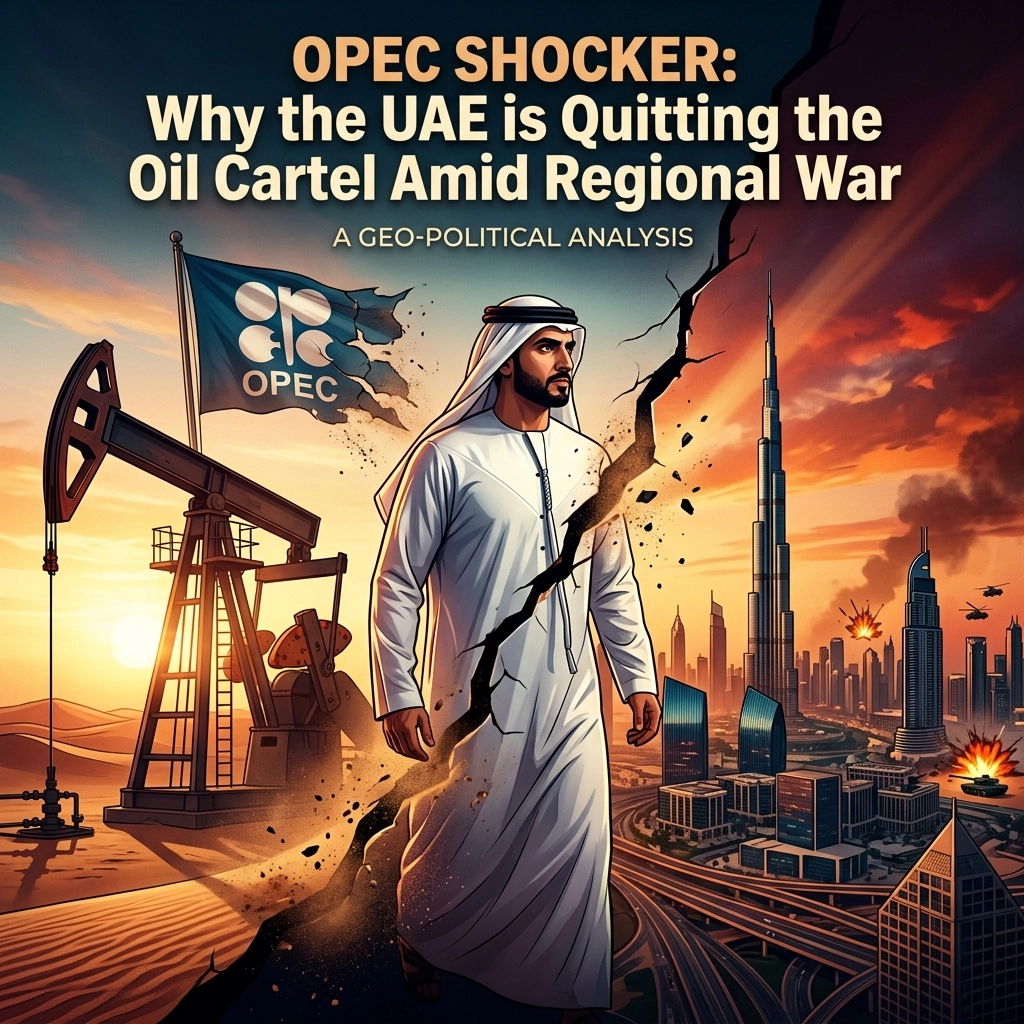

The global energy landscape shifted on its axis this week as the United Arab Emirates (UAE) formally announced its intention to withdraw from the Organization of the Petroleum Exporting Countries (OPEC) and the broader OPEC+ alliance. Effective May 1, 2026, this historic move marks the end of a 60-year membership and signals a fundamental realignment in the UAE exit from OPEC and the nation's role in global energy geopolitics.
For decades, the UAE has been a cornerstone of the cartel, often acting as the moderating voice alongside Saudi Arabia. However, the convergence of regional conflict, ambitious national production targets, and a diversifying economic vision has led Abu Dhabi to conclude that its future is best secured outside the "straitjacket" of production quotas. This decision serves as a massive catalyst for change in how oil-producing nations navigate an increasingly volatile world.
The Geopolitical Trigger: Regional War and the Iran Factor
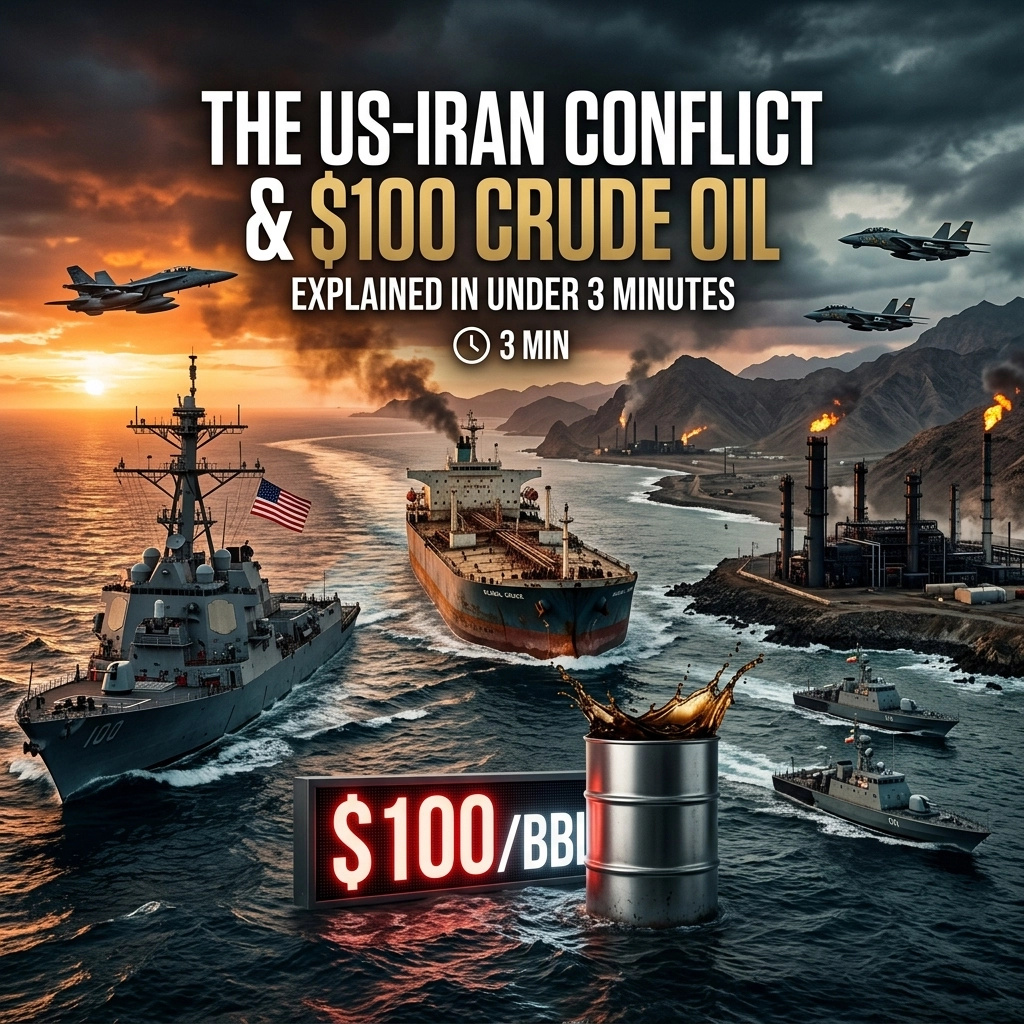
The primary driver behind the timing of this announcement is the escalating regional instability. With the Gulf region currently grappling with the repercussions of the Iran war, the strategic calculus for energy exporters has been fundamentally altered. The effective closure of the Strait of Hormuz and the persistent threat to maritime security have forced the UAE to prioritize national survival and economic agility over collective cartel bargaining.
Leadership in Abu Dhabi has reportedly grown frustrated with the limitations of OPEC’s policy framework in the face of active conflict. By initiating the UAE exit from OPEC, the nation gains the sovereign flexibility to navigate bilateral security and energy agreements without being tethered to the consensus of a group that includes members with vastly different geopolitical risk profiles.

Pursuing Production Flexibility: The 5 Million BPD Ambition
Central to the UAE’s strategic pivot is its massive investment in oil and gas infrastructure. Through the Abu Dhabi National Oil Company (ADNOC), the country has funneled billions into expanding its production capacity. The stated goal of reaching 5 million barrels per day (bpd) by 2027 is essentially incompatible with OPEC’s current strategy of production cuts to maintain price floors.
The UAE argues that as a low-cost producer with some of the world's most sophisticated extraction technologies, it should not be penalized by quotas designed to prop up less efficient members. By leaving the cartel, the UAE can:
- Maximize Revenue: Increase volumes to offset potential price volatility.
- Market Share Capture: Fill the void left by other producers struggling with aging infrastructure or political instability.
- Monetize Assets: Accelerate the extraction of reserves before the global energy transition significantly dampens demand.
This shift represents a "value proposition" focused on volume and reliability, positioning the UAE as an independent energy powerhouse.
The Saudi-UAE Rift: A Marriage of Convenience No More
While publicly maintaining a facade of diplomatic unity, the bilateral relationship between the UAE and Saudi Arabia has undergone a significant "revitalization" of competition. For years, the two economic giants of the GCC have competed for regional dominance in finance, tourism, and logistics.
The divergence in oil policy is the latest and most public manifestation of this rivalry. While Riyadh remains committed to high prices to fund its "Vision 2030" projects, Abu Dhabi’s economy is increasingly tied to global economic growth and trade fluidity. The UAE leadership has concluded that OPEC decision-making has historically privileged Saudi interests, often at the expense of Emirati economic objectives. This exit is a definitive statement of economic independence.

Global Market Implications: Weakening the Cartel’s Grip
The departure of the UAE, one of the few members with significant spare capacity, deals a heavy blow to OPEC’s ability to manage global price stability. Historically, the "fear factor" of OPEC’s collective action could move markets with a single press release. Without the UAE’s 3-4 million bpd of current production under its umbrella, the cartel’s influence is undeniably diluted.
Market analysts suggest that this move might lead to a "democratization" of oil supply, where individual nations compete more fiercely on price and reliability rather than adhering to a centralized price-fixing mechanism. This could lead to a period of lower oil prices in the long run, though the immediate uncertainty of the Iran war provides a temporary floor for the market.
Beyond Oil: A Multi-Sector Business Briefing
While the UAE exit from OPEC dominates the headlines, several other critical developments are reshaping the business world this week. These shifts reflect a broader trend of regulatory evolution and economic adaptation across the globe.
1. SEBI Proposes Dynamic Options Strike Prices
In a move to increase market depth and responsiveness, the Securities and Exchange Board of India (SEBI) is discussing a proposal that would allow exchanges to introduce new options strike prices during active trading hours. This "data-driven insight" into market volatility aims to protect investors from sudden price swings and provide more precise hedging tools. Traders should monitor Business Tantra’s news feed for further updates on this regulatory shift.
2. Canada Approves Generic Semaglutide
In a historic healthcare win, Canada has become the first G7 nation to approve a generic version of semaglutide (popularly known under the brand names Ozempic and Wegovy). This move is expected to significantly lower costs for patients and insurers, potentially triggering a global wave of patent challenges and generic entries in the high-growth weight loss and diabetes market.
3. India’s Higher Ethanol-Blended Fuel Push
The Indian government has proposed new vehicle rules to allow for higher ethanol-blended fuels. As reported by The Economic Times, this initiative aims to reduce carbon emissions and lower the nation's crude oil import bill. For automotive manufacturers, this represents a new "mission" to align production with a greener, self-reliant energy policy.
4. Aviation Crisis: Airlines Seek ATF Relief
India’s major carriers, including Air India, IndiGo, and SpiceJet, have issued a stark warning to the government. Citing the "exponential growth" in operating costs due to West Asia turmoil and skyrocketing Aviation Turbine Fuel (ATF) prices, the industry claims to be on the verge of "stopping operations." Airspace restrictions on long-haul routes have further exacerbated the financial strain.
Strategic Insights and Acknowledgments
The insights regarding the UAE's strategic pivot and its impact on the energy sector were developed in collaboration with industry experts. Special thanks to Khurshid Alam, Founder at Pixel Street, for providing the analytical framework for understanding these complex market movements.
For businesses operating in these sectors, maintaining a "legitimate purpose" for every strategic pivot is essential for long-term survival. Whether it is a nation exiting a 60-year-old cartel or a startup racing for an IPO, the ability to adapt to geopolitical realities is the ultimate competitive advantage.

Conclusion
The UAE's decision to quit OPEC is more than just a policy change; it is a seismic shift in the global order. By prioritizing national interest and production flexibility amid a regional war, Abu Dhabi is charting a course toward an independent, high-volume future. While this weakens OPEC’s grip on global price stability, it offers the UAE the "electronic communications network" of global trade it needs to thrive in a post-cartel world.
As we watch this transition unfold on May 1st, the business community must remain vigilant. From the fluctuations in oil prices to the regulatory changes in the Indian stock market, the only constant is change. For more in-depth analysis and the latest updates on global business trends, visit our about-us page or register for our newsletter at businesstantra.in/register.
The "OPEC Shocker" is a reminder that in the world of high-stakes business and energy, no alliance is permanent, and every nation is ultimately its own master of destiny.