





























As of April 2026, the Indian business landscape has undergone a seismic shift. With the formal enactment of the Jan Vishwas 2.0 (Amendment of Provisions) Bill, the government has sent a clear message to the global investment community: India is moving away from the "Inspector Raj" of the past and toward a future defined by trust-based governance.
For decades, entrepreneurs in India operated under the looming shadow of criminal prosecution for minor administrative oversights. A misplaced register or a delayed filing could, theoretically, lead to imprisonment. Jan Vishwas 2.0 effectively dismantles this antiquated structure, serving as a catalyst for change in the nation’s regulatory environment. By decriminalizing a staggering number of provisions, the bill seeks to democratize the business environment, ensuring that the fear of incarceration does not stifle innovation.
The Magnitude of Reform: Decoding the Numbers
The scale of Jan Vishwas 2.0 is unprecedented. Building upon the foundations of the first iteration, this 2026 overhaul is an extensive legislative exercise that touches nearly every facet of commerce.
To understand the impact, one must look at the technical data:
- Total Provisions Amended: 784 legal provisions.
- Total Acts Affected: 79 Central Acts across 23 ministries.
- Decriminalization Scope: 717 sections have had criminal penalties removed.
- Focus Areas: Environment, Agriculture, Media, Industry, and Finance.
This reform is not merely a superficial adjustment; it is a fundamental reimagining of the relationship between the state and the citizen. By shifting the focus from criminal liability to civil accountability, the government is prioritizing the Ease of Doing Business (EoDB) while maintaining high standards of compliance.

From Imprisonment to Financial Fines: A Rationalized Approach
The cornerstone of Jan Vishwas 2.0 is the replacement of imprisonment with monetary penalties for minor lapses. In the previous legal framework, several minor infractions: often referred to as "procedural defaults": carried the risk of jail time. This created a significant psychological burden for business owners, particularly those leading Small and Medium Enterprises (SMEs).
Under the new regime, the government has introduced a graded enforcement mechanism. For first-time or minor contraventions, the law now favors warnings or proportionate financial penalties. This ensures that the punishment fits the "crime."
The 10% Escalation Clause
To ensure that these civil penalties remain an effective deterrent against negligence, the bill incorporates a unique provision: a mandatory increase in fines. Fines and penalties will increase by 10% every three years. This mechanism ensures that the financial consequences of non-compliance keep pace with economic growth and inflation, maintaining their relevance without requiring frequent legislative amendments.
This rationalized approach allows businesses to operate with data-driven insights into their risk management. They can now view compliance as a manageable operational cost rather than a potential threat to their personal liberty.
Empowering the Backbone of the Economy: Impact on MSMEs
Micro, Small, and Medium Enterprises (MSMEs) are the primary beneficiaries of the Jan Vishwas 2.0 framework. Historically, larger corporations had the legal resources to navigate complex litigation, while smaller entrepreneurs were often overwhelmed by the sheer volume of compliance requirements.
By decriminalizing 717 provisions, the bill removes the "compliance trap" that often hindered growth. When an entrepreneur is no longer worried about criminal charges for an accidental administrative error, they are more likely to take calculated risks, invest in new technologies, and expand their workforce.
The shift toward trust-based governance is a transformative solution for the MSME sector. It allows founders to focus on their "mission" and "value proposition" rather than spending excessive hours on legal defense. For more insights on how technology is further simplifying these processes, explore The Rise of Agentic Commerce, where AI and automation are meeting these new regulatory standards.

Strengthening Investor Sentiment and Trust-Based Governance
Foreign Direct Investment (FDI) and domestic capital both seek stability and predictability. The passage of Jan Vishwas 2.0 acts as a signal to global markets that India’s regulatory ecosystem is maturing. By aligning Indian laws with global best practices: where administrative errors are handled through civil tribunals rather than criminal courts: the country is enhancing its competitive edge.
The concept of "trust-based governance" is central to this legislative move. It assumes that the majority of businesses intend to comply with the law for a legitimate purpose. It treats the business community as partners in national growth rather than potential suspects. This revitalized perspective is expected to result in exponential growth in sectors that were previously bogged down by regulatory complexity.
Key Acts Transformed by Jan Vishwas 2.0
The 79 Acts amended cover a wide spectrum of the economy. Some of the most notable changes occurred in:
- The Environment (Protection) Act: Shifting focus to restorative penalties rather than just punitive measures.
- The Patents Act: Simplifying the filing and maintenance process by removing criminal threats for procedural errors.
- The Trade Marks Act: Enhancing the protection of intellectual property while streamlining enforcement.
- The Food Safety and Standards Act: Ensuring public health while providing a fairer adjudication process for small vendors.
These changes are not just about deleting lines in a legal document; they represent a move toward an electronic communications network of compliance where digital records and automated filings reduce the chance of error in the first place. For businesses looking to professionalize their presence in this new era, utilizing tools like a Digital Business Card can help maintain a modern, compliant corporate identity.
A Catalyst for Judicial Reform
Beyond the corporate world, Jan Vishwas 2.0 serves as a vital tool for judicial reform. India’s courts have long been burdened with millions of pending cases, many of which involve minor regulatory infractions that could have been settled administratively.
By moving these cases from criminal courts to designated adjudicating officers and civil authorities, the bill:
- Reduces the judicial caseload significantly.
- Accelerates the pace of dispute resolution.
- Ensures that criminal courts can focus on serious offenses that impact public safety and national security.
This systemic offloading is essential for a functional democracy and a thriving economy. It ensures that justice is not only done but is done swiftly.
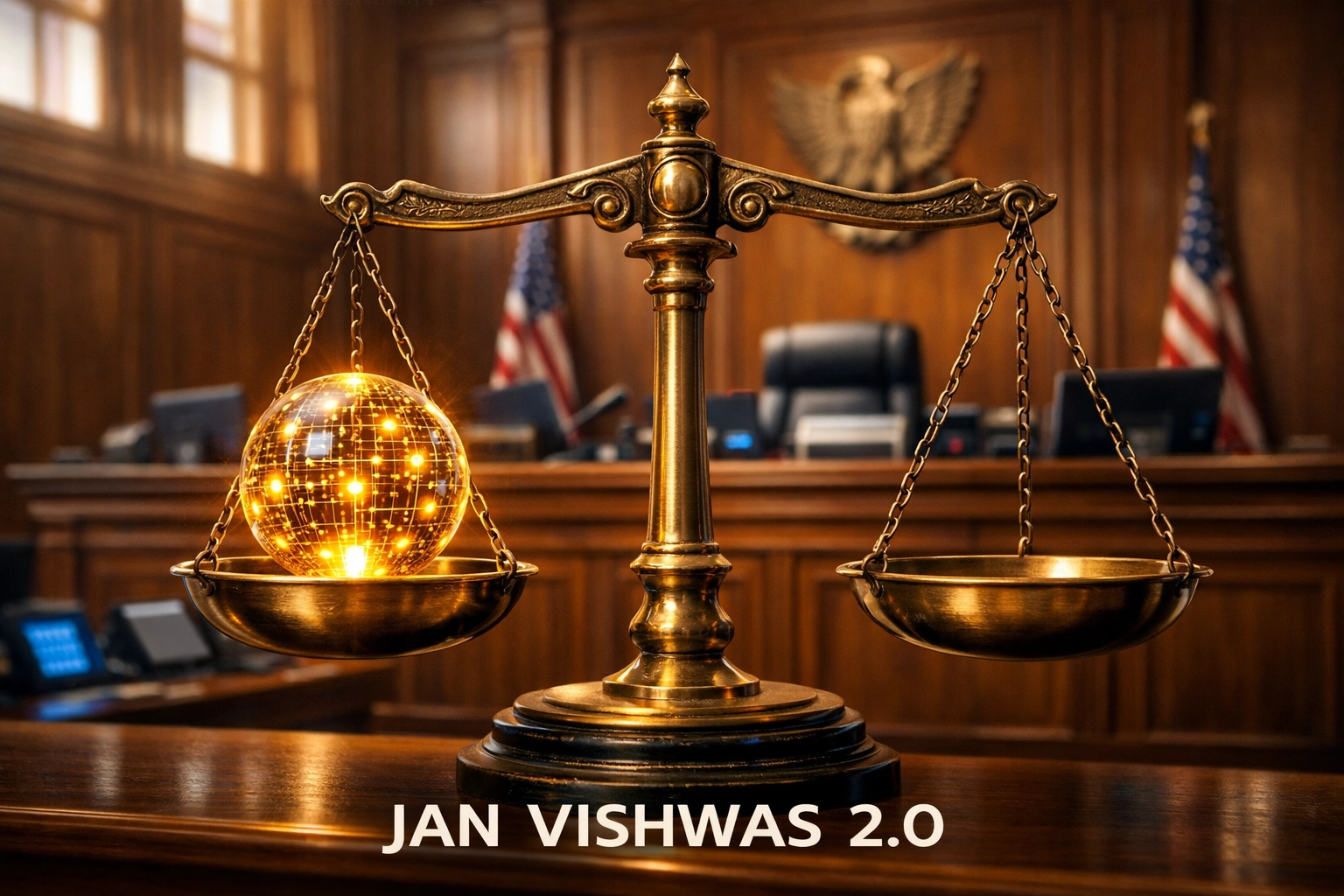
Navigating the New Compliance Era
While the decriminalization of 717 provisions is a welcome relief, it does not mean that compliance is optional. On the contrary, the precision of the new financial penalties means that businesses must be more diligent than ever. The focus has shifted from "fear of jail" to "efficiency of operations."
Business owners should consider the following steps to align with the Jan Vishwas 2.0 era:
- Audit Internal Processes: Identify which of the 79 amended acts apply to your specific industry.
- Invest in Compliance Software: Use data-driven tools to ensure no filing is missed, avoiding the 10% escalating fines.
- Engage with Professionals: Consult with legal and tax experts to understand the new civil penalty structures. For tailored advice, you can Contact Business Tantra to connect with industry observers.
Conclusion
The enactment of Jan Vishwas 2.0 in April 2026 stands as a definitive milestone in India’s journey toward becoming a global economic powerhouse. By decriminalizing 717 provisions and focusing on a trust-based relationship between the government and the governed, the state has removed a significant barrier to entrepreneurial energy.
This reform is more than a legislative update; it is a fundamental shift in the national psyche. It acknowledges that for a nation to achieve exponential growth, its creators and innovators must be allowed to operate in an environment of clarity, fairness, and respect. As we move forward, the "Ease of Doing Business" will no longer be just a metric, but a lived reality for every entrepreneur in India.
To stay updated on further legislative changes and business news, visit our Home News section or learn more About Business Tantra.