
























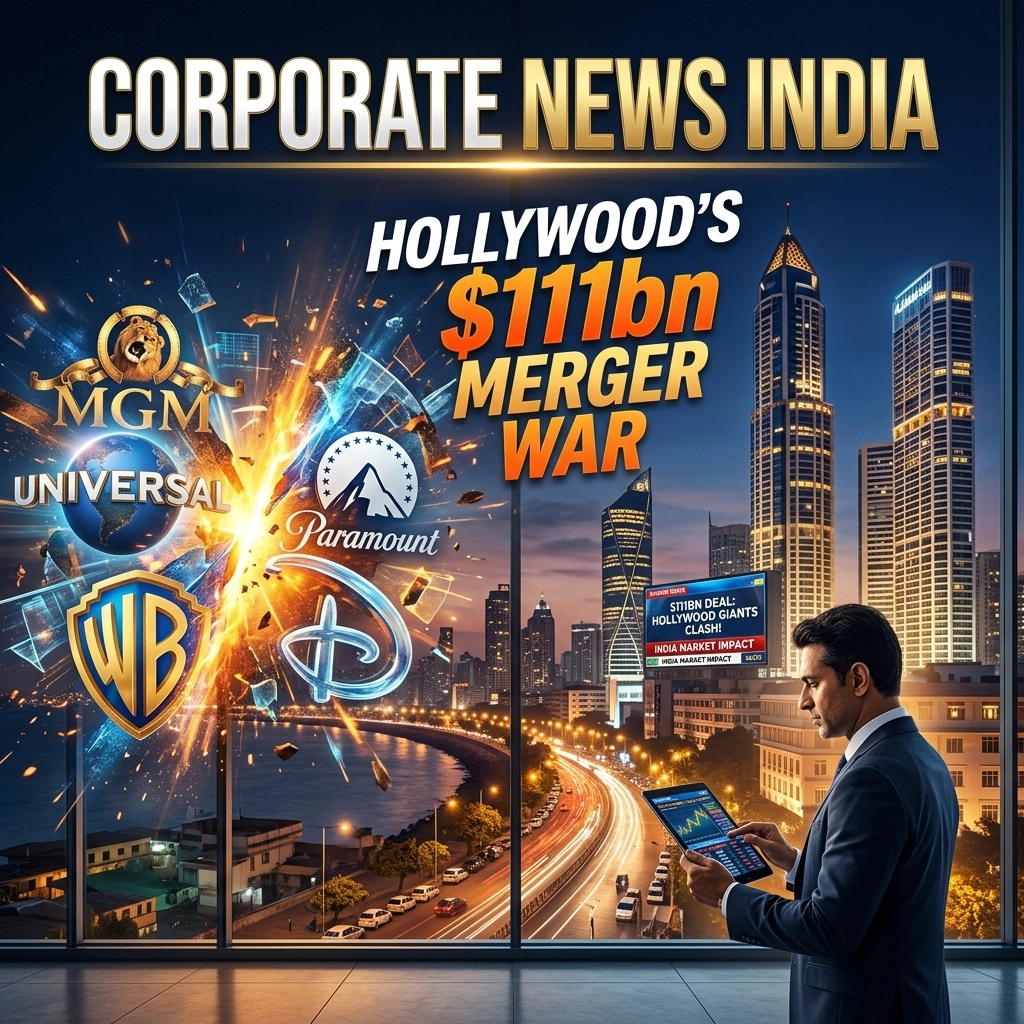

Corporate news India observers and global media analysts are currently witnessing a seismic shift in the entertainment landscape as the proposed $111 billion merger between Paramount Skydance and Warner Bros Discovery (WBD) reaches a boiling point. This massive consolidation, which aims to create a singular media titan to rival Netflix and Disney, has moved from the boardroom to the frontlines of a cultural rebellion. As of April 14, 2026, the deal has sparked an unprecedented backlash from the very individuals who fuel the industry’s creative engine.
Over 1,400 prominent actors and directors, including Academy Award winner Emma Thompson and Hollywood stalwart Ben Stiller, have officially signed a collective letter opposing the merger. Their core argument is that the unification of two legacy studios: each with over a century of history: will inevitably lead to "Ghost Town" studios, where creative risk-taking is sacrificed at the altar of debt reduction and corporate efficiency. For the global market, and specifically within the context of corporate news India, this merger represents more than just a North American business transaction; it is a catalyst for change that could redefine content licensing and production across the Eastern hemisphere.
1. The Creative Resistance: Why A-Listers Are Sounding the Alarm
The open letter signed by Hollywood’s elite is not merely a protest against a business deal; it is a manifesto against the perceived "monopolization of imagination." According to reports from Variety, the signatories argue that the $111 billion valuation is built upon a foundation of drastic cost-cutting measures that will hollow out the creative infrastructure of both Paramount and Warner Bros.
Emma Thompson and Ben Stiller have been vocal about the danger of reduced competition. When two of the five major "Big Five" studios merge, the number of buyers for original scripts and independent projects shrinks overnight. The actors fear that a "Ghost Town" scenario will emerge, where historic backlots become mere shells for franchise maintenance rather than hubs for original storytelling. This sentiment echoes throughout the corporate news India sectors, where local production houses often rely on international co-productions and diverse licensing opportunities that are now at risk of being streamlined into a singular, rigid corporate pipeline.

2. The Ellison Empire: A $111 Billion Power Play
At the heart of this transaction are David Ellison and his father, Larry Ellison, the founder of Oracle and one of the world's wealthiest individuals. Following Netflix’s exit from the bidding war in early 2026, the Ellisons moved swiftly to secure a deal that integrates Paramount Skydance with the vast assets of Warner Bros Discovery.
According to the BBC, the financial architecture of this deal is staggering. The merger involves approximately $58 billion in new borrowing, pushing the combined entity's total leverage beyond the $70 billion mark. While the deal creates a streaming colossus with over 210 million subscribers: uniting the libraries of HBO Max and Paramount+: the debt burden is a significant point of contention. Corporate news India experts suggest that such high leverage often forces companies to prioritize immediate revenue through "safe" content, potentially stifling the experimental films and series that have historically defined the HBO brand.
3. Corporate News India: Analyzing the Global Media Ripple Effect
Why is this a critical topic for corporate news India? The answer lies in the interconnected nature of modern media distribution. Both Paramount and Warner Bros Discovery have extensive footprints in the Indian market, ranging from sports broadcasting rights to high-stakes streaming partnerships with local giants like Reliance and JioCinema.
- Content Licensing: WBD’s HBO content is currently a cornerstone of premium streaming in India. A merger could lead to a restructuring of these deals, potentially increasing costs for Indian consumers or leading to the withdrawal of certain titles as the new entity focuses on its proprietary global platform.
- The "Pax Silica" Influence: With Larry Ellison’s involvement, there is a distinct tech-heavy approach to this media merger. This "data-driven insights" model suggests that algorithms may soon play a larger role in greenlighting content than traditional creative intuition.
- Market Consolidation Trends: The Hollywood merger serves as a mirror to the ongoing consolidation in the Indian media space, such as the Zee-Sony-Reliance dynamics. Corporate news India analysts are looking at the WBD-Paramount deal as a blueprint: or a warning: for how domestic mergers might handle creative opposition.
To stay updated on how these global shifts affect the Indian landscape, you can explore our latest updates on Business Tantra Home News.
4. The "Ghost Town" Risk and the Threat of Monopsony
The term "Ghost Town" has become a rallying cry for the 1,400 actors and directors opposing the deal. It refers to the physical and intellectual vacancy that occurs when a studio stops investing in diverse, mid-budget films in favor of a few "tentpole" blockbusters. When competition is reduced, a "monopsony" occurs: a market situation where there is only one buyer (or very few) for a specific product, in this case, creative labor.

The signatories of the protest letter argue that if the merger proceeds, the new entity will have an outsized influence over wages, working conditions, and creative control. This is a vital concern for corporate news India because the Indian "creative economy" is increasingly tied to global standards. If the standard for creative freedom drops in Hollywood due to corporate consolidation, the ripple effect will eventually hit production hubs in Mumbai, Bangalore, and Hyderabad.
5. Financial Synergies vs. Creative Integrity: The $6 Billion Question
The Ellisons have publicly identified a "cost-synergy opportunity" worth approximately $6 billion. In the language of corporate news India, "synergy" is often a euphemism for massive layoffs and department closures. The plan involves merging back-office operations, marketing teams, and even specialized production units.
While these synergies may please shareholders in the short term, they represent a "fragile" ecosystem for the workers involved. This mirrors trends seen in other sectors, where the "work family" concept is being dismantled by Gen Z and veteran professionals alike who refuse to ignore the cold reality of corporate restructuring. The tension between maintaining a $111 billion valuation and preserving the cultural heritage of these studios is the defining conflict of this merger.
6. Regulatory Hurdles: The April 2026 Deadline
As we stand on April 14, 2026, the merger faces critical regulatory hurdles. Warner Bros shareholders are scheduled to meet later this month to vote on the takeover. However, the opposition from high-profile figures like Emma Thompson has caught the attention of antitrust regulators in both the United States and Europe.
In the realm of corporate news India, the focus is on whether international regulators will impose "divestiture" requirements: forcing the new company to sell off certain assets (like news channels CNN or CBS) to prevent a monopoly. The deal’s implicit support from Washington, which previously suggested the Ellison-led acquisition would face fewer hurdles than a Netflix takeover, is now being questioned as the scale of creative industry opposition becomes clear.

7. The Future of Cinema and the Digital Business Card
As the industry moves toward this hyper-consolidated future, the way professionals network and maintain their independence is also evolving. Whether you are a director in Los Angeles or a tech entrepreneur in Mumbai, the need for a "democratized" way to connect has never been greater. Amidst the chaos of corporate news India, tools like the Digital Business Card (NFC Enabled) from Business Tantra are becoming essential for professionals who find themselves navigating an increasingly volatile corporate world.
Conclusion: A Catalyst for a New Media Order
The $111 billion merger between Paramount Skydance and Warner Bros Discovery is more than a simple acquisition; it is a battle for the soul of the entertainment industry. While the Ellisons promise a revitalized media giant capable of surviving the streaming wars, the fierce opposition from over 1,400 creative professionals suggests that the cost of this "victory" may be too high.
For those following corporate news India, this situation serves as a definitive case study in the risks of extreme consolidation. As the vote in late April approaches, the global business community remains on edge. Will the merger create a transformative solution for the declining cable industry, or will it leave behind a "Ghost Town" of lost opportunities and stifled voices? At Business Tantra, we will continue to provide data-driven insights into this developing story.
To learn more about our mission to provide high-voltage business news, visit our About Us page or Register to join our community of industry experts.