






















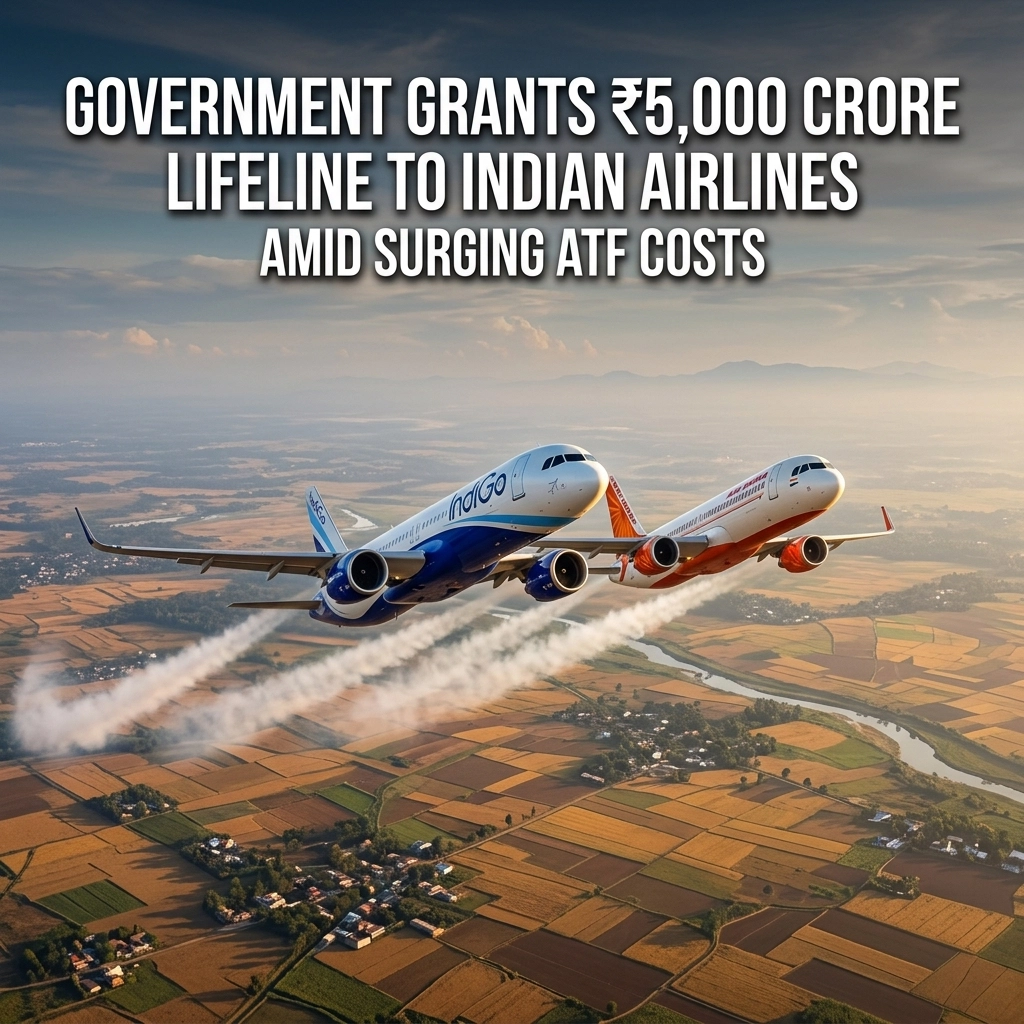
Government Grants ₹5,000 Crore Lifeline to Indian Airlines Amid Surging ATF Costs

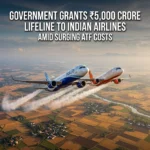
The Indian aviation sector, a critical pillar of the nation's infrastructure and economic connectivity, has recently navigated through turbulent skies. In a decisive move to stabilize the industry, the Government grants ₹5,000 Crore lifeline to Indian Airlines through the newly approved Emergency Credit Line Guarantee Scheme (ECLGS) 5.0. This strategic intervention, sanctioned by the Union Cabinet on May 5, 2026, arrives at a juncture where geopolitical instability and volatile fuel markets have threatened to ground the progress of domestic carriers.
As Aviation Turbine Fuel (ATF) prices continue to soar, the government’s fiscal injection serves as a vital catalyst for change, ensuring that the "wings of India" remain operational despite mounting external pressures. This article explores the intricate details of the relief package, the underlying economic triggers, and the long-term implications for the Indian aerospace ecosystem.
1. The Architecture of the ECLGS 5.0 Framework
The primary mechanism for this financial rescue is the ECLGS 5.0, a revitalized version of the credit scheme that supported various industries during the pandemic era. The ₹5,000 crore allocation specifically earmarked for scheduled airlines is designed to address immediate liquidity mismatches that have arisen due to the sudden spike in operational expenses.
Under this scheme, eligible borrowers: specifically scheduled passenger airlines with a "standard" account status as of March 31, 2026: can access credit facilities up to ₹1,500 crore per airline. The structure of the loan is notably borrower-friendly, featuring a seven-year tenor that includes a two-year moratorium on principal repayments. This grace period is essential, providing carriers with the necessary "breathing room" to stabilize their balance sheets without the immediate pressure of debt servicing.
Furthermore, the government has introduced a provision where up to 50% of the interest accrued during the period can be converted into a Funded Interest Term Loan (FITL). This technical adjustment is a sophisticated fiscal tool aimed at easing short-term cash flow burdens, allowing airlines to prioritize operational safety and payroll obligations over debt interest.

2. Geopolitical Volatility: The Driver of Surging ATF Costs
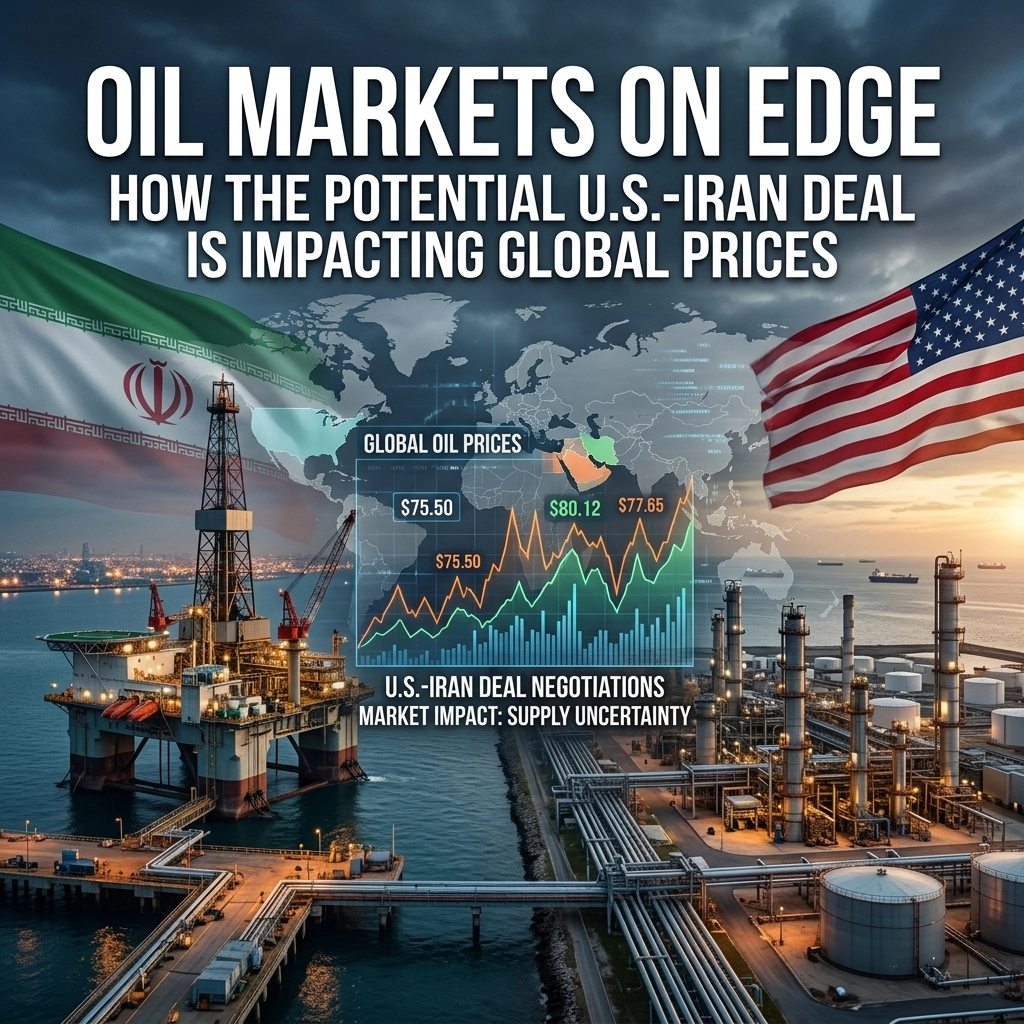
The necessity for such a massive intervention cannot be understood without examining the global energy landscape. The ongoing conflict in West Asia, particularly the tensions between Iran and Israel, has sent shockwaves through the global oil markets. For the aviation industry, where fuel typically accounts for nearly 40% of total operating costs, the surge in ATF prices has been catastrophic.
The volatility in the energy sector is not just a localized issue; it is a complex intersection of semiconductor geopolitics, trade route disruptions, and currency fluctuations. The Indian Rupee’s depreciation against the US Dollar has further compounded the problem, as ATF is priced based on international benchmarks and settled in foreign currency.
This confluence of factors has created a "perfect storm." While some major players like IndiGo have previously shown resilience: evidenced by how IndiGo swings back to profit in better times: the current environment has made it nearly impossible for even the most efficient carriers to maintain profitability without state support.
3. How the Government Grants ₹5,000 Crore Lifeline to Indian Airlines Impacts Market Players
The distribution of this ₹5,000 crore lifeline is expected to have a varied impact across the competitive landscape of the Indian skies. While the ₹1,500 crore cap per airline ensures that the benefits are not monopolized by a single entity, the strategic importance of this aid remains paramount for both established giants and emerging players.
For the "Big Two": the Air India group and IndiGo: the credit line serves as a buffer to maintain their aggressive expansion plans and massive aircraft orders. These airlines are currently at the forefront of the Modi wave in the startup and business flood, representing India's ambition to become a global aviation hub.
However, for mid-sized and smaller carriers, this lifeline is quite literally a matter of survival. The surge in ATF costs had begun to mirror the inflationary pressures seen in other logistics sectors, much like how the rising consumer price index impacts truck financing. Without this intervention, several carriers were facing the grim prospect of technical default, which would have led to a significant reduction in regional connectivity and potential job losses for thousands of ground staff and flight crews.

4. The Broader Economic Context: ECLGS 5.0 and National Growth
The ₹5,000 crore for airlines is actually part of a much larger ₹2.5 lakh crore additional credit flow targeting multiple stressed sectors. The government’s approach reflects a sophisticated understanding of the "multiplier effect." Aviation does not exist in a vacuum; it supports tourism, international trade, and the rapid movement of high-value goods, all of which are essential for maintaining the nation’s growth trajectory.
In the context of India’s objective to reach a $5 trillion economy, the stability of the aviation sector is non-negotiable. The government’s decision to democratize access to credit through the ECLGS framework ensures that the sector remains competitive and does not devolve into a duopoly. This maintains the "level playing field" necessary for innovation, similar to the support systems seen in the T-Hub incubator model in Telangana.
By securing the financial health of airlines, the state is also protecting the interests of the Indian consumer. Without state aid, airlines would have been forced to pass on the surging fuel costs directly to passengers through exorbitant "fuel surcharges," potentially stifling domestic travel and impacting the broader middle-class economy.
5. Strategic Sovereignty and Airspace Challenges
Beyond the balance sheets, there is a dimension of strategic sovereignty at play. The recent West Asia crisis hasn't just increased fuel prices; it has resulted in significant airspace restrictions. Indian carriers flying to Europe and North America have had to reroute flights, increasing flight times and further bloating fuel consumption.
The government’s financial intervention acknowledges these external "force majeure" events. By providing this lifeline, the Ministry of Civil Aviation and the Ministry of Finance are essentially subsidizing the increased costs associated with maintaining India’s international connectivity during a period of global unrest. This ensures that Indian airlines are not unfairly penalized for geopolitical events beyond their control, allowing them to remain competitive against international carriers who may have different hedging strategies or state-backing.
6. Data-Driven Insights: Fueling Future Stability
The reliance on data-driven insights has been a hallmark of this policy decision. By analyzing the "legitimate purpose" of the credit: which includes paying staff salaries, maintaining aircraft, and clearing dues to oil marketing companies: the government is ensuring that the funds are utilized for operational sustainability rather than debt restructuring alone.
This proactive stance is indicative of a broader trend in Indian policy-making, where the state acts as a partner to industry. Whether it is through the new battery swap scheme for EVs or this aviation lifeline, the focus remains on ensuring that Indian businesses are not left vulnerable to global shocks.

Conclusion
The announcement that the Government grants ₹5,000 Crore lifeline to Indian Airlines is more than just a fiscal measure; it is a vote of confidence in the future of Indian aviation. By addressing the immediate crisis of surging ATF costs through the ECLGS 5.0, the Union Cabinet has effectively shielded the industry from a potential collapse.
While the challenges of geopolitical volatility and high fuel prices remain, this relief package provides the structural support needed for carriers to navigate the coming months. As we look toward the remainder of 2026, the focus will shift to how efficiently these airlines utilize this capital to modernize their fleets and optimize their operations. Ultimately, this intervention ensures that the Indian aviation sector remains a robust engine of growth, continuing to connect the nation and the world with resilience and efficiency.

admin


Related Post