























Reliance Refinery Maintenance: Crude Unit Shutdown at Jamnagar

In the intricate machinery of global energy markets, few facilities command as much attention as the Jamnagar refining complex in Gujarat, India. Owned and operated by Reliance Industries Limited (RIL), this site is the heartbeat of India's petroleum export economy. Recently, the announcement of a planned Reliance Refinery Maintenance cycle, specifically the shutdown of a 660,000 barrels-per-day (bpd) crude unit, has sent ripples through corporate circles and energy trading floors alike.
As of May 5, 2026, industry sources confirm that RIL is moving forward with a strategic "turnaround": a scheduled period of maintenance, cleaning, and inspection. While a temporary cessation of activity in such a massive unit might seem like a pause, in reality, it is a calculated maneuver designed to ensure long-term operational excellence and safety.
1. The Strategic Scale of the Jamnagar Turnaround
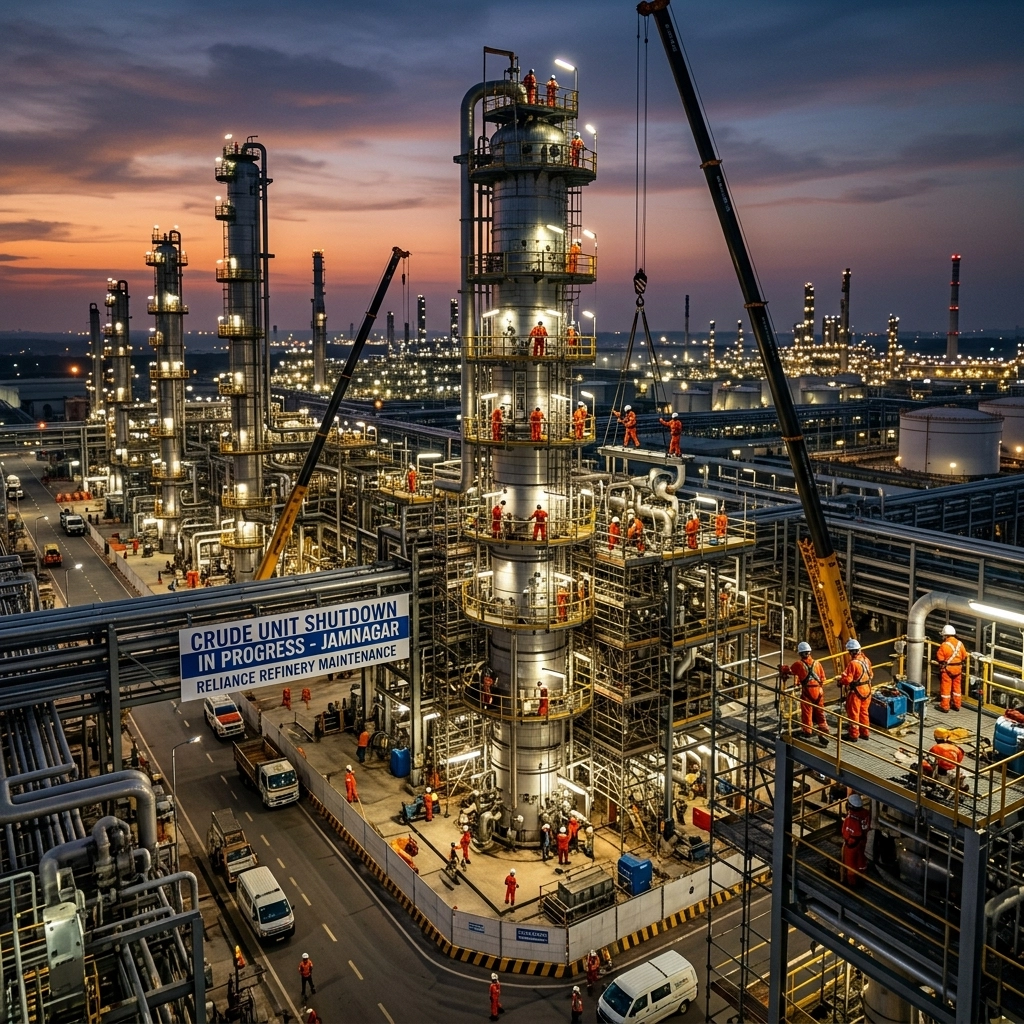
The Jamnagar complex is not merely a factory; it is a global phenomenon. It houses two distinct refineries with a combined processing capacity of approximately 1.4 million bpd. The unit currently under the spotlight is the 660,000 bpd crude processing unit, which represents a significant portion of the site’s total throughput.
Reliance Industries has historically utilized these maintenance windows as a catalyst for change, integrating the latest metallurgy and catalyst technologies to improve yields. A crude unit shutdown involves more than just turning off a valve; it requires the systematic cooling of massive towers, the purging of volatile gases, and the mobilization of thousands of specialized technical contractors. This specific maintenance cycle is expected to last approximately three to four weeks, during which secondary units, such as the diesel hydrotreater, will also undergo rigorous servicing.
The precision required in these operations highlights why business management for startups is essential for growth, as even the world's largest conglomerates must manage logistics, human capital, and supply chains with surgical accuracy to avoid "unplanned" downtime.

2. Reliance Refinery Maintenance: Ensuring Operational Longevity
The primary value proposition of a scheduled shutdown is the preservation of capital assets. In the high-pressure, high-temperature environment of a refinery, equipment wear is inevitable. Heat exchangers foul, pipes erode, and catalysts lose their efficacy. By adhering to a strict Reliance Refinery Maintenance schedule, RIL ensures that its Jamnagar facility remains at the top of the global cost curve.
During this 2026 maintenance phase, engineers are reportedly focusing on:
- Safety Audits: Inspecting pressure vessels to ensure they meet stringent international safety standards.
- Efficiency Upgrades: Replacing older components with more energy-efficient alternatives to reduce the refinery's overall carbon footprint.
- Compliance: Ensuring all units adhere to the latest environmental regulations regarding emissions and effluent treatment.
This level of meticulous planning is what allowed the Indian economy to witness a 2021 economic rebound that surpassed many global peers, driven by the resilience of its industrial giants.
3. Global Supply Chain and Macro-Economic Implications
The global energy market is an interconnected electronic communications network where a ripple in Jamnagar can lead to a wave in Singapore or Rotterdam. Because Reliance is a major exporter of refined products: particularly ultra-low sulfur diesel and jet fuel: the temporary reduction in throughput can tighten global supplies.
However, Reliance’s dual-refinery architecture provides a unique buffer. While one crude unit is down, the export-oriented refinery (the SEZ unit) can often pivot to maintain core contract obligations. This operational flexibility is a hallmark of RIL’s corporate strategy. Market analysts are closely watching the "Gross Refining Margins" (GRMs), as a reduction in supply during a maintenance season often provides a temporary boost to product prices, benefiting other refiners in the region.

4. Integration of Predictive Analytics and AI in Maintenance
One of the most transformative shifts in the 2026 energy landscape is the deployment of Artificial Intelligence (AI) in industrial maintenance. Reliance has been a pioneer in using data-driven insights to move from reactive maintenance to "predictive maintenance."
By using thousands of sensors placed across the Jamnagar units, RIL’s technical teams can predict exactly which components are likely to fail or underperform. This allows them to order parts months in advance and reduce the "outage" time significantly. This transition from broad industry trends to specific operational tools is what keeps the Indian energy sector competitive on a global scale.
The move toward more intelligent, tech-heavy operations mirrors the broader trend seen in other sectors, such as India's new battery swap scheme, where technology is used to democratize access to energy and efficiency.
5. Financial Outlook and RIL Market Sentiment
For investors, the Reliance Refinery Maintenance is a well-telegraphed event. While it might lead to a slight dip in quarterly production volumes, the long-term benefit of a "revitalized" unit often outweighs the short-term loss. The stock market typically views these turnarounds as a sign of healthy corporate governance and asset management.
RIL's ability to fund these massive maintenance projects: often costing hundreds of millions of dollars: comes from its robust balance sheet and diverse revenue streams. From retail to telecommunications, the conglomerate’s multi-sectoral approach ensures that a temporary lull in one segment is offset by growth in another. This is a far cry from the shaky start for Stellantis or other global firms that have struggled with single-market dependencies.

6. The Future of Jamnagar: Toward Green Energy
While the current maintenance focuses on traditional crude units, it is impossible to discuss Jamnagar without mentioning Reliance's "New Energy" mission. The company is currently building the Dhirubhai Ambani Green Energy Giga Complex adjacent to the existing refineries.
This proximity is no accident. The goal is to eventually use the hydrogen produced during the refining process or generated via massive electrolyzers to transition the site into a "net-zero" hub. In this context, the current Reliance Refinery Maintenance cycle might include preparatory work for integrating green hydrogen into the refining process, further solidifying RIL’s role as a leader in the global energy transition.
The evolution of Jamnagar from a "crude-only" facility to a multi-energy powerhouse is a testament to the "exponential growth" mindset that defines modern Indian industry.

Conclusion
The shutdown of the 660,000 bpd crude unit at Jamnagar for scheduled maintenance is a routine yet critical event in the life of the world's largest refining complex. It serves as a reminder of the immense technical and managerial expertise required to keep the global energy supply chain functioning. By prioritizing safety, efficiency, and technological integration, Reliance Industries continues to set the standard for the energy sector in India and beyond.
As the units come back online in the coming weeks, they will be more efficient, safer, and ready to fuel the next phase of India’s economic journey. For investors and industry observers, this maintenance cycle is not a sign of slowing down but a necessary preparation for the high-performance demands of the future. The ability of RIL to manage such complex turnarounds while maintaining its market dominance is a clear indicator that the "Modi wave" of industrialization and the rise of Indian conglomerates are far from over.

admin

Related Post