



















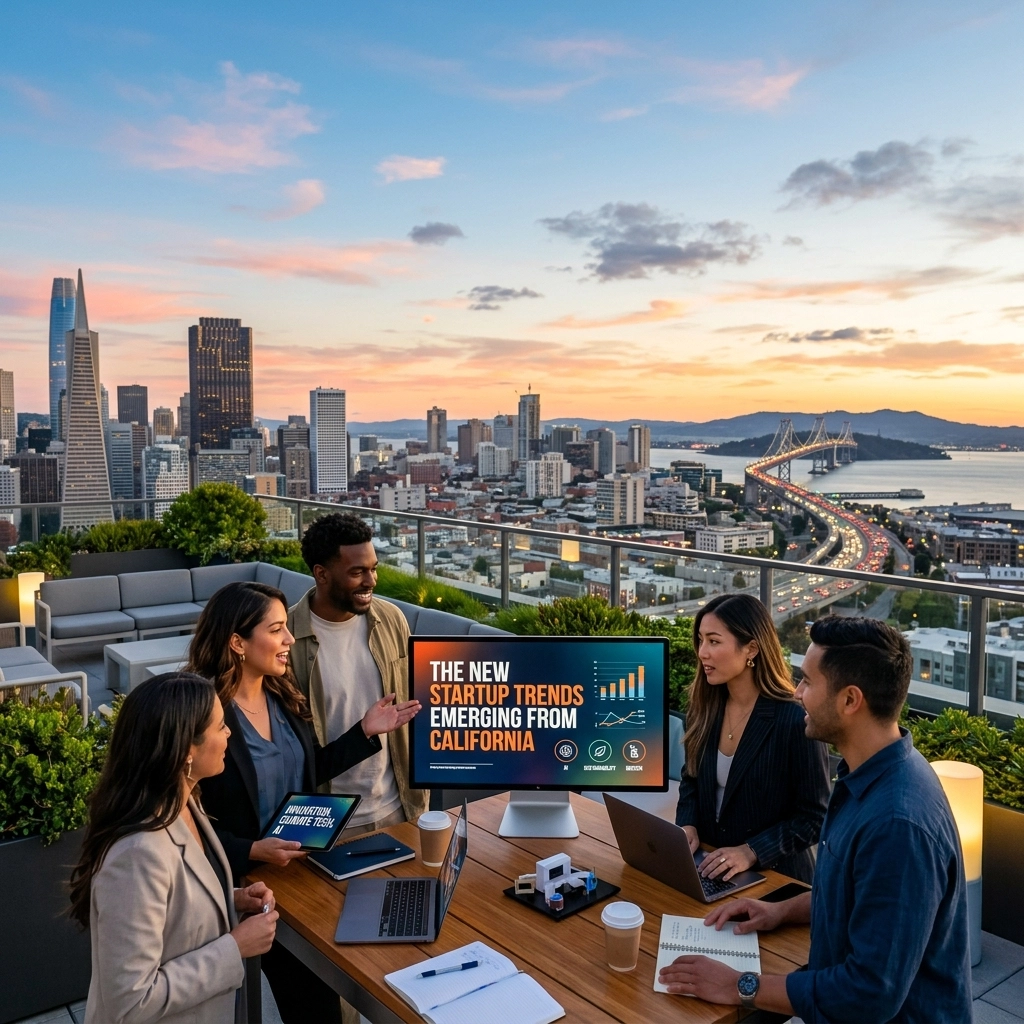
The New Startup Trends Emerging from California

As we navigate the second quarter of 2026, the global business landscape is witnessing a seismic shift that traces its tremors back to a single, high-voltage geographic epicenter: California. The Golden State is no longer just a hub for software; it has evolved into a sprawling laboratory for the future of human existence. For any professional tracking California business, the current velocity of innovation isn’t just impressive: it is a total reconstruction of the global economic order.
The narrative of startups in USA has often been one of iterative improvement, but today’s trends suggest a radical departure. We are witnessing the birth of "Deep Intelligence" and "Hard Tech" integration that renders the "app-for-that" era of the last decade obsolete. From the fog-drenched streets of San Francisco to the sun-scorched aerospace labs of El Segundo, the new California startup is more ambitious, more capitalized, and more disruptive than ever before.
1. The AI Hegemony: Beyond the Large Language Model
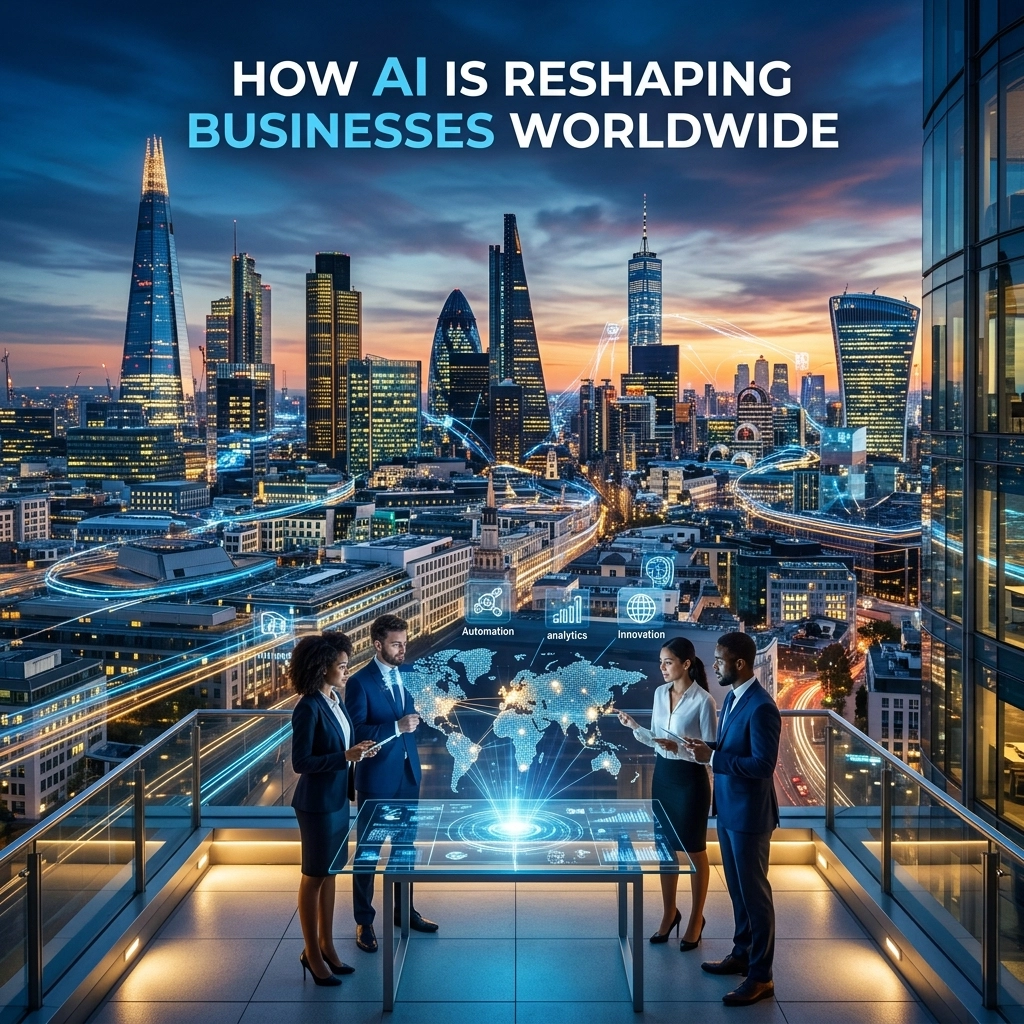
It is an undisputed fact: San Francisco and the surrounding Silicon Valley are currently absorbing more than 50% of the world’s total AI venture capital funding. But the trend in 2026 has moved past chatbots and generative art. The modern California business is now focused on "Agentic AI": systems that don't just suggest content but execute complex, multi-step business processes without human intervention.
The physical footprint of these giants is staggering. AI-centric startups now occupy over 2.4 million square feet of premium commercial space in the Bay Area, a tenfold increase since 2021. Companies like OpenAI and Anthropic have moved beyond the research phase, acting as the foundational utilities for the next generation of startups in USA. This concentration of cognitive power is acting as a catalyst for change, forcing every traditional sector: from law to logistics: to either integrate or face immediate irrelevance.

2. The Great Robotics Renaissance
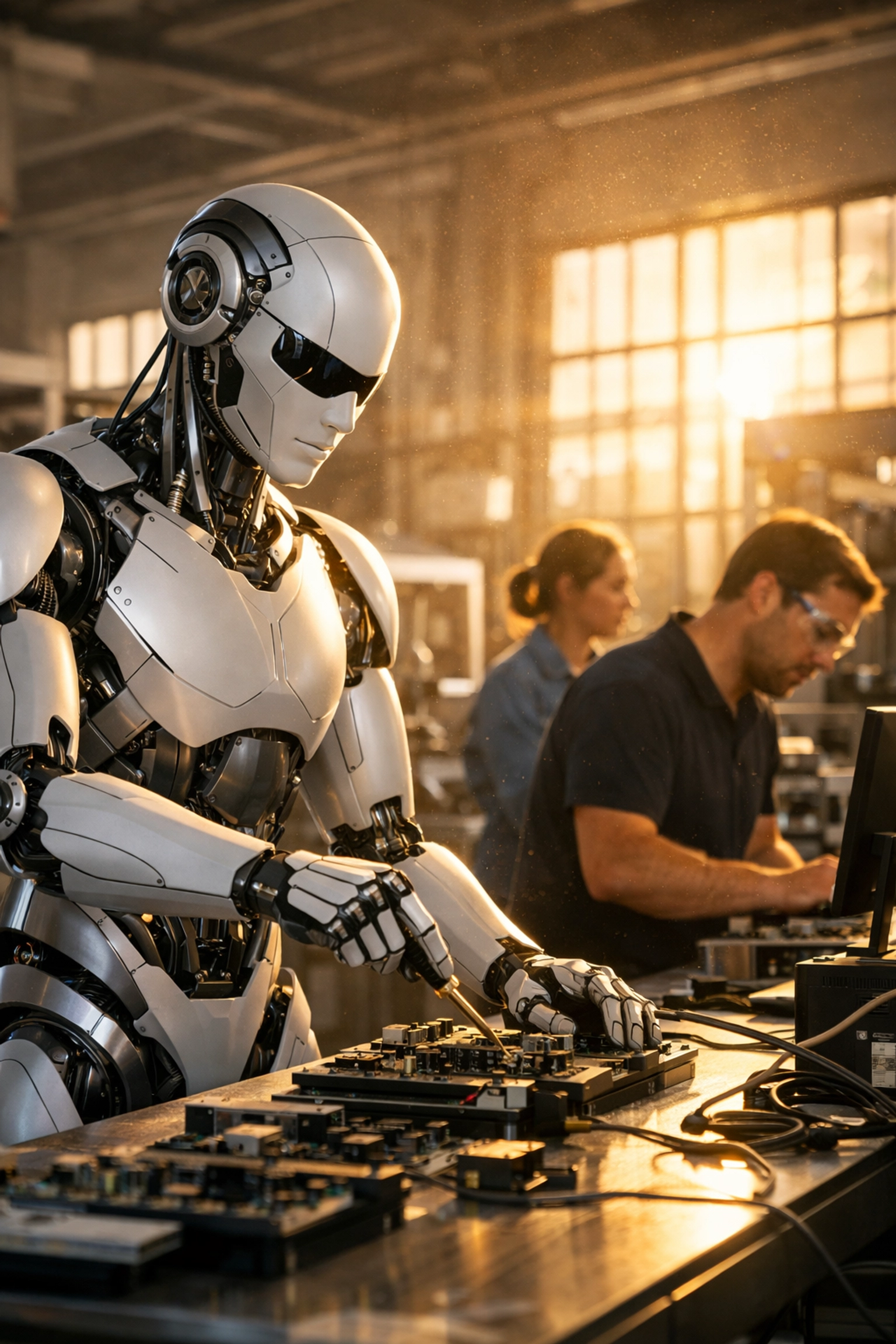
For years, the promise of robotics remained confined to the controlled environments of car manufacturing plants. However, a new trend emerging from California is the "democratization of physical labor" through AI-powered robotics. We are seeing a surge in startups focused on "Humanoid General Purpose Robots" designed to walk into existing warehouses and construction sites and perform tasks previously thought impossible for machines.
Startups like Machina Labs and GrayMatter Robotics are utilizing advanced spatial intelligence to deploy robots that can assist in tedious manufacturing tasks with the precision of a master craftsman. This trend is particularly vital for the global supply chain, as California-bred technology begins to bridge the labor gap in Western markets. This leap in hardware is a direct result of the "Intelligence Surplus" created by the AI boom, allowing machines to finally understand the chaotic physical world.
3. Fintech 3.0: The End of Legacy Friction
In the realm of financial technology, San Francisco remains a powerhouse, with fintech startups in the city raising over $5 billion in the last fiscal year alone. The new trend here is the total infusion of AI into the "Trust Layer." We are moving beyond simple digital wallets and toward autonomous financial advisors that manage 100% of a user’s investment and tax strategy in real-time.
These startups are leveraging "Trust-Centric Experiences" where privacy is the ultimate commodity. As Indian founders look toward expanding to the US, the bar for entry has been raised. You no longer compete on a better UI; you compete on the precision of your predictive risk models. This shift is also impacting how international transactions are handled, with many California-based neobanks integrating deeply with decentralized networks to provide instantaneous, borderless settlements.
For those looking to network in this high-stakes environment, tools like NFC-enabled digital business cards have become the standard for the modern, tech-savvy executive.
4. Climate Tech: The New Moral and Economic Frontier
California’s aggressive regulatory environment has historically been seen as a hurdle, but in 2026, it has become the greatest driver of startups in USA. The "Climate Tech" sector is no longer a niche interest; it is a multi-billion-dollar industrial complex. California startups are now leading the world in "Carbon Intelligence": using data and AI to track CO2 emissions with granular precision across entire global supply chains.
The focus has shifted from simple renewable energy to "Hard Decarbonization." We are seeing startups dedicated to creating carbon-neutral cement, sustainable aviation fuels, and large-scale industrial carbon capture. This trend is a testament to the "value proposition" of the California ecosystem: identifying a global existential threat and turning its solution into a profitable, scalable business model.
5. Defense Tech and "Silicon Shield" Strategies
Perhaps the most dramatic shift in the California startup scene is the revitalization of "Defense Tech." A new generation of founders, backed by heavyweight VCs like Andreessen Horowitz and Founders Fund, are building the "Silicon Shield." This trend involves the rapid development of autonomous drones, satellite surveillance, and AI-driven cybersecurity systems meant to protect national interests.
This isn't the slow-moving defense contracting of the past. These are fast-moving, software-first companies that are disrupting the traditional military-industrial complex. For the global investor, this signifies that California business is becoming deeply entwined with geopolitical stability, making the success of these startups a matter of international security rather than just commercial gain.

6. The Decentralized Physical Infrastructure (DePIN) Wave
Merging the worlds of Web3 and physical infrastructure, California is seeing a rise in DePIN startups. These companies are building decentralized networks for energy sharing, 5G connectivity, and data storage. Instead of a single corporation owning a cell tower, thousands of individual "nodes" (homes and small businesses) contribute to a collective network powered by tokenized incentives.
This "bottom-up" approach to infrastructure is designed to be more resilient and cost-effective than traditional models. It represents a bold experiment in how technology can democratize access to essential services, potentially offering a blueprint for developing economies that lack established centralized infrastructure.
7. Healthcare Infrastructure: Replacing the Legacy Stack
In the healthcare sector, the focus has moved away from "wellness apps" and toward "Infrastructure Replacement." Startups like Noyo are building API-first platforms that replace the antiquated legacy systems used for health insurance enrollment and management. By modernizing the "back office" of medicine, these California startups are aiming to reduce the massive administrative overhead that plagues the American healthcare system.
This trend is also fueling a surge in AI-driven drug discovery, where startups are using foundation models to simulate chemical interactions, cutting the time to develop new life-saving medications from decades to months. The "exponential growth" in this sector is a clear indicator that California remains the world’s premier destination for high-impact biotechnology.
Conclusion: The 2026 Verdict
The landscape of startups in USA is undergoing a profound metamorphosis. California is no longer content with just being the world’s software factory; it is striving to become the brain and the muscle of the physical world. The trends we see today: from autonomous robotics to AI-led climate intelligence: are not merely business opportunities; they are the architectural blueprints for the next century of human progress.
For the global entrepreneur and investor, the message is clear: the California ecosystem remains the ultimate catalyst for change. While the barriers to entry are higher and the competition more fierce, the rewards for those who can navigate this "Frontier of Intelligence" are unprecedented. As we look toward the remainder of 2026, the only certainty is that the innovations born in the Golden State will continue to rewrite the rules of global commerce.
To stay updated on how these global shifts impact the Indian ecosystem and the 92 million MSMEs navigating their own digital transformations, keep following Business Tantra. The future is being built in real-time, and we are here to provide the insights you need to lead it.