



























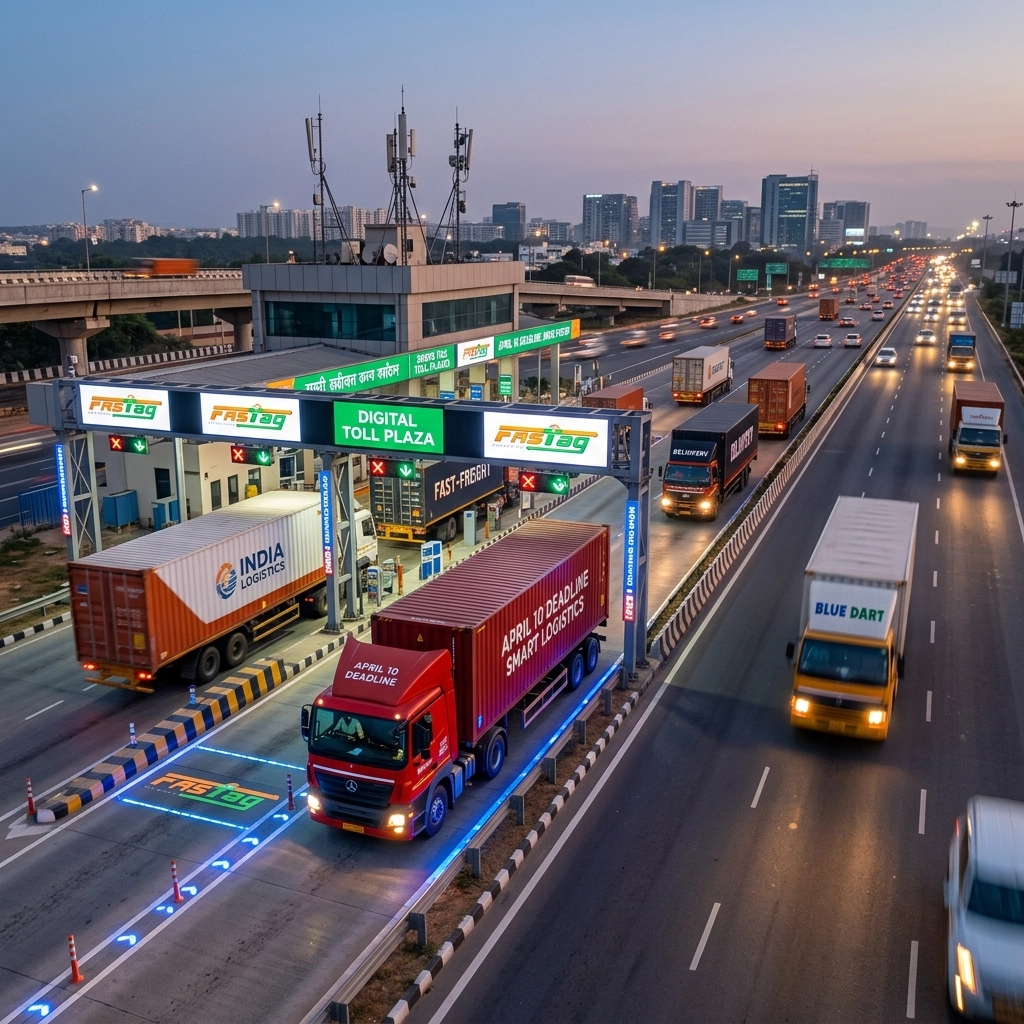
The April 10 Deadline: How India’s New Digital Toll System is About to Speed Up Your Logistics.

The landscape of Indian infrastructure is on the precipice of a monumental shift. As of April 10, 2026, the Ministry of Road Transport and Highways (MoRTH) will enforce a complete transition to a cashless highway ecosystem. This mandate represents more than just a change in payment processing; it is a fundamental restructuring of how goods move across the subcontinent. India’s new digital toll system is designed to eliminate the friction of physical currency, serving as a catalyst for change in the logistics sector by targeting the chronic bottlenecks found at the nation’s 1,150+ toll plazas.
For business leaders and fleet operators, this deadline is not merely a compliance check: it is a strategic pivot. By mandating FASTag or UPI-based transactions and effectively banning cash, the government is laying the digital groundwork for what will eventually become a signal-free highway network. Understanding the nuances of this transition is essential for any enterprise that relies on timely delivery and optimized supply chain management.
1. The Strategic Pivot to a Cashless Highway Ecosystem
For decades, the Indian logistics sector has been hamstrung by "dwell time": the hours lost by commercial vehicles idling in toll queues. While FASTag penetration has been high for several years, the persistence of cash lanes created a fragmented flow of traffic. The April 10 mandate ends this fragmentation. By requiring 100% digital compliance, the government aims to democratize high-speed travel across the Golden Quadrilateral and beyond.
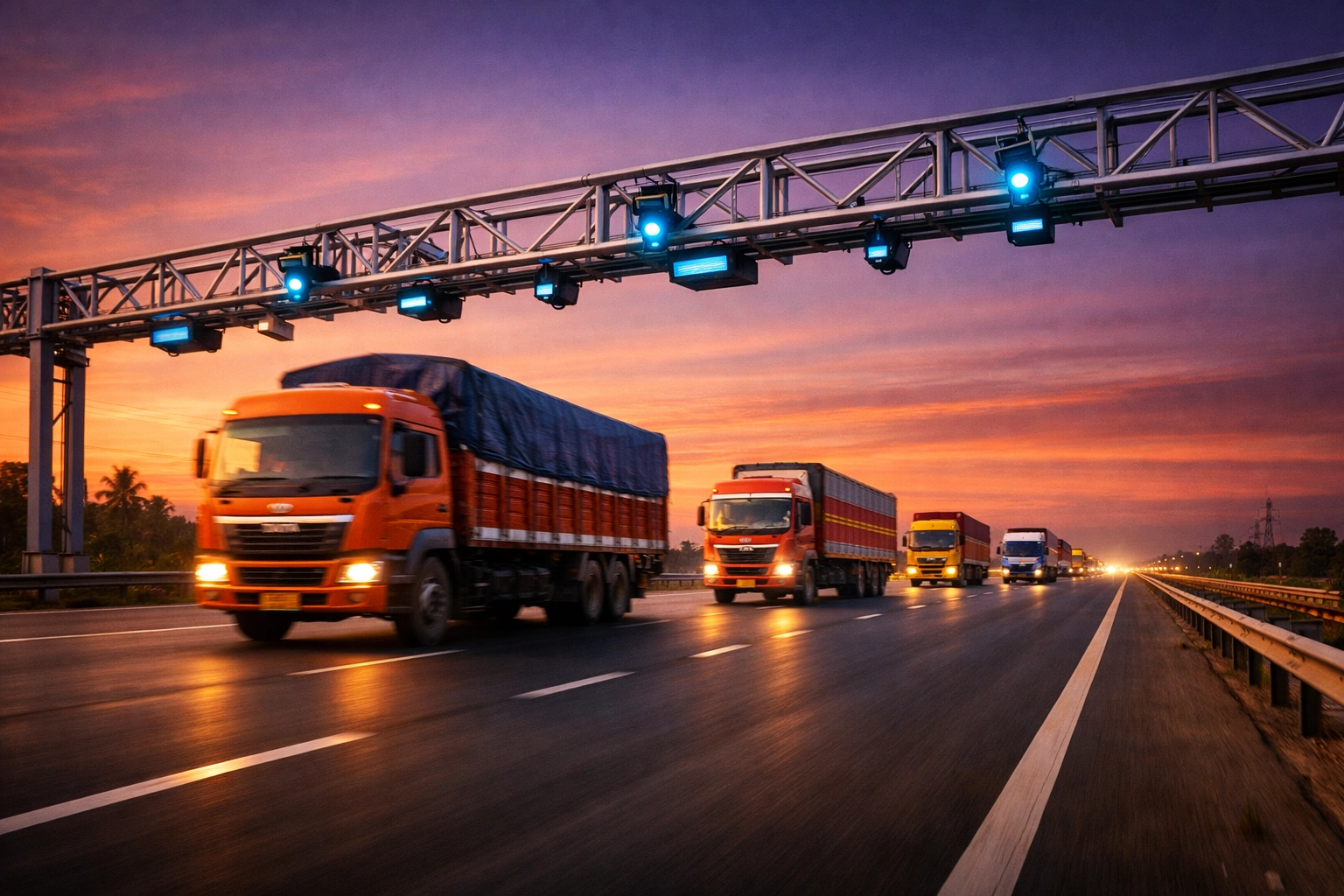
The transition is a move toward a "multi-lane free-flow" (MLFF) environment. In this advanced stage, heavy-duty trucks and commercial vans will no longer need to stop at a physical barrier. Instead, high-speed cameras and RFID readers will capture data-driven insights in real-time, debiting accounts without requiring a change in velocity. This evolution is vital for a nation aiming to reduce its logistics costs from 14% of GDP to a more globally competitive 8-9%.
2. Quantifying the Logistics Impact: Speed and Throughput
The immediate benefit of India’s new digital toll system is the exponential growth in lane throughput. A manual cash lane can typically process approximately 60 to 100 vehicles per hour. In contrast, a fully digital lane can handle over 1,200 vehicles in the same period. For a logistics company managing a fleet of 50 trucks, the cumulative time saved across a cross-country route could amount to hundreds of hours per month.
Furthermore, the reduction in idling leads to significant fuel savings and reduced wear and tear on vehicle components. When transit times become predictable, supply chain managers can move from "just-in-case" inventory models to "just-in-time" precision. This revitalized approach to movement ensures that the "value proposition" of Indian logistics is no longer just about volume, but about velocity and reliability.
3. Navigating India’s New Digital Toll System: Costs and Compliance
Compliance is no longer optional, and the financial implications of ignoring the April 10 deadline are steep. According to the latest directives, any vehicle entering a toll lane without a functional FASTag will be required to pay via UPI at a rate of 1.25 times the standard toll fee. While UPI offers a digital alternative, it is intended to be a deterrent rather than a primary method for commercial fleets due to the surcharge.
Logistics operators must also be aware of the "three-day rule." If a vehicle is flagged for non-compliance or non-payment, an e-notice is generated. Failure to settle the dues within 72 hours results in the penalty doubling. For large-scale operations, these "leakages" can quickly erode profit margins. To stay informed on the latest regulatory updates and business trends, professionals often visit Business Tantra to ensure their operations remain streamlined.

4. The End of Exemptions and the Rise of the Annual Pass
In a move to standardize revenue collection and ensure a "legitimate purpose" for every toll crossing, the government has largely eliminated ID-card-based exemptions for commercial entities. In their place, the National Highways Authority of India (NHAI) has introduced an annual FASTag pass priced at Rs 3,075. This pass permits unlimited crossings across the entire national highway network for a 12-month period.
For regional logistics players who frequent specific corridors, this annual pass provides a predictable, fixed cost, allowing for more accurate budgeting and financial forecasting. Business owners should review their terms and conditions with their fleet management providers to ensure these passes are correctly integrated into their digital wallets before the April 10 cutoff.
5. Technical Challenges and the Transition to MLFF
The jump to a fully digital system is the precursor to the implementation of Global Navigation Satellite System (GNSS) based tolling. While the current system relies on RFID (Radio Frequency Identification) tags, the long-term vision involves satellite tracking to charge vehicles based on the exact distance traveled.
However, the immediate focus remains on the electronic communications network that supports FASTag. Logistics companies must ensure that their tags are not just present, but "active" and linked to accounts with sufficient balances. A common point of failure is "blacklisted" tags caused by low balances or technical glitches in the banking interface. To avoid operational disruptions, it is recommended that fleet managers utilize dedicated dashboards to monitor tag health in real-time.
6. Strategic Advice for Logistics Fleet Operators
As the deadline approaches, business owners should take the following proactive steps to safeguard their operations:
- Fleet Audit: Conduct a comprehensive audit of all vehicles. Ensure every unit, including sub-contracted vehicles, is equipped with a functional FASTag.
- Balance Management: Shift from individual vehicle wallets to a centralized corporate wallet. This ensures that a single vehicle doesn't get stuck due to an empty sub-account while the company has overall liquidity.
- Driver Training: Educate drivers on the new UPI surcharge. While UPI is a fallback, drivers must understand that it represents a 25% increase in cost which must be avoided through proper tag maintenance.
- Data Integration: Use the data-driven insights provided by digital tolling reports to analyze route efficiency. If a specific toll plaza is consistently showing delays despite being digital, it may be time to reroute.
For those looking to register their business for updated news alerts, the register page on our platform offers tailored insights for the Indian corporate sector.

7. Global Context and Future Outlook
India’s move mirrors successful transitions seen in markets like Singapore and the United States, where "open road tolling" has become the standard. By removing physical barriers, India is signaling to global investors that its infrastructure is ready for the demands of 21st-century commerce. This digital transformation is expected to act as a lubricant for the "Make in India" initiative, ensuring that manufactured goods can reach ports and international borders without the friction of archaic payment systems.
The April 10 deadline is a line in the sand. It separates the traditional, manual methods of the past from a high-tech, high-velocity future. As we move closer to this date, the synergy between government policy and private sector adaptability will determine the success of this transition.
Conclusion
The transition to a fully digital toll system on April 10, 2026, is a landmark moment for India’s infrastructure and logistics sectors. While the immediate focus is on the elimination of cash and the adoption of FASTag and UPI, the broader impact is the creation of a seamless, high-speed transit network. By reducing dwell times, cutting operational costs, and providing transparent data-driven insights, India’s new digital toll system serves as a transformative solution to age-old logistics bottlenecks.
For business owners, the message is clear: the era of manual processing is over. Early adoption and rigorous fleet management are no longer just "best practices": they are the prerequisites for survival in a signal-free economy. To stay ahead of these shifts and ensure your business remains compliant and competitive, continue to follow the expert analysis here at Business Tantra. The road ahead is faster, smoother, and entirely digital; make sure your fleet is ready to run.

admin


Related Post