

























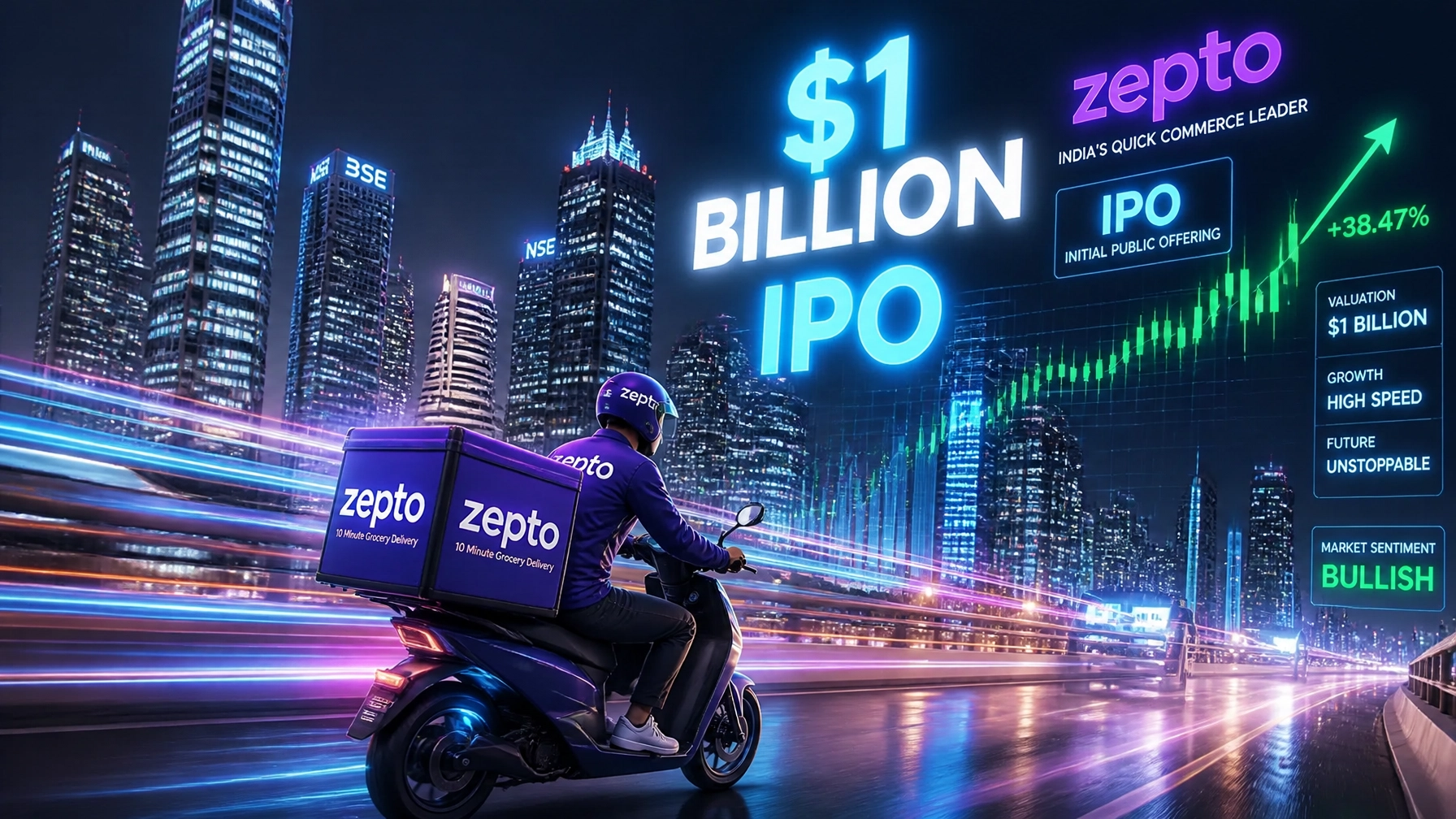

The Indian capital markets are on the precipice of a transformative milestone. As of May 2026, the formalization of Zepto’s $1 Billion IPO has emerged as a definitive catalyst for change within the domestic technology sector. Having received the requisite approval from the Securities and Exchange Board of India (SEBI) on May 11, 2024, the Mumbai-born quick commerce giant is poised to execute a public listing that will not only revitalize investor sentiment but also democratize the convenience economy across the subcontinent.
This anticipated public offering, projected to launch as early as July 2026, represents more than a mere capital infusion; it signifies the maturation of a business model that many skeptics once deemed unsustainable. In a landscape characterized by exponential growth and hyper-competitive logistics, Zepto has transitioned from a daring experiment by teenage founders into a multi-billion-dollar enterprise that is fundamentally restructuring the Indian retail hierarchy.
1. The Meteoric Rise of Zepto: A Case Study in Strategic Execution
Founded in July 2021 by Aadit Palicha and Kaivalya Vohra, Zepto’s journey is a testament to the fact that agility and precision can disrupt even the most entrenched market players. Their success underscores the importance of a clear mission and a robust value proposition. For those observing the current start-up flood in India, Zepto serves as the primary exemplar of how localized innovation can outpace global incumbents.
The company’s ability to scale is deeply rooted in its "dark store" model: micro-warehouses strategically positioned in high-density urban areas to facilitate sub-10-minute deliveries. This operational tool has allowed Zepto to maintain a legitimate purpose in the daily lives of millions, transforming the "need it now" mindset into a consistent revenue stream. However, such rapid scaling requires a disciplined approach to business management for startups, an area where Zepto has demonstrated surprising sophistication.
2. Deciphering the Financials: Zepto’s $1 Billion IPO and the Path to Profitability
The financial architecture of the upcoming listing is designed to provide both capital for expansion and a liquidity event for early-stage backers such as Nexus Venture Partners and Y Combinator. The proposed ₹11,000 crore (approximately $1.3 billion) offering includes a substantial fresh equity component, which will be utilized for network expansion and supply chain augmentation.

Zepto’s financial performance in FY25 has been nothing short of extraordinary. The organization reported a 150% surge in revenue, reaching ₹11,110 crore, while simultaneously halving its losses. This trajectory suggests that the company is on track to achieve positive EBITDA by mid-2026, a critical metric for institutional investors during the roadshows managed by global lead book runners like Morgan Stanley and Goldman Sachs. The data-driven insights gathered from their 7,000+ SKU inventory have allowed for optimized stocking, reducing wastage and increasing the contribution margin per order.
3. The Dark Store Revolution: How Technology Democratizes Convenience
At the heart of the quick commerce frontier lies a sophisticated electronic communications network that synchronizes inventory, delivery partners, and consumer demand in real-time. The "dark store" is no longer just a warehouse; it is a high-tech hub of automated efficiency.

These facilities are engineered for surgical precision. By utilizing proprietary AI algorithms, Zepto can predict demand surges before they occur, ensuring that high-velocity items: ranging from fresh produce to electronics: are always within a 2-kilometer radius of the consumer. This level of operational excellence is what differentiates the leaders from those who might not be cut out to be an entrepreneur. For Zepto, technology is not just a tool; it is the fundamental infrastructure that allows them to deliver on a promise that was once considered logistically impossible.
4. Competitive Dynamics: The Battle for the 10-Minute Window
The quick commerce sector is currently a theater of intense rivalry. Zepto’s $1 Billion IPO is a strategic move to fortify its position against formidable competitors, including:
- Blinkit (Zomato): The current market leader in terms of volume, benefiting from the massive ecosystem of its parent company, Zomato.
- Swiggy Instamart: A powerful contender that leverages its extensive food delivery fleet to optimize last-mile logistics.
- BigBasket Now (Tata Group): Bringing the weight of the Tata conglomerate and a deeply established grocery supply chain to the table.
- Amazon India: The global giant is increasingly pivoting toward hyperlocal models to protect its market share in the grocery segment.
The influx of capital from the IPO will enable Zepto to invest in brand campaigns and technology that further reduce delivery times and improve service reliability, ensuring they remain at the forefront of this digital retail evolution. Organizations looking to emulate this success often start at innovation hubs like T-Hub in Telangana, where the next generation of logistics disruptors is being bred.
5. The Economic Impact: Why 2026 is the Year of the Quick Commerce Frontier
The broader economic implications of Zepto’s public debut are significant. India’s online grocery and quick commerce market, valued at approximately $11.4 billion in 2024, is on a path to reach a staggering $96.3 billion by 2033. This represents a CAGR of 25%, a growth rate that far outpaces traditional retail sectors.

The "Quick Commerce Frontier" is driven by rapid urbanization and a fundamental shift in consumer behavior. The modern Indian consumer values time as a primary currency, and companies that can effectively "buy back" that time through rapid fulfillment are capturing a larger share of the household wallet. Furthermore, the IPO serves as a bellwether for the entire startup ecosystem, potentially triggering a "gold rush" of new-age listings throughout the remainder of 2026.
Conclusion
In summary, Zepto’s $1 Billion IPO is not merely a corporate milestone; it is a definitive marker of the new era of Indian commerce. By successfully navigating the complexities of hyperlocal logistics and high-velocity scaling, Zepto has demonstrated that the quick commerce model is a viable, profitable, and essential component of the modern economy. As the company moves toward its July listing, the focus will remain on its ability to sustain growth while achieving long-term profitability. For investors, professionals, and entrepreneurs alike, Zepto’s journey offers a blueprint for how technology and operational discipline can combine to create a transformative solution for the 21st-century consumer. The frontier of Indian business is no longer just digital; it is instantaneous. 🚀