


























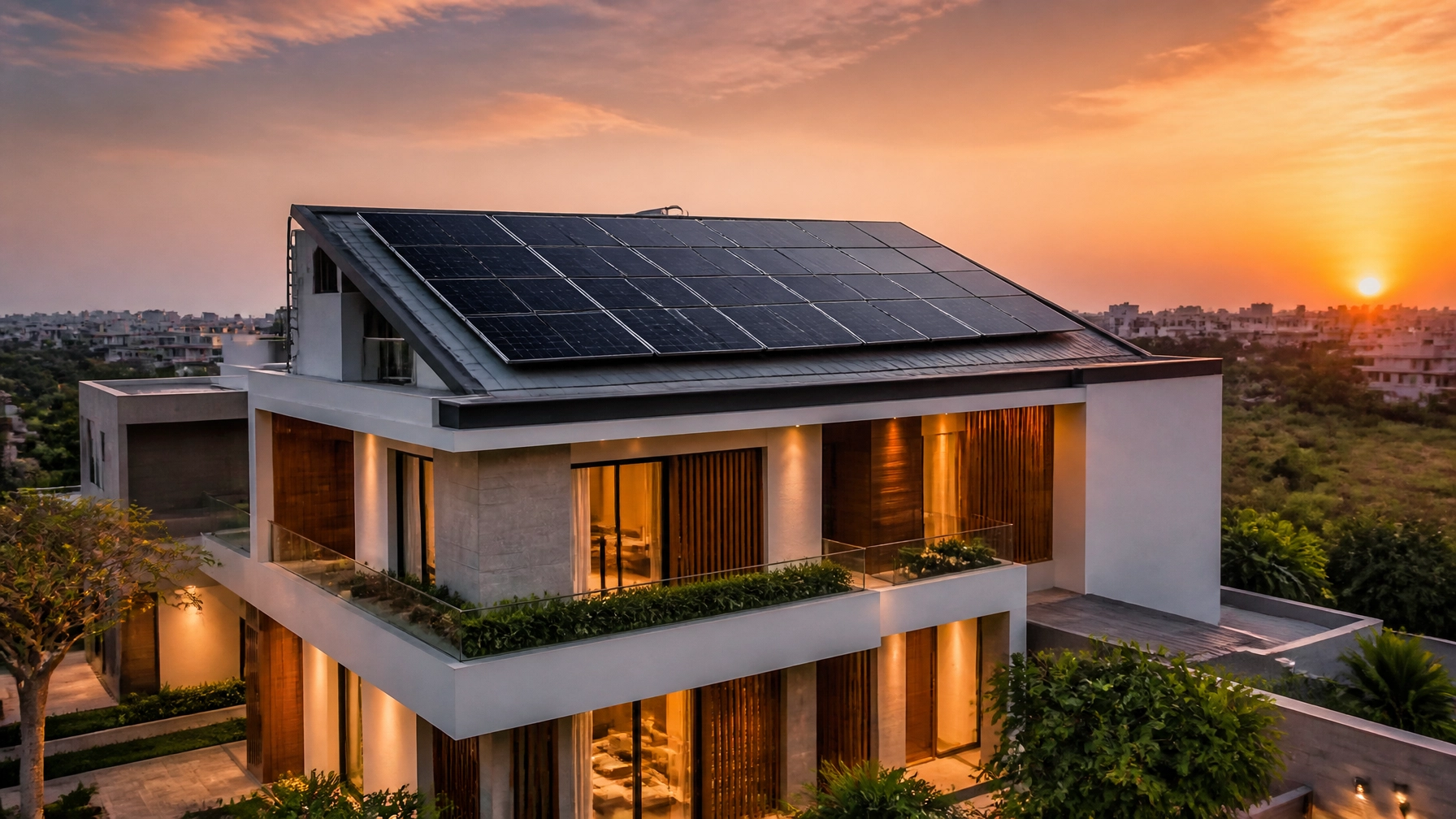

As we navigate the economic landscape of May 2026, the question is no longer whether renewable energy is viable, but rather how quickly it can be integrated into the average Indian household. Rooftop solar in 2026 has transitioned from a niche environmental statement to a central pillar of middle-class financial planning. At the heart of this energy revolution is a phenomenon many industry analysts are calling the "SolarSquare Surge." This full-stack startup has not only revitalized the residential energy sector but has also served as a primary catalyst for change in how urban India perceives power consumption.
The shift toward decentralizing energy production is part of a larger movement often referred to as the start-up flood in India. As traditional utility costs rise and government incentives reach an all-time high, the mission to solarize every rooftop has moved from a vision to a multi-billion-dollar reality.
1. The Exponential Growth of Rooftop Solar in 2026
The current year marks a definitive turning point. Statistics indicate that the Indian residential solar market is currently experiencing exponential growth, driven by a combination of technological maturity and aggressive policy support. With approximately 3 million homes already solarized and an addressable market of 70 million more, the headroom for expansion is staggering.
The primary driver for this acceleration is the realization that rooftop solar in 2026 offers more than just environmental benefits: it provides definitive energy independence. In an era where data-driven insights dominate decision-making, homeowners are increasingly viewing their rooftops as high-yield assets.

2. SolarSquare: A Full-Stack Disruptor
Founded by Neeraj Jain, Shreya Mishra, and Nikhil Nahar, SolarSquare began its journey in 2015 as a B2B corporate player. However, its strategic pivot to the B2C residential market in 2020 was a masterclass in essential business management for startups. By late 2024, the company secured a landmark $40 million Series B round led by Lightspeed, positioning it as the dominant leader in the residential space.
SolarSquare’s value proposition lies in its "full-stack" approach. Unlike traditional contractors who outsource various stages of the project, SolarSquare manages everything:
- Modular Design: Prefabricated systems that resemble "IKEA-style" assembly.
- Rapid Installation: Reducing the industry average of five days down to just eight hours.
- Consumer Financing: Bridging the gap between the ₹2 lakh upfront cost and long-term affordability.
3. The Policy Engine: PM Surya Ghar Muft Bijli Yojana
No discussion of the "SolarSquare Surge" is complete without acknowledging the role of the PM Surya Ghar: Muft Bijli Yojana. This central government initiative has been a legitimate purpose for the surge in adoption, with SolarSquare's leadership reporting a staggering 250% increase in uptake following the scheme's implementation.
By easing financing hurdles and improving transparency within the DISCOM (Distribution Company) network, the policy has democratized access to clean energy. It has removed the traditional bureaucratic friction that often discouraged early adopters, allowing companies like SolarSquare to scale their operations to over 50 cities across the nation.
4. Financial Innovation: Breaking the Upfront Cost Barrier
Historically, the primary deterrent for residential solar was the high initial investment. SolarSquare recognized that to achieve mass-market penetration, they needed to innovate on the financial front. By partnering with leading NBFCs and pursuing their own NBFC license, they have introduced long-tenure, point-of-sale loans that significantly reduce the EMI burden for households.
The goal is simple: ensure that the monthly EMI for the solar system is lower than the household's current electricity bill. This shift in the financial model has been a "catalyst for change," transforming a complex infrastructure project into a simple, data-driven savings plan.

5. Technical Precision and Smart Integration
The rooftop solar in 2026 landscape is increasingly defined by smart technology. Modern installations are no longer passive panels; they are part of a sophisticated electronic communications network. SolarSquare’s proprietary monitoring apps provide homeowners with real-time data on energy generation, consumption, and carbon footprint reduction.
This level of precision ensures that the "value proposition" remains transparent. When a customer can see exactly how much they saved in a single afternoon, the psychological barrier to adoption disappears. Furthermore, as India explores its new battery swap schemes and home storage solutions, the potential for these residential systems to integrate with the broader smart grid grows exponentially.
6. Navigating the Challenges of Mass Adoption
Despite the laudatory progress, challenges remain. The industry must maintain high standards of quality and after-sales service to ensure the long-term viability of these systems. SolarSquare has addressed this by standardizing its "IKEA-like" prefabricated kits, ensuring that every installation meets a rigorous professional benchmark regardless of the location.
As the "SolarSquare Surge" continues, the focus is shifting toward large-scale housing societies. Solarizing a single villa is a technical feat; solarizing a 200-unit apartment complex is a logistical triumph. By leveraging economies of scale and sophisticated engineering, the industry is proving that green energy can be both professional and profitable.

Conclusion
The surge in rooftop solar in 2026 represents more than just a shift in the energy mix; it is a fundamental restructuring of the Indian consumer’s relationship with utility providers. Led by visionaries like Shreya Mishra and backed by global giants like Elevation Capital and Lightspeed, SolarSquare has demonstrated that a full-stack, tech-driven approach is the only way to effectively democratize clean energy.
As we look toward the remainder of the decade, the mission is clear. With 70 million homes still awaiting solarization, the growth trajectory is set to remain steep. The SolarSquare surge is not just a corporate success story; it is the blueprint for a revitalized, energy-independent India. For business professionals and investors alike, the message is definitive: the sun is finally rising on the Indian residential rooftop. ☀️