


























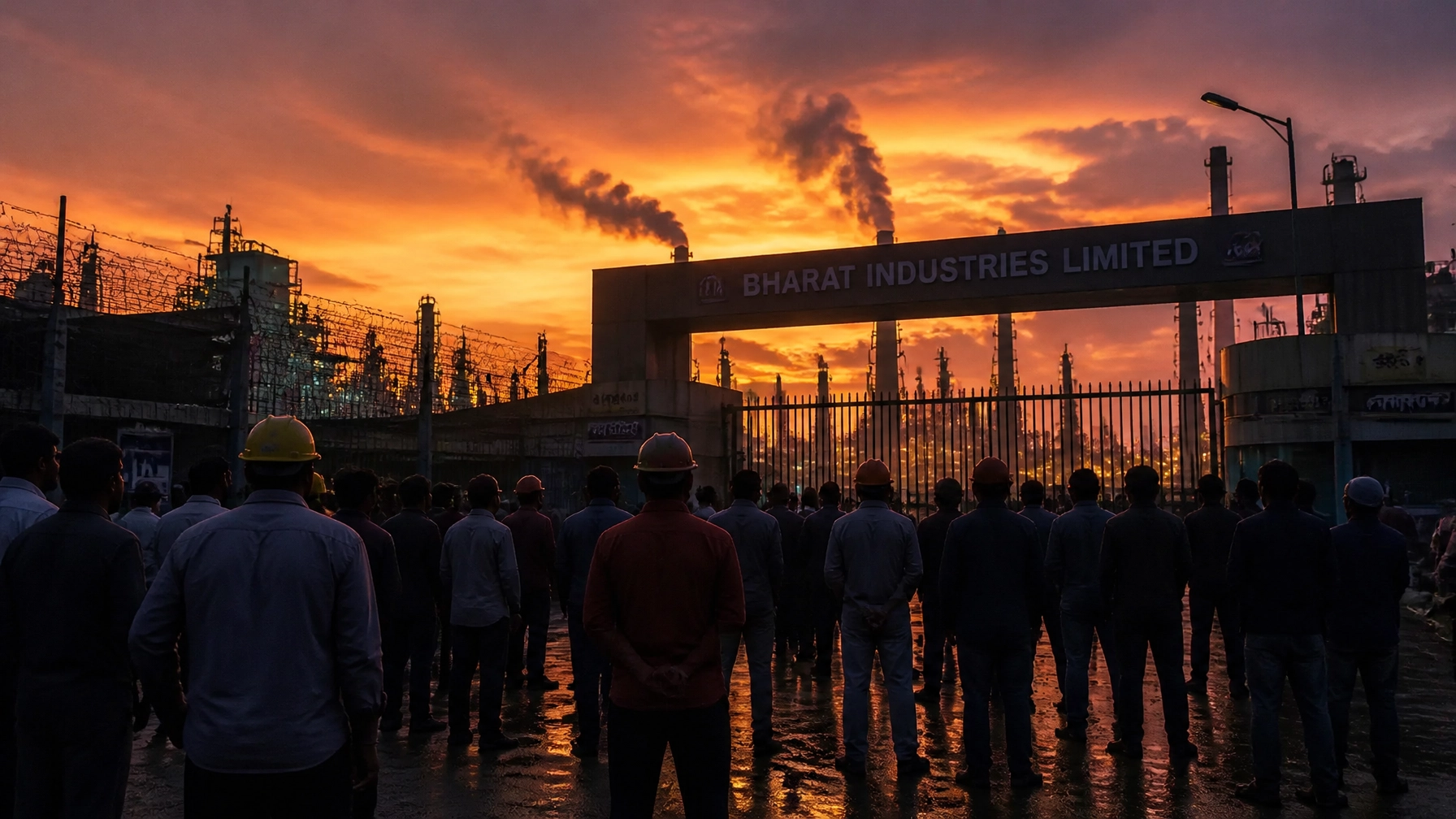

As India continues its trajectory toward becoming a global manufacturing powerhouse, the landscape of industrial relations has reached a critical juncture. The year 2026 has emerged as a catalyst for change, witnessing an unprecedented scale of labour trouble in India that spans across the National Capital Region (NCR) to the industrial hubs of the South. From the historic nationwide strike on February 12 to localized factory-floor agitations, the friction between workforce expectations and corporate operational mandates has intensified.
For business leaders, investors, and policy observers, understanding the root causes of this unrest is not merely an academic exercise; it is a prerequisite for navigating the complexities of the Indian market. The current wave of discontent is a multi-faceted phenomenon, driven by wage disparities, the transition to new regulatory frameworks, and the rising cost of living in urban industrial clusters.
1. The 2026 Crisis: A Confluence of Factors
The escalation of labour trouble in India throughout 2026 is not an isolated event but the culmination of several years of mounting pressure. While the economy has shown signs of being revitalized through digital transformation, the benefits have not permeated every layer of the shop floor.
The primary driver has been the widening chasm between stagnant wages and an aggressive cost-of-living surge. Reports indicate that workers in industrial belts, typically earning between ₹11,000 and ₹13,000 per month, have faced an inflation rate in basic commodities and fuel that has outpaced their income growth by nearly 10%. This "cost surge," coupled with delayed wage revisions, has turned stable industrial zones into flashpoints of agitation.
2. The Minimum Wage Divergence: NCR as the Epicenter
The National Capital Region, encompassing Delhi, Noida, Ghaziabad, and Manesar, has served as the primary theater for recent industrial unrest. The mission of achieving uniform industrial growth has been challenged by significant regional disparities in minimum wage policies.

In early 2026, the state of Haryana implemented a substantial hike in minimum wages, raising the floor for unskilled workers to approximately ₹15,220 per month. This move, while beneficial for the local workforce, created a massive wage gap with neighboring districts in Uttar Pradesh, such as Noida and Ghaziabad, where wages remained significantly lower.
This disparity triggered a wave of protests as workers within the same supply chains demanded parity. The resulting "wage war" forced the Uttar Pradesh government to announce a 21% hike in minimum wages to quell the unrest. However, the lag in implementation has led to ongoing friction, characterized by road blockades and disruptions that have impacted the "just-in-time" delivery models of many multinational corporations. For more detailed economic indicators, you can explore our economics section.
3. De-coding the Four Labour Codes: A Regulatory Transition
Central to the discourse on labour trouble in India is the implementation of the four central labour codes: the Code on Wages, Industrial Relations Code, Social Security Code, and the Occupational Safety, Health, and Working Conditions Code. While these codes were notified in 2025, the gap between notification and full-scale implementation has created a vacuum of uncertainty.

The government’s value proposition for these codes is to simplify the complex web of colonial-era laws and provide a framework that supports exponential growth. However, trade unions and labour advocates argue that certain provisions: such as those easing the norms for hiring and firing in units with up to 300 workers: undermine job security and collective bargaining rights.
From a corporate perspective, these codes are designed to provide data-driven insights into workforce management and reduce the compliance burden. Yet, the lack of clarity on state-specific rules has left both employers and employees in a state of flux. This transition period has become a primary grievance in the historic nationwide strikes observed in early 2026.
4. The Vulnerability of Contract Labour
A significant portion of the recent unrest has been driven by the "informalization" of the formal sector. Over 90% of India’s workforce operates within the informal economy or under short-term contracts. In many large-scale manufacturing units, contract workers perform tasks identical to those of permanent employees but without the same social security benefits or job security.

The recent protests in Noida and Manesar were largely mobilized by these contract workers, many of whom utilized social media and electronic communications networks to coordinate actions outside traditional union structures. This shift in mobilization tactics: bypassing formal leadership: makes the unrest more volatile and harder for management to negotiate.
The demand for the "regularization" of contract workers and the provision of basic facilities like canteens, rest areas, and health insurance has become a central theme. Businesses must recognize that maintaining a bifurcated workforce is increasingly becoming a risk factor that can disrupt production cycles and damage brand reputation. Insights into how these shifts affect the broader market can be found on our Latest Stories page.
5. Mitigating Unrest: A Roadmap for Enterprises
To navigate the current climate of labour trouble in India, enterprises must move beyond a reactive stance. The goal should be to create a sustainable industrial ecosystem that balances profitability with workforce welfare. Key strategies include:
- Transparent Wage Indexing: Aligning internal wage structures with regional inflation indices and competitor benchmarks to prevent "wage-gap" agitations.
- Early Engagement with Labour Unions: Establishing a legitimate purpose for dialogue before grievances escalate into strikes. Proactive communication regarding the impact of the new Labour Codes is essential.
- Investing in Social Security: Moving toward a model that provides better health and retirement benefits for contract workers, thereby reducing the "precariousness" that fuels unrest.
- Leveraging Technology for Grievance Redressal: Implementing digital platforms where workers can report issues safely, ensuring that management can address problems before they reach a breaking point.
As India seeks to democratize its economic gains, the role of the manufacturing sector is pivotal. However, this growth cannot be sustained without a stable and satisfied workforce.
Conclusion
The recent surge in labour trouble in India serves as a stark reminder that the country's industrial ambitions are intrinsically linked to its social fabric. The events of 2026: from the NCR wage protests to the debates over the Labour Codes: highlight a workforce that is increasingly aware of its rights and more connected than ever before.
While the government continues to refine the regulatory environment to attract FDI and boost the "Make in India" initiative, the responsibility of maintaining industrial harmony lies equally with corporate leadership. By prioritizing fair wages, social protection, and transparent communication, businesses can transform this period of unrest into an opportunity to build a more resilient and inclusive industrial future. For continued coverage of the Indian business landscape, stay tuned to Business Tantra.