
























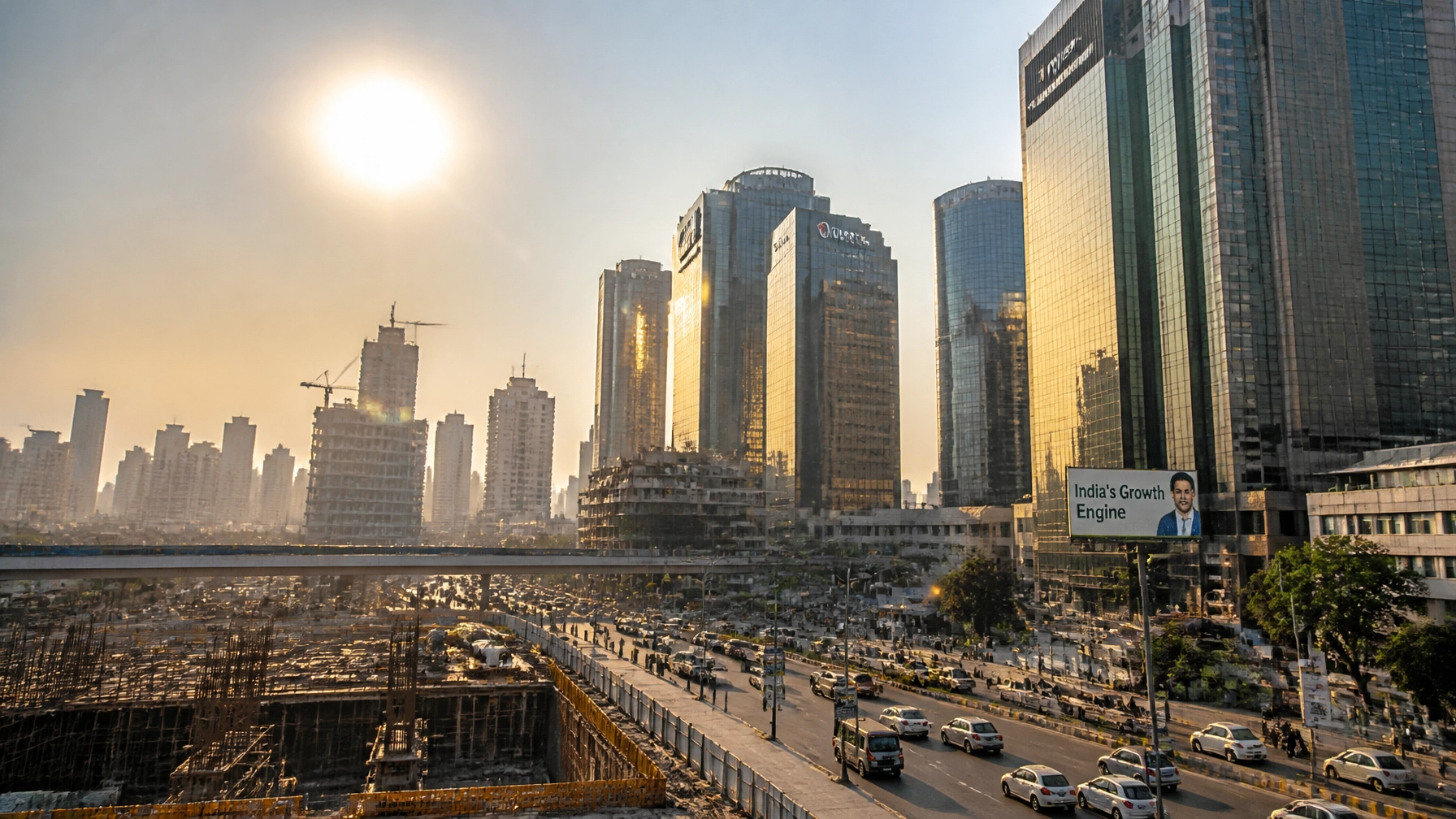

The blistering mercury levels sweeping across the subcontinent are no longer merely a seasonal inconvenience; they have evolved into a formidable macroeconomic headwind. As we navigate the fiscal landscape of 2026, the heat wave effects in Indian Business have become a central pillar of corporate risk assessment. From the sun-drenched fields of the agrarian heartland to the glass-and-steel boardrooms of Mumbai, the rising temperatures are recalibrating the very foundations of productivity, operational costs, and consumer behavior.
Recent data underscores the gravity of the situation. In 2024 alone, heat exposure resulted in a staggering loss of approximately 247 billion potential labor hours: a 124% increase compared to the 1990s baseline. This translates into a potential income loss of nearly US$194 billion. For a nation striving for exponential growth and a $5 trillion economy, these climatic disruptions act as a "thermal tax" that threatens to revitalize old inefficiencies if left unaddressed.
1. The Erosion of Human Capital and Labor Productivity
The most immediate and visceral impact of extreme heat is the decline in labor capacity. When the wet-bulb temperature reaches critical levels, the human body’s ability to self-regulate through perspiration is compromised, leading to fatigue, cognitive decline, and significant health risks.
In sectors like construction and logistics: the vital arteries of the Indian infrastructure boom: the heat wave effects in Indian Business are particularly acute. Workdays are often truncated or shifted to nocturnal hours, leading to project delays and increased labor costs. According to the International Labour Organization (ILO), India could lose 34 million jobs by 2030 due to heat-stress-induced productivity decline. For business leaders, this necessitates a "mission-critical" shift toward worker welfare, including revitalized hydration protocols, mandatory cooling breaks, and the implementation of wearable tech to monitor heat stress in real-time.
2. Agriculture: The Fragile Foundation of the Supply Chain

Agriculture remains the backbone of the Indian economy, accounting for over 66% of heat-related labor hour losses. The thermal stress does not only affect the workforce but also the yields themselves. Heat waves during the "terminal ripening" phase of crops like wheat can lead to shriveled grains and reduced harvests, a phenomenon observed with increasing frequency in states like Punjab and Haryana.
For the corporate sector, this translates into high-volatility input costs. Food processing companies, FMCG giants, and retail chains face supply chain disruptions that necessitate sophisticated hedging strategies. As reported by Outlook Business, agriculture alone accounted for over $72 billion of heat-related income loss in recent cycles. To democratize resilience, agribusinesses are increasingly investing in climate-resilient seeds and precision irrigation systems, framing these not just as tools, but as transformative solutions for food security.
3. Manufacturing and MSMEs: The Hidden "Heat Tax"

The manufacturing sector, particularly Micro, Small, and Medium Enterprises (MSMEs), faces a unique set of challenges. Unlike large-scale industrial plants that may have centralized HVAC systems, many MSMEs operate in environments where heat management is rudimentary.
During peak heat spells, productivity in these units can drop by as much as 20%. Machines overheat, maintenance cycles shorten, and the quality of output can become inconsistent. Furthermore, the heat wave effects in Indian Business manifest as a "three-month low" in new order growth, as noted during the 2024 heat wave. For manufacturers, the value proposition now lies in energy-efficient cooling and the adoption of automation to reduce human exposure to extreme thermal environments. At Business Tantra, we recognize that the digital transformation of these SMEs is essential to maintain India's industrial competitive edge.
4. Energy Demand and Infrastructure Equilibrium

The surge in temperature triggers an exponential growth in power demand, primarily driven by cooling requirements. In May 2024, India's peak power demand touched a record 271 GW. This puts immense strain on the national grid, leading to sporadic blackouts and a heavy reliance on expensive peaking power.
For businesses, this creates a dual financial burden:
- Elevated Operational Costs: Rising electricity tariffs and the necessity of diesel-backed redundancy increase the cost of doing business.
- Infrastructure Risk: The threat of grid failure can halt production lines and damage sensitive electronic equipment.
To mitigate this, forward-thinking enterprises are transitioning toward on-site renewable energy and sophisticated energy management systems. By utilizing data-driven insights to load-shift heavy operations to cooler hours, companies can navigate the energy peak more effectively.
5. Macroeconomic Implications for 2026 and Beyond

Looking toward the remainder of 2026, the macroeconomic outlook suggests that heat waves are no longer "black swan" events but a "new normal." Analysts at Business Standard warn that these thermal shocks could shave off 2.5% to 4.5% of India’s GDP annually by 2030.
The heat wave effects in Indian Business also extend to consumer behavior. While there is a seasonal boom for cooling appliances and beverages, the broader "discretionary spend" often takes a hit as households reallocate budgets toward rising medical bills and utility costs. This shift requires retailers to be more agile, utilizing modern digital tools and networking to maintain customer engagement even during the "summer slump."
6. Strategic Adaptation: Building a Heat-Resilient Business Model
To thrive in this revitalized climatic reality, Indian businesses must move beyond reactive measures and adopt a proactive "mission" of resilience. This includes:
- Workforce Re-engineering: Implementing flexible shifts and "cool-corridors" in warehouses and factories.
- Infrastructure Hardening: Investing in green roofs, reflective coatings, and high-efficiency HVAC systems that utilize IoT for predictive maintenance.
- Financial Resilience: Engaging with insurance providers to explore climate-linked derivatives that protect against revenue loss during extreme heat events.
- Supply Chain Transparency: Using blockchain and AI to track the impact of heat on perishable goods, ensuring quality control from farm to fork.
Conclusion
The heat wave effects in Indian Business represent one of the most significant challenges of our time, yet they also provide a catalyst for change. By acknowledging the legitimate purpose of climate adaptation, Indian enterprises can lead the world in developing sustainable, heat-resilient operational models. The transition from viewing heat as an external threat to an internal operational variable is essential for maintaining the momentum of the Indian growth story.
As we look toward 2027 and beyond, the winners in the Indian market will be those who integrate climate intelligence into their core business strategy, ensuring that while the temperatures may rise, their productivity and profitability remain steadfast.