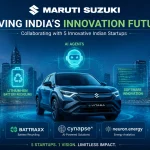






















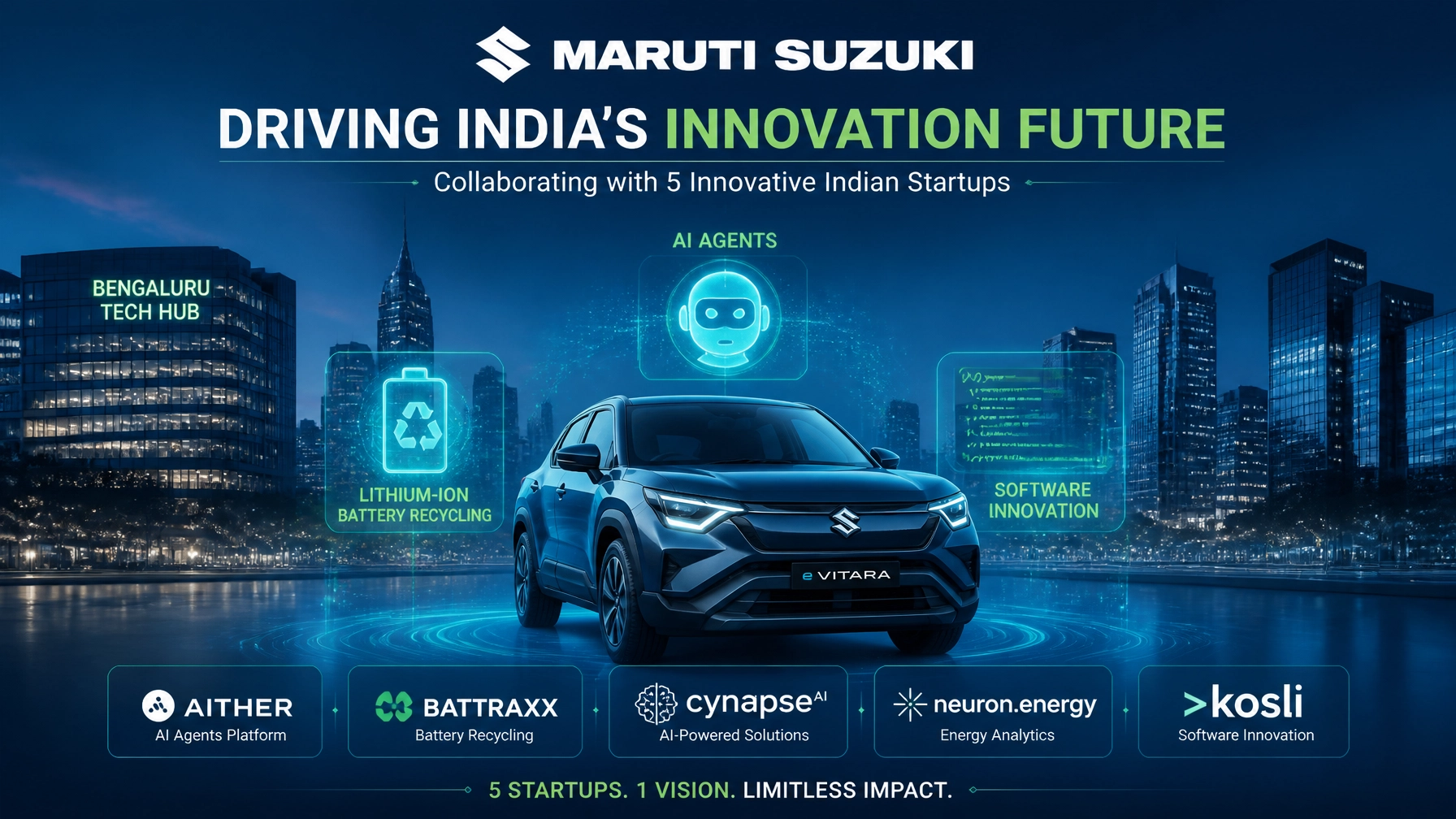

The Indian automotive landscape is undergoing a monumental shift, not just in terms of electrification, but through the integration of deep-tech ecosystems. On June 29, 2026, Maruti Suzuki India Limited (MSIL) further solidified its position as a catalyst for change by announcing the onboarding of five pioneering companies from its 5th cohort of the Maruti Suzuki Incubation Program (MSIP). This latest installment of startup news India highlights a strategic move to "democratize" high-end technology across its manufacturing, procurement, and customer engagement sectors.
Partnering with the Nadathur S. Raghavan Centre for Entrepreneurial Learning (NSRCEL) at IIM Bangalore, Maruti Suzuki has spent the last seven years meticulously screening approximately 7,400 startups to find those capable of delivering "exponential growth." The 5th cohort winners: MiniMines, Sarvam AI, Easework AI, Siftly, and CodeMate AI: represent a diverse cross-section of the Indian startups list, ranging from circular economy champions to Generative AI innovators.
The MSIP Vision: Orchestrating Industry 4.0
The Maruti Suzuki Incubation Program is more than a traditional mentorship initiative; it is a collaborative platform designed to co-create solutions for real-world industrial challenges. By integrating these nimble startups into its vast operational framework, Maruti Suzuki is revitalizing its internal processes and ensuring its value proposition remains unmatched in an increasingly competitive market.
According to Hisashi Takeuchi, Managing Director & CEO of Maruti Suzuki India, the mission is to leverage "data-driven insights" and "agentic AI" to optimize everything from the factory floor to the final customer touchpoint. This synergy between a corporate giant and agile innovators serves as a benchmark for the latest business stories coming out of India.
1. MiniMines: Closing the Loop on EV Batteries
As India accelerates toward electric mobility, the management of end-of-life lithium-ion batteries has become a critical environmental and economic concern. MiniMines has emerged as a frontrunner in this space by developing a proprietary process for the legitimate purpose of recycling used batteries and extracting precious materials like lithium, cobalt, and nickel.

For Maruti Suzuki, the onboarding of MiniMines is a "transformative solution" for sustainability. By recovering critical metals, MiniMines helps build a circular economy that reduces dependence on imported raw materials. This focus on environmental performance is essential for any modern automotive leader aiming for carbon neutrality.
2. Sarvam AI: Democratizing Multilingual Customer Support
In a country as linguistically diverse as India, providing consistent customer service across digital channels is a monumental task. Sarvam AI addresses this by building Generative AI agents capable of high-fidelity interaction in multiple Indian languages.

By utilizing Sarvam AI’s technology, Maruti Suzuki aims to enhance its customer engagement across all touchpoints: from digital showrooms to service support. These GenAI agents provide a more natural, "human-like" experience for users, regardless of their native tongue. In the context of fintech news India, such AI-driven customer interfaces are also becoming the gold standard for banking and financial services, proving the cross-industry utility of Sarvam’s platform.
3. Easework AI: The Rise of Agentic Procurement
Procurement for a giant like Maruti Suzuki involves thousands of indirect consumables and complex approval workflows. Easework AI introduces "agentic AI": autonomous agents that can orchestrate end-to-end procurement tasks with minimal human intervention.

This automation of "electronic communications networks" within the supply chain significantly reduces manual errors and lead times. By deploying Easework AI, Maruti Suzuki is essentially "revitalizing" its procurement office, allowing human employees to focus on strategic decision-making rather than repetitive administrative tasks.
4. Siftly and CodeMate AI: Marketing and Dev Efficiency
The remaining two startups in this impressive Indian startups list focus on the digital and software infrastructure of the company:
- Siftly: Utilizes GenAI tools to enhance brand visibility. By analyzing vast amounts of consumer data, Siftly helps Maruti Suzuki optimize its digital marketing campaigns and ensure its brand presence remains dominant in a crowded digital landscape.
- CodeMate AI: Focuses on the developer experience. By providing AI-powered dev tools, CodeMate AI enables Maruti Suzuki’s internal software teams to build and deploy business applications with unprecedented speed, effectively shortening the product development lifecycle.
The Economic Impact: A New Era for Indian Innovation
The inclusion of these startups into the Maruti Suzuki ecosystem is a strong signal for the startup category in India. It demonstrates that large-scale corporations are now willing to bet on domestic innovation to solve high-stakes industrial problems.
Furthermore, the integration of automation and AI-driven procurement tools reflects broader trends often seen in fintech news India, where efficiency and data-driven security are paramount. As these startups scale with Maruti Suzuki, they gain the "legitimate purpose" and credibility needed to attract further global investment, driving India’s position as a global tech hub.
Conclusion
The onboarding of the 5th MSIP cohort marks a significant milestone in Maruti Suzuki’s journey toward a tech-first future. By fostering a diverse Indian startups list that covers everything from sustainability (MiniMines) to advanced automation (Easework AI, Sarvam AI), the automaker is building a resilient and future-ready business model.
This partnership with NSRCEL at IIM Bangalore serves as a vital bridge between academic excellence and industrial application. As these five startups begin their integration, the primary impact will be felt in enhanced operational efficiency, superior customer experiences, and a more sustainable automotive ecosystem. For the Indian startup community, this is a definitive win that underscores the power of corporate-startup collaboration in driving national economic growth.