

























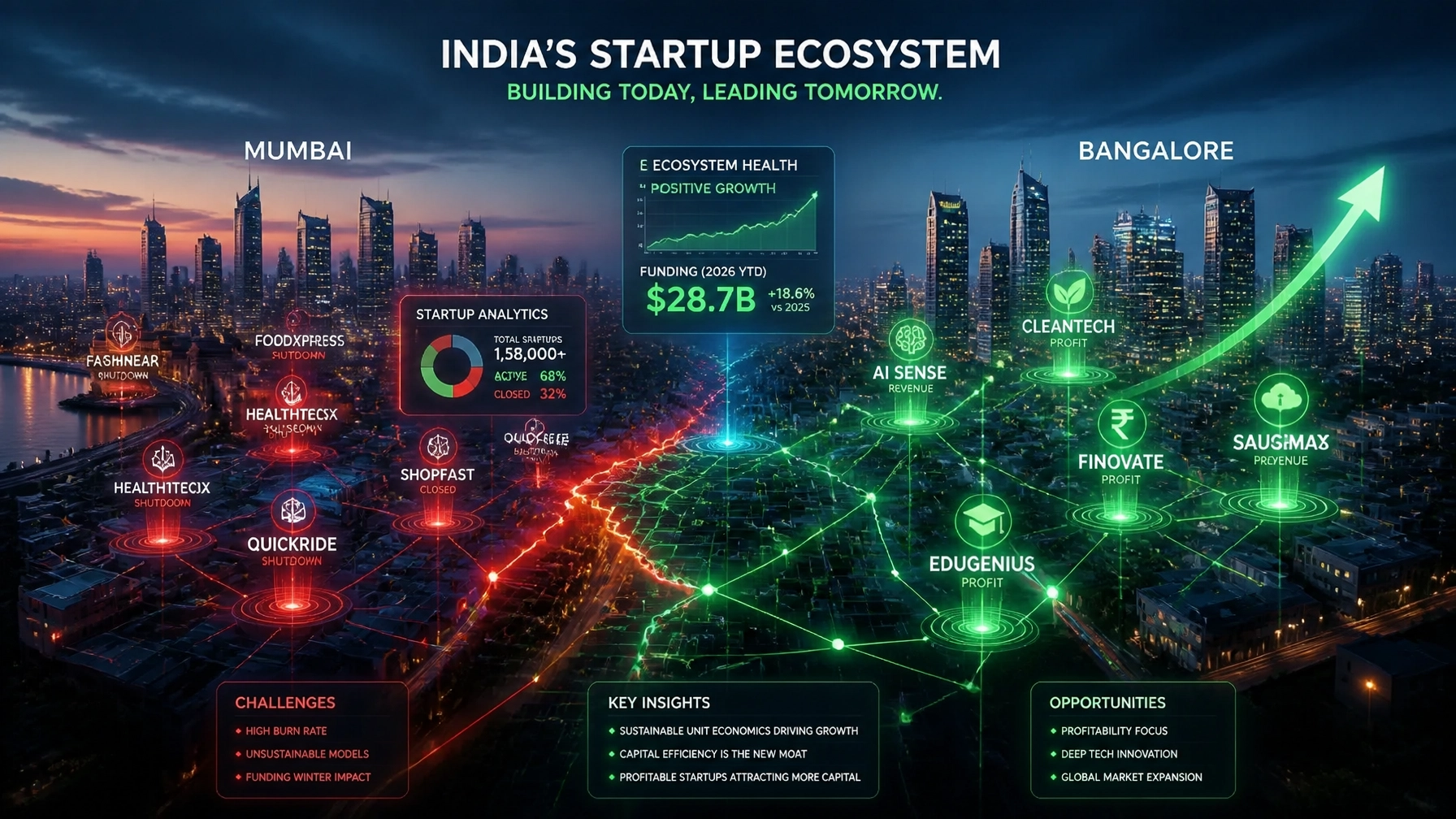

The year 2025 has etched itself into the history of the Indian startup ecosystem not as a year of unbridled expansion, but as a period of profound introspection. According to analytical estimates credited to industry observers like Divyansh Agrawal, a staggering 11,223 startups ceased operations in India during 2025. This figure represents more than just a chilling statistic; it serves as a definitive reality check for entrepreneurs, investors, and policymakers alike.
For nearly a decade, the narrative surrounding Indian innovation was dominated by hyper-valuations, "burn-to-earn" strategies, and the relentless pursuit of unicorn status. However, the market has undergone a fundamental transformation. The era of growth at any cost has been replaced by a rigorous demand for sustainable revenue, real problem-solving, and robust cash flow. While the high number of closures might seem alarming at first glance, many industry experts view this as a catalyst for change: a necessary pruning that paves the way for a more resilient and revitalized corporate landscape.
1. From Valuation to Viability: The Pivot of 2025
The primary driver behind the significant number of startup closures in 2025 was the collective shift in investor sentiment. In previous years, the Indian startup ecosystem was fueled by abundant liquidity and a "fear of missing out" (FOMO) among venture capitalists. This often led to inflated valuations that were detached from the underlying economic reality of the business models.
As global interest rates remained elevated and the "funding winter" persisted into the mid-2020s, the focus shifted from vanity metrics to unit economics. Startups that lacked a clear path to profitability found it increasingly difficult to secure follow-on funding. The market began to democratize success by rewarding those who could demonstrate tangible value rather than just exponential user growth. This transition has forced founders to prioritize essential business management over aggressive marketing spends, ensuring that the next wave of companies is built on a bedrock of financial stability.

2. Decoding the 11,223 Closures: Not a Collapse, but a Cleaning
When examining the 11,223 shutdowns, it is vital to distinguish between the broader ecosystem and the officially recognized entities. Data from the Department for Promotion of Industry and Internal Trade (DPIIT) typically tracks a smaller subset of "recognized" startups, reporting far fewer official deregistrations. However, the five-figure estimate encompasses the wider landscape, including thousands of unregistered ventures and entities that simply became dormant.
A significant portion of these closures occurred in the B2C e-commerce and consumer internet sectors. These industries were previously saturated with startups offering heavily subsidized services, from 10-minute grocery deliveries to ultra-discounted fashion. Once the "legitimate purpose" of these subsidies: customer acquisition: failed to translate into long-term loyalty or profitable margins, the businesses became unsustainable.
This high attrition rate signifies a "market correction." Much like the dot-com bubble of the early 2000s, the current shakeout is removing fragile, capital-dependent models while leaving room for startups that have successfully pivoted or those addressing deep-seated structural gaps in the Indian economy.
3. The End of "Growth at All Costs" in the Indian Startup Ecosystem
The "growth at all costs" fallacy has been one of the most detrimental legacies of the previous funding cycle. Entrepreneurs were often incentivized to burn cash to capture market share, under the assumption that profitability would follow once a monopoly was established. In 2025, the market decisively rejected this premise.
Today’s successful ventures are characterized by:
- Sustainable Revenue Streams: Moving away from heavy discounting toward value-based pricing.
- Operational Efficiency: Utilizing data-driven insights to optimize supply chains and reduce overheads.
- Governance and Compliance: Establishing rigorous internal controls to build trust with institutional investors and regulatory bodies like SEBI.
For many, the realization that they were not cut out for the grueling demands of entrepreneurship came too late. The 2025 reality check has emphasized that starting a business is relatively accessible, but ensuring its survival requires a level of fiscal discipline that was previously undervalued.

4. Sectoral Shifts: Why Deep Tech is Rising While B2C Corrects
While the 11,223 shutdowns paint a somber picture for consumer-facing apps, other segments of the Indian startup ecosystem are experiencing a resurgence. There is a noticeable migration of capital toward Deep Tech, Clean Tech, and SaaS (Software as a Service) platforms that offer clear ROI to their clients.
According to reports by Inc42 and Tracxn, investment in Indian Deep Tech startups nearly doubled in the first half of 2025 compared to the previous year. These companies are working on fundamental innovations in semiconductors, space technology, and AI-driven healthcare. Unlike the B2C sector, these ventures are built on proprietary intellectual property and "electronic communications network" infrastructure that provide a competitive moat, making them far more resilient to temporary market fluctuations.
Furthermore, regional hubs like T-Hub in Telangana are increasingly focusing on incubating product-led companies rather than service-oriented ones, further strengthening the nation's technical core.
5. Navigating the 2026 Landscape: Resilience over Hype
As we move further into 2026, the blueprint for success has been rewritten. The next generation of Indian unicorns will not be defined by their ability to raise massive rounds of capital, but by their ability to generate strong cash flow and build lasting trust with their stakeholders.
Resilience has become the new valuation. Founders are now expected to be "cockroach startups": entities that can survive harsh economic conditions by maintaining lean operations and focusing on core competencies. This shift is not the end of India's startup story; it is the beginning of a more mature, professionalized chapter. The focus is now on building long-term value, ensuring that the businesses created today will still be relevant and profitable a decade from now.

Conclusion
The 11,223 startup shutdowns in 2025 mark a pivotal turning point for the Indian startup ecosystem. While the loss of so many ventures is undeniably difficult, it has purged the market of unsustainable practices and redirected focus toward fundamental business principles. By moving from hype to high-value models, the ecosystem is laying the groundwork for more stable, impactful, and globally competitive enterprises. The "Great Reality Check" may have been a bitter pill to swallow, but it has undoubtedly set the stage for a healthier, more prosperous era of Indian entrepreneurship.