


























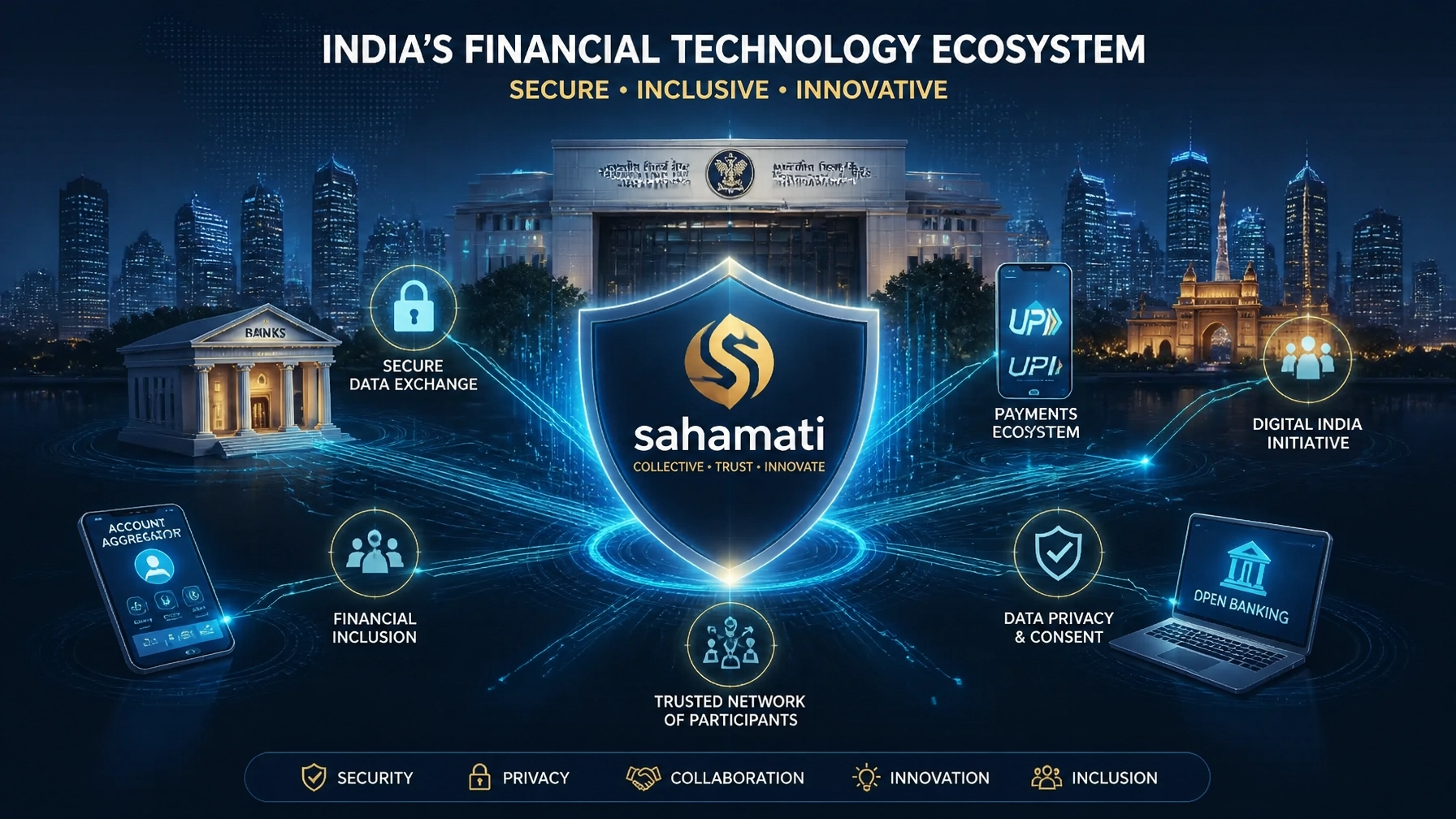

The Indian financial landscape has recently witnessed a pivotal institutional evolution that promises to redefine the paradigms of data-driven finance. On June 5, 2026, the Reserve Bank of India (RBI) officially recognized the Sahamati Foundation as the Self-Regulatory Organization (SRO) for the Account Aggregator Ecosystem. This landmark decision is not merely a regulatory administrative update; it is a catalyst for change that signals a sophisticated maturation of India’s digital public infrastructure.
For the uninitiated, the Account Aggregator (AA) framework is a cross-sectoral initiative that facilitates the secure, consent-based exchange of financial information between various regulated entities. By elevating Sahamati to the status of an SRO-AA, the RBI has effectively democratized the governance of this network, ensuring that the industry itself takes the lead in maintaining technical standards, ethical compliance, and consumer trust.
1. Decoding the Account Aggregator Ecosystem
To understand the magnitude of this development, one must first grasp the core architecture of the Account Aggregator Ecosystem. At its heart, the AA framework is designed to eliminate the friction associated with traditional paper-based or screen-scraping methods of financial data sharing. It operates as a neutral intermediary that facilitates the movement of data but never "sees" or stores it.
The ecosystem comprises three primary architectural participants:
- Financial Information Providers (FIPs): These are the repositories of customer data, such as banks, insurance companies, and tax departments.
- Financial Information Users (FIUs): These are regulated entities that consume data to provide services like lending, wealth management, or insurance.
- Account Aggregators (AAs): The digital conduits that orchestrate the consent-based transfer of data from FIPs to FIUs.
As of the RBI’s June 2026 announcement, the ecosystem has reached an exponential growth phase, boasting over 1,120 live regulated financial entities, including 176 FIPs and 1,020 FIUs. This network is supported by 17 operational Account Aggregators, creating a robust web of interoperable financial intelligence.

2. Sahamati’s Ascension: The Role of a Self-Regulatory Organization
The recognition of Sahamati as the SRO-AA marks a strategic shift from direct central oversight to a more nuanced, industry-led governance model. An SRO acts as a bridge between the regulator (RBI) and the market participants. By empowering Sahamati, the RBI is leveraging the foundation's deep technical expertise and industry rapport to enforce discipline and revitalize innovation within the Account Aggregator Ecosystem.
The responsibilities of Sahamati in this new capacity are multi-faceted and rigorous. It is tasked with developing operational standards that ensure seamless data portability while maintaining a "legitimate purpose" for every data request. This institutional arrangement is designed to prevent market fragmentation and ensure that every participant, from the largest public sector bank to the most agile fintech startup, adheres to a unified code of conduct.
For those navigating the complexities of modern business models, understanding these regulatory structures is vital. Much like how business management for startups is essential for sustainable growth, a robust SRO is essential for the stability of a nation-scale data network.
3. The Four Pillars of Sahamati’s Governance
Under the new SRO framework, Sahamati will focus on four critical pillars to fortify the Account Aggregator Ecosystem:
I. Technical and Operational Standards
While the Reserve Bank Information Technology Pvt Ltd (ReBIT) continues to define the underlying technical specifications, Sahamati is responsible for the practical implementation and evolution of these standards. This ensures that the electronic communications network remains secure and interoperable across different sectors like banking, securities, and insurance.
II. Governance and Compliance
Sahamati will implement a rigorous oversight mechanism to monitor the behavior of AAs, FIPs, and FIUs. By establishing industry best practices, the SRO ensures that data-driven insights are generated ethically and that user privacy remains sacrosanct. This revitalized focus on compliance is intended to build the "trust infrastructure" necessary for mass adoption.
III. Dispute Resolution Mechanisms
In a system processing millions of consent requests, disputes are inevitable. Sahamati will act as a primary arbitrator, providing a neutral platform for resolving technical glitches, data discrepancies, or consumer grievances. This reduces the burden on the judiciary and the central bank, providing a faster, more efficient path to resolution.
IV. Industry-Wide Interoperability
By acting as a neutral, industry-led coordination body, Sahamati ensures that the AA framework does not become a series of "walled gardens." It promotes a culture of collaboration where data can flow securely across diverse platforms, much like the interconnected nature of India’s top business growth networks.

4. Why This Matters for the Indian Economy
The maturation of the Account Aggregator Ecosystem under Sahamati’s stewardship is a transformative solution for India’s credit gap. For decades, small and medium enterprises (SMEs) have struggled to access formal credit due to a lack of "collateral" or a formal "credit history."
The AA framework changes this by enabling "Information Collateral." A small business owner can now share their GST data, bank statements, and insurance records with a lender in seconds via a secure AA. This allows lenders to move from asset-backed lending to cash-flow-based lending, providing a massive boost to the MSME sector.
The economic implications are profound:
- Democratization of Credit: High-quality financial services are no longer the exclusive preserve of the urban elite.
- Operational Efficiency: The cost of customer acquisition and data verification for banks is slashed, leading to lower interest rates for borrowers.
- National Security and Data Sovereignty: By keeping Indian financial data within a regulated, consent-based domestic framework, India strengthens its "Sovereign AI" and data security posture.
5. Strategic Roadmap for Businesses and Fintechs
For entrepreneurs and business leaders, the rise of the SRO-AA presents a unique value proposition. Whether you are building a new fintech product or managing a legacy financial institution, the Account Aggregator Ecosystem offers a wealth of opportunities to enhance customer experience.
- Integrate Early: Businesses that integrate with the AA framework early will gain a significant competitive advantage in terms of data-driven decision-making and customer onboarding speed.
- Focus on Consent-Architecture: Privacy is no longer an afterthought; it is a feature. Design your user interfaces to prioritize clear, granular consent.
- Leverage Ecosystem Insights: Use the cross-sectoral data (insurance, pension, tax) to build more personalized financial products.
Just as T-Hub helps startups turn ideas into products, the Sahamati-led AA ecosystem provides the raw material: data: to build the next generation of financial services.

Conclusion
The Reserve Bank of India’s recognition of Sahamati as the SRO-AA is a definitive milestone in the journey toward a truly digital and inclusive financial system. By establishing a neutral, industry-led body to oversee the Account Aggregator Ecosystem, the RBI has ensured that the framework is not just technologically advanced but also ethically grounded and operationally resilient.
As we move forward, the success of this mission will depend on the collective participation of all stakeholders: from regulators and fintechs to the end consumers who finally hold the keys to their own data. The transition from abstract industry trends to a concrete operational reality is now complete. We are standing at the threshold of a new era where financial data is no longer a burden to be managed, but a transformative asset to be utilized for the greater economic good of India. 🇮🇳