

























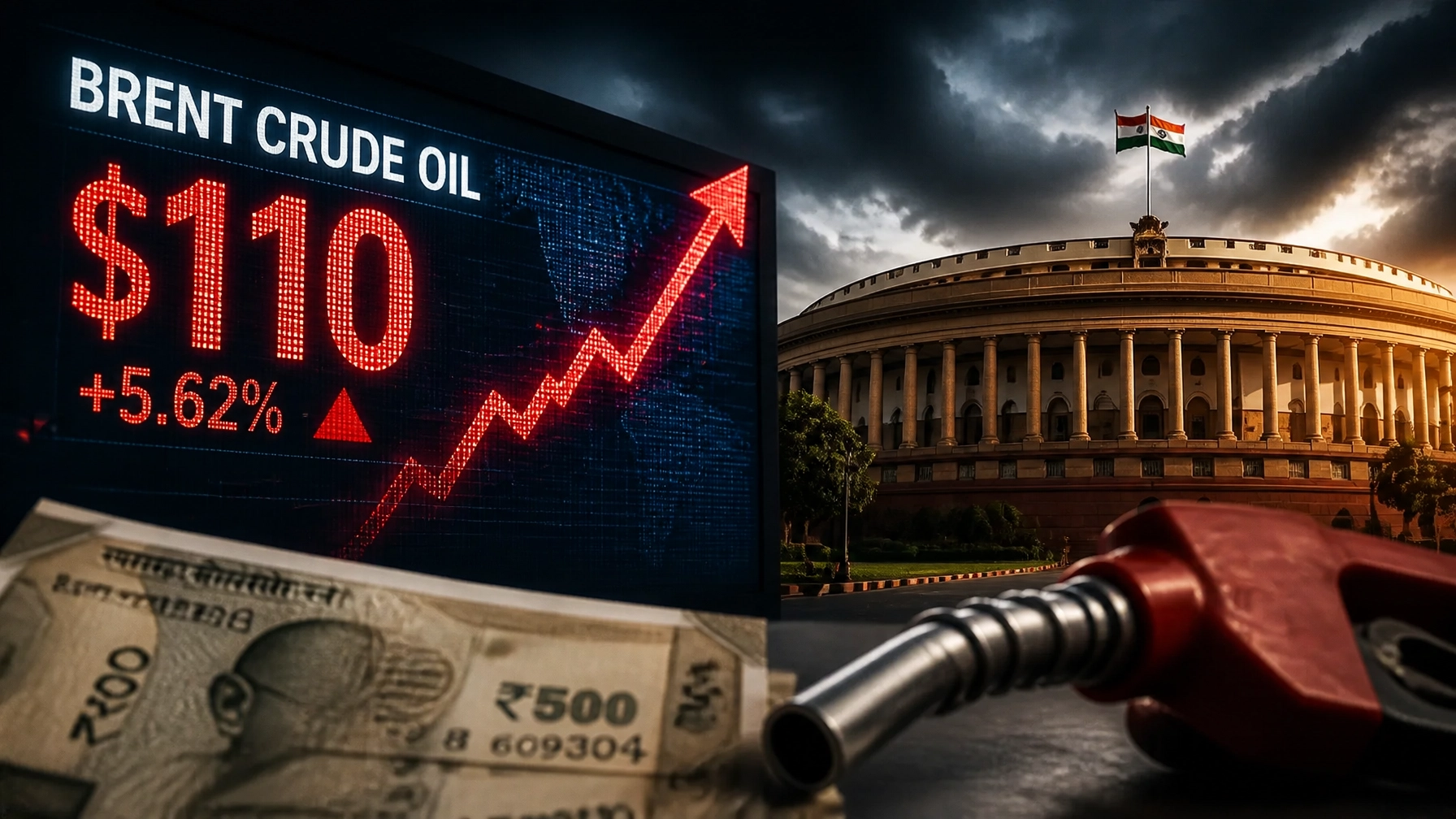

The global energy landscape has been thrown into a state of volatility as Brent crude oil prices breached the psychological threshold of $110 per barrel in May 2026. For an emerging powerhouse like the economy of India, which relies on imports for over 85% of its crude requirements, this surge is not merely a number on a ticker tape, it is a significant catalyst for change across every sector. From the kitchens of middle-class households to the boardrooms of Mumbai's financial district, the ripples of this "black gold" shock are being felt with increasing intensity.
As high fuel prices begin to permeate the supply chain, investors and analysts are closely monitoring financial news India outlets for signs of a prolonged inflationary spiral. The question is no longer whether $110 oil is "bad," but rather how resilient India's fiscal architecture will be in the face of such a sustained external shock.
The Tectonic Shift in the Economy of India
The relationship between crude oil and the economy of India is historically inverse: as oil prices rise, macroeconomic indicators typically decline. When Brent crude averages above the $100 mark for an extended period, it exerts immense pressure on the country's "twin deficits", the Current Account Deficit (CAD) and the Fiscal Deficit.
1. The Inflationary Ripple Effect
Every $10 increase in the price of crude oil is estimated to add approximately 40 to 60 basis points to India's Consumer Price Index (CPI). With oil at $110, experts predict that inflation could potentially shoot above the 5.5% mark, drifting away from the Reserve Bank of India’s (RBI) ideal target of 4%. This is not just about the price at the petrol pump; it is about the "indirect impact."
- Logistics & Freight: Over 70% of India's domestic freight moves by road. Higher diesel prices lead to immediate hikes in transportation costs.
- FMCG & Food: When the cost of moving grains and vegetables from farms to cities rises, the common citizen pays more for daily essentials.
- Manufacturing: Petrochemicals, fertilizers, and plastics all use oil derivatives as primary inputs, leading to "input cost inflation" for manufacturers.

Financial News India: The Fiscal Tightrope Walk
According to recent financial news India reports, the government is facing a "Catch-22" situation. If the administration passes the full cost of $110 oil to consumers, inflation could derail the post-2025 growth momentum. However, if the government chooses to cushion the blow by cutting excise duties, it risks widening the fiscal deficit beyond the projected 4.5% of GDP.
Current projections suggest that a sustained $110 price point could push the fiscal deficit toward 5.2% to 5.3%, potentially affecting India's sovereign credit outlook. This delicate balance is a recurring theme in Indian business updates, where the focus has shifted from expansion to margin preservation.
2. The Rupee’s Vulnerability
As the oil import bill swells, costing an additional $16.7 billion for every $10 rise in prices, the demand for US Dollars increases. This naturally puts the Indian Rupee (INR) under downward pressure. A weaker Rupee, in turn, makes all other imports (electronics, machinery, etc.) more expensive, creating a secondary layer of "imported inflation."

Sectoral Impact: Winners and Losers
While the broader economy faces headwinds, the impact is unevenly distributed across the corporate landscape.
- Aviation & Paint: These sectors are highly sensitive to oil prices. Aviation Turbine Fuel (ATF) accounts for nearly 40% of an airline's operating cost. Expect ticket prices to soar.
- Upstream Oil Companies: Companies like ONGC and Oil India may see higher realizations for their domestic production, though the government often imposes "windfall taxes" to capture these extraordinary profits.
- Electric Vehicles (EVs): High fuel prices act as a natural "catalyst for change," accelerating the adoption of India's new battery swap scheme and pushing consumers toward electric mobility.
Indian Business Updates: The Policy Response
The Reserve Bank of India (RBI) remains the primary line of defense. In recent high-level meetings, the consensus has moved toward a "hawkish" stance. If oil remains at these elevated levels, the likelihood of interest rate cuts in 2026 diminishes, and we might even see preemptive rate hikes to stabilize the currency and anchor inflation expectations.

Corporate leaders are also adjusting their strategies. As noted in recent discussions on startup management, the focus for 2026 has shifted from "growth at any cost" to "sustainable profitability." In an environment of high energy costs, operational efficiency is no longer a luxury, it is a survival requirement.
Strategic Energy Security: The Long-Term Play
India's strategy to mitigate such shocks involves diversifying its energy basket. This includes increasing the share of renewables and strengthening bilateral ties with major energy producers. The strategic energy partnership between India and Russia has been one such pillar, allowing for discounted crude imports that have partially shielded the domestic market from the full brunt of global price spikes.

Conclusion
Is $110 crude oil bad? Defininitively, yes: for a country that thrives on affordable energy to power its industrial and agricultural engines. The current price surge threatens to widen the fiscal gap, dampen consumer spending, and slow the overall growth trajectory of the economy of India.
However, the silver lining lies in the accelerated transition toward energy efficiency and green alternatives. While the immediate term will be characterized by tight margins and inflationary pressure, the resilience shown by Indian businesses and the proactive stance of policymakers suggest that the nation is better equipped to handle this "oil shock" than it was a decade ago. For those following financial news India, the coming months will be a masterclass in macroeconomic management under pressure.
Stay updated with the latest economics and market movers by following our dedicated news feeds.