


























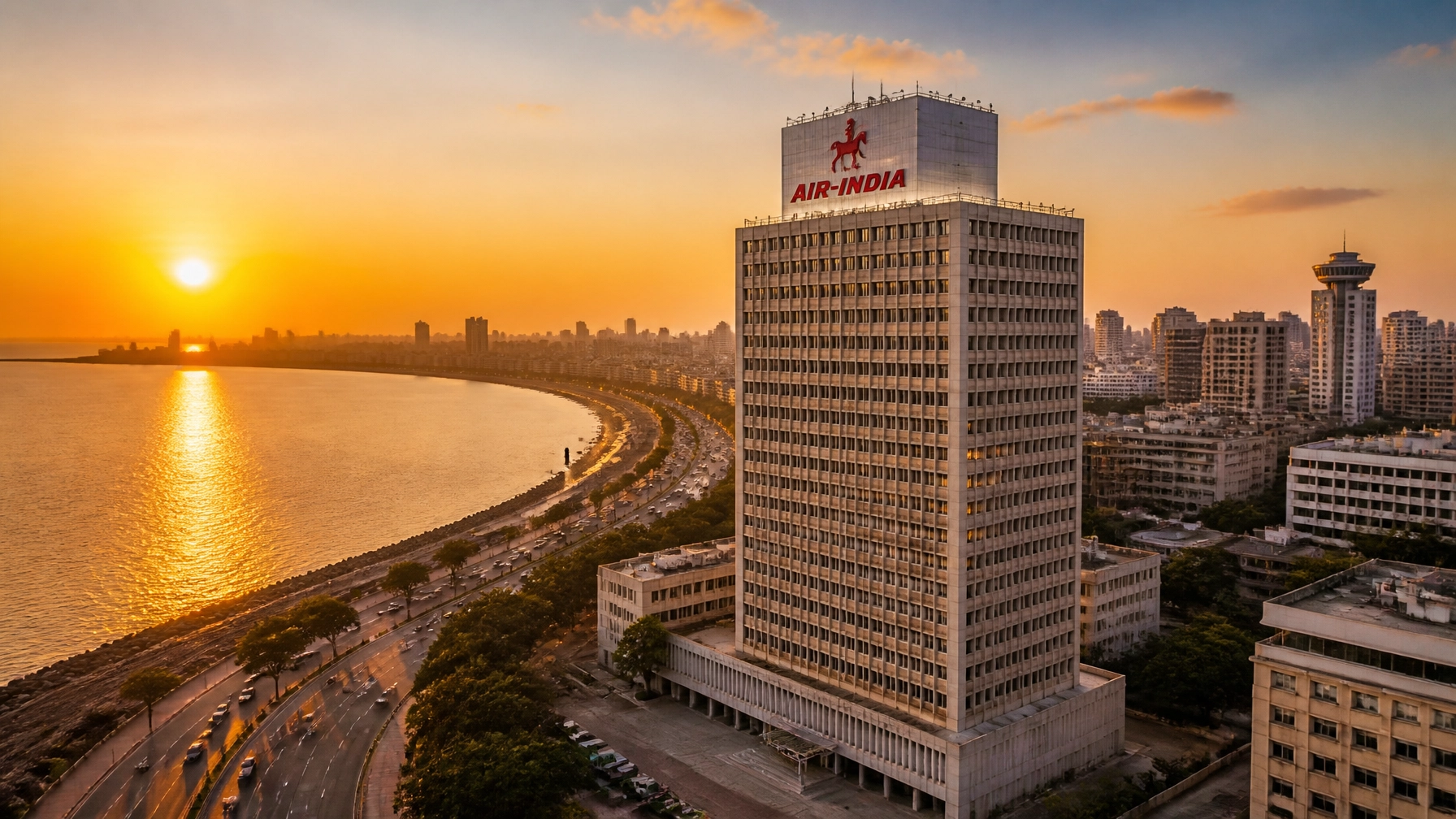

The skyline of South Mumbai is undergoing a transformative shift as the state administration marks a definitive victory in real estate strategy. In a move that underscores the government’s commitment to administrative consolidation and fiscal prudence, the Air India Building acquisition has finally reached its logical conclusion. The Maharashtra government has officially finalized the purchase of the iconic 23-storey skyscraper at Nariman Point for a staggering Rs 1,601 crore.
This acquisition is not merely a transfer of title; it is a catalyst for change in the way the state manages its sprawling bureaucracy. By taking over one of the most recognizable corporate landmarks in India, the Eknath Shinde-led government is positioning itself to revitalize the operational efficiency of the state secretariat. For decades, the Air India building stood as a sentinel of India's aviation ambitions; today, it is poised to become the nerve center of Maharashtra's administrative future.
The Historical Context: An Icon of Post-Modern Mumbai
Constructed in 1974, the Air India building has been a permanent fixture in the visual narrative of Mumbai’s financial district. Designed by the renowned American post-modern architect John Burgee, the tower was among the first high-rises to dominate the Nariman Point area, standing alongside other historic structures like Express Towers and The Oberoi. For over half a century, the "Centaur" logo at its summit has greeted travelers and residents alike, symbolizing the height of Indian corporate prestige.
The building served as the global headquarters for the national carrier, Air India, during its most expansive years. It housed not only the executive offices but also a priceless collection of Indian art: the famed "Maharajah collection": which reflected the airline's role as a cultural ambassador. However, following the airline's privatization and subsequent return to the Tata Group, the building was transferred to Air India Assets Holding Ltd (AIAHL), a special-purpose vehicle created to manage non-core assets. This transition paved the way for a historic bidding war that ultimately saw the state government emerge as the triumphant buyer.

The Economics of the Deal: Analyzing the Rs 1,601 Crore Valuation
The financial architecture of the Air India Building acquisition is as complex as the structure itself. The final price tag of Rs 1,601 crore reflects a nuanced negotiation process that has spanned several years. Initially, in 2018, Air India sought a valuation closer to Rs 2,000 crore. Competing bids from the Jawaharlal Nehru Port Authority (JNPA) and the Life Insurance Corporation of India (LIC) hovered between Rs 1,200 crore and Rs 1,375 crore.
The Maharashtra government’s decision to raise its offer to Rs 1,601 crore was backed by data-driven insights into the long-term savings on rental expenditures. By acquiring the property, the state also agreed to waive nearly Rs 300 crore in outstanding dues related to land lease and interest, effectively sweetening the deal for AIAHL. This transaction represents a sophisticated use of public funds to secure a permanent asset in a prime business district where real estate prices continue to show exponential growth.
Investors and analysts viewing this through an economic lens will recognize the parallels to broader market trends. Just as the 2021 economic rebound signaled a shift toward high-value infrastructure investments, this acquisition reflects a robust state balance sheet capable of high-stakes asset monetization. The move effectively converts a liability: recurring rental costs for scattered offices: into a high-value state asset.
Strategic Imperatives: Solving the Mantralaya Space Crunch
The primary driver behind the Air India Building acquisition is the critical shortage of office space at Mantralaya, the state secretariat. This "space crunch" became an acute administrative bottleneck following the devastating fire in 2012, which forced several key departments to relocate to private, rented premises across Mumbai.
The current dispersion of departments has hindered administrative coordination and increased the logistical burden on the state. By acquiring approximately 46,470 square meters of prime office space, the government can now:
- Centralize Operations: Bring together departments that are currently operating from disparate locations.
- Reduce Fiscal Outgo: Eliminate the massive monthly rental payments to private landlords.
- Enhance Security: Centralize the security apparatus for state departments within a government-owned facility.
- Improve Citizen Access: Create a single-window destination for various public services.
According to reports by The Economic Times, the Public Works Department (PWD) has already taken formal possession of the building and is preparing a comprehensive structural audit to ensure the tower meets modern safety and sustainability standards.

The Vision for a "Model Government Complex"
The Maharashtra government does not intend to simply occupy the building; the mission is to democratize the space by creating a "Model Government Complex." Public Works Minister Shivendrasinhraje Bhosale has emphasized that the renovation will prioritize quality and citizen convenience.
The proposed plans include:
- Redesigned Entrance: A main entrance that reflects the rich cultural heritage of Maharashtra, utilizing the expertise of leading architects.
- Smart Infrastructure: Integration of high-speed electronic communications networks and modern data centers to support digital governance.
- Sustainable Upgrades: Retrofitting the 1970s structure with energy-efficient systems to align with modern environmental standards.
- Public Services Hub: Dedicated floors for citizen interaction, ensuring that the building serves a legitimate purpose for the general public, not just the bureaucracy.
Just as modern enterprises realize that business management for startups is essential for scaling, the state is applying corporate-level management principles to its real estate portfolio. The goal is to move away from the traditional image of dusty government offices and toward a revitalized, tech-enabled administrative hub.

Urban Impact: Revitalizing Nariman Point’s Commercial Standing
The Air India Building acquisition also holds significant implications for the Nariman Point micro-market. For years, there has been a narrative of "de-centralization" as businesses moved toward Bandra-Kurla Complex (BKC). However, the state’s massive investment in Nariman Point reinforces the area's status as a critical power center.
The presence of a high-density government hub will likely lead to:
- An Increase in Footfall: Thousands of employees and visitors daily will revitalize local businesses and services.
- Improved Infrastructure: The surrounding roads, lighting, and public amenities are likely to see upgrades as part of the "Model Complex" development.
- Real Estate Stability: The permanent presence of the state government ensures that occupancy rates in the area remain stable, providing confidence to other investors.
In an era where inflation gauges fluctuate and market sentiment can be volatile, this deal provides a bedrock of stability for the South Mumbai real estate market. It confirms that Nariman Point remains a prestigious address with a value proposition that few other locations can match.

Conclusion
The acquisition of the Air India building for Rs 1,601 crore is a landmark moment in the history of Maharashtra's administrative and economic development. By securing this iconic asset, the state has not only resolved a decades-long space crisis but has also preserved a piece of Mumbai’s architectural heritage.
This deal serves as a definitive statement of intent: the government is willing to make bold, long-term investments to modernize its operations and serve its citizens more effectively. As the Public Works Department begins the process of transformation, the Air India building is set to evolve from an aviation relic into a dynamic administrative powerhouse. The Air India Building acquisition will be remembered as the moment the state reclaimed its place at the heart of Nariman Point, ensuring that the corridors of power are as resilient and prestigious as the city they govern.
For further updates on major state acquisitions and economic news, stay tuned to India Today and follow the latest stories right here on Business Tantra.