







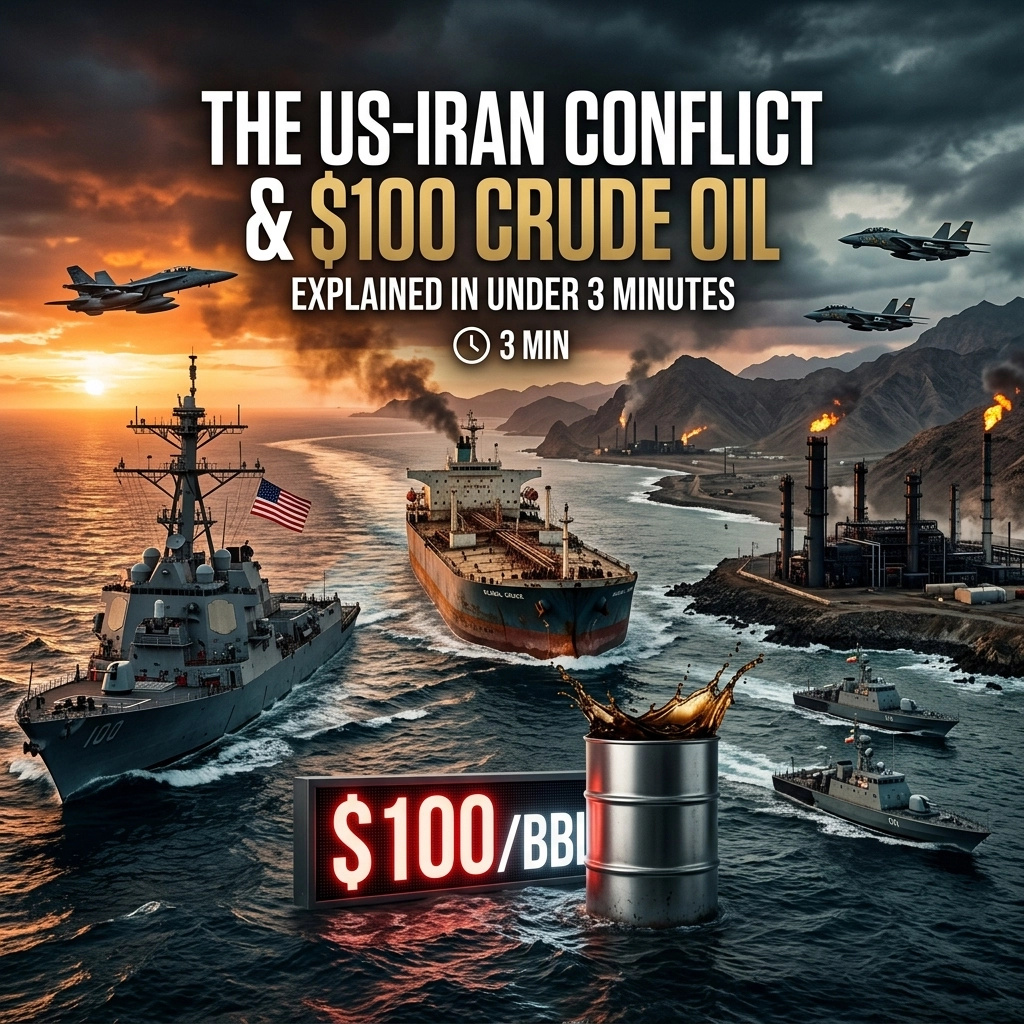




















The global energy landscape is currently navigating a period of unprecedented volatility, with global oil prices serving as the primary barometer for geopolitical stability. As of May 7, 2026, the international community finds itself at a critical juncture. The potential for a comprehensive U.S.-Iran peace deal has emerged as a significant catalyst for change, promising to either revitalize supply chains or, should negotiations falter, plunge the market into a deep supply deficit.
Currently, Brent crude has retreated from its peak of $112 per barrel to a range between $99 and $102. West Texas Intermediate (WTI) has followed a similar trajectory, hovering near the $93–$95 mark. This price correction reflects a market that is pricing in the high probability of a diplomatic breakthrough: a "de-escalation premium" that is currently counteracting the "war premium" established earlier this year.
1. The Strait of Hormuz: A Chokepoint for Global Stability
The current pricing tension cannot be understood without acknowledging the geopolitical crisis that began in late February 2026. The effective blockage of the Strait of Hormuz: a vital artery through which approximately 20% of the world’s petroleum passes: sent shockwaves through the global economy. For nations dependent on Middle Eastern crude, the closure represented more than a logistical hurdle; it was a threat to national energy security.
The prospect of a U.S.-Iran deal is widely viewed as the only immediate solution to reopening this waterway. Should the 14-point memorandum currently under discussion be ratified, it would allow Persian Gulf oil to flow back into international markets, normalizing trade routes and reducing the reliance on more expensive, long-haul logistics.

2. Supply Relief and the Lifting of Sanctions
A finalized agreement would likely involve the lifting of long-standing sanctions on Iranian crude production. Industry analysts suggest that Iran is prepared to inject an additional 1 to 1.5 million barrels per day (bpd) into the global supply pool almost immediately. This influx of supply would be a transformative event for global oil prices, providing a much-needed buffer against the tightening inventories seen in the United States and Europe.
According to data-driven insights from the latest market reports, U.S. crude inventories are currently sitting at roughly 457.2 million barrels. While this may seem substantial, the lack of Middle Eastern imports has forced domestic buyers to depend heavily on local production, leaving little margin for error. The introduction of Iranian oil would allow for a necessary replenishment of global reserves, potentially pushing prices down into the sustainable $70 range.
3. Market Sentiment and the "$920 Million Premonition"
One of the most intriguing developments in this saga is the aggressive movement within the futures market. Just 70 minutes before the initial deal reports were leaked via Axios earlier this week, a massive $920 million short position was placed on crude oil. This trade, which generated an estimated $125 million in profit as prices plummeted 13%, underscores a growing conviction among institutional investors that a deal is imminent.

This level of professional positioning suggests that high-net-worth traders are moving past the "if" and focusing on the "when." At Business Tantra, we observe that such market movements often precede official diplomatic announcements, acting as a leading indicator for the broader economic direction.
4. The Indian Perspective: Inflation and Market Resilience
For the Indian economy, the trajectory of global oil prices is a matter of paramount importance. As a major net importer of oil, India’s fiscal deficit and retail inflation are directly tied to the cost of a barrel. A cooling of the oil market would provide the Reserve Bank of India (RBI) with the necessary breathing room to maintain a stable interest rate environment, fostering domestic growth.
Investors in the Indian stock market have been watching these developments closely. A reduction in energy costs traditionally serves as a catalyst for sectors such as paints, lubricants, and aviation. You can track these sectoral shifts and more through our Home Blog section, where we analyze the intersection of global energy and domestic equity.

5. The Downside Risk: What if Negotiations Collapse?
While the market is currently leaning toward optimism, a "Plan B" must be considered. The geopolitical equilibrium is fragile. If the U.S.-Iran negotiations were to collapse, the consequences for the energy sector would be catastrophic. Analysts from leading financial institutions have warned that a definitive end to the peace process could send global oil prices spiraling toward $200 per barrel.
Such a spike would likely trigger "demand destruction," where the cost of fuel becomes so prohibitive that economic activity slows down globally. This scenario would force businesses to implement rigorous contingency plans and perhaps accelerate the transition to alternative energy sources.
6. Strategic Hedging and Corporate Response
For businesses operating in energy-intensive industries, the current volatility necessitates a sophisticated approach to risk management. Utilizing "data-driven insights" to hedge against price fluctuations is no longer an option: it is a requirement for survival. Many corporations are now looking at long-term supply contracts and financial derivatives to lock in prices while they remain near the $100 mark, fearing a sudden reversal.

Technological advancements in financial modeling have democratized access to these hedging tools, allowing even mid-sized enterprises to protect their margins against the whims of the Strait of Hormuz. Transparency and precision in these operations are governed by strict Terms and Conditions to ensure market integrity.
7. Conclusion: A New Era for Energy Markets?
The next few days will be decisive for the future of the global economy. Whether the U.S. and Iran can find common ground on the remaining points of the 14-point memorandum will determine if we enter a period of "revitalized" energy trade or a "protracted" period of scarcity.
A successful deal would not only cool global oil prices but also serve as a legitimate purpose for renewed international cooperation. It would provide the exponential growth catalyst that the post-conflict global economy desperately needs. However, the market remains on a razor's edge, balancing the hope of a $70 barrel against the nightmare of a $200 surge.
As we continue to monitor these developments, staying informed through reliable Business News is essential for any serious investor or business leader. The energy sector is currently a masterclass in how geopolitics, finance, and logistics converge to shape our world.
Key Takeaways for Investors:
- Watch the Strait: Any news regarding the lifting of the blockade will be the primary driver for immediate price drops.
- Monitor Inventory Levels: U.S. and Chinese stockpiles will indicate how long the market can sustain current prices if a deal is delayed.
- Hedge Against the Extremes: The spread between a "deal" price ($75) and a "no-deal" price ($200) is too wide to ignore.
For further analysis and real-time updates on market-moving events, feel free to visit our About Us page to learn more about our mission to provide clarity in a complex world.